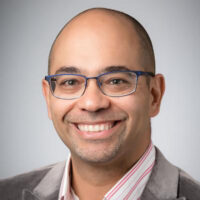
Hong Li is an Associate Professor at the University of California, Davis, specializing in interdisciplinary research at the intersection of food science, engineering, and biotechnology. Their work focuses on innovative food processing technologies, including infrared drying systems, catalytic thermal treatments, and microbial inactivation methods. Li's research also addresses sustainable production of alternative proteins, nutraceuticals, and optimization of agricultural by-products. Key research interests include food safety, energy-efficient processing, and the application of advanced technologies like cold plasma and mathematical modeling in food systems. Li has contributed to advancements in nut drying, fish meat quality, and fungal protein production. Their work emphasizes practical solutions for industrial applications while maintaining nutritional and sensory quality. Publications highlight Li's expertise in food physics, interdisciplinary collaboration, and bridging theoretical models with real-world processing challenges. Despite extensive contributions, no scientific awards or named grants are explicitly mentioned in the text.
Trine Grønhaug Halvorsen is a Professor at the University of Oslo's Department of Pharmacy, within the Faculty of Mathematics and Natural Sciences. Her research focuses on developing innovative analytical methods for protein analysis in complex biological samples using mass spectrometry. She specializes in sample preparation techniques, smart sampling strategies, and biomarker quantification. Education: PhD in Drug Analysis (2003), Cand.pharm. (1998) Awards: Publication Award (2001) for pioneering liquid-phase microextraction work Research interests include molecularly imprinted polymers, antibody-based capture methods, and electromembrane extraction. Her work emphasizes improving analytical sensitivity and speed for low-abundance proteins in clinical and biomedical contexts. Recent articles highlight advancements in smart samplers, dried blood spot analysis, and LC-MS-based protein quantification. These studies address challenges in biomarker detection and clinical diagnostics. Labs/Teams: Pharmaceutical Analytical Chemistry Group, SmartProteinAnalysis@UiO Teaching: Courses in bioanalytical chemistry, drug analysis, and sample preparation
Professor Guangzhao Mao is the Head of the School of Engineering at the University of Edinburgh and holds the title of Chair Professor of Materials Engineering. She is also an Adjunct Professor at the University of New South Wales (UNSW) Sydney, where she formerly led the School of Chemical Engineering. Her research focuses on nanotechnology and materials engineering, with key areas including electrocrystallization for advanced sensors, nanomedicine for central nervous system (CNS) drug delivery, and innovative material synthesis using liquid metal technologies. Her work bridges engineering and medicine, addressing challenges like drug delivery across the blood-brain barrier and environmental monitoring through gas sensors. Professor Mao’s academic qualifications include a B.Sc. and Ph.D., with her doctoral studies likely in chemical or materials engineering (details unspecified). Her research team has pioneered technologies such as protein-drug nanoconjugates for spinal cord injury treatment and microfluidic assays for drug screening. She has received prestigious awards, including the Fulbright Senior Scholarship and AIChE Fellowship, and has held visiting roles at the Max Planck Institute. Her leadership and innovation have positioned her at the forefront of interdisciplinary research, with contributions to both academic institutions and industry partnerships. Current projects emphasize translating nanomedicines into clinical applications and advancing sustainable catalytic systems through liquid metal-enabled synthesis.
Ed Pickering is a Senior Lecturer in Metallurgy and Materials Engineering at the University of Manchester. He has held roles since 2015, advancing to Reader in 2023. His affiliations include the Henry Royce Institute (Research Area Lead for Advanced Metals Processing), the Advanced Metallics System CDT and Fusion CDT Management Boards, and industrial technical advisory panels. Ed’s work bridges academic and industrial collaboration with Rolls-Royce, UKAEA, Airbus, EDF, and Sheffield Forgemasters. Ed completed his undergraduate studies (2011) and PhD (2014) in Materials Science at the University of Cambridge, followed by a Research Associate role in Cambridge’s Rolls-Royce UTC. His academic trajectory includes: Senior Lecturer (2019–present) Reader (2023–present) Ed’s research focuses on phase transformations, microstructural characterization, and alloy development for nuclear (fission/fusion) and aerospace applications. Key themes include optimizing processing routes to enhance material properties while minimizing waste and environmental impact. His studies frequently address steel, high-entropy alloys, and novel refractory alloys, emphasizing their service performance under extreme conditions. His scientific contributions span structural integrity assessment of welded joints, machine learning applications in metallurgy, and material flow uncertainties in forging. He has also advanced heat treatment optimization for reactor steels and explored cobalt-free hardfacing alloys. Frank Fitzgerald Medal (2017) Grunfeld Memorial Medal (2021) In advising and grants, Ed leads the Materials Performance Centre (MPC) and co-leads the NEWAM project on wire-additive manufacturing. He supervises research across these initiatives and collaborates with over 30 PGR students in interdisciplinary teams. His work also involves managing technical facilities like the Advanced Metal Processing platform. Ed’s laboratory affiliations include the MPC and WAAM-based Engineering and Process Metallurgy groups, where he explores sustainable materials solutions for energy and aerospace industries.
Dr Amir Kadiric is a Reader in Mechanical Engineering at Imperial College London's Faculty of Engineering, leading the SKF University Technology Centre for Tribology. He holds a MEng (Mechanical Engineering) and PhD (Tribology) from Imperial College (2005). Previously, he worked at SKF's Engineering and Research Centre in the Netherlands, focusing on rolling bearing research. Education: MEng in Mechanical Engineering (Imperial College), PhD in Tribology (Imperial College, 2005) His research emphasizes damage mechanisms in machine elements—such as rolling contact fatigue (micropitting, pitting), scuffing, and fretting—as well as reliability/efficiency of electric vehicle transmissions and condition monitoring of tribological systems. He collaborates with industries to advance applications in wind turbines, geared turbofan engines, and EV drivetrains. His work integrates experimental and computational methods, including novel techniques for in-situ lubricant film measurement and tribofilm analysis. He leads the Imperial-Industry collaboration through the SKF UTC for Tribology, advancing fundamental and applied tribology research. Dr Kadiric’s lab focuses on surface coatings, lubricant formulation, and advanced material characterization to mitigate failure modes in dynamic mechanical systems. His contributions bridge academic and industrial challenges in sustainable energy systems and high-performance engineering components.
Gregor Kieslich is a Research Professor at the Technical University of Munich's School of Natural Sciences, Department of Chemistry. His laboratory explores molecular and solid-state chemistry at the Catalysis Research Centre. Research focuses on structure-property relationships in functional materials including metal-organic frameworks, molecular perovskites, and hybrid systems. The group develops design principles for advanced materials with tailored electronic, mechanical, and ionic transport properties through crystal engineering approaches. Recent publications emphasize materials for energy applications, with consistent focus on structural dynamics under external stimuli. Articles frequently investigate ion transport mechanisms, framework flexibility, and defect engineering using computational and experimental methods. No specific awards or laboratory details are documented in the provided information.
Lee Rybeck Lynd is the Paul E. and Joan H. Queneau Distinguished Professor of Engineering and Adjunct Professor of Biology at Dartmouth College's Thayer School of Engineering. He has been a member of the Dartmouth faculty since 1987 and serves as Co-Founder and Chief Technology Officer of Terragia Corporation, Consolidated Bioprocessing Team Leader for the DOE Center for Bioenergy Innovation, and Director of the Advanced Second Generation Biofuel Laboratory. Professor Lynd's research spans microbial cellulose utilization, metabolic engineering, innovative biomass processing technologies, and sustainable bioenergy futures. His work focuses on cost-effective production of cellulosic biofuels that benefit people and the environment, with particular emphasis on consolidated bioprocessing (CBP) which offers potential for transformative cost reductions in biofuel production. His research integrates molecular biology, microbiology, and chemical/biochemical engineering to advance both fundamental understanding and applied capability in bioenergy. His publication record includes over 300 papers with more than 42,000 citations and an h-index of 88. Recent research trends show increasing focus on sustainability metrics, carbon-negative biofuels, and the integration of bioenergy systems with food production and environmental protection. His work increasingly addresses the socio-economic dimensions of bioenergy deployment alongside technical innovations. Charles Thom Award, Society for Industrial Microbiology and Biotechnology (2021) Thayer Distinguished Research Award for Faculty (2020) Lemelson-MIT Sustainability Award (2007) AAAS Fellow (2012) Charles D. Scott Award for Distinguished Contributions (2005) Professor Lynd has advised numerous graduate students and postdoctoral researchers, currently mentoring several PhD candidates including Nick Cervenka, Madeline Hoey, Shu Huang, Matthew Kubis, and Bishal Sharma. His research has been supported by multiple funding sources including the Department of Energy, USDA NIFA, Sao Paulo Research Foundation (Brazil), and The Link Foundation. He has testified before the US Senate three times and has been featured in Wired, Forbes, and Nova. He leads the Lynd Research Lab which includes postdoctoral associates, graduate students, technicians, and undergraduate researchers. The lab collaborates closely with the DOE Center for Bioenergy Innovation and maintains an international network of collaborators. Current research focuses on consolidated bioprocessing, metabolic engineering of cellulolytic microbes, and sustainable bioenergy futures that integrate environmental, economic, and social considerations.
Dr. Fengwang Li is a Senior Lecturer at the School of Chemical and Biomolecular Engineering, University of Sydney, specializing in electrochemical energy systems and CO₂ conversion. He joined in 2020 after completing postdoctoral research at the University of Toronto, focusing on CO₂ capture and utilization. His PhD from Monash University (2017) earned the Mollie Holman Medal for best thesis. Research interests include electroactive materials, green hydrogen/ammonia, and sustainable chemical synthesis. He leads projects on CO₂ electrolysis catalysts and reactor design, utilizing operando/in-situ techniques for material characterization. Collaborations span institutions globally, including the University of Warwick and California Institute of Technology. Awarded the 2023 Eureka Prize for Outstanding Early Career Researcher, he has published over 90 articles in top journals like Nature , Science , and Angewandte Chemie . His work aims to economically viable CO₂-to-fuel conversion, advancing renewable energy and carbon neutrality. Key grants include the ARC DECRA (2019) and University of Sydney SOAR Prize (2023). He co-leads the GETCO2 Centre and is affiliated with Sydney Nano Institute and the Net Zero Institute.
Dr. Xiaoyi Tian is a Researcher at the School of Electrical and Computer Engineering, University of Sydney. They are affiliated with the University of Sydney Nano Institute and specialize in microwave photonics, sensor technology, and machine learning applications. Their research focuses on integrating machine learning with photonic sensors, particularly using microresonators and optical signal processing for high-resolution sensing. Key areas include microwave-photonic hybrid systems, signal processing algorithms, and sensor optimization. Dr. Tian has contributed to advancements in athermal sensors, subwavelength grating resonators, and recurrent neural networks for sensor performance enhancement. Their work spans conferences like OFC, CLEO-PR, and IEEE journals. No formal awards or student advisees are listed, though their publications reflect active collaboration in interdisciplinary research.
Dr. Adam Wanekaya serves as a Professor and Department Head in the Department of Chemistry and Biochemistry at Missouri State University. His research focuses on the fabrication, modification, characterization, and application of nanoscale materials, with specific applications in chemical sensing, biomedical sensing, and environmental remediation of heavy metals and toxins. He holds a PhD in Chemistry from the State University of New York, Binghamton, and M.S. and B.S. degrees in Chemistry from the University of Nairobi. Educational Background: Ph.D. in Chemistry, State University of New York, Binghamton M.S. in Chemistry, University of Nairobi B.S. in Chemistry, University of Nairobi His research interests emphasize integrating nanoscale materials into functional devices for real-world applications. He leads efforts in advancing sustainable solutions for environmental and biomedical challenges through nanotechnology. Contact: wanekaya@missouristate.edu , Roy Blunt Hall 425.
Professor Hao Wang is a distinguished academic and researcher in materials science and manufacturing at the University of Southern Queensland (UniSQ). He holds the position of Professor (Materials and Manufacturing) within the School of Engineering and serves as the Theme Leader for Functional Materials at the Centre for Future Materials. His career spans over 30 years, with a PhD from the University of Queensland (2001) and a GCertEd from Queensland (2005). Professor Wang’s research focuses on advanced materials, including carbon fiber composites, flame retardants, CO2 conversion technologies, and green concrete (geopolymer). He has authored over 450 papers, earning a Google Scholar H-index of 100 and recognition as a Clarivate Highly Cited Author (2023) and Top 2% World Scientist. He leads the Asian-Australasian Association for Composite Materials and was Chair of the 2018 Asian-Australasian Conference on Composite Materials. His recent publications emphasize sustainable materials, recyclable polymers, and fire-safe composites. Over 150 doctoral students have been supervised under his mentorship, focusing on topics like CO2 electrolysis, geopolymer concrete, and flame-retardant epoxy resins. His work bridges academia and industry, addressing global challenges in materials innovation and environmental sustainability.
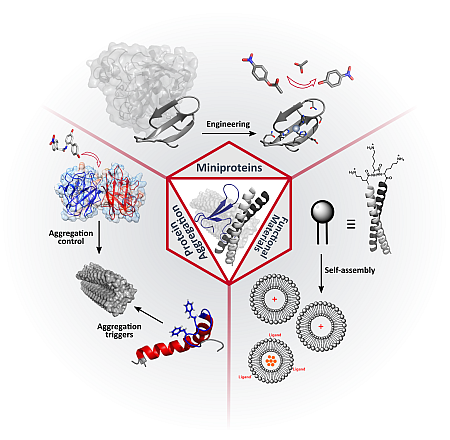
Jun.-Prof. Dr. Franziska Thomas is a Junior Professor at the Institute of Organic Chemistry, Heidelberg University, leading an active research group at the interface of organic chemistry, biochemistry, and biophysics. Her work centers on understanding protein folding mechanisms and their implications for biological function. Dr. Thomas established her independent research group at Georg-August-Universität Göttingen in June 2015 before moving to Heidelberg University in February 2020. She was offered her current tenure track position at Heidelberg on April 26, 2019. Her research program has two primary focuses: (1) designing peptide scaffolds with catalytic activity using de novo designed components that can be chemically synthesized and modified, and (2) studying protein aggregation mechanisms relevant to neurodegenerative diseases such as amyotrophic lateral sclerosis. She employs small, well-characterized self-assembling peptides to create novel materials and understand disease pathways. Analysis of her publication record reveals consistent advancement in peptide and protein engineering, with recent work emphasizing WW domains, β-sheet miniproteins, and innovative solid-phase synthesis techniques. Her research bridges fundamental protein science with applications in materials engineering and disease mechanism understanding. Her work has received significant funding including: The excellence cluster 3DMM2O for the project 'Design of Structured Adhesion Miniproteins for Tissue Engineering' The Deutsche Forschungsgemeinschaft for the research grant 'The WW-domain scaffold as a model system for the de novo design of miniaturized phosphate receptors, phosphatases and sulfatases' Dr. Thomas actively mentors a large research team including 11 PhD students and 2 Master's students, with numerous past students who have successfully completed their theses. She teaches courses including 'Chemische Biologie' and 'OC-Z6 Synthese und Retrosynthese' and participates in seminar series such as IMSEAM and 3DMM2O. The Thomas Lab maintains strong collaborative connections with multiple research groups including the Kivala, Kemerink, Blasco, Klein, Comba, and Gräter groups, reflecting an interdisciplinary approach to peptide and protein science.
Dr. Wael El-Dakhakhni is a Professor of Civil Engineering at McMaster University, holding the Martini, Mascarin and George Endowed Chair in Masonry Design. He serves as Director of the INTERFACE Institute and NSERC CaNRisk-CREATE program, focusing on systemic risk and resilience in complex systems. His research spans interdependent networks, data-driven modeling, and infrastructure resilience under climate and disaster scenarios. He leads the INViSiONLab, advancing AI-driven solutions for urban resilience through digital twins. El-Dakhakhni is a Fellow of the American Society of Civil Engineers and a Member of the Royal Society of Canada, with notable awards including the NSERC Discovery Accelerator Supplement (twice), Ontario Early Researcher Award, and John B. Scalzi Research Award. His work bridges academia and industry, contributing to codes, standards, and real-world applications in structural engineering and disaster response. Education: BSc (Ain Shams University, Egypt), MSc and PhD (Drexel University, USA). Research Interests: Complex systems simulation, systemic risk quantification, resilient infrastructure design, AI applications in urban planning, and climate resilience frameworks. His work integrates advanced machine learning, network theory, and physics-informed models to address multi-hazard challenges in energy, transportation, and urban systems. Key Projects: CITYDNA, McMasterDNA, and infrastructure digital twins for pandemic and climate crisis decision-support systems. He collaborates with governments and organizations to enhance infrastructure resilience through predictive analytics and adaptive strategies. Labs/Teams: INViSiONLab, McMaster INTERFACE Institute, NSERC-CaNRisk-CREATE program, and the Centre for Effective Design of Structures. His research has informed policy and standards in North America, emphasizing interdisciplinary solutions for systemic risk mitigation.
Prof. Chunli Bai is a distinguished academic leader serving as President of the Chinese Academy of Sciences (CAS) since 2011 and President of TWAS (The World Academy of Sciences) since 2013. He previously led the University of Chinese Academy of Sciences (UCAS) from 2001-2014 and directed the National Center for Nanoscience and Technology (2003-2008). His research focuses on nanotechnology, molecular self-assembly, scanning probe microscopy, and catalyst characterization. Education highlights include a Research Associate position at the California Institute of Technology (1985-1987) and Visiting Professorships at Tohoku University (1991-1992). He has held progressively senior administrative roles within CAS since 1996, culminating in his current presidencies. Research interests emphasize nanomaterials synthesis, STM-driven structural analysis, and molecular-level surface interactions. His work bridges fundamental nanoscience with applied technologies, particularly in catalytic systems and nanodevice development. Prof. Bai has received over 15 major international honors including membership in 8 national academies, 6 honorary doctorates, and prestigious medals from UNESCO and the National Academy of Sciences (USA). He authored/co-authored influential books on nanotechnology and pioneered China's nanoscience advancement through visionary leadership. His extensive network includes global collaborations through TWAS and CAS, driving scientific capacity development in developing countries. Leadership in major institutions has positioned him as a pivotal figure in both Chinese and global scientific communities.
Vishal Choudhury is a Research Fellow at the Max Planck Institute for the Science of Light (MPL), focusing on advanced optical technologies and nonlinear phenomena in fiber lasers. His work contributes to the development of high-power lasers, supercontinuum generation, and optical feedback systems. He is affiliated with the MPL’s core research areas in nonlinear optics, quantum optics, and photonics technology. Choudhury’s research explores cutting-edge applications such as Fourier spectral shapers for laser wavelength control, computational ellipsometry for material characterization, and the mitigation of stimulated Brillouin scattering effects in fiber systems. His studies bridge fundamental optical physics with practical advancements in laser engineering and high-power light sources. His publications emphasize innovations in cascaded Raman lasers, broadband supercontinuum generation, and the optimization of fiber laser performance. Choudhury’s contributions highlight advancements in spectral shaping, polarization maintenance, and the integration of distributed feedback mechanisms to enhance laser stability and tunability.