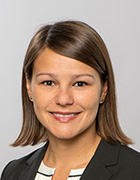
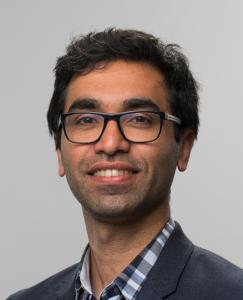
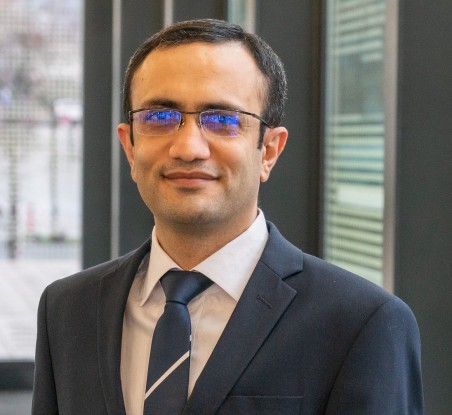
Yulong Wei is a Researcher in the Department of Microbial Pathogenesis at Yale School of Medicine. His work focuses on understanding viral persistence mechanisms, particularly in HIV-1 and SARS-CoV-2, using cutting-edge genomic and immunological approaches. He explores how host cellular environments influence viral integration, reservoir formation, and immune evasion. Research interests include: HIV reservoir dynamics and latency mechanisms Host-pathogen interactions in viral persistence Single-cell multiomics analysis of viral infections Antiviral drug discovery and repurposing Ribosomal adaptation and translation mechanisms in bacteria Recent work highlights his contributions to understanding how interferon signaling and chromatin structure affect HIV integration sites, as well as computational studies of griseofulvin's potential in combating SARS-CoV-2. He has also investigated evolutionary genomic signatures in microbes related to translation efficiency and environmental adaptation. His lab is part of the Yale School of Medicine's broader efforts in microbial pathogenesis and infectious disease research, with a focus on translational applications for persistent viral infections.
Dr. Jenna Yentes is an Associate Professor in the Department of Kinesiology and Sport Management at Texas A&M University, affiliated with the College of Education and Human Development. Her research focuses on functional resiliency in aging populations, biomechanics of chronic obstructive pulmonary disease (COPD), and nonlinear analysis of human movement. She leads studies on gait stability, respiratory-gait coupling, and exoskeleton-assisted walking. Notable contributions include quantifying locomotor reserve and exploring firefighter performance in protective gear. Education: Ph.D. in Biomechanics (University of Nebraska, 2013), M.S. in Kinesiology (California State University Fullerton, 2006), B.A. in Kinesiology (University of Northern Colorado, 2000). Research Interests: Reserve capacity in older adults' mobility and cognition Biomechanical adaptations in COPD patients Methodological rigor in nonlinear data analysis (e.g., entropy metrics) Firefighter physical performance under protective gear Recent Articles Trends: Focus on entropy-based gait analysis, COPD biomechanics, dual-task interference in aging, and exoskeleton effects on interlimb coordination. Methodological rigor in parameter selection for nonlinear algorithms is a recurring theme. Awards: 2023 Faculty Climate Award (Texas A&M), 2019 Promising Scientist Award (International Society of Posture and Gait Research), and 2019 Chancellor's Commission on the Status of Women Award (University of Nebraska). Advising & Grants: Mentors graduate students (noted in publications) and collaborates with TEEX Fire Academy and multiple Texas A&M research centers including the Huffines Institute for Sports Medicine and the Center for Population Health and Aging. Research supported by institutional and federal grants. Labs/Teams: Active in Texas A&M's Human Movement and Aging Lab, collaborating with interdisciplinary teams in sports medicine, rehabilitation engineering, and pulmonary research.
Dr. Amir Tavakoli Taba is a Senior Lecturer in Medical Imaging Sciences at the University of Sydney, where he co-directs the Medical Image Optimisation and Perception Group (MIOPeG). He specializes in improving medical imaging accuracy, particularly in breast cancer diagnosis, through advancements like phase-contrast tomography and AI integration. His work bridges technological innovations (e.g., low-dose imaging) with clinical practice, emphasizing quality control and radiologist performance analysis. Education: PhD (University of Sydney) MEngSc (University of New South Wales) BSc (University of Tehran) Research Interests: Dr. Taba’s research focuses on phase-contrast computed tomography (PCT), AI-driven diagnostic tools, and clinical workflow optimization. His projects include the world’s first PCT clinical trial (scheduled for 2024 in Melbourne) and collaborations with institutions like ANSTO, Harvard Medical School, and the University of Iowa. He also investigates radiologist expertise development and the role of social networks in medical decision-making. Grants & Awards: NHMRC Synergy Grant (IMPACT: Implementation of X-ray Phase-Contrast Tomography) International recognition, including the SPIE Medical Imaging Award Advising & Labs: Current students: Mohammed ALANAZI (abdominal CT optimization), Jenna ARBID (phase-contrast imaging) Labs: MIOPeG, part of the Sydney Vital and Sydney Catalyst cancer research networks Teaching: Courses in imaging technologies, medical image perception, and clinical capstone projects for diagnostic radiography students.
Liuping Wang is a Professor in the School of Electrical and Computer Engineering at RMIT University, Australia, since 2007. He serves as Head of Discipline for Electrical Energy and Control Systems since 2005 and teaches Advanced Control Systems (EEET 2100) and Real Time Estimation and Control (EEET 2221). Current academic rank: Professor Location: City Campus, Australia Industry collaborators: ANCA, Australian Power Academy, Advanced Manufacturing CRC His research interests span: Control Theory with applications to UAVs and industrial processes Development of Model Predictive Control systems System Identification using neural networks Robust Control for constrained systems Control of AC motors and power electronics Applications in biomedical research and food process monitoring The 15 most recent publications (2015-2025) demonstrate expertise in: UAV control systems with segmented surfaces Battery condition monitoring for electric vehicles Mult-agent robotics with coordination algorithms Smart grid security and electricity dispatch GPS-denied localization for mobile robots Disturbance observer control with input constraints As a supervisor, he oversees Masters Research and PhD projects but no specific student names are listed. His email is liuping.wang@rmit.edu.au for collaboration or supervision inquiries.
Monty A. Escabi is an Associate Professor at the University of Connecticut. His research focuses on understanding the neural mechanisms underlying auditory perception and sound recognition, combining large-scale neural recordings with computational modeling and machine learning. He explores how the brain processes sounds in complex environments, aiming to develop advanced sound recognition technologies and treatments for hearing loss. Education: B.S., Electrical Engineering, Florida International University, 1993 M.S., Electrical Engineering: Signal Processing and Stochastic Modeling, Columbia University, 1995 Ph.D., Bioengineering, University of California at Berkeley and San Francisco, 2000 Research Interests: Dr. Escabi investigates the computational principles of natural hearing, focusing on spectrotemporal processing in auditory pathways. His work bridges signal processing and neuroscience to uncover how neural circuits encode sound features like temporal periodicity and acoustic envelopes. The Escabi Lab also develops neurotechnologies for high-resolution auditory cortex recordings. Grants & Collaborations: National Science Foundation ($890,842): Cortical Specializations for Behavioral Discrimination of Temporal Shape and Rhythm of Sound (2014–2018) National Institutes of Health ($1,448,437): CRCNS: Role of Statistical Regularities in Neural Sound Coding (2015–2020) Laboratory: The Escabi Lab (http://escabilab.uconn.edu) specializes in auditory neuroscience, employing multi-disciplinary approaches to study neural coding and its translational applications in hearing technology.
Michael Krauthammer is a Professor of Medical Informatics and Chair of the Department of Quantitative Biomedicine at the University of Zurich, affiliated with the University Hospital of Zurich. His lab focuses on Clinical Data Science and Translational Bioinformatics, leveraging AI and machine learning to address healthcare challenges. Key areas include cancer genomics, federated learning, and automated medical imaging analysis. Education and affiliations: Krauthammer leads an interdisciplinary team supported by major funding agencies. His research spans bioinformatics, clinical decision support systems, and multimodal data integration. Notable projects include AI-assisted diagnosis in rheumatology and prime editing efficiency prediction. Recent work emphasizes longitudinal cfDNA analysis, drug interaction modeling, and personalized oncology. The lab collaborates across disciplines, with projects funded by Swiss and international grants. Students and postdocs work on topics like machine learning for radiology reports, longitudinal disease trajectories, and protein design. Key projects include the NTCIR-18 RadNLP challenge, prime editing prediction models (Nature Biotechnology 2024), and vision transformers for capillaroscopy analysis. The lab advocates for reproducible data science and ethical AI in healthcare.
Prof. Julijana Gjorgjieva is a tenured W3 Professor of Computational Neuroscience at the School of Life Sciences Weihenstephan, Technical University of Munich (TUM). She leads an independent research group at the Max Planck Institute for Brain Research and is affiliated with the Bernstein Center for Computational Neuroscience. Her research focuses on the principles governing neural circuit development, balancing learning plasticity with functional stability through computational and theoretical approaches. Key interests include synaptic organization, energy-efficient neural computation, and evolutionary optimality principles. Education & Career: B.Sc. Mathematics, Harvey Mudd College (2006) M.A.St. in Applied Mathematics, University of Cambridge (2007) Ph.D. Applied Mathematics, University of Cambridge (2011) Postdoctoral Fellowships: Harvard University (2011-2014), Brandeis University (2014-2016) Max Planck Research Group Leader (2016-2022) W2/W3 Professor at TUM since 2016 Research Interests: Computational neuroscience, theoretical modeling of neural circuits, synaptic plasticity mechanisms, homeostatic regulation, and the interplay of development and evolution in shaping brain architecture. She employs mathematical frameworks to study how circuits achieve robustness while enabling adaptive learning. Awards: Heinz Maier-Leibnitz Prize (2022) Eric Kandel Young Neuroscientist Prize (2021) ERC Starting Grant (2018) Multiple postdoctoral and early-career fellowships Grants & Funding: Includes DFG Collaborative Research Center on Neural Homeostasis, HFSP grants, and EU Horizon 2020 initiatives. Active in mentoring and promoting computational neuroscience through programs like Neuromatch Academy. Labs & Collaborations: Leads a multidisciplinary lab integrating experimental and theoretical approaches. Collaborates with institutions such as the Max Planck Society and international computational neuroscience networks.
Dubravko Kicic is a Ph.D. Visitor (Faculty) at the Department of Neuroscience and Biomedical Engineering at Aalto University, specializing in advanced brain stimulation techniques and neuroengineering. His work primarily focuses on transcranial magnetic stimulation systems and their clinical applications. Education: Doctoral degree in Engineering and Technology from Helsinki University of Technology (awarded October 20, 2009) Master's degree in Engineering and Technology from Helsinki University of Technology (awarded June 14, 2005) Kicic's research centers on non-invasive brain stimulation technologies, particularly transcranial magnetic stimulation (TMS). His work spans neuroscience, biomedical engineering, and clinical applications for treating neurological and psychiatric conditions. He investigates how to optimize brain stimulation targeting, develop multi-locus TMS systems, and create robotic platforms for precise stimulation delivery. His fingerprint includes expertise in Transcranial Magnetic Stimulation, Behavioral Addiction, Magnetoencephalography, Neuromodulation, Pulse Rate analysis, and Signal Space engineering. Recent publications demonstrate a clear trend toward developing more precise and effective brain stimulation systems. Kicic's work focuses on multi-locus TMS for simultaneous stimulation of multiple brain areas, robotic targeting systems for improved accuracy, and real-time identification of brain states to optimize stimulation timing. His research bridges engineering innovation with clinical neuroscience applications, particularly for depression and pain treatment. Kicic has supervised at least one thesis and has been involved in media coverage regarding how magnetic brain stimulation can help patients with depression and pain. His collaborative work shows extensive international connections in the neuroscience and biomedical engineering fields. His research contributes to UN Sustainable Development Goals related to good health and well-being through developing advanced neurotechnologies for clinical applications.
Jayson Paulose is an Associate Professor of Physics at the University of Oregon, affiliated with the College of Arts and Sciences and the Institute for Fundamental Science. His research spans theoretical soft matter physics, biophysics, evolutionary dynamics, and metamaterials design, focusing on the intersection of topology, geometry, and statistical mechanics in artificial and biological systems. Academic Roles: Faculty member in the Department of Physics, Director of the MSTC Program. Research Themes: Designer matter (topological and active metamaterials), biological systems (elasticity of thin shells, evolutionary genetics), and mechanical principles in soft structures. Collaborations: Partners with experimentalists and theorists in physics, materials science, and biology at UO and institutions like Leiden University. Lab: Paulose Group, which includes graduate and undergraduate researchers, explores problems such as topological protection in metamaterials and genetic propagation in populations. Research Interests include: Topological soft matter: Using symmetry and geometry to design materials with robust mechanical properties. Evolutionary dynamics: Modeling the impact of long-range dispersal on genetic diversity and population structure. Elastic mechanics: Analyzing thin shells and membranes relevant to biological systems. Active matter: Studying non-equilibrium systems like rotating dimer particles and synthetic metamaterials. Publications reflect his interdisciplinary focus, with recent work (2023–2024) on mechanical metamaterials, elastic shells, and stochastic population genetics, and earlier contributions to active spinner materials and topological protection in biological systems. Education & Training of students in his lab emphasizes theoretical rigor and computational techniques, with alumni transitioning to postdoctoral positions and industry roles in mechanical engineering, data science, and software development. Contact: jpaulose@uoregon.edu | Office: 375 Willamette Hall, University of Oregon.
Prof. Vahid Jamali is an Assistant Professor and Head of the Resilient Communication Systems Group at the Technical University of Darmstadt, Germany. His research focuses on resilient communications, 6G wireless systems, bio-inspired molecular communication, and reconfigurable intelligent surfaces (RIS). He holds a Doctoral Degree from Friedrich-Alexander-Universität Erlangen-Nürnberg (FAU), Germany, and has served as a postdoctoral researcher at Princeton University and FAU. Education PhD in Communication Systems, FAU (2019) Visiting Researcher at Stanford University (2017) Research Assistant at FAU's Institute for Digital Communications (2013-2019) Research Interests Resilient Networks : Emergency networks, RIS-based systems, and resilience-by-design architectures. Wireless Innovations : 6G technologies, holographic MIMO, and joint communication-sensing systems. Bio-inspired Systems : Molecular communication modeling using biological principles like diffusion and chemical reactions. Recent Work Trends His 2024-2025 publications emphasize RIS optimization (e.g., temperature-aware phase shifts, fast beam switching) and molecular communication (e.g., Poisson channel identification, bio-inspired receiver designs). Emerging themes include AoI-based RIS reconfiguration and integrated sensing-communication-powering (ISCAP) for IoT. Lab Activities He leads the Resilient Communication Systems Group, exploring cutting-edge RIS hardware (e.g., liquid crystal implementations) and theoretical foundations for future wireless systems.
Jim Crutchfield is a Distinguished Professor of Physics at the University of California, Davis, where he also serves as Director of the Complexity Sciences Center. He holds additional affiliations as President and Scientific Director of the Art & Science Laboratory in Santa Fe, External Faculty at the Santa Fe Institute, General Member of the Telluride Science Research Center, and Visiting Scholar at the Redwood Center for Theoretical Neuroscience. His work bridges physics, computation, and complex systems. Education: B.A. summa cum laude in Physics and Mathematics, University of California, Santa Cruz (1979) Ph.D. in Physics, University of California, Santa Cruz (1983) Crutchfield's research centers on computational mechanics , a framework he pioneered to quantify how natural systems store, process, and transmit information. His interests span nonlinear dynamics, evolutionary dynamics, information engines, quantum computation, and pattern discovery. He explores how structure emerges in complex systems, from cellular automata to biological evolution and neural networks. His recent work focuses on thermodynamic computing, causal inference, and the physics of intelligence. His publications reveal a consistent focus on the interplay between information, energy, and computation in physical systems. Themes include the thermodynamics of information engines, causal architecture in time series, emergent organization, and intrinsic computation in quantum and classical domains. These works span disciplines such as physics, computer science, biology, and cognitive science. Scientific Recognition: Postdoctoral Fellow, Miller Institute for Basic Research in Science IBM Postdoctoral Fellow, Condensed Matter Physics Distinguished Visiting Research Professor, Beckman Institute Bernard Osher Fellow, San Francisco Exploratorium NSF Graduate Fellow UCB Chancellor’s Fellow Crutchfield has advised over two dozen PhD students in physics, computer science, and mathematics, contributing significantly to the next generation of complexity scientists. He has led major interdisciplinary initiatives, including NSF-funded museum exhibits and workshops on network dynamics, collective cognition, and evolutionary dynamics. He has also been active in public discourse through talks, films, and publications on the philosophy of complexity. He leads research groups exploring the dynamics of learning, pattern discovery, and distributed intelligence, often in collaboration with institutions like the Santa Fe Institute and Caltech. His work continues to shape the theoretical foundations of complex systems science.
Jordan Theriault is an Assistant Professor at Northeastern University, affiliated with both the Biology and Psychology departments. His research focuses on understanding the brain as a self-regulating system, particularly exploring brain-based metabolic costs of information encoding and their implications for mental health and neuroimaging interpretation. He employs advanced neuroimaging technologies like 7 Tesla MRI and simultaneous PET/MR imaging to study brain metabolism and functional changes in critical regions like the brainstem and hypothalamus. Dr. Theriault’s theoretical work emphasizes the brain’s role in predicting sensory input and regulating bodily states, proposing that predictable environments enhance metabolic efficiency. This framework has implications for mental/physical health and social dynamics, such as conformity and social pressure. His lab, the Interdisciplinary Affective Sciences Laboratory, integrates neuroscience, psychology, and philosophy to address complex questions about emotion, morality, and interoceptive control. Key technical innovations include high-resolution imaging techniques and methodological critiques of brain-behavior relationships. His work bridges basic research with applied insights into human behavior, leveraging interdisciplinary approaches to advance understanding of neural systems and their societal relevance.
Susanne Bornelöv is a Professor in the Department of Biochemistry at the University of Cambridge. Her research focuses on computational genomics and gene regulation, particularly exploring posttranscriptional mechanisms such as codon optimality-mediated mRNA decay and transposon silencing. She uses computational methods, ribosome profiling, and Drosophila models to study how codon usage, tRNA availability, and RNA modifications influence gene regulation and genome evolution. Her work integrates artificial intelligence (AI) and comparative genomics to model gene regulatory processes and design novel regulatory elements. Key research areas include piRNA clusters' roles in suppressing retroviruses, codon usage bias in pluripotent stem cells, and the interplay between mRNA methylation and protein synthesis. The Bornelöv Group collaborates widely, including with institutions like Cold Spring Harbor Laboratory, to advance understanding of fundamental gene expression principles. Publications highlight contributions to topics like deep learning in genomics, evolutionary conserved piRNA mechanisms, and transcriptional regulation. She leads a group open to interns, students, and researchers, fostering interdisciplinary approaches to address complex biological questions.
Tasos Dagiuklas is a Professor in the Department of Computer Science and Technology within the School of Engineering and Technology at the University of Bedfordshire. With over 168 publications spanning from 1995 to 2025, he has established himself as a leading researcher in telecommunications and network systems. His extensive publication record demonstrates continuous scholarly contribution across multiple decades in the field. Professor Dagiuklas' research focuses on wireless communications, edge computing, 5G/6G networks, quality of experience (QoE), and federated learning . His work bridges theoretical networking concepts with practical applications, particularly in multimedia delivery and security. He has developed significant expertise in video streaming optimization, network security mechanisms, and resource management in emerging network architectures. His research consistently addresses the evolving challenges of modern communication systems, with recent work increasingly focusing on AI integration in networking. Analysis of his recent publications (2023-2025) reveals a strong trend toward edge computing, federated learning, and security applications in next-generation networks. His work demonstrates a strategic shift from traditional networking concerns to more complex systems involving AI integration, energy efficiency, and heterogeneous environments. The publications show consistent collaboration with researchers across multiple institutions, with particularly strong partnerships with Muddesar Iqbal, Ilias Politis, and Stavros Kotsopoulos. Professor Dagiuklas has made substantial contributions to the academic community through his extensive publication record in high-impact venues including IEEE journals and conferences. His work has evolved from foundational networking research to cutting-edge investigations of AI-enhanced communication systems, reflecting the broader trajectory of the field itself. His research demonstrates both technical depth in specific networking challenges and breadth across multiple application domains.
Mehdi Kabbage is a Professor and Director of Graduate Studies in the Department of Plant Pathology at the University of Wisconsin-Madison . His research focuses on necrotrophic fungal pathogenesis, particularly the role of oxalic acid and programmed cell death (PCD) in plant-pathogen interactions. He teaches courses in fungal biology and plant-microbe interactions. Education : Ph.D. in Plant Pathology (Kansas State University), M.S. in Plant Pathology (Kansas State University), B.S. in Engineering (Ecole d'Ingénieurs de Purpan, France) Dr. Kabbage investigates how Sclerotinia sclerotiorum manipulates plant PCD through oxalic acid secretion and explores strategies to inhibit this process for crop protection. His work spans molecular mechanisms of fungal virulence, plant stress tolerance, and genetic resistance in soybeans. Recent publications highlight his research on fungal effector proteins, host-induced gene silencing, oxalic acid signaling, and autophagy-based resistance strategies. He collaborates extensively on soybean and dry bean pathosystems, with a focus on integrated disease management and climate resilience. His lab develops transgenic approaches for stress tolerance, studies BAG protein family functions in plant defense, and investigates fungal enzymatic virulence factors like alcohol oxidases and laccases. Current projects include chemical genomics for resistance pathway discovery and novel antifungal agents such as poacic acid.