Dr. Angela de Bruin is a Senior Lecturer in the Department of Psychology at the University of York, UK. She holds a PhD in Psychology from the University of Edinburgh (2017), an MSc in Cognitive Neuroscience from Radboud University Nijmegen (2013), and a BA in Linguistics from the same institution (2011). Prior to her current role, she was a Marie Curie Fellow at the Basque Center on Cognition, Brain and Language (2016–2019). Her research focuses on bilingualism, language switching, language production, executive control, and cognitive ageing. Key questions include how bilinguals manage language use across contexts, the influence of individual differences on language control, and age-related changes in language processing. She has secured significant funding, including a UKRI Frontiers Research Grant (£1.2M) and an ESRC New Investigator grant (£298K). Dr. de Bruin supervises PhD students and teaches modules on bilingualism and cognition. She serves as Associate Editor for Journal of Memory and Language and Section Editor for The Encyclopedia of Applied Linguistics . Her work has been published in high-impact journals such as Psychological Bulletin and Cognition . Her research demonstrates how bilingual language control evolves with ageing and how contextual factors (e.g., interlocutors, sentence context) shape language choice. She advocates for rigorous assessment of bilingual experiences to avoid publication biases in cognitive advantage studies.
Dr. Ahmet Tekin is an Assistant Professor at the Department of Electrical and Electronics Engineering, Boğaziçi University. His research focuses on analog/mixed-signal/RF/microwave VLSI design, with emphasis on biomedical electronics, wireless communication systems, and integrated circuit innovation. He specializes in developing advanced sensor technologies, antenna arrays, and energy-efficient RF systems for healthcare, IoT, and aerospace applications. Key research areas include continuous glucose monitoring devices, optoelectronic blood pressure sensors, phased array transmitters for satellite communication, and resonance-based wireless charging systems. His work integrates cutting-edge semiconductor technologies like 22nm FDSOI and SOI CMOS with innovative circuit architectures. Dr. Tekin's recent publications highlight advancements in ultra-wideband antennas, adaptive sampling techniques, and biomedical IoT communication protocols. His research bridges electronics engineering with practical applications in healthcare, robotics, and renewable energy systems. Though no awards are explicitly mentioned, his prolific output in high-impact journals underscores his contributions to the field. He advises on interdisciplinary projects at the intersection of electronics and biomedical engineering, with a focus on wearable technologies and smart medical devices. His lab collaborates on energy harvesting systems and low-power biomedical sensors, reflecting a commitment to both foundational research and real-world solutions.
Bruce DeBruhl is an Associate Professor in the Computer Science and Software Engineering Department at California Polytechnic State University (Cal Poly San Luis Obispo). He is affiliated with the Computer Engineering Program and focuses on research areas including wireless security, cyber-physical systems, automotive security, and privacy engineering. His teaching portfolio includes courses such as Intro to Computer Security, Privacy Engineering, Network Security, and Hardware Security. Dr. DeBruhl holds a PhD and MS in Electrical and Computer Engineering from Carnegie Mellon University Silicon Valley (under Patrick Tague) and a BS in Electrical Engineering from Kettering University. His research explores cutting-edge topics like jamming defense algorithms for OFDM systems, security in autonomous vehicle platoons, and privacy-preserving vehicular communication protocols. Recent work includes developing interleaving algorithms to resist jamming attacks, analyzing adversarial strategies in vehicular networks, and creating educational frameworks to introduce privacy concepts to computing students. His publications span prestigious venues like IEEE WiSec, ACM SIGCSE, and Digital Humanities conferences. Though no scientific awards are explicitly listed, his prolific publication record (over 20 papers since 2010) and active involvement in cybersecurity education indicate significant contributions to the field. Current projects include vehicular radio tracking, collaborative autonomous vehicle security testing, and pedagogical innovation in CS education.
Joakim Gustafson is a Professor of Speech Technology and Head of the Department at the Division of Speech, Music and Hearing, KTH Royal Institute of Technology. His research focuses on multimodal systems, conversational speech synthesis, social robotics, and interactional analysis of spontaneous spoken dialogue. He leads VR-funded projects such as CONNECTED (context-aware speech synthesis for conversational AI) and co-leads projects like STANCE (speaker stance perception) and CAPTivating (public speaking analysis with TTS). He is also involved in Digital Futures-funded AAIS (social robots for elderly assistance) and WASP-funded PerCorSo (robot behavior in crowded environments). Education: Defended his PhD thesis at KTH in 2002 under supervision of Björn Granström, with faculty opponent Julia Hirschberg from Columbia University. Prior roles include Senior Researcher at Telia Research (2000-2007), leading projects like NICE (speech-enabled computer game for children) and TänkOm (animated agent Pixie). Research interests span speech synthesis realism, robot interaction design, and accessibility technologies. Projects aim to improve AAC devices, dementia detection via multimodal analysis, and sustainable cooking interfaces. He actively contributes to editorial boards of journals including Speech Communication and International Journal of Human-Computer Studies , and served as Technical Program co-Chair for Interspeech 2017. His lab, the Intelligence Augmentation Lab, supports data collection for projects like Food Talk. Grants & Collaborations: VR, RJ, WASP, Vinnova, and EU funding across multiple projects. Co-PI in international initiatives like BabyRobot (robot learning for children) and EACare (dementia early detection). Labs/Teams: Intelligence Augmentation Lab (IA-Lab) at KTH, collaborating with RPL (Robot Perception & Language Lab) and ISCA (International Speech Communication Association).
Renee Kroon serves as Associate Professor and Head of Unit at Linköping University's Department of Science and Technology (ITN), Faculty of Science and Engineering, within the Laboratory of Organic Electronics (LOE). His academic journey began with an MSc in Polymer Science from the University of Groningen (2008), followed by a PhD at Chalmers University of Technology (2013) focusing on conjugated polymers for solar cells. After postdoctoral research at the University of South Australia and with Prof. Christian Muller on organic thermoelectrics, he joined LOE in July 2020. His research spans organic chemistry , polymer science , and organic electronics , with core expertise in designing functionalized conjugated polymers for electronic applications. Key areas include organic thermoelectrics, polar polythiophene synthesis, mixed ionic-electronic conductors, and organic electrochemical transistors. Recent work emphasizes sustainable synthesis methods, biohybrid materials (e.g., lignin integration), and applications in biosensing and energy storage. Analysis of his 15 most recent publications reveals dominant trends in polymer synthesis innovation (direct arylation, vapor-phase methods), structure-property relationships (side-chain engineering, microstructure effects), and application-driven materials design (biosensors, thermoelectrics, sustainable electronics). The work consistently bridges fundamental chemistry with device engineering. Scientific recognition includes: Docent (Associate Professor) appointment at Linköping University (November 2024) As Head of Unit at LOE, Kroon leads research on conductive polymers within Linköping's expanded 500m² chemistry laboratory in Norrköping. His group collaborates extensively across organic electronics, with co-authors from institutions including Chalmers University, University of South Australia, and international partners. Current projects focus on sustainable polymer processing, bioelectronic interfaces, and high-performance thermoelectric materials. The Laboratory of Organic Electronics (LOE) explores electronic/optical properties of organic and hybrid materials, serving as a hub for interdisciplinary research in sustainable electronics, biosensors, and energy applications within ITN's technical-scientific framework.
Carine Signoret is an Associate Professor and Docent at Linköping University's Department of Behavioural Sciences and Learning (IBL), affiliated with the Disability Research Division (FUSA). Her research focuses on cognitive psychology, neuroimaging techniques (EEG, MEG, fMRI), and auditory perception. She emphasizes interdisciplinary approaches to understand how the brain processes language and environmental stimuli, particularly in hearing-impaired populations. Her work integrates cognitive psychology, acoustics, linguistics, and neuroscience to explore factors influencing perception and behavior. Teaching spans psychology, neuroscience, and statistics across undergraduate to PhD levels in French, English, and Swedish. She leads student projects, course management, and has experience in Sweden and France. Research environments include studies on design for sustainability and disability research, aiming to improve cognitive and communicative support systems. Her articles address cognitive hearing science, working memory, and neuroimaging applications. Key themes include auditory attention, hearing aid effects, and neural mechanisms underlying speech perception. She collaborates widely, with recent focus on selective attention tracking and phonological processing in hearing aid users. Carine Signoret’s contributions bridge experimental neuroscience and real-world applications, advancing understanding of sensory-cognitive interactions in health and impairment.
Huanping Dai is an Associate Professor in the Department of Speech, Language & Hearing Sciences at the University of Arizona. His research focuses on auditory perception, psychophysics, and the neural mechanisms underlying sound detection and discrimination. His work explores topics such as spatial hearing, temporal integration, and the influence of sensory cues on perceptual decisions. Key areas of investigation include interaural time and level differences (ITD/ILD), the impact of training and experience on auditory skills, and the theoretical foundations of signal detection in complex acoustic environments. He has extensively studied how temporal and spectral features of sounds affect detectability and discrimination thresholds. Dr. Dai’s recent studies highlight sex differences in auditory perception and the role of learning in refining binaural processing. His research also addresses optimal decision-making strategies in sensory systems, combining empirical data with advanced statistical modeling. His lab investigates signal detection mechanisms in both expected and unexpected contexts, with applications to hearing aid design and understanding auditory disorders. Collaborative work focuses on bridging psychophysical findings with computational models of auditory processing.
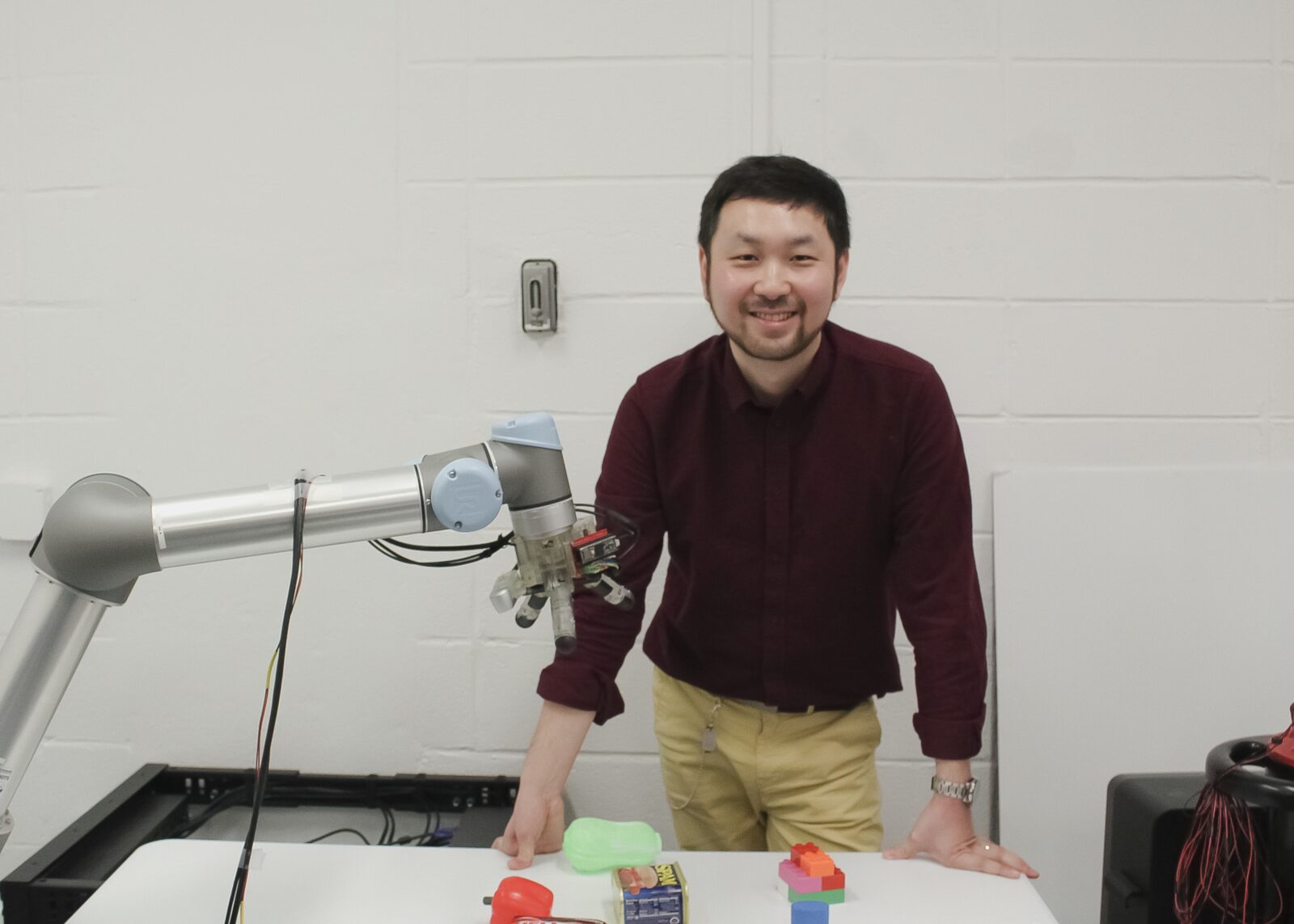
Long Wang is an Assistant Professor in the Department of Mechanical Engineering at Stevens Institute of Technology, part of the Charles V. Schaefer, Jr. School of Engineering and Science. He holds a Ph.D. in Mechanical Engineering from Vanderbilt University (2018), an M.S. in Mechanical Engineering from Columbia University (2012), and a B.S. in Mechanical Engineering from Tsinghua University (2010). His research focuses on building robots and intelligent machines for challenging environments, with expertise in telemanipulation, kinematic modeling, continuum robots, and robotic hand designs. Dr. Wang leads the Advanced Robot Manipulators Laboratory, which investigates applications in minimally invasive surgery, search and rescue operations, and remotely assisted tasks. Key research areas include compliant manipulator designs, collaborative robotics, and human-in-the-loop teleoperation systems. His recent publications demonstrate a strong focus on continuum robots, underwater manipulation systems, and surgical robotics. Trends show innovative approaches to admittance control, modular designs for aerial and marine applications, and educational robotics initiatives. Courses taught include Robot Manipulators (ME 650), Introduction to Modern Control Engineering (ME 621), and Engineering Graphics (E 120).
Professor Jonathan Leach leads the Quantum Optics and Computational Imaging group at Heriot-Watt University's School of Engineering & Physical Sciences. His experimental quantum optics research develops novel methods for generating, manipulating, and detecting quantum states of light for secure communication and ultra-sensitive sensing. Work bridges quantum information science and computational imaging, with applications including high-dimensional entanglement systems, quantum state measurement techniques, and fundamental limits of super-resolution imaging. Publications demonstrate advanced quantum imaging techniques, with recent focus on single-photon lidar enhancement, quantum ghost imaging, and structured light manipulation. Research consistently integrates quantum phenomena with computational methods. Switched On Award for Most Engaging Lecturer (2015) Group investigates quantum technologies for achieving performance advantages in computation, communication, and imaging beyond classical limits.
Dr. Wesley Freppel is a Research Fellow at Griffith University's Institute for Biomedicine and Glycomics, focused on molecular virology and virus-host interactions. He holds a Ph.D. in Virology and Immunology from INRS (Canada) and M.Sc. degrees from Aix-Marseille University and the University of Strasbourg (France). His research examines the replication dynamics of +ssRNA viruses, including flaviviruses and alphaviruses, and their manipulation of host cell processes like mitochondrial dynamics and metabolism. He leads multidisciplinary projects to develop antiviral therapies and optimize diagnostic methods. Education: Ph.D. Virology and Immunology, INRS, Canada M.Sc. Human Pathology, Aix-Marseille University, France M.Sc. Cellular Physiopathology, University of Strasbourg, France B.Sc. Cellular and Molecular Biology, University of Strasbourg, France Research Interests: +ssRNA viruses, flavivirus/alphavirus pathogenesis, cell metabolism, viral replication mechanisms, and antiviral drug development. His work bridges virology, cell biology, and biochemistry to address pandemic threats like SARS-CoV-2, Zika, and Ross River virus. Funded Projects: Includes grants from Griffith University and external agencies for studies on flavivirus-peroxisome interactions, panflaviviral therapeutics, and alphavirus-induced arthritis. Recent awards include travel grants to the American Society of Virology and Australasian Virology Society. Media Contributions: Authored articles on viral immunity, antiviral treatments, and pandemic responses for public health awareness. Contributed to optimizing SARS-CoV-2 saliva testing during the pandemic, achieving 20,000 weekly tests in Montreal hospitals. Advising & Grants: Current associate supervisor for a doctoral project on host-pathogen interfaces. Secured over AUD 300,000 in internal grants for virology research. Collaborates with Prof. Lara Herrero's lab, ranked #1 in Ross River virus research. Labs & Teams: Member of Griffith University's Institute for Biomedicine and Glycomics, part of a team advancing viral diagnostics and therapeutic strategies.
Dr. Guang Lu is a Lecturer at the Lucerne School of Business, affiliated with the Institute of Communication and Marketing (IKM) and its CC Communication & Marketing Technologies division. He holds a Ph.D. in Energy Science and Engineering from ETH Zurich (2016), an M.Sc. in Mechatronics from Southeast University (2010), and a B.Sc. in Mechanical Design from Southeast University (2007). His work bridges computational mechanics, marketing technologies, and AI-driven solutions for societal challenges. Dr. Lu’s research focuses on AI applications in elder care (e.g., emotion-aware chatbots), NLP for corporate culture analysis, and sustainability in e-commerce. He has pioneered studies on sharing economy dynamics, algorithmic nudging for eco-friendly consumer behavior, and greenwashing detection via ESG report analysis. His technical expertise spans computational fluid dynamics, granular mechanics (e.g., rockfall simulations), and multimodal emotion recognition systems. His career includes roles as a Computational Mechanics Engineer at WSL SLF (2017–2019), Researcher/Teaching Assistant at ETH Zurich (2010–2016), and Engineer at Southeast University’s Robotics Center (2007–2010). He has published over 39 peer-reviewed articles, with recent work emphasizing AI ethics in elder care technology and data-driven marketing strategies. Dr. Lu collaborates with industry partners like GPTW Switzerland AG and has conducted projects on corporate culture assessment, chatbot localization for German-speaking elderly populations, and algorithmic solutions for sustainable consumer choices. His research often integrates interdisciplinary methods, merging natural language processing with engineering systems to address modern business and societal challenges.
Dr. Usman Rauf is an Assistant Professor of Cybersecurity and Director of the Graduate Cybersecurity Program at Mercy University's School of Liberal Arts. He leads the CRISP Lab and holds a Ph.D. in Software & Information Systems from the University of North Carolina at Charlotte. His work focuses on insider threat detection, vehicular security, bio-inspired cybersecurity architectures, and privacy quantification in smart applications. He has contributed to federal grants and published in journals like IEEE Access and Future Generation Computer Systems. Education: Ph.D. in Software & Information Systems, University of North Carolina at Charlotte Research Interests: Insider threat detection using behavioral analytics and machine learning frameworks Vehicular network security and inter-vehicle communication protocols Bio-inspired cybersecurity architectures mimicking biological systems for resilience Privacy quantification methodologies in IoT and medical devices Formal methods for policy regulation and attack mitigation Publications Trends: Recent work emphasizes ML-driven threat detection frameworks (Employee Watcher, E-Watcher), formal approaches to insider attacks, and application of bio-inspired strategies. Emerging focus on Bluetooth Low Energy (BLE) network security and pandemic data analysis via AI/IoT integration. Advising & Grants: Served as senior personnel on federal grants for cybersecurity research. Advises students in graduate cybersecurity programs, focusing on project-based learning through courses like IASP 600/601. Labs & Teams: Heads the CRISP Lab, which develops cutting-edge cybersecurity solutions using hybrid frameworks and bio-inspired techniques.
Dr. Maximilian Stark is a Lecturer at the Institute of Communications, TU Hamburg. His research focuses on machine learning-driven advancements in communication systems, particularly applying the information bottleneck method to decoding algorithms, signal processing, and quantization techniques. His work bridges theoretical information theory with practical implementation challenges in coding and channel design. Key research areas include LDPC and polar codes optimization, low-bitwidth decoding architectures, and distributed signal processing frameworks. Recent publications emphasize adaptive learning systems for error resilience under quantization constraints and hardware-efficient receiver design. Dr. Stark's academic contributions span over 20 peer-reviewed articles since 2016, with a strong emphasis on integrating machine learning principles into traditional communication engineering problems. Notable themes include neural decoding paradigms, resource-constrained quantization strategies, and distributed information compression methods. No scientific awards explicitly listed. Academic advising details and lab affiliations are not provided in source materials.
Prof. George Karystinos is a Professor at the Technical University of Crete (TUC), School of Electrical and Computer Engineering (ECE), where he leads the Telecommunications Laboratory. His academic journey includes a Ph.D. in Electrical Engineering from SUNY Buffalo (2003) and a Diploma in Computer Engineering from the University of Patras (1997). He previously held a faculty position at Wright State University before joining TUC in 2005. His research focuses on communication theory, coding, adaptive signal processing, wireless systems, and neural networks. Key interests include spreading code design, interference suppression, adaptive antenna arrays, and noncoherent detection techniques. His work has led to advancements in power line communication, MIMO systems, and low-complexity decoding algorithms. Prof. Karystinos has received prestigious awards, including the 2003 IEEE Transactions on Neural Networks Outstanding Paper Award and the 2001 IEEE International Conference on Telecommunications Best Paper Award. He is an active member of IEEE societies in Communications, Signal Processing, and Information Theory. He teaches core courses such as Signals and Systems , Information Theory and Coding , and Probability and Random Processes . His laboratory emphasizes practical applications of theoretical concepts, with recent projects on smart photovoltaic systems and cascaded H-bridge converter control. His research spans 20+ years, yielding over 80 publications in top journals/conferences. Current efforts address challenges in IoT communication, noncoherent detection for RFID, and energy-efficient signal processing. He collaborates internationally on projects funded by Greek and EU research programs.
Aaron M. Yoder, PhD , is an Associate Professor jointly appointed in the Department of Biological Systems Engineering at the University of Nebraska–Lincoln (UNL) and the Department of Environmental, Agricultural and Occupational Health at the University of Nebraska Medical Center (UNMC). He devotes 10 % effort to UNL and 90 % to UNMC, directs or co-directs the Central States Center for Agricultural Safety and Health (CS-CASH) and Nebraska AgrAbility , and is a key faculty member of the Biomedical Engineering, Health, and Safety Systems emphasis area. Education & Certifications: PhD — field not explicitly stated in text, but research record indicates advanced training in agricultural safety/ergonomics/biomedical engineering. Research Interests: Yoder’s work sits at the intersection of engineering, public health, and behavioral science . He designs and evaluates technology-enabled interventions —from wearable sensors that monitor heat strain during field work to immersive virtual reality modules that teach youth safe tractor operation. His portfolio spans: ergonomic redesign of agricultural machinery for vulnerable populations (women, aging farmers, workers with disabilities); implementation-science approaches that translate evidence-based safety programs into real-world practice across U.S. states and low-middle-income countries; use of social marketing and narrative storytelling to shift attitudes and behaviors around roll-over protective structures (ROPS), all-terrain vehicles, and colorectal cancer screening in rural communities; real-time IoT dashboards for first responders and heavy-machinery operators that fuse environmental and physiological data to prevent injury and illness; mental health and substance-use surveillance among farming populations, with recent work in Nigeria and the Central States cattle-feeding sector. Publication Trends: Across the 15 most recent papers (2023-2025) a clear trajectory emerges: rigorous mixed-methods evaluation of large-scale safety interventions ; integration of wearable sensors, VR, and IoT into occupational health practice; and a growing global focus on low-resource settings. Heat-stress mitigation, cancer-screening promotion, and ATV/ROPS safety dominate the engineering–public-health interface. Scientific Awards & Recognition: No specific awards are enumerated in the supplied text. Funding, Leadership & Mentorship: Principal or Co-Investigator on numerous CDC/NIOSH and USDA-NIFA grants supporting CS-CASH, AgrAbility, and international collaborations. Leads multidisciplinary teams of engineers, epidemiologists, extension educators, and community partners across Nebraska, the Midwest, and sub-Saharan Africa. Active mentor to graduate students and post-doctoral fellows in Biological Systems Engineering and the College of Public Health (specific student names not provided). Labs & Centers: Yoder directs activities within the Central States Center for Agricultural Safety and Health (a CDC/NIOSH-funded Agricultural Safety and Health Center) and Nebraska AgrAbility (USDA-NIFA), leveraging state-of-the-art motion-capture, sensor fabrication, and VR development laboratories shared between UNL and UNMC.