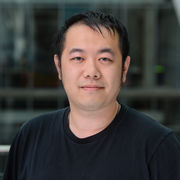
Earl T. CampbellView profile
Professor
- Architectures for fault-tolerant quantum computing
- Topological error correcting codes
- Magic states
- +5 more
Professor Earl T. Campbell is a Professor of Quantum Computation at the School of Mathematical and Physical Sciences, University of Sheffield, and serves as VP of Quantum Science at Riverlane. His research focuses on practical quantum technologies with capabilities beyond classical physics, particularly in fault-tolerant quantum computing. His educational background includes: Physics & Philosophy MSc (2001-2005, Bristol University) Quantum computing PhD (2005-2008, Oxford University) Professor Campbell's research centers on the central question 'What are the optimal blue-prints for large-scale, reliable quantum technologies?' His work spans architectures for fault-tolerant quantum computing, topological error correcting codes, magic states, gate synthesis, and Majorana fermions. His team designs protocols and software to operate future quantum computers reliably despite noise and decoherence, including development of error correction codes, magic state factories (which determine quantum computer processing speed), and algorithm compilation into machine-level commands. His recent publications demonstrate a strong focus on practical aspects of quantum error correction, with significant contributions to surface codes, homological product codes, and efficient decoding algorithms. His work bridges theoretical quantum information science with practical implementation challenges, aiming to reduce resource requirements for fault-tolerant quantum computing. His notable scientific achievements include: Royal Commission of Great Exhibition of 1851 fellowship (2008-2010) EPSRC early career Research Fellow (2015-present) Professor Campbell supervises PhD student Luke Heyfron and collaborates with postdoc Mark Howard. He has received significant grant funding including an EPSRC early career fellow project 'Towards fault-tolerant quantum computing with minimal resources' (EP/M024261/1, £675,867) and Royal Commission fellowship funding (~£100,000). He is an active member of the EPSRC Peer Review College and the Institute of Physics QQQ group Committee, and has organized the FTQT2016 workshop in Benasque, Spain.