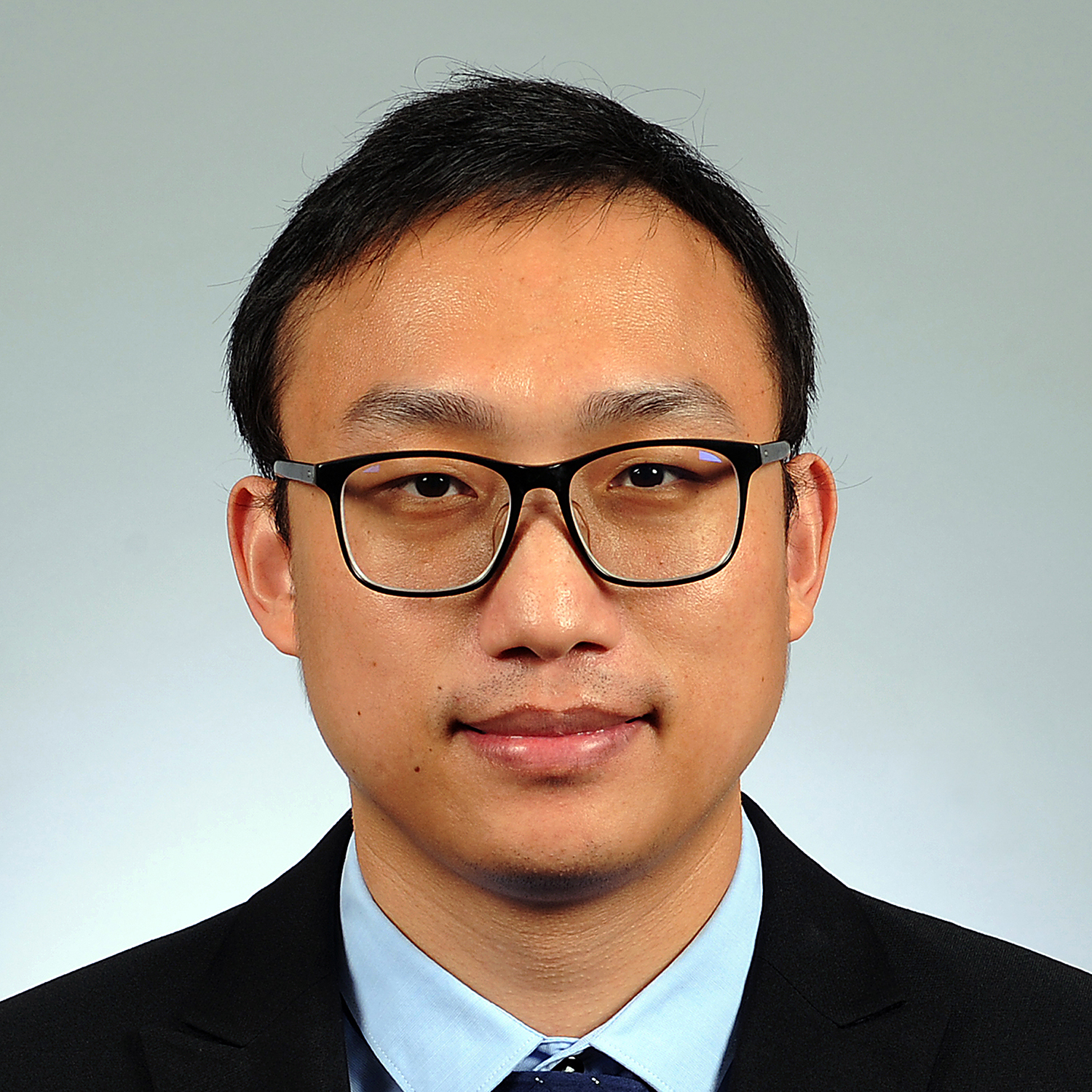
Fahim Hasan Khan is an Assistant Professor in the Computer Science and Software Engineering Department at California Polytechnic State University, San Luis Obispo (Cal Poly). His research focuses on computer vision, applied machine learning, and citizen science applications, with a special emphasis on environmental monitoring and education. He holds a PhD in Computer Science and Engineering from UC Santa Cruz, where he was advised by Professors Alex Pang and James Davis, and a Master's in Computer Science from the University of Calgary. Key research contributions include real-time rip current detection systems (RipFinder, RipScout), mobile citizen science platforms (SmartCS), and educational tools to engage high school students in STEM research. His work has received media attention for innovations in drowning prevention and environmental safety. Notable awards include the Best Poster Presentation Award at ICIAR 2019 and the Best of the Baskin School of Engineering Award at UC Santa Cruz in 2022. Dr. Khan collaborates extensively with industry and academic partners to develop practical solutions for challenges in marine safety, autonomous systems, and healthcare diagnostics. He actively mentors students and seeks to democratize access to machine learning tools through no-code platforms.
Kangkook Jee is an Assistant Professor in the Department of Computer Science at the Erik Jonsson School of Engineering and Computer Science, University of Texas at Dallas. His work focuses on cybersecurity, machine learning applications in security, data provenance analysis, and graph neural networks. He has developed systems like ProvIoT for IoT security and UTrack for enterprise user tracking. His research addresses challenges in adversarial machine learning, malware detection, and robust graph classification under adversarial conditions. He also explores federated learning, confidential computing, and blockchain-based secure data sharing. Key contributions include techniques for detecting stealthy attacks in IoT, improving graph neural network robustness against adversarial node modifications, and enhancing intrusion detection through provenance-based analysis. His work bridges theoretical advancements in machine learning with practical enterprise security solutions. Notable systems include AIQL for efficient attack investigation and SEAL for storage-efficient causality analysis in enterprise logs. Research trends across his publications emphasize combining provenance tracking with modern ML techniques to address evolving cybersecurity threats. Work in 2024-2025 focuses on decompilation challenges, federated edge-cloud security, and graph abstraction methods for robust classification. No scientific awards are explicitly listed in the provided texts. His grants and advising activities are not detailed here, though his extensive publication record suggests active collaborative research. His lab works on tools like Nodoze for automated threat triage and APTrace for agile causality analysis in enterprise systems.
Fan Yao is an Associate Professor in the Department of Electrical and Computer Engineering at the University of Central Florida's College of Engineering and Computer Science. She received her Ph.D. in Computer Engineering from The George Washington University in 2018 and currently leads the Computer Architecture and Systems Research (CASR) lab. Her research focuses on the intersection of computer architecture, security, and machine learning, with particular emphasis on hardware-based security vulnerabilities and defenses. Dr. Yao's research interests span computer architecture, hardware and system security, AI security, energy-efficient computing, and cloud computing. Her work addresses critical security challenges in modern computing systems, particularly focusing on microarchitecture attacks, hardware-based model tampering in deep learning systems, and information leakage threats in emerging non-volatile memory systems. She has developed innovative defense mechanisms against cache timing channels, branch predictor vulnerabilities, and GPU-based side channels. Her recent publications demonstrate a strong focus on AI security (particularly Deep Neural Network vulnerabilities), hardware security (including cache and branch predictor attacks), and secure memory architectures. The research shows an evolution from traditional computer architecture topics toward the security implications of AI hardware and emerging memory technologies, with increasing emphasis on practical attacks and defenses in real-world systems. NSF GW I-Corps Site Grant Award, 2018 Best Dissertation Award, GWU, 2018 The Norris & Betty Hekimian Engineering Endowment Fellowship, GWU, 2017 Top Picks in Hardware and Embedded Security, 2019 NSF CAREER project award, 2024 Dr. Yao currently leads multiple NSF-funded research projects including 'Understanding and Taming Deterministic Model Bit Flip Attacks in Deep Neural Networks' (NSF SaTC, 2020-2023), 'Towards Secure-By-Design Integration of Emerging Non-Volatile Memory in Future System' (NSF CNS, 2020-2023), and 'Architecting Secure-by-Design Memristor-Based Memories' (NSF CNS, 2019-2022). She has successfully mentored numerous PhD students, many of whom appear as first authors on top-tier conference publications, demonstrating her commitment to graduate education and research mentorship. As the leader of the CASR lab, Dr. Yao oversees a vibrant research group focused on building secure-by-design, efficient, and advanced future systems through novel techniques spanning hardware, computer architecture, and systems. The lab actively publishes at top computer architecture and security conferences including ISCA, MICRO, HPCA, IEEE S&P, and USENIX Security, with multiple papers accepted to these venues annually. The group has developed several influential tools and frameworks for security analysis, including proof-of-concept code for BranchSpec exploits that has been widely cited in the hardware security community.
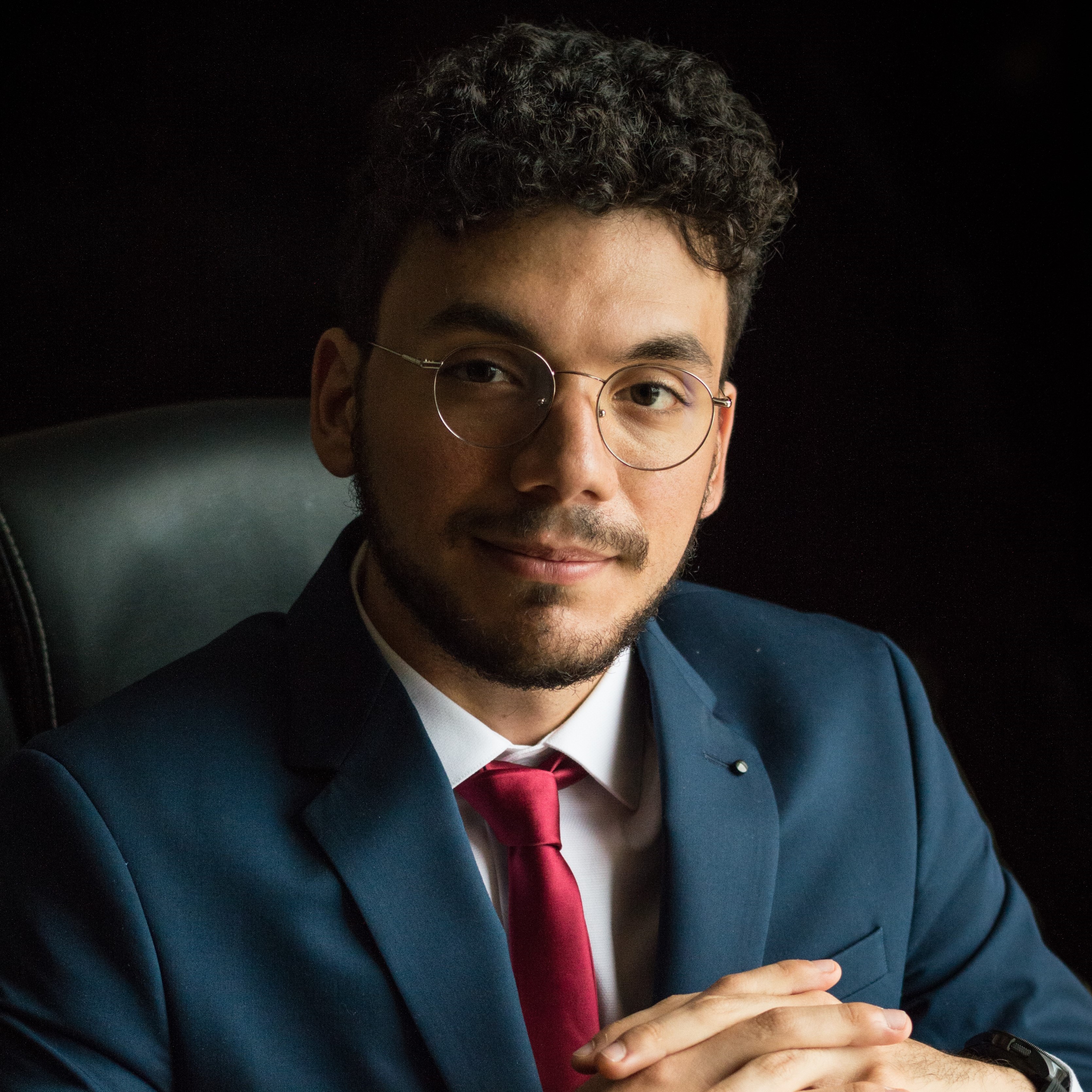
Francesco Greco is a Research Fellow and Ph.D. student at the University of Bari Aldo Moro's Computer Science Department, actively contributing to the Interaction, Visualization, Usability & UX (IVU) Laboratory under Prof. Maria Francesca Costabile. He completed a visiting research position at King's College London's Cybersecurity (CYS) group from October 2023 to March 2024 under Prof. Luca Viganò's supervision. His academic qualifications include: Master's degree in Computer Science (2022, University of Bari, full marks with honors) Bachelor's degree in Computer Science and Digital Communication (2020, University of Bari - Taranto, full marks with honors) Greco's research centers on Human-Computer Interaction and Usable Security , with specialized expertise in End-User Development , Internet of Things security , Computer Vision , and eXplainable AI for cybersecurity . His work develops human-centered security tools that translate technical findings into actionable user protections, particularly through phishing detection systems that generate intuitive explanations. Analysis of his 15 recent publications (2023-2025) reveals a cohesive research trajectory focused on XAI-driven security interventions . Key themes include timing optimization for phishing warnings, human factors in cybersecurity incidents, and LLM-based educational tools. His work consistently bridges theoretical HCI principles with practical security applications, as demonstrated by tools like APOLLO for phishing email analysis. Greco actively collaborates within the IVU Lab ecosystem and maintains international partnerships, including his recent work at King's College London. His research output demonstrates significant contributions to usable security frameworks and cybersecurity education methodologies.
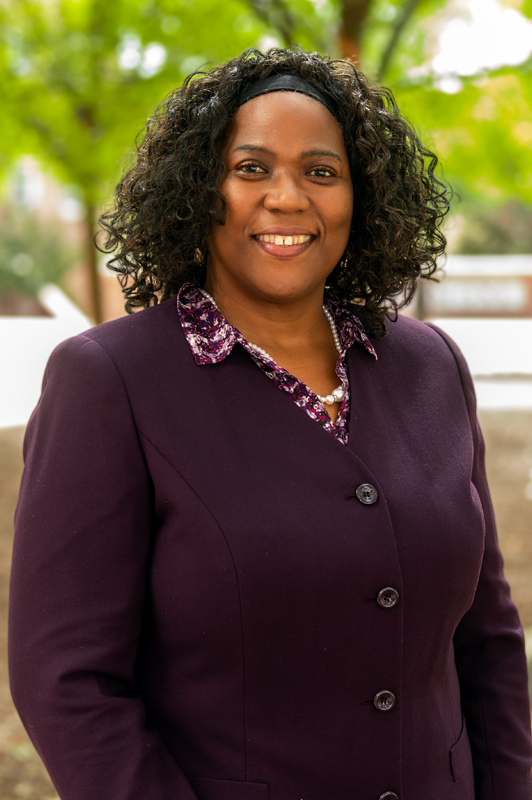
Cheryl Seals is the Charles W. Barkley Endowed Professor in the Department of Computer Science and Software Engineering at Auburn University's College of Engineering. She holds a Ph.D. in Computer Science from Virginia Tech, with additional degrees from Virginia Tech, North Carolina A&T State University, and Grambling State University. Her research focuses on AI ethics, natural language processing (NLP), virtual reality (VR) applications in healthcare and education, and promoting diversity in STEM. She leads initiatives like the NSF-funded AI ethics education project and the Institute for African Americans in Computing Sciences (IAAMCS). Notable awards include the Charles W. Barkley Professorship (2020) and participation in Drexel’s ELATES fellowship program. Her work bridges technology and social impact, including VR-based empathy training for medical students and interventions to mitigate pandemic-induced learning loss. She collaborates on interdisciplinary projects, such as automated grading tools for speech therapy and pavement crack recognition systems. Education: Ph.D. Computer Science, Virginia Tech M.S. Computer Science, Virginia Tech M.S. Software Engineering, North Carolina A&T State University B.S. Computer Science, Grambling State University Research Interests: AI Ethics and STEM Education Reform NLP for Sentiment Analysis and Hate Speech Detection VR Applications in Healthcare Training and Empathy Development Computing Equity and Underrepresented Groups Interdisciplinary Tools for Education and Accessibility Awards and Recognition: Charles W. Barkley Endowed Professor (2020–2025) ELATES Fellowship Participant (2024) Grants and Collaborations: NSF Grant: Integrating AI Ethics into STEM Curricula Collaborative Research: Evolution of IAAMCS National Science Foundation (NSF) AI Ethics Initiative Labs and Affiliations: Center for Artificial Intelligence and Cybersecurity Engineering McCrary Institute for Cyber and Critical Infrastructure Security
Lane Harrison is an Associate Professor in the Department of Computer Science at Worcester Polytechnic Institute (WPI), where he directs the Visualization and Information Equity lab (VIEW). His research leverages cognitive and perceptual principles to improve information visualization and visual analytics systems, with critical applications in cybersecurity and health-risk communication for high-stakes decision-making. His educational background includes a BS (2009) and PhD (2013) in Computer Science from the University of North Carolina, Charlotte. Prior to WPI, he was a Postdoctoral Researcher at Tufts University's Visual Analytics Lab. Harrison's research focuses on empirical evaluation of visualization techniques , investigating how cognitive principles can optimize user performance with visual representations. He develops design guidelines for effective visualizations in domains like cybersecurity and healthcare, while creating adaptive systems that integrate models of user abilities. His work bridges theoretical foundations with practical applications to address real-world challenges in data interpretation. Analysis of his 2016-2021 publications reveals consistent emphasis on user-centered evaluation methodologies , including crowdsourcing and controlled experiments. Key trends include quantifying exploration behaviors in web visualizations, addressing cognitive biases in data reproduction, and developing healthcare-focused analytics for drug interactions and risk communication. His research demonstrates strong interdisciplinary connections between visualization, cognitive science, and domain-specific applications. His scientific recognition includes: Best Paper Award at ACM CHI 2016 for adaptive interface research Harrison secures significant research funding including an NSF Grant (2022) for visualization studies and participates in an 11-school AI collaboration for intelligence professionals (2025). He teaches data visualization and web programming courses, mentoring students through the VIEW lab on projects applying visualization techniques to social issues and scientific domains. He directs the VIEW lab at WPI, which develops computational methods to understand how people engage with data visualizations while emphasizing equitable information access. Current projects integrate user modeling with visualization systems to optimize design for diverse cognitive abilities and application contexts.
Uwe Meyer-Baese is an Associate Professor in the Electrical and Computer Engineering Department at the FAMU-FSU College of Engineering. He holds a Ph.D. (Dr.-Ing. habil) from Darmstadt University of Technology, Germany. His research focuses on Digital Signal Processing with FPGAs, VLSI design, and medical imaging applications. He has authored over 100 publications, 5 books, and holds 3 patents. He has been recognized with awards such as the Humboldt Fellowship (2009) and the FAMU-FSU Teaching Award (2007). Education History: Dr.-Ing. habil (Venia Legendi), Darmstadt University of Technology, Germany, 2003 Ph.D. (Dr. Ing.), Darmstadt University of Technology, Germany, 1995 M.S., Darmstadt University of Technology, Germany, 1989 Research Interests: FPGA-based embedded systems and real-time DSP Low-power VLSI architectures Medical image processing (e.g., breast MRI, brain tumor analysis) Hardware security and intellectual property protection Graph theory applications in biological networks Recent work includes advancements in FPGA implementations for microprocessor systems, brain network controllability studies, and AI-driven medical diagnostics. His lab focuses on bridging hardware design with biomedical applications, emphasizing practical implementations through FPGA platforms. Awards: Max-Kade Award in Neuroengineering (1997) ECE Department Research Award (2005) Humboldt Fellowship (2009) FAMU-FSU Teaching Award (2007) He has advised over 60 master’s theses and contributed to major grants in FPGA-based medical systems. His book Digital Signal Processing with Field Programmable Gate Arrays is a widely used textbook in the field.
Manolis Koubarakis is a Professor and Director of Graduate Studies at the Department of Informatics and Telecommunications, National and Kapodistrian University of Athens. He is affiliated with the Archimedes Unit at Athena Research Center and is a member of ELLIS. His research focuses on Artificial Intelligence and Data Science, particularly in Linked Geospatial Data, Earth Observation, and Knowledge Graphs. Education: PhD in Computer Science (National Technical University of Athens), M.Sc. in Computer Science (University of Toronto), and B.Sc. in Mathematics (University of Crete). Research Interests: His work spans AI applications in geospatial data, entity resolution, ontology-based data access (OBDA), and semantic web technologies. He leads projects like ExtremeEarth (AI for Copernicus data) and LEO (linked Earth Observation data). Awards: 2015: Fellow of the European Association of Artificial Intelligence (EurAI) 2022: Best Demo Award at CIKM for Copernicus App Lab Advising & Grants: Supervises students in AI and data science. Collaborates on EU-funded projects like BigDataEurope and participates in initiatives like the Standing Scientific Committee for AI in Greece's justice system. Labs & Teams: Heads the AI Lab (ai.di.uoa.gr) and contributes to the MaDgIK group, focusing on data and knowledge management systems.
Dr. Kevin Schneider is a Professor in the Department of Computer Science at the University of Saskatchewan. His research focuses on software architecture, evolution, analysis, and visualization, with notable work in quantum computing applications and machine learning. He also explores collaborative software teams and domain-specific languages to enhance development processes. Education: Ph.D., Computing and Information Science, Queen’s University (2000) Research Associate, Computing and Information Science, Queen’s University (1991–94) M.Sc., Computing and Information Science, Queen’s University (1990) B.Sc.(Hon), Computational Science, University of Saskatchewan (1980) Research interests include software design principles, maintenance strategies, and the integration of AI/quantum computing into software engineering. He emphasizes reproducibility in scientific workflows and tools like VizSciFlow. His work often bridges theory and practice, addressing challenges in code clone stability, user feedback management, and healthcare-related machine learning frameworks. Scientific Awards: Most Influential Paper at SCAM 2001 for his work on software engineering via source transformation. Advising and grants: While no specific advisees are listed, his research involves large-scale projects such as the Nutrient App and automated polyp segmentation tools. He collaborates on grants related to quantum computing applications and cloud-based software systems. Labs and teams: His work centers on collaborative scientific data analysis groups and developing tools for real-time groupware systems in complex workflows. He contributes to projects like CloneCognition and FSECAM, aiming to improve software design and maintenance through advanced analytics.
Damien Raftery is a Lecturer in the Department of Business at South East Technological University (SETU Carlow), where he has served since 1995. He holds roles as eLearning Development Officer in the Teaching and Learning Centre (since 2008) and External Examiner. His academic leadership includes Programme Directorships, Academic Council membership (2013-2015), and chairing the Teaching, Learning & Support Services Committee. Education: BSc (Hons) and MSc in Mathematical Science from University College Dublin (1994-1995), followed by an MA in Management in Education (Waterford Institute of Technology, 2003) and an MA in Educational Studies (University of Sheffield, 2017). Research focuses on higher education pedagogy, with emphasis on generative AI's impact on teaching/assessment, blended/flipped learning methodologies, and quantitative literacy. He actively contributes to educational technology through roles in the Irish Learning Technology Association (founding treasurer, conference organizer) and co-developed the StatsSkills web app for statistics education. His recent work addresses AI-driven challenges in assessment, VLE optimization, and digital pedagogy innovations. Collaborative efforts include organizing the 2024 Digital Education Conference and publishing on AI ethics in academic settings.
Timothy Verstynen is a Professor of Psychology and Neuroscience Institute at Carnegie Mellon University, affiliated with the Dietrich College of Humanities and Social Sciences. His research focuses on cognitive neuroscience, cognitive science, computational modeling, and learning science. He investigates how neural pathways regulate action planning, skill learning dynamics, and structure-function relationships in the brain. His work integrates psychophysics, computational models, and neuroimaging techniques (fMRI, TMS, diffusion imaging). Key research themes include: 1) Action selection and stopping mechanisms under sensory input; 2) Neurobiological bases of skill acquisition timelines; 3) White matter architecture's role in cognitive functions. Recent studies explore links between brain structure, cardiovascular health, and decision-making processes using multimodal imaging and machine learning. Notable publications address cortico-basal ganglia-thalamic circuits' role in decision policies, stress-brain connectivity, and reward-based learning. His CoAx Lab develops tools like CBGTPy for modeling decision-making systems. Research spans neuroimaging methodological advancements (e.g., local connectome fingerprinting) and translational health neuroscience projects.
Associate Professor Benjamin Turnbull is Deputy Head of School at UNSW Canberra's School of Systems & Computing. His research focuses on cybersecurity, simulation, and emerging technologies, aiming to develop decision support systems for cyber resilience. He leads large-scale research projects funded by organizations like CSIRO, Australian Defence Force, and the US Naval Research Laboratory, totaling over $3 million AUD in grants. Teaching contributions include co-creating the Bachelor of Cyber Security program and directing multiple postgraduate cybersecurity offerings. His educational design emphasizes industry-relevant courses, from undergraduate to executive programs like the UNSW Online Cyber Security Masters. He has extensive experience in curriculum design, content development, and online education. Research interests span cyber situation awareness, secure simulation platforms, and automated learning from big datasets. Notable projects include the UNSW-MG24 microgrid cybersecurity dataset and frameworks like OQFL (quantum-based federated learning) for intelligent transportation systems. His work bridges theory and practice, with outputs including software tools and policy recommendations for cyber resilience in critical infrastructure. Key collaborations include the Cyber Cooperative Research Centre and DST Group. He has authored over 100 peer-reviewed publications, focusing on IoT security, blockchain-enabled learning, and cyber-physical-social systems resilience. His grants emphasize applied research with direct societal impact, such as mitigating supply chain cyber risks and enhancing microgrid cybersecurity.
Jonathan Skelton is a Senior Lecturer in Computational and Theoretical Chemistry at the University of Manchester's School of Chemistry. He holds a Ph.D. in Computational Chemistry from the University of Cambridge (2010–2013) and a B.A. and M.Sc. in Natural Sciences from Trinity College, Cambridge (2006–2010). His research focuses on lattice dynamics and computational modeling of materials, particularly thermoelectrics, to enhance energy efficiency and sustainability. Education Ph.D. in Computational Chemistry, University of Cambridge (2010–2013) M.Sc. and B.A. Natural Sciences, Trinity College, University of Cambridge (2006–2010) Research Interests : Lattice dynamics, density-functional theory (DFT), thermoelectric materials, thermal transport, and computational materials design. His work emphasizes structural dynamics' role in material properties and the development of open-source tools for broader accessibility. Recent Research Trends : Recent publications explore thermoelectric properties of oxides (e.g., LaCoO₃), lanthanide frameworks, and 2D materials. His studies highlight advances in thermal conductivity reduction and phonon engineering for energy applications. Awards & Memberships : Associate Fellow of the UK Higher Education Academy, Member of the Royal Society of Chemistry. Grants & Supervision : Advised multiple PhD theses on topics like actinide systems and functional perovskites. Active in reviewing and conference participation. Labs & Collaborations : Works on open-source software development and collaborates globally on energy materials research.
Mike Carbonaro is a Professor in the Department of Educational Psychology at the University of Alberta's Faculty of Education. He holds multiple advanced degrees including a Ph.D. (Educational Psychology), M.Sc. (Computing Science), and interdisciplinary credentials in Education. His research focuses on educational technology integration, robotics in K-12 education, computational thinking, and interprofessional health sciences education. He pioneered Canada's first university-level course on LEGO robotics for K-12 and contributed to a major simulation-based healthcare training grant. He co-developed the ScriptEase project and collaborated on GRAND initiatives like BELIEVE and HLTHSIM. Education: Ph.D. Educational Psychology, University of Alberta (1997) M.Sc. Computing Science (AI focus), University of Alberta (1993) B.A. Computer Science, York University (1991) M.Ed. Educational Psychology, University of Alberta (1988) B.Ed. Secondary Biological Sciences, University of Alberta (1984) Research Highlights: Dr. Carbonaro's work bridges technology and education across multiple domains. Key areas include: Blended learning models Health sciences interprofessional training Indigenous education technology integration Computational thinking curriculum development He has led projects integrating robotics and digital games into school curricula, and co-developed the Aboriginal Teacher Education Program (ATEP) with Blue Quills First Nations College. Teaching & Leadership: Coordinator for the Graduate Certificate in Educational Technology Teaches courses like EDCT 400 (Lego Robotics) and EDU 210 (Technology in Education) Developed new blended delivery models university-wide Grants & Collaboration: Over $1M in funded projects, including simulation-based healthcare training and interprofessional education initiatives. Collaborations span computing science, health sciences, and Indigenous education sectors. Future Work: Focus on K-12 computational thinking integration, health sciences simulation development, and technology equity in Indigenous education contexts.
Behrouz Far is a Professor at the University of Calgary’s Schulich School of Engineering, Department of Electrical and Software Engineering. He holds a PhD in Artificial Intelligence from Chiba University, Japan (1990) and degrees from the University of Teheran including a B.S. in Electrical Engineering (1983) and M.S. in Electrical Engineering (1986). His research focuses on AI applications in medical imaging, software engineering, transportation systems, and data mining. He has contributed to advancements in fundus image analysis, deep learning models for disease detection, and intelligent traffic management systems. Dr. Far has received notable awards such as the 2017 SSE Achievement Award and the AITF-AMA Tier-2 Chair in Smart Multimodal Transportation Systems (2013). His work bridges theoretical AI with practical healthcare solutions, including tools like LETTA for traffic management systems and methodologies for detecting ocular lesions using CNNs. He teaches courses on software testing, reliability engineering, and agent-based systems. His publications highlight contributions to medical diagnostics (e.g., choroidal nevi classification), transportation optimization (e.g., real-time traffic signal control), and machine learning explainability. Collaborative research includes projects on biopotentiostat biosensors for SARS-CoV-2 detection and data mining for cancer patient stratification.