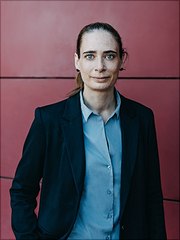
Rui Teixeira is an Assistant Professor in the School of Civil Engineering at University College Dublin (UCD). He leads UCD's Centre for Critical Infrastructure Research (CCIR) and focuses on Uncertainty Quantification, Safety, and Risk in civil engineering systems, with applications to infrastructure resilience. His research emphasizes reliability analysis, multi-fidelity modeling, and AI-driven risk assessment. Education: MSc in Civil Engineering, University of Porto, Portugal PhD in Civil Engineering, Trinity College Dublin Professional Certificate in University Teaching and Learning, UCD Research Interests: Development of novel reliability analysis techniques Resilience of infrastructure systems Artificial intelligence applications for risk assessment Probabilistic system evaluation and safety standards Grants & Projects: Smart Enforcement of Transport Operations (SETO), Horizon Europe (2023–2026) Optimality-Tracking Civil Engineering Systems, Enterprise Ireland (2023–2025) Floating Offshore Wind Dynamic Cables (FlOWDyn), Sustainable Energy Authority of Ireland (2024–2027) Teaching: Coordinates courses such as 'Civil Engineering Systems' and 'Design of Structures 1'. Labs/Teams: Director of the Centre for Critical Infrastructure Research (CCIR), focusing on interdisciplinary approaches to infrastructure resilience.
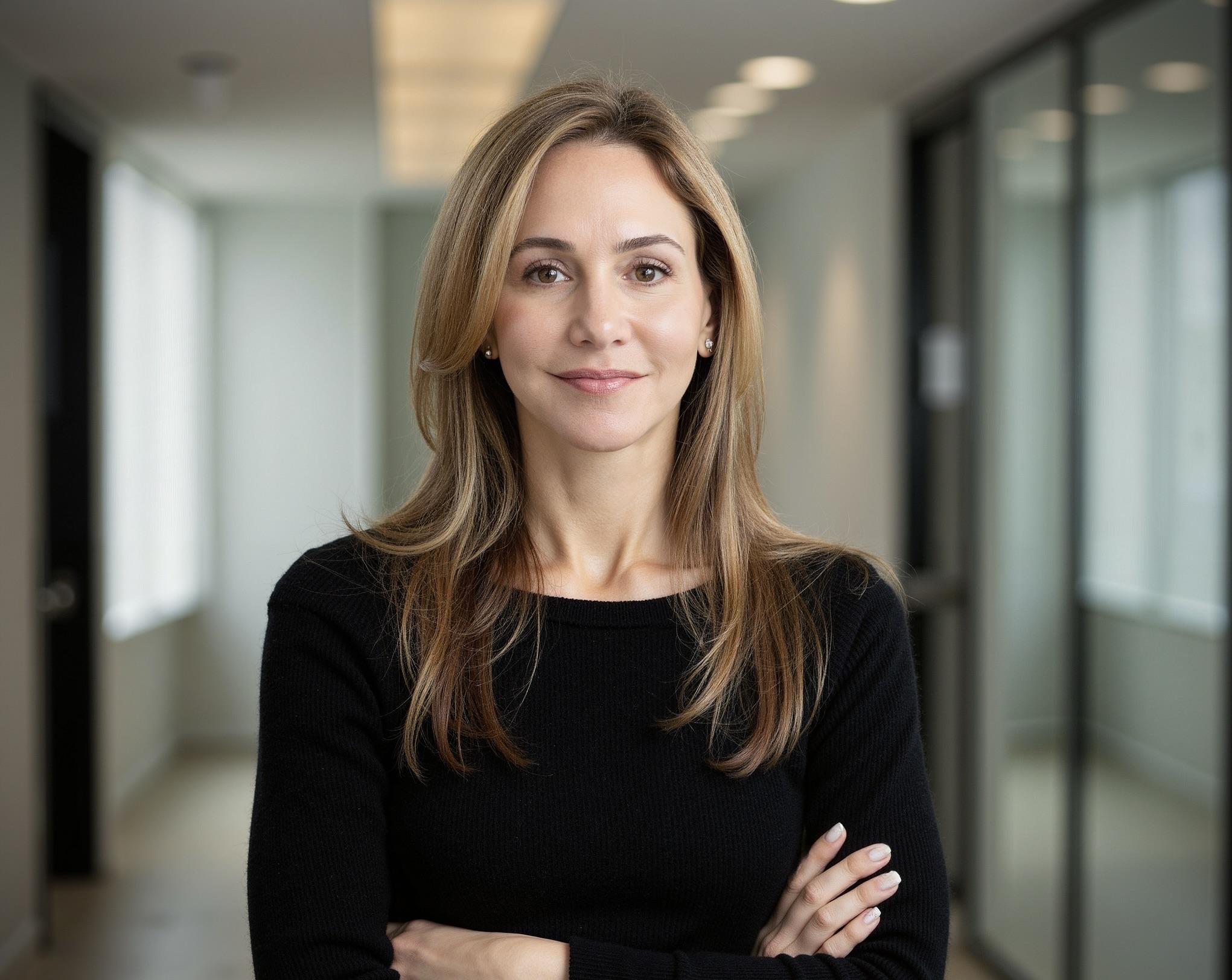
Prof. Dr. Anne Lauscher is an Associate Professor of Data Science at the University of Hamburg Business School, specializing in fair, inclusive, and sustainable conversational AI systems. Her research focuses on improving algorithmic fairness through demographic factors in NLP systems and exploring ethical implications of large language models. She holds a PhD from the University of Mannheim, where her work on computational argumentation was awarded summa cum laude, and has conducted research at Grammarly and the Allen Institute for AI. Key contributions include gender-fair machine translation datasets (e.g., Building Bridges), bias detection frameworks (e.g., SHADES), and multilingual benchmarking tools like MultiQ. Her work has been recognized with the Maria Gräfin von Linden-Award and inclusion in the '100 Brilliant Women in AI Ethics' list. Research spans ethical NLP, multilingual AI, and societal impacts of AI technologies. Education: PhD in Data and Web Science (University of Mannheim, 2021), Postdoc at Bocconi University's NLP group (2021-2022). Academic roles include adjunct positions and international collaborations across Europe and the US. Research Interests: Conversational AI fairness, multilingual NLP systems, ethical AI evaluation, bias mitigation in LLMs, and interdisciplinary applications of machine learning in scientific discovery. Publications (select highlights): Over 55 peer-reviewed works in top-tier venues like ACL, EMNLP, and AAAI. Recent focus on LLM hallucination analysis, cross-cultural NLP benchmarks, and gender-neutral language resources. Awards: 2021 Maria Gräfin von Linden-Award (Baden-Württemberg), 2023 '100 Brilliant Women in AI Ethics', 2022 Dissertation Award Nominee (GI). Labs/Teams: Leads the UHH Data Science Research Group, collaborating with industry partners like Grammarly and academic institutions worldwide. Active in initiatives promoting gender equity in STEM and sustainable AI development.
Roles and Affiliations: Assistant Professor of Computer Science and Data Science at Brown University. Affiliated with Brown's Data Science Institute and Science, Technology and Society program. Holds affiliations with Harvard's Berkman Klein Center for Internet & Society and Petrie-Flom Center for Health Law Policy. Education: PhD (2023), MS (2021) in Computer Science from Cornell University. Postdoctoral training at Harvard (2023-2024) in internet law and computation research. Earlier degrees include an MPS from NYU (2015), MA from Columbia (2005), and BA from NYU (2002). Research Focus: Specializes in digital safety, cybersecurity for vulnerable populations, and sociotechnical systems. Key areas include technology-facilitated abuse prevention, youth digital literacy, and ethical AI design. Explores intersections of technology with healthcare, privacy, and legal systems. Key Contributions: Published 12 peer-reviewed articles on IPV tech interventions, youth digital safety, and mHealth apps. Recent work addresses AgeTech misuse and asylum seeker digital tools. Teaches Accessible and Inclusive Cybersecurity and Privacy . Awards: 2023 CHI Reviewer Recognition, 2018 ACM CHI Best Paper Award, and 2017 ACM CSCW Diversity Award. Recipient of Meta's prestigious PhD fellowship (Top 1.8%). Grants & Labs: Collaborates on projects involving clinical security protocols, VR safety, and digital health equity. Engages with interdisciplinary teams across computer science, law, and public health sectors.
Dr. Jackie Cha serves as an Assistant Professor in the Department of Industrial Engineering within Clemson University's College of Engineering, Computing and Applied Sciences. Her research bridges human factors engineering with healthcare innovation, focusing on surgical robotics, physiological signal analysis, and wearable medical technologies to enhance clinical performance and safety. Her academic foundation includes advanced degrees from leading institutions: Ph.D. in Industrial Engineering from Purdue University M.S.E. in Biomedical Engineering from the University of Michigan B.S.E. in Biomedical Engineering from the University of Michigan Cha's research program centers on quantifying human performance in high-stakes medical environments through sensor-based metrics. She investigates nontechnical skills in surgical teams, mental workload during robotic procedures, and ergonomics of exoskeleton implementation in operating rooms. Her work integrates physiological signals, eye-tracking, and proximity sensors to develop objective assessment tools for surgical proficiency and team dynamics. Analysis of her 2023-2025 publications reveals consistent thematic focus on human-robot collaboration in surgery, with emerging trends in AI-driven workload detection (s-DResNet), neural correlates of surgical expertise, and environmental factors affecting robotic surgery outcomes. Key methodological approaches include scoping reviews of human-robot interaction metrics, mixed-methods evaluations of exoskeleton efficacy, and extended reality applications for nontechnical skills training. She leads the ECHO Lab (Engineering for Clinical and Human Outcomes) at Clemson, which develops translational solutions for healthcare human factors challenges. Her lab's work spans from fundamental physiological signal analysis to applied interventions in operating rooms and emergency medical settings.
Dr. Sudeep Hegde is an Assistant Professor in the Department of Industrial Engineering at Clemson University, where he also serves as a Faculty Scholar in the Clemson University School of Health Sciences Research (CUSHR). His research focuses on proactive organizational learning, human-AI collaboration, and remote physiological monitoring, with applications in healthcare, education, and transportation. He holds a Ph.D. in Industrial and Systems Engineering from the University of Buffalo (2015), an M.S. from the University at Buffalo (2010), and a B.S./M.S. from Ramaiah Institute of Technology in India (2007). His professional experience includes roles at Texas A&M University, the State University of New York at Buffalo, and Harvard Medical School. Hegde’s work emphasizes resilience engineering, cognitive systems, and applied ergonomics. Notable research contributions include studies on organizational adaptive capacity during crises, healthcare workflow optimization, and leveraging AI for healthcare decision-making. He teaches courses such as Human Factors Engineering and Cognitive Systems and Resilience Engineering. Key research thrusts include: Proactive organizational learning frameworks Human-AI teaming for large-scale learning Remote physiological monitoring in high-stress environments Resilience in healthcare systems and emergency response Past grants and collaborations include studies on pandemic response strategies, ED physician workloads, and biofeedback applications for mental health. His interdisciplinary approach bridges systems engineering, human factors, and healthcare innovation.
Dr. M.Z. Naser is an Assistant Professor in the Glenn Department of Civil Engineering at Clemson University. His research focuses on causal and explainable machine learning methodologies applied to structural engineering, materials science, and fire safety. He holds a PhD from Michigan State University and an M.S. from the American University of Sharjah. Naser teaches courses such as Machine Learning for Civil Engineers and Structural Fire Engineering, emphasizing interdisciplinary innovation. His work bridges data-driven analysis with domain-specific knowledge to address challenges in resilient infrastructure design, including fire-resistant materials, structural retrofits, and AI-driven decision-making. Education: PhD, Michigan State University; M.S., American University of Sharjah Research Themes: Explainable AI, Fire Engineering, Structural Materials, Causal Inference Key Projects: Developing SPINEX framework, wildfire classification models, and cognitive infrastructure systems Recent publications analyze over 1000 fire tests to uncover spalling mechanisms, explore synthetic fire tests via GANs, and benchmark automated ML platforms. His work on causal diagrams for civil engineers and firefighter algorithms highlights contributions to both theory and practical applications. Naser also advocates for integrating AI into engineering education, emphasizing ethical and transparent model deployment.
Justin Hollander is a Professor of Urban and Environmental Policy & Planning at Tufts University, affiliated with the Graduate School of Arts and Sciences. He earned a PhD from Rutgers University, an MRP from UMass Amherst, and a BA from Tufts. His research focuses on urban redevelopment, cognitive urbanism, and the intersection of technology with planning. Dr. Hollander has authored 11 books and over 70 journal articles, with grants from organizations like the U.S. Department of State and the Lincoln Institute of Land Policy. He serves as Editor-in-Chief of the Journal of Planning Education and Research and hosts the Cognitive Urbanism podcast. Research interests include cognitive responses to urban environments, biometric tools in design, and policy responses to urban shrinkage. Notable publications address military dimensions of urban planning, AI-driven public art analysis, and Mars colonization. Awards include the 2025 William R. and June Dale Prize. He teaches courses on urban studies, real estate development, and thesis guidance. Professional activities include conference presentations and media contributions to outlets like NPR and The New York Times. As director of the Urban Attitudes Lab, he explores biometric and digital tools for urban analysis. Ongoing work includes studies on climate hazards in Addis Ababa, bot-driven online planning discourse, and post-pandemic urban futures.
Dr. Mojgan A. Jadidi serves as Associate Professor in the Teaching Stream and Director of Common Engineering & BSc Science within the Department of Civil Engineering at York University's Lassonde School of Engineering. A Professional Engineer (P.Eng) and founder of the GeoVA Lab, she leads research at the intersection of geospatial analytics, digital infrastructure, and innovative engineering education aligned with UN Sustainable Development Goals. Education: PhD in Geomatics, Université Laval (2014) MSc in Earthquake and Seismology Engineering, ROSE Center (Italy) & Université Joseph Fourier (France) BSc in Civil-Survey Engineering, Iranian University of Science and Technology Research Focus: Her pioneering work in Geospatial Visual Analytics spans 2D/3D environments, Building Information Modeling (BIM) and 3D GIS integration, and Spatial Quantum Computing applications for smart cities. She develops Infrastructure Digital Twins using sensor data fusion while revolutionizing engineering education through gamification and augmented/virtual reality pedagogies that transform complex spatial concepts into immersive learning experiences. Research Trends: Recent publications (2021-2023) demonstrate convergent innovation across three domains: (1) Building energy optimization through BIM-graph analytics, (2) Transportation safety via AI-driven situational awareness, and (3) Educational technology using VR sandboxes and visual-verbal comics. These works consistently integrate quantum computing principles and UN SDG frameworks to solve urban sustainability challenges. Scientific Recognition: ASEE Zone III Best Paper Award (2023) ASEE Saint Lawrence Best Research Paper & Poster (2022) 3D GeoInfo Conference Best Paper (2018) NSERC Postdoctoral Fellowship (2016) ESRI Student Award (2011) Erasmus Mundus Scholarship (2006) Research Leadership: As Associate Director of York's ESRI Center of Excellence, she manages multi-source funding from NSERC, Mitacs, and York University internal grants. Her professional service spans global organizations including ISPRS Commission IV (Secretary), IEEE Women in Engineering (Member), PEO Etobicoke (Chair), and buildingSMART Canada (Committee Member), driving standards for BIM and digital twin implementation in urban infrastructure. Lab Innovation: The GeoVA Lab develops cutting-edge tools including the TopoSurvey Game for immersive surveying education, PAN-Lassonde XR Sandbox for virtual lab experiences, and quantum computing frameworks for bike-sharing optimization, establishing new paradigms in spatial data interaction and engineering pedagogy.
Farokh B. Bastani is a Professor of Computer Science at the University of Texas at Dallas (UTD), affiliated with the Erik Jonsson School of Engineering and Computer Science. He holds a Ph.D. from the University of California, Berkeley. His research focuses on AI-driven software synthesis, embedded real-time systems, formal methods, high-assurance autonomous systems, and fault-tolerant distributed systems. He leads research in the NSF Industrial/University Cooperative Research Center (IUCRC). Education: Ph.D., Computer Science, UC Berkeley His work emphasizes software reliability, safety assurance, and modular parallel programming. Research outputs include journal and conference publications, though specific titles are not listed here. The awards section appears incomplete (404 error noted). Labs/Teams: Active involvement with the NSF IUCRC program. No advising records or grant details provided in the text.
Tae Eun Kim is an Associate Professor in Maritime Safety Management at UiT The Arctic University of Norway, working within the Department of Technology and Security. Her research, teaching, and industrial collaboration focus on maritime safety and human factors, with particular expertise in maritime safety management, accident analysis, Maritime Autonomous Surface Ships (MASS), and human factors in maritime operations. Dr. Kim's research spans four interconnected domains: maritime safety management and leadership, maritime accident and casualty analysis, Maritime Autonomous Surface Ships (MASS), and human factors in maritime operations. She has developed assessment instruments like the Safety Leadership Self-Efficacy Scale (SLSES) and conducted STAMP-based causal analyses of maritime accidents. Her work on MASS addresses safety challenges in mixed navigational environments and examines leadership competencies for autonomous shipping operations. Her human factors research explores how technological advancements impact navigators' performance, crew dynamics, and safety outcomes, including gender parity issues in the maritime industry. Dr. Kim's publication record reveals a strong focus on the intersection of maritime safety, technology, and human performance. Her recent work increasingly addresses autonomous shipping technologies, with numerous publications on AI decision transparency, learning analytics in maritime simulator training, and multi-modal data analysis for nautical skill development. She has conducted systematic reviews on simulator training approaches and scenario design, contributing significantly to methodology development in maritime education and training. Her research demonstrates a clear trajectory toward integrating emerging technologies with traditional maritime safety practices as the industry transitions toward greater automation. Dr. Kim is actively involved in several significant research projects, including the i-MASTER EU Horizon Europe Research and Innovation Project, the REFRAME project, and the SPRICE project (Multidisciplinary approach for spray icing modelling). She is a member of both the Advanced Maritime Ship Operations research group and the Maritime Safety Science (MARSCI) Research Group, demonstrating her commitment to collaborative research in maritime safety science. Dr. Kim teaches several specialized courses at UiT, including SVF-3206 Safety Management and Accident Investigation, TEK-3014 Navigation Technology, MFA-2100 Maritime Digitalization, MFA-8010 Maritime HTO (Human-Technology-Organisation) and Innovation, and MFA-2018 Maritime Administration and Leadership. Her teaching portfolio reflects the interdisciplinary nature of her expertise, bridging engineering, safety science, and organizational behavior in maritime contexts.
Lokukaluge Prasad Perera is a Professor in Maritime Technology at UiT The Arctic University of Norway and a Senior Research Scientist in Smart Data at SINTEF Digital . He holds a BSc in Mechanical Engineering from Oklahoma State University (1999), MSc in Systems & Controls from the same institution (2001), and a PhD in Naval Architecture and Marine Engineering from Technical University of Lisbon (2012). His research focuses on Maritime and Offshore Systems , Advanced Data Analytics , Autonomous Navigation , Energy Efficiency , and Digital Twin Applications . He has published over 100 peer-reviewed papers and was recognized in the World's Top 2% Scientists (2021-2022) by Stanford University. Key professional experiences include roles at SINTEF Ocean (2014–2017), Center for Marine Technology and Engineering in Portugal (2008–2012), and Wärtsilä Finland (2012–2014). He has also held academic positions at Naval & Maritime Academy and Ocean University of Sri Lanka . His work addresses challenges in emission reduction , renewable energy integration , and safety-critical systems for maritime operations. Current projects emphasize trustworthiness of autonomous ships and data-driven decision frameworks for energy efficiency.
Jakub Kostal is an Associate Professor of Chemistry and Director of the MS Environmental and Green Chemistry Program at George Washington University. He leads the Kostal Research Group, focusing on computational chemistry, green chemistry, and predictive toxicology. His work aims to develop computer models to predict chemical toxicity and design safer, sustainable chemicals. Education: PhD from Yale University (2012), B.A. from Middlebury College (2006). He collaborates with the Lapkin Group at the University of Cambridge on sustainable process engineering using AI. His research team includes graduate students Jillian Brejnik, Diana Garnica Acevedo, and Geetesh Devineni. Research interests center on reducing chemical hazards through computational methods, including predicting environmental persistence, optimizing chemical reactions for sustainability, and advancing machine learning tools for toxicity prediction. His team’s contributions include refining models for pesticide safety and designing bio-based alternatives. Publications highlight advancements in quantum mechanics modeling, in silico toxicity prediction, and sustainable chemical design. He actively engages with policymakers, including speaking at the White House on sustainable chemistry strategies.
Marina Freire-Gormaly is an Assistant Professor in the Mechanical Engineering Department at York University's Lassonde School of Engineering. Her research focuses on renewable energy-powered water treatment systems, machine learning for smart design, advanced manufacturing, and sustainable engineering solutions for remote communities. She holds a PhD and M.A.Sc. from the University of Toronto, specializing in carbon capture and storage technologies. She has worked on nuclear energy projects at Ontario Power Generation and contributed to World Bank sustainability assessments. She currently chairs the Canadian Society of Mechanical Engineers' Student and Young Professional Affairs committee. Education: PhD in Mechanical Engineering, University of Toronto M.A.Sc. in Mechanical Engineering, University of Toronto Research Interests: She pioneers solar-powered reverse osmosis systems, energy recovery mechanisms, and IoT-driven smart systems. Her lab explores nanotechnology applications in environmental sustainability, including carbon capture and aquatic remediation. She integrates machine learning for optimizing energy-water nexus challenges in off-grid regions. Key Contributions: Developed models for membrane fouling in desalination systems, advanced pore network characterization for geologic CO2 storage, and designed automated renewable energy systems. Her work bridges engineering innovation with global sustainability goals. Grants & Collaborations: Engages with industries like Honda Canada and Trane Canada on sustainability initiatives. Supervises graduate students in emerging areas like nanobubble technology and direct air capture systems. Lab Activities: The Freire-Gormaly Lab focuses on clean energy-water systems, with current projects involving nano-technology for space applications (Canadian Space Agency collaboration) and life cycle assessments of carbon storage technologies.
Cristiano Politowski is an Assistant Professor in the Department of Computer Science at Ontario Tech University’s Faculty of Science. His research focuses on applying software engineering principles to video game development, with particular emphasis on software testing, artificial intelligence for software engineering (AI4SE), deep reinforcement learning, and empirical software engineering. Education includes a PhD in Computer Science and Software Engineering from Concordia University (2022), supervised by Professors Yann-Gaël Guéhéneuc and Fabio Petrillo. Prior to his current role, he held postdoctoral positions at Université de Montréal and École de Technologie Supérieure in Montréal, Canada. Research interests span game engine architecture analysis, automated testing methodologies for games, and bridging gaps between academic theory and industry practices in software engineering. His work often involves empirical studies on software quality, framework impacts, and event-driven systems. Publications reflect a focus on game development challenges, including studies on API compatibility, subsystem coupling visualization, and AI-driven game balance assessment. He actively contributes to the understanding of software processes in the video game industry through surveys and dataset curation initiatives like PlayMyData.
Dr. Frederic Bosche is a Reader in Construction Informatics at the University of Edinburgh's School of Engineering, leading the CyberBuild Lab. His research focuses on advancing digital construction technologies, including BIM, sensing systems, and digital twinning to enhance infrastructure management and workforce safety. Education: PhD in Civil Engineering (University of Waterloo), M.Sc. from University of Texas at Austin, and M.Eng. from Ecole Centrale de Lille. Research interests include automated construction processes, data-driven infrastructure lifecycle management, and integrating emerging technologies like AI and IoT into construction workflows. His CyberBuild Lab has pioneered projects in defect detection, roof monitoring, and smart construction inspection. Notable contributions include over 100 publications, 12 research projects (e.g., 'Digital Facility' and 'Monitoring Roofs of Traditional Buildings'), and awards such as the Charles M. Eastman Top PhD Paper Award. He actively engages in public outreach through science festivals and collaborates internationally with institutions like ETH Zurich and Heriot-Watt University.