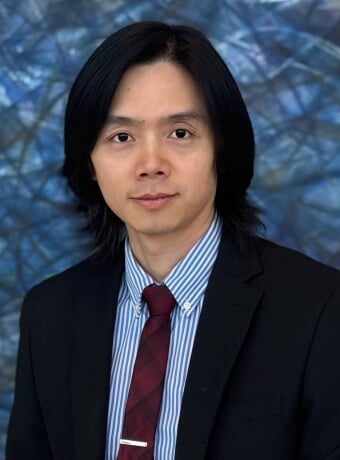
Chris J Seeger is a Professor and Landscape Architecture Extension Specialist at Iowa State University's Department of Landscape Architecture within the College of Design. His work focuses on leveraging Geographic Information Systems (GIS), participatory design, and community engagement to enhance urban walkability and infrastructure planning. He specializes in methodologies like Facilitated-Volunteered Geographic Information (F-VGI), integrating citizen input with spatial data for community-driven solutions. Key projects include the I-WALK initiative, which assesses walkability in Iowa communities through data collection and participatory mapping. His research spans over two decades, with early contributions to web-based GIS tools (e.g., VaSS Builder) and historical environmental documentation. He has collaborated with schools, municipalities, and nonprofits to produce over 50 community reports analyzing infrastructure, transportation, and public health. Seeger’s expertise bridges technology and practice, emphasizing low-tech/high-tech integration for accessible urban planning. His work often addresses challenges in rural-urban contrasts, sustainable design, and technology adoption in underserved areas.
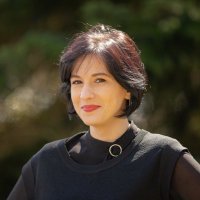
Dr. Danielle Griego is a Lecturer at ETH Zurich's Department of Civil, Environmental and Geomatic Engineering and Executive Director of Design++, an interdisciplinary initiative fostering collaboration across 6 departments and over 20 professors. She holds a Ph.D. from ETH Zurich (2020), focusing on building-integrated solar photovoltaics and energy efficiency through participant-driven mobile apps. Her work bridges architecture, engineering, and sustainability, with prior roles including leading Singapore’s EcoCampus program at NTU. Her research emphasizes energy-efficient building design, community solar policy, and smart urban technologies. Education: Ph.D. in Architecture and Building Systems (ETH Zurich, 2020) M.Sc. Civil Engineering (University of Colorado Boulder, 20XX) B.Sc. Architectural Engineering (University of Colorado Boulder, 20XX) Her research interests include sustainable urban energy systems, behavioral change via technology, and the integration of renewable energy into built environments. She leads Design++ to advance interdisciplinary projects with industry partners, addressing real-world challenges in energy efficiency and smart cities. Grants & Advising: No formal advisee list provided, but actively involved in supervising Design++ initiatives and teaching courses related to building energy systems and sustainable design. Labs/Teams: Design++ at ETH Zurich serves as a central hub for cross-disciplinary research and education in design innovation and sustainability.
Laura Schalbetter is a researcher at the Chair of Planning of Landscape and Urban Systems (PLUS) within ETH Zürich's Department of Civil, Environmental and Geomatic Engineering (D-BAUG). Her work bridges landscape architecture with cutting-edge technology through projects like REGaitVR and GLOBESCAPE , focusing on restorative environments and place-making in transformed landscapes. Education: MSc in Geomatics (ETH Zürich), BSc in Geomatic Engineering and Planning (ETH Zürich) Research interests center on virtual reality applications for gait rehabilitation, eye-tracking analysis in outdoor environments, and geospatial data integration in urban systems. Her work combines high-fidelity 3D environments with motion tracking and GIS technologies. Key publications analyze VR's role in therapeutic spaces, gaze-based interaction with geospatial interfaces, and AI-enhanced eye-tracking in landscape analysis. Recent studies examine oxygen supplementation strategies' impact on microbial communities and spatial visualization frameworks for quantum computing. Professional affiliations include: Current PhD student at ETH Zürich (since 2023) Research Assistant at PLUS (2021-2022) Student Assistant at IKG (2020) and IGP (2018-2020)
Rob Kitchin is Professor in the Maynooth University Social Sciences Institute (MUSSI) and the Department of Geography at Maynooth University (National University of Ireland, Maynooth). Since 1998 he has directed or co-directed several flagship interdisciplinary centres, including the National Institute for Regional and Spatial Analysis (2002–2013), the Digital Repository of Ireland (2009–2017) and the All-Island Research Observatory (2005–2017), and currently leads the ERC-funded Data Stories project (2022–2027). Education PhD Geography, University of Wales Swansea (1992–1995) MSc Geographical Information Systems, University of Leicester (1991–1992) BSc (Hons) Geography, University of Lancaster (1988–1991) Research Interests Rob’s work sits at the intersection of human geography , digital geographies and urban studies . He interrogates how software, big data, algorithms and spatial media reshape cities, governance and everyday life, with particular attention to questions of social justice, ethics and power. His research clusters include smart cities and urban science, software studies and code/space, cartographic theory and dashboards, data infrastructures and practices, and social geography of Ireland. Scientific Awards Maynooth University Research Achievement Award 2018 (inaugural, university-wide) Royal Irish Academy Gold Medal for the Social Sciences 2013 ERC Advanced Investigator Award 2013 ( The Programmable City ) Meridian Book Award 2011 (Association of American Geographers) Cantemir Prize 2012 (Berendel Foundation) Elected Member of the Royal Irish Academy 2015 Media Achievement Award 2015 (AAG) Numerous national e-government and geography prizes Research Funding & Leadership Principal or co-investigator on 50 funded projects worth c. €39 million from ERC, SFI, HEA, ESRC, NSF, RIA and others. Recent roles include PI of Data Stories (ERC, €2.5 m, 2022–2027), Building City Dashboards (SFI, €2.35 m, 2016–2021) and The Programmable City (ERC, €2.31 m, 2013–2018). He previously directed the National Institute for Regional and Spatial Analysis (2002–2013) and the Digital Repository of Ireland (2009–2017). Labs, Teams & Editorial Roles Rob leads the Programmable City and Data Stories research teams at Maynooth, supervising post-docs and graduate researchers across geography, computer science and urban planning. He is Editor-in-Chief of Dialogues on Digital Society (2024–), former Managing Editor of Dialogues in Human Geography (2011–2020) and Social & Cultural Geography (2000–2009), and Editor-in-Chief of the 12-volume International Encyclopedia of Human Geography .
Volker Paelke is an Assistant Professor of 3D Geovisualization and Augmented Reality at the Institute of Cartography and Geoinformatics, Leibniz University Hannover. His work focuses on user interface design, mixed reality systems, and geoinformatics applications. He leads research in augmented reality visualization, location-based services, and spatial data interaction. Education background includes a PhD in 3D Illustration Design (2002) and extensive postdoctoral research in mixed reality systems. His interdisciplinary approach bridges computer science, geospatial technologies, and human-computer interaction. Research interests emphasize innovative user interfaces for geovisualization, context-aware systems, and applications of augmented reality in archaeology, education, and navigation. Key projects include the GeoScope mixed-reality device and AR-based navigation tools. Over 50 peer-reviewed publications since 2002 span topics like tag-cloud visualizations, adaptive LIDAR scanning, and agile design methods for mixed reality systems. His work frequently explores integration of software engineering and usability engineering in system development. Labs/Teams: Active in the Institute's Mixed Reality Lab and collaborates with industry partners on geovisualization tools. Advises on EU-funded projects like GeoPilot involving image-based interaction and public participation systems.
Robin Jordan Beaman is a researcher at James Cook University (JCU) specializing in marine geology, coral reef systems, and submarine geomorphology. His work focuses on understanding coastal and marine processes, including sediment dynamics, sea-level changes, and the interaction between human activity and natural environments. He has contributed extensively to studies of the Great Barrier Reef's submerged geomorphic features, submarine landslides, and coral reef ecology. Research interests include carbonate platform evolution, deep-sea biodiversity, and the application of geospatial technologies for marine environmental monitoring. Collaborations span archaeology, ecology, and geophysics, reflecting interdisciplinary approaches to coastal and marine sciences. His fieldwork often integrates advanced mapping techniques such as LiDAR and underwater robotic surveys. Key contributions include: Mapping submerged reefs and shelf-edge geomorphic features in the Great Barrier Reef Investigating postglacial sedimentation and sea-level impacts Characterizing Halimeda bioherms and their role in carbonate budgets Studying submarine landslide hazards and their implications for coastal communities Recent projects involve interdisciplinary work on early human migration routes and coastal paleolandscapes, linking geological data with archaeological findings.
Juho Hamari is a Professor in Computing Sciences at Tampere University, affiliated with the Faculty of Information Technology and Communication Sciences. His work focuses on gamification, virtual reality (VR), and human-computer interaction, with a particular emphasis on applications in education, healthcare, and environmental science. He holds a PhD in Information Technology and has published extensively on topics ranging from ethical AI to extended reality (XR) storytelling. Research interests include exploring how interactive technologies can enhance well-being, mediate human-nature relationships, and address societal challenges like climate change. His recent work highlights innovative uses of gamification in elderly care, VR-based mindfulness practices, and AI ethics frameworks for multi-agent systems. Key contributions include systematic reviews on computational wearables, gameful educational systems, and the theoretical distinction between gamification and gamblification. He actively contributes to academic communities through editorial roles and serves as a program committee member for conferences like CHI PLAY and IEEE VR. His research demonstrates a commitment to bridging theory and practice, with projects funded by national research councils and international collaborations. Current work includes exploring trustworthy large language models (LLMs) for ethical AI systems and investigating embodied cognition in multisensory VR environments.
Natalya Gomez is an Associate Professor in the Department of Earth and Planetary Sciences at McGill University, where she holds a Canada Research Chair in Geodynamics of Ice Sheet-Sea Level Interactions. She is affiliated with the Trottier Space Institute and conducts interdisciplinary research at the intersection of geophysics and climate science. Her research examines ice sheet-sea level-solid Earth interactions in response to past, present, and future climate changes. Primary interests include Antarctic ice dynamics, glacial isostatic adjustment, sea level projections, and coupled Earth system modeling. She develops numerical models to understand feedback mechanisms between cryospheric, oceanic, and geodynamic processes. Publications demonstrate consistent focus on polar processes, with recent advances in 3D mantle viscosity modeling, ice-ocean interactions, and coastal vulnerability assessment. Article trends reveal methodological innovations in satellite geodesy, paleoclimate reconstructions, and ensemble modeling approaches. Scientific Awards & Honors: Arthur B. McDonald Fellowship (NSERC, 2024) IUGG Early Career Scientist Award (2023) AGU Cryosphere Early Career Award (2019) Current research involves international collaborations including the ISMIP7 model intercomparison project for IPCC AR7. She leads significant fieldwork programs in Greenland and supervises multiple graduate students on projects ranging from exoplanet ice dynamics to coastal infrastructure vulnerability.
Jiawei Guo is a researcher at National Central University's Department of Electrical Engineering. His work spans multiple disciplines including machine learning, computer vision, and computational physics. Key affiliations: National Central University, Taoyuan, Taiwan Research focus: Neural network applications in energy systems, underwater depth estimation, and mobile app security His research integrates physics-informed neural networks for solving complex engineering problems and adversarial transformers for pattern detection in acoustic signals. Recent publications demonstrate expertise in 3D modeling , multimodal reasoning , and privacy-compliant software analysis . Article trends show strong emphasis on diffusion models for medical imaging, spatial-temporal analysis for Gaussian processes, and data pruning techniques for efficient computation. While no formal awards are listed, his collaborative work appears in top venues including ACL , ICML , and IEEE Access .
B.S. Manjunath is a Professor in the Department of Electrical and Computer Engineering at the University of California, Santa Barbara (UCSB). He serves as Director of the Center for Multimodal Big Data Science and Healthcare and the Center for Bio-image Informatics. His research focuses on image/video analysis, multimedia databases, steganography, and bio-informatics. Manjunath holds a Ph.D. from the University of Southern California (1991), M.E. from Indian Institute of Science (1987), and B.E. from Bangalore University (1985). He is an IEEE Fellow and ACM Fellow. Education: Ph.D. (1991), Signal & Image Processing Institute, EE-Systems, USC M.E. (1987), Systems Science and Automation, Indian Institute of Science B.E. (1985), Electronics Engineering, Bangalore University Research Interests: Image/video analysis (segmentation, registration, texture analysis) Multimedia databases and data mining Steganography and digital forensics Signal/image processing for bio-informatics His work includes developing the BisQue open-source platform for image informatics and leading NSF-funded initiatives in bio-image informatics and interactive multimedia. Key Contributions: Over 300 peer-reviewed publications 24 patented technologies Co-editor of the ISO/MPEG-7 multimedia standard Founder faculty of the Media Arts and Technology Program Awards and Affiliations: IEEE Fellow (2025) and ACM Fellow (2025) Affiliated with UCSB’s Computer Science Department and Dynamical Neuroscience Program Former Director of the NSF-sponsored Interactive Digital Multimedia IGERT program Labs and Platforms: Director of the Vision Research Lab Lead developer of the BisQue image informatics system Pioneering work in multimodal camera networks and healthcare analytics
Sara Shirowzhan is a Senior Lecturer at the School of Built Environment, UNSW, serving as co-convener of the Smart Cities and Infrastructure Cluster and UNSW co-lead of the Work Integrated Learning Community of Practice. She specializes in advanced GIS, BIM, digital twins, and AI applications for sustainable urban development, disaster management, and smart infrastructure. Her research spans technologies like sensing, remote sensing, and machine learning to address SDG11 and urban resilience. She holds editorial roles at Nature Scientific Reports , Sustainability , and Buildings . Education: PhD in Geomatics Engineering from UNSW Faculty of Engineering. Awards include the 2023 Outstanding Paper Award from the International Society for Digital Earth. Grants include projects on BIM-GIS integration, disaster-responsive housing, and AI-driven WIL opportunities. Teaching focuses on Urban Informatics, GIS, BIM, and Geo-computation with R. Supervision covers AI in construction, net-zero carbon strategies, and digital twins. Engagements include Women in Construction Ambassador and CIOB Tomorrow’s Leaders Champion roles. Research interests emphasize data-driven decision-making for resilient cities, digital construction, and integrating AI with geospatial technologies. Active in policy and industry collaborations to advance smart urban solutions.
Djamila Aouada is an Assistant Professor and Senior Research Scientist at the University of Luxembourg's Interdisciplinary Centre for Security, Reliability and Trust (SnT), where she heads the Computer Vision, Imaging, and Machine Intelligence (CVI2) research group. She earned her State Engineering degree from École Nationale Polytechnique, Algeria, and PhD from North Carolina State University. Her research spans computer vision, signal processing, pattern recognition, and data modeling. Dr. Aouada leads several national and European projects including FNR FAVE, 3D-Act, and H2020 STARR, focusing on AI-driven solutions for industrial and security applications. She has received four IEEE Best Paper Awards for her contributions. Dr. Aouada has supervised 5 completed PhD theses and currently mentors 5 PhD candidates, while maintaining collaborations with Los Alamos National Laboratory and Mitsubishi Electric Research Labs. She serves as Senior IEEE Member and previously chaired IEEE Benelux Women in Engineering.
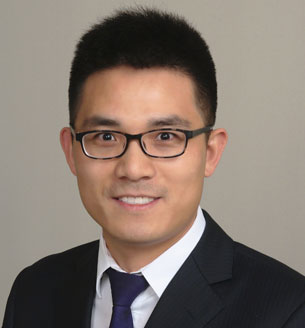
Zhenbo Wang is an Associate Professor in the Department of Mechanical, Aerospace, and Biomedical Engineering at the University of Tennessee, Knoxville, within the Tickle College of Engineering. Promoted from Assistant Professor (2018-2024) to Associate Professor in August 2024, his work bridges theoretical optimization and real-world aerospace/transportation applications. His educational journey includes: PhD in Aerospace Engineering from Purdue University (2018) ME from Beihang University (2013) BE from Nanjing University of Aeronautics and Astronautics (2010) Wang's research centers on convex optimization and machine learning for vehicular systems , with emphases on space vehicles, urban air mobility, and connected transportation. His lab develops computationally efficient methods enabling real-time trajectory planning under complex constraints. Recent work integrates deep reinforcement learning for autonomous vehicle coordination in dense airspace, addressing safety and energy-efficiency challenges in next-generation air transportation systems. Analysis of his 15 most recent publications (2024-2025) reveals dominant themes: urban air mobility optimization (60% of articles), convex programming applications (45%), and human-AI collaboration (25%). Key trends include energy-aware routing algorithms, spatiotemporal infrastructure planning, and high-fidelity modeling for eVTOL operations, reflecting industry shifts toward sustainable advanced air mobility. Major recognitions include: NSF CAREER Award (2023) for foundational optimization research Professional Promise in Research Award (2024) Hoffman Research Excellence Award (2023) Purdue University teaching honors (2017-2018) As Associate Editor for IEEE Transactions on Aerospace and Electronic Systems and Senior AIAA Member, Wang mentors graduate students in the Autonomous Systems Laboratory while securing significant grants including his NSF CAREER project. His professional service spans editorial roles for 10+ journals and committee leadership in atmospheric flight mechanics. The Autonomous Systems Laboratory (ASL) drives innovation in real-time control systems through collaborations with Oak Ridge National Laboratory and industry partners. Current projects focus on drone pollination systems, connected vehicle corridors, and hypersonic vehicle optimization, with strong emphasis on transitioning theoretical advances to operational systems.
Min Liu is a Professor at the Institute of Computing Technology, Chinese Academy of Sciences, where they lead research at the intersection of computer vision, machine learning, and remote sensing applications. With an extensive publication record spanning from 1998 to 2025, their work demonstrates significant contributions to multiple scientific domains. Professor Liu's research interests span computer vision, machine learning, remote sensing, image processing, artificial intelligence, and environmental monitoring. Their work uniquely bridges theoretical computer science with practical applications in environmental science, particularly in analyzing climate change impacts, vegetation dynamics, and water resource management. Recent publications reveal a strong focus on applying deep learning techniques to solve complex problems in geospatial analysis and environmental monitoring, with particular attention to Chinese ecosystems and urban environments. Analysis of Professor Liu's recent publications (2023-2025) shows a clear trend toward interdisciplinary research that combines advanced computer vision techniques with environmental science applications. Their work frequently employs deep learning architectures like feature pyramid networks, graph convolutional networks, and self-attention mechanisms to address challenges in remote sensing image analysis, object detection, and environmental monitoring. A significant portion of their research focuses on China-specific environmental challenges, including urbanization impacts on vegetation, salt marsh carbon stock estimation in the Yangtze River estuary, and lake water body extraction from satellite imagery. Professor Liu has made significant contributions across multiple domains including: Environmental monitoring using remote sensing data Deep learning applications for geospatial analysis Computer vision algorithms for object detection and image segmentation Climate change impact assessment through data-driven approaches Ecosystem modeling and analysis Their research demonstrates strong methodological innovation while maintaining practical relevance to pressing environmental challenges, particularly those facing China's rapidly urbanizing landscape and changing ecosystems.
Dr. Pengfei Xue is a Professor in the Department of Civil, Environmental, and Geospatial Engineering at Michigan Technological University (MTU), and serves as Associate Director of the Great Lakes Research Center (GLRC). He directs the Numerical Geophysical Fluid Dynamics Laboratory at GLRC and holds a joint appointment as a Geophysical Scientist at Argonne National Laboratory. His research focuses on developing integrated regional Earth system models (IRESMs) to study Great Lakes and coastal ocean dynamics, including atmospheric, hydrological, and biological processes. He has expertise in data assimilation, machine learning, and coupled atmosphere-ocean-wave modeling, with applications to offshore wind energy and climate resilience. Education: PhD, Intercampus Marine Science Graduate Program, University of Massachusetts BS in Mathematics and Applied Mathematics, East China Normal University Research Interests: Hydrodynamic modeling of Great Lakes and coastal systems Regional climate modeling and land-atmosphere interactions Coupled ocean-atmosphere dynamics and extreme event analysis Machine learning applications in environmental forecasting Lake ice, sediment transport, and water quality modeling His work is supported by NOAA, DOE, NASA, and other agencies. Recent projects include advancing coupled models for offshore wind assessments and simulating future climate impacts on Great Lakes ecosystems. Teaching interests include geophysical fluid dynamics and hydrodynamic modeling.