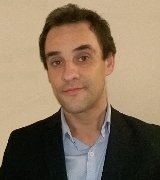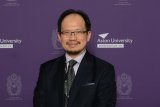
About
Prof. Victor Chang is a Professor of Business Analytics at the Department of Business Analytics and Information Systems, Aston Business School, Aston University, UK, since mid-May 2022. Previously, he served as Professor of Data Science and Information Systems at Teesside University’s School of Computing, Engineering and Digital Technologies (September 2019–mid-May 2022). His interdisciplinary research spans Artificial Intelligence, Data Science, Business Analytics, Cybersecurity, and IoT, with applications in healthcare, finance, smart cities, and education.
Education:
- PhD in Computer Science (University of Southampton, 2009–2013)
- PGCert in Higher Education (University of Greenwich, 2011–2012)
- MBA in Technology Management (University of Sydney, 2002–2004)
- MPhil in Engineering (e-Learning) (Cambridge University, 2001–2002)
- BEng/BSc in Telecom, Physics and Computing (University of Sydney, 1996–2000)
Prof. Chang’s research focuses on AI and IoT for healthcare diagnostics, cybersecurity frameworks, and financial risk assessment, emphasizing digital transformation and technology adoption. His work includes case studies in cloud/edge computing, 5G/6G, and ethical AI. A leading figure in Industry 4.0/5.0, he develops scalable solutions for government, education, and service sectors.
His scientific awards include the 2024 Inspirational Individual of the Year (UK National IT Award, BCS), 2025 Data Leader of the Year (British Data Awards), 2016 European Best Project in Research, 2017 Outstanding Young Scientist Award, and recognition as a
- Senior Fellow of the Higher Education Academy (SFHEA, 2025)
- Fellow of the British Computer Society (FBCS, 2024)
- Fellow of the Institution of Engineering and Technology (FIET, 2025)
Prof. Chang has led £14 million+ in projects across Europe and Asia, including a multi-million-pound initiative at Teesside University. He founded and chairs international conferences (IoTBDS, COMPLEXIS, FEMIB) and serves on advisory boards for global research communities. His educational impact includes teaching over 100,000 students and mentoring 200+ early-career professionals.
Research fields