About
Robert Riener is a Full Professor for Sensory-Motor Systems at ETH Zurich and a Full Professor of Medicine at the University of Zurich's medical faculty. He chairs the Department of Health Sciences and Technology and maintains guest professorships at USC Los Angeles, SSSA Pisa, and SJTU Shanghai.
- ETH Zurich - Department of Health Sciences and Technology
- University of Zurich - Medical Faculty
- SJTU Shanghai - Guest Professorship
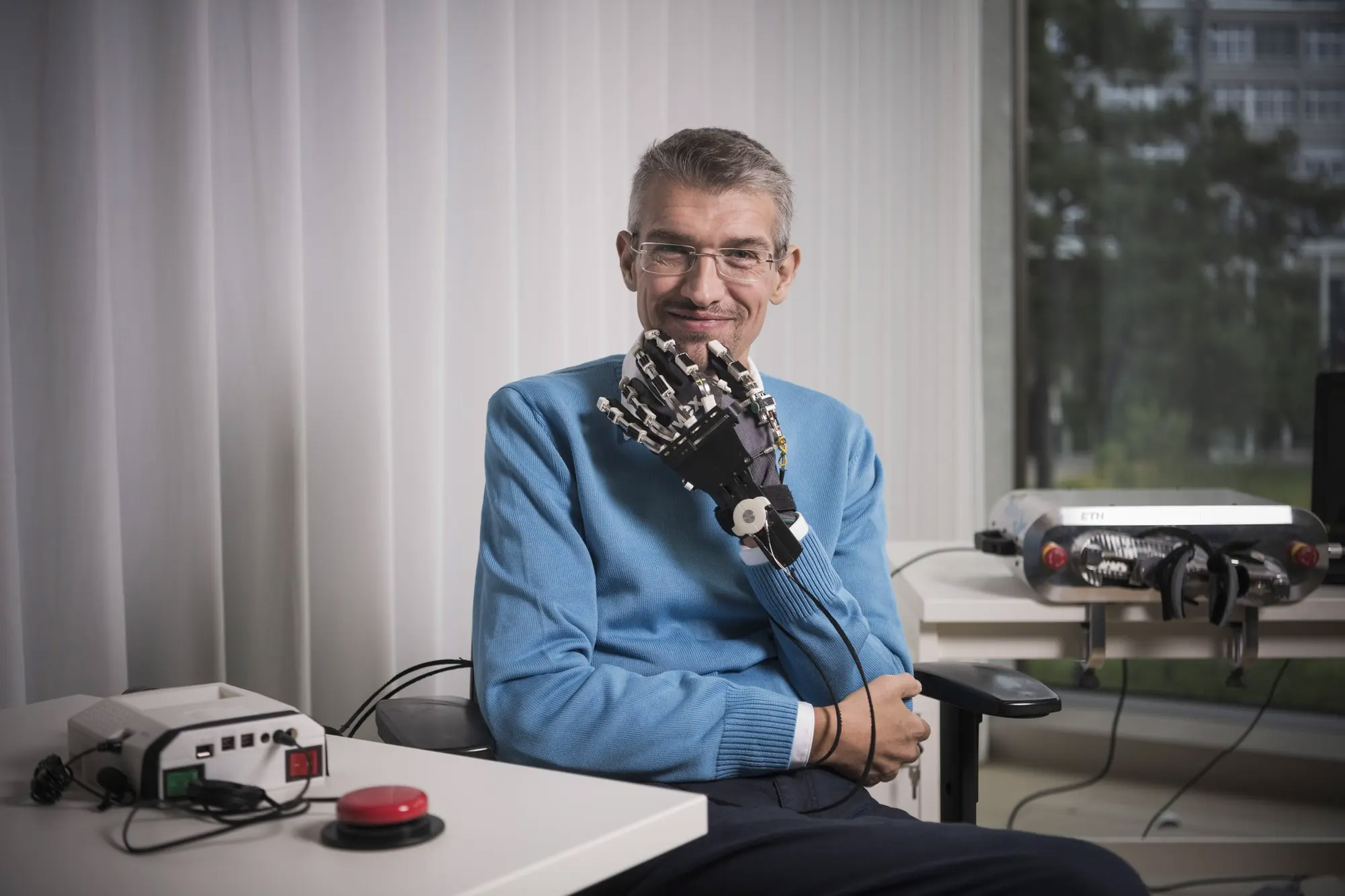
His research focuses on sensory-motor interactions between humans and machines, with expertise in powered prostheses, exoskeletons, and machine learning applications for neurorehabilitation. Riener has pioneered innovations in bionic dexterity and rehabilitation technology, bridging engineering with medical applications to enhance human mobility.
Riener initiated and organizes CYBATHLON, an international competition for assistive technology users that has received multiple prestigious awards including the European Excellence Award and Yahoo Sports Technology Award. His work demonstrates significant impact in translating academic research into practical rehabilitation solutions.
- European Excellence Award (CYBATHLON)
- Yahoo Sports Technology Award (CYBATHLON)
- REIMAGINE Education Awards (two)
- 2018 Honorary Doctoral Degree from University of Basel
- 2022 President of ICORR (International Consortium of Rehabilitation Robotics)
- 2019 AAAS Leshner Leadership Fellow
- 2023 Member of Swiss Academy of Technical Sciences (SATW)
As an academic leader, Riener has published over 500 peer-reviewed articles, 36 books and book chapters, and filed 26 patents. His research group bridges engineering and clinical applications, developing technologies that address real-world rehabilitation challenges while advancing fundamental understanding of human-machine interaction.
Riener's laboratory focuses on developing and testing next-generation rehabilitation technologies, with strong connections to clinical settings through the University Hospital Balgrist. His work integrates mechanical engineering, neuroscience, and artificial intelligence to create more intuitive and effective assistive devices.