About
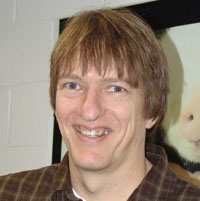
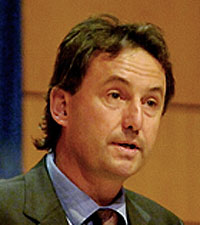
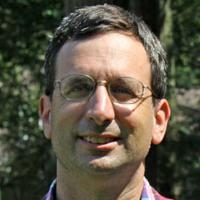
Marc Forster is the Henry B. Plant Professor of History and College Marshal at Connecticut College, where he has served since 1990. He chairs the Department of History and has held leadership roles including Director of the Toor Cummings Center for International Studies and the Liberal Arts (CISLA).
His educational background includes a B.A. from Swarthmore College and M.A. and Ph.D. from Harvard University.
- B.A., Swarthmore College
- M.A., Harvard University
- Ph.D., Harvard University
Professor Forster specializes in early modern Germany (1500-1800), with a focus on German Catholicism, popular religion and culture, and rural society. His research explores how common people shaped Catholic identity through practices like processions and pilgrimages, and how rural communities resolved conflicts in settings such as taverns and lower courts. He argues that the development of state institutions was facilitated by local conflict resolution mechanisms.
His scholarly output, spanning from 1992 to 2024, reveals a consistent engagement with religious and social history of early modern Germany. The works demonstrate a shift from religious identity to the dynamics of conflict and peacemaking, highlighting the agency of rural populations in shaping both religious practice and social order.
Forster has received numerous accolades including the Helen Brooks Regan Faculty Award for Excellence in Leadership (2017), the Nancy Batson Nisbet Rash faculty research award (2007), and the Student Government Association's teaching award (2011). His research has been supported by prestigious fellowships:
- National Endowment for the Humanities fellowship (2006-2007)
- Guggenheim Fellowship
- Alexander von Humboldt Stiftung grant
- Fulbright-Hays grant
As an educator, Forster has mentored students through courses such as Early Modern Europe and The French Revolution. His administrative service includes chairing the history department (2001-2006), serving on the Committee on Appointments, Promotion, and Tenure, and leading the Presidential Search Committee. He also directed CISLA, fostering international studies at the college.
Fluent in German, French, Latin, and Swedish, Forster has presented his work internationally, including at Oxford University. His current research continues to explore the social fabric of early modern German villages.