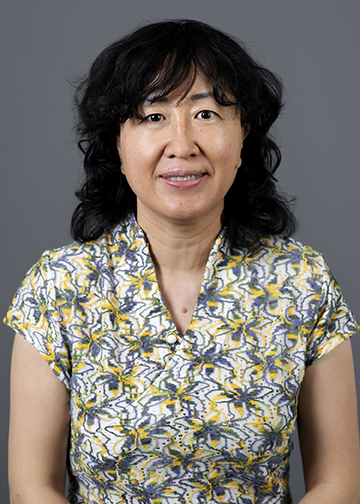
About
Dr Keming Yang is an Associate Professor in the Department of Sociology at Durham University and a Fellow of the Wolfson Research Institute for Health and Wellbeing. His academic career has been dedicated to understanding loneliness as a social phenomenon, alongside broader interests in economic sociology, Chinese entrepreneurship, and social gerontology.
Research Interests:
- Sociology of loneliness and mental health
- Economic sociology and entrepreneurship, particularly in China
- Social gerontology and ageing studies
- Statistical methods in social research
- Cross-national comparative studies
His methodological approach is notably eclectic, integrating quantitative techniques like statistical modeling of large-scale survey data with qualitative methods such as case studies and Qualitative Comparative Analysis (QCA). This methodological pluralism reflects his commitment to rigorous, problem-oriented social science.
Publications & Research Contributions:
Dr Yang's recent publications demonstrate a clear trajectory toward deepening the sociological understanding of loneliness across the lifespan. His 2023 article "Loneliness and intersectionality" introduces a progressive conditional approach to examining how multiple social identities and structures intersect to shape loneliness experiences. Similarly, his 2022 qualitative study on stroke survivors' experiences of loneliness provides nuanced insights into how health events and social contexts interact to produce loneliness. His collaborative work has explored loneliness among adolescents, older adults, and clinical populations, consistently emphasizing the social determinants of mental health.
Supervision & Mentorship:
Dr Yang currently supervises two PhD students: Sijin Li and Tengpeng Zhang. His supervision interests encompass sociology of mental health and illness, economic sociology, political sociology, social gerontology, and any China-related or comparative cross-national topics. He explicitly welcomes PhD inquiries in these areas.
Teaching:
He teaches "Sociology of Mental Health and Illness" for senior undergraduates and "Intermediate Statistics" for postgraduate students in the MA Research Methods program, demonstrating his dual expertise in substantive sociology and methodological training.