About
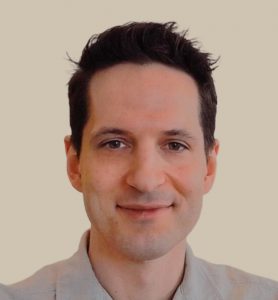
Dr. Fraser Riddell serves as Associate Professor in Literary Medical Humanities within Durham University's Department of English Studies, while co-leading the Affective Experience Lab under the Institute for Medical Humanities' Discovery Research Platform. His academic trajectory includes prior teaching roles at the University of Oxford's Faculty of English Language and Literature (Trinity College) and the University of St Andrews' School of Modern Languages, before joining Durham in 2019.
Riddell's educational foundation was established through doctoral research at Durham University, supported by Arts and Humanities Research Council funding via the Northern Bridge Doctoral Training Partnership. His scholarly profile reflects rigorous interdisciplinary training bridging literary studies, medical humanities, and sensory theory.
Central to Riddell's research is the interrogation of gender, sexuality, and embodied experience within Victorian and early-twentieth century literature. He pioneers investigations into tactile sensory perception across nineteenth-century literary, medical, and scientific discourses, examining works by Lafcadio Hearn, Thomas Hardy, and Charlotte Mew. His monograph Music and the Queer Body in English Literature at the Fin de Siècle (Cambridge University Press, 2022) employs psychoanalytic, phenomenological, and queer frameworks to analyze musical encounters in Symonds, Pater, and Woolf. Current projects explore queer pastoral soundscapes and sensory description in decadent literature.
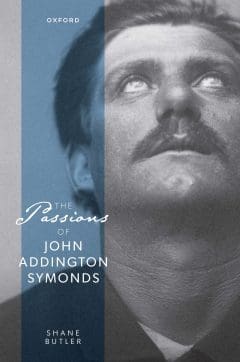
Analysis of Riddell's recent publications reveals a cohesive trajectory centering Victorian literary intersections with medical humanities, queer theory, and sensory studies. His work consistently examines how music, touch, and breath function as conduits for non-normative subjectivity formation, with recurring engagements with Vernon Lee, John Addington Symonds, and fin-de-siècle decadence. Methodologically, he blends close textual analysis with interdisciplinary frameworks from affect theory and medical history.
Riddell actively mentors doctoral researchers, recently supervising theses on Elizabeth Gaskell's fallen women narratives, Thomas Hardy's gender representations, and Joseph Conrad's colonial commerce themes. Current supervisees include Catherine Dent and Ila Indhoomati Thangavel, reflecting his commitment to nurturing emerging scholarship in Victorian and medical humanities fields.
As co-leader of the Affective Experience Lab, Riddell contributes to Durham's Institute for Medical Humanities by developing interdisciplinary methodologies examining how sensory and emotional experiences shape medical narratives and practices. The lab serves as a nexus for collaborative projects integrating literary analysis with medical anthropology and phenomenological approaches to embodiment.