About
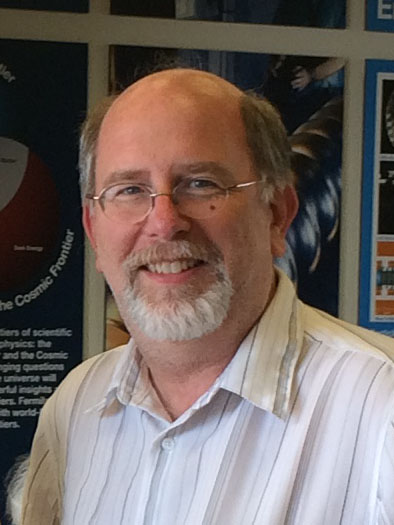
Christopher Walter is a Professor of Physics and currently serves as the Chair of Physics at Duke University's Trinity College of Arts & Sciences. He has been a faculty member at Duke since 2004, progressing from Assistant Professor to Associate Professor, and ultimately to Professor in 2017. He also maintains a research connection with the University of Tokyo's Institute for Physics and Mathematics of the Universe as a Visiting Senior Scientist.
- Ph.D. in Physics, California Institute of Technology (1997)
- M.S. in Physics, California Institute of Technology (1991)
- B.A. in Physics, University of California, Santa Cruz (1989)
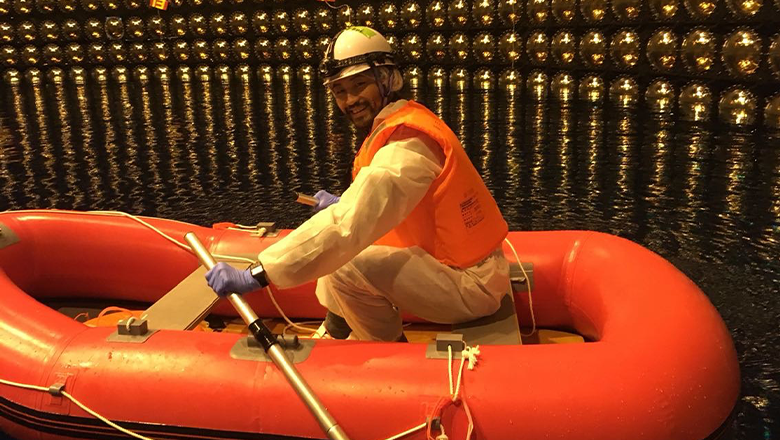
Walter's research spans two major areas of fundamental physics: particle physics and cosmology. He studies the nature of neutrinos using giant underground detectors like Super-Kamiokande, and investigates cosmic acceleration using space-based telescopes. His work on neutrino oscillations contributed to the team whose leader (T. Kajita) was awarded the Nobel Prize. He is deeply involved with the Super-Kamiokande detector and T2K neutrino experiment in Japan.
His recent publications reveal a strong focus on neutrino physics, particularly using the Super-Kamiokande detector with gadolinium loading (SK-Gd). His work spans neutrino oscillation measurements, proton decay searches, supernova neutrino detection, and cosmic ray studies. He's also increasingly involved with space telescope research, particularly the Nancy Grace Roman Space Telescope, focusing on cosmological measurements and galaxy surveys.
Walter has secured significant research funding, including a long-term grant from the Department of Energy for High Energy Physics research at Duke (2013-2025), and sabbatical support from SLAC National Accelerator Laboratory and Stanford University.
As Chair of Physics at Duke since 2025, he leads the department while maintaining an active research program that bridges particle physics and cosmology. His work with the SK-Gd experiment represents a major advancement in neutrino detection capabilities, while his Roman Space Telescope research connects particle physics with cosmological observations.