About
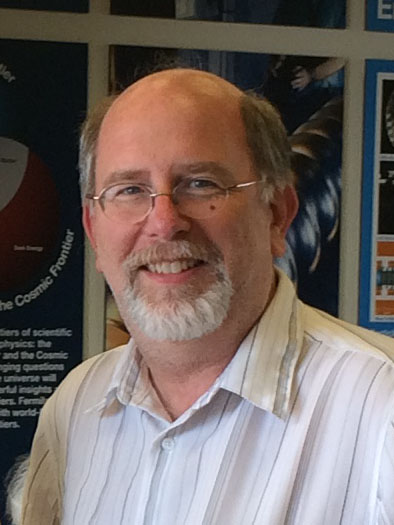
Ed Kearns is a Professor and Director of Undergraduate Studies at Boston University's Department of Physics. His research focuses on neutrino physics and particle astrophysics, with key contributions to the discovery of neutrino oscillations via atmospheric neutrinos in the Super-Kamiokande experiment (recognized by the 2015 Nobel Prize). He leads studies on CP violation, dark matter detection via neutrinos, and proton decay searches. His work includes the Super-Kamiokande upgrade with gadolinium and collaborations like T2K (neutrino oscillations) and EMPHATIC (hadron production).
Education:
- B.S. in Physics, Massachusetts Institute of Technology (1982)
- A.M. in Physics, Harvard University (1984)
- Ph.D. in Physics, Harvard University (1990)
Research Interests: Kearns’ work spans neutrino oscillation mechanisms, nucleon decay experiments testing Grand Unified Theories, and indirect dark matter detection. He pioneered the MiniCLEAN liquid argon detector for dark matter research and contributed to LArIAT (Liquid Argon Time Projection Chamber) R&D. His group has graduated four PhD students focusing on nucleon decay studies.
Awards:
- W.K.H. Panofsky Prize in Physics (2021)
- Breakthrough Prize in Fundamental Physics (2015)
- Fellow, American Physical Society (2008)
Advising & Projects: Kearns oversees Super-K’s neutron tagging upgrades and directs the EMPHATIC experiment at Fermilab. His lab actively collaborates with global teams on neutrino physics, including contributions to the T2K accelerator-based neutrino beam program.