About
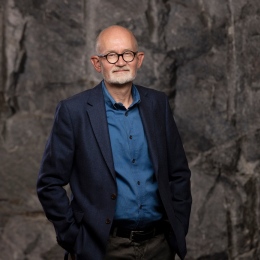
Bo G Ekelund is a Professor of English Literature at Stockholm University's Department of English within the Faculty of Humanities. He received his PhD from Uppsala University in May 1995, served as a post-doctoral fellow at Uppsala's Department of English from 1996 to 2000, and has been at Stockholm University since summer 2000, where he was promoted to Professor in 2021. His office is located in Room E 854 at Universitetsvägen 10 E, 8th floor.
Ekelund's research follows a tradition of critical social theory, heavily influenced by Pierre Bourdieu. His work spans several major projects including Literary Generations and Social Authority which analyzed 955 US prose fiction writers across 60 years, Studies in an Undead Culture: Scenes of Recognition in literature and politics 1980-2000, and research on Caribbean Anglophone fiction funded by the Swedish Research Council. He has also conducted significant work on Swedish translations and the reception of international theory through projects funded by the Swedish Research Council.
Ekelund's scholarly output demonstrates a consistent trajectory from his early work on John Gardner to his current focus on spatial theory, Caribbean literature, and geometric data analysis. His publications reveal a distinctive methodological approach that blends Bourdieusian sociology with innovative quantitative techniques like Geometric Data Analysis (GDA) to examine literary fields, spaces, and transnational knowledge flows. His work consistently interrogates the relationship between literature, place, and power across different geopolitical contexts.
Ekelund has secured funding from prestigious sources including the National Bank of Sweden Tercentenary Foundation, the Swedish Research Council, and the RJ-funded research program Cosmopolitan and Vernacular Dynamics in World Literature. His research has established him as a significant figure in Scandinavian literary scholarship with a distinctive transnational perspective that bridges European and Caribbean literary studies. His work demonstrates how peripheral national contexts like Sweden can productively engage with global literary fields through methodological innovation and theoretical sophistication.