
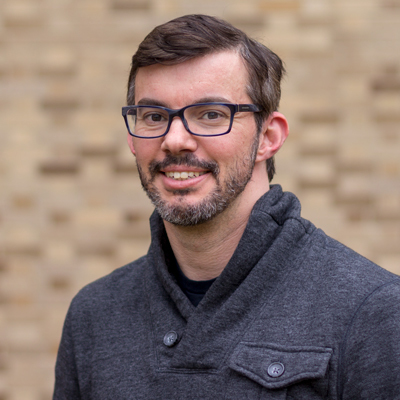
About
Adrian Rocha is an Associate Professor in the Department of Biological Sciences at the University of Notre Dame, where he has been a faculty member since 2012, advancing to Associate Professor in 2019. His research is centered on ecosystem ecology, with a focus on Arctic and tundra environments undergoing rapid climate change. He leads the Rocha Lab, which conducts field, experimental, and modeling studies to understand ecosystem responses to disturbances such as fire and warming.
- University: University of Notre Dame
- School: College of Science
- Department: Department of Biological Sciences
- Position: Associate Professor
Adrian Rocha earned his Ph.D. in Earth Systems Science from the University of California, Irvine (2008), an M.S. in Environmental Science from Ohio State University (2003), and a B.S. in Earth Systems Science and Policy from California State University of Monterey Bay (2001, cum laude). Prior to joining Notre Dame, he held postdoctoral and research associate positions at the Marine Biological Laboratory, Ecosystems Center (2008–2012).
His research interests include the biological and environmental controls on ecosystem exchanges of mass and energy across spatial and temporal scales. He employs tools such as eddy covariance, remote sensing, and ground-based physiological measurements. Key research areas include Arctic climate change, disturbance ecology, land-atmosphere interactions, wetland ecology, and coupled biogeochemical cycles. His lab investigates how tundra ecosystems respond to fire, permafrost thaw, and vegetation shifts, with implications for carbon cycling and climate feedbacks.
The recent publications reflect a strong focus on Arctic fire dynamics, carbon and energy fluxes, post-fire recovery, and ecosystem modeling. Collectively, these works emphasize the role of disturbance in altering surface properties, radiative forcing, and long-term carbon storage in high-latitude ecosystems. The integration of field measurements with remote sensing and modeling is a hallmark of his research approach.
Notable scientific contributions include leading the Carbon in Arctic Tussock Tundra (CATT) Network, an international collaborative effort to understand carbon storage in tussock tundra and the impacts of shrub expansion. While no formal awards are listed in the provided text, his leadership in collaborative science and NSF-funded research indicates recognition in the field.
Adrian Rocha has advised multiple graduate students, including Ph.D. and Master’s candidates such as Bethany Blakely, Salvatore Curasi, and Kelseyann Wright. His lab includes current researchers like Chathuranga Senevirathne and Rachel Badzioch. He has secured research funding, including NSF support, and leads projects on post-fire recovery, phenology, and carbon cycling in the Arctic. His lab utilizes automated chamber systems, eddy covariance towers, and remote sensing data to study ecosystem processes.
The Rocha Lab is actively engaged in fieldwork in Alaska and around Toolik Lake, operates phenology stations, and collaborates with institutions such as Woods Hole Research Center, Oak Ridge National Lab, and the University of Edinburgh. The lab welcomes new graduate students and promotes interdisciplinary research combining forestry, plant physiology, micrometeorology, and biogeochemistry.
Find Adrian Rocha elsewhere
Related Searches
You Might Also Like
 Adrian V. RochaUniversity of Notre Dame · Associate Professor
- TTorsten SachsAlfred Wegener Institute for Polar and Marine Research · Researcher
- MMichelle MackNorthern Arizona University · Professor
 Manuel HelbigHelmholtz Centre Potsdam - German Research Centre for Geosciences · Researcher
 Wille, C.Helmholtz Centre Potsdam - German Research Centre for Geosciences · Researcher
- AAnne GriebelUniversity of Technology Sydney · Lecturer