About
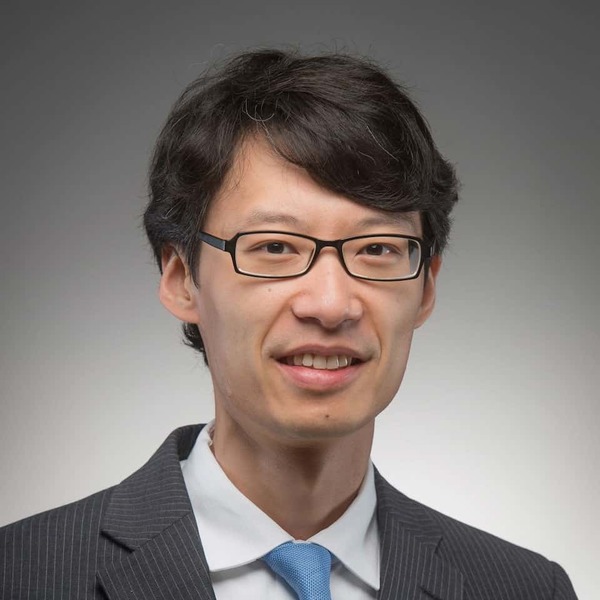
Adam Fritsch is a Professor of Physics at Gonzaga University in the College of Arts and Sciences, with an adjunct appointment at Ohio University. He teaches a wide range of physics courses to students from all majors, emphasizing critical thinking over rote memorization. His research program focuses on experimental nuclear physics, particularly nuclear astrophysics and nuclear structure.
Education:
- Ph.D., Physics, Michigan State University (2014)
- M.S., Physics, Michigan State University (2011)
- A.B., Physics, Wabash College (2009)
Fritsch's research centers on nuclear astrophysics, particularly stellar nucleosynthesis processes that explain how elements form in stars. He investigates proton evaporation mechanisms and nuclear level densities that impact astrophysical reaction rates. His work also explores nuclear structure, with a focus on alpha clustering phenomena in atomic nuclei, including the search for linear-chain structures in carbon-14. His experimental approach combines detector development with data analysis techniques to study these fundamental nuclear processes.
His recent publications demonstrate consistent work in nuclear reaction studies, nuclear structure investigations, and detector development. The majority focus on alpha clustering, nuclear level densities, and the development of active-target time projection chambers for studying exotic nuclei and low-energy nuclear reactions. His research has direct applications to understanding stellar environments and element formation throughout the universe.
Fritsch actively mentors undergraduate students in research, with numerous students participating in his projects over the years. He serves as the moderator of the Physics Journal Club at Gonzaga, which meets weekly to discuss recent developments in physics. His service includes roles as Consulting Editor for the American Journal of Physics and member of the Academic Technology Advisory Council at Gonzaga.
His laboratory is located in Herak 256A, where he conducts research on nuclear reaction analysis of stellar nucleosynthesis processes with student researchers. He also serves as Radiation Safety Officer at Gonzaga University, demonstrating his commitment to both research and safety in the physics department.