معرفی
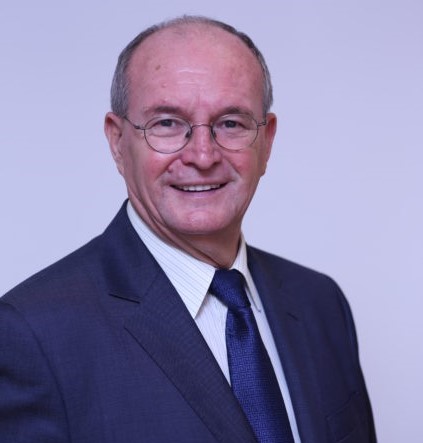
Özer Ergenç is a Professor in the Department of Turkish Literature at Bilkent University, holding a Ph.D. from Ankara University (1974). Previously a faculty member at Ankara University, he specializes in Ottoman historical studies with emphasis on urban institutions and socio-economic structures across Anatolian cities.
Education:
- Ph.D. in History, Ankara University (1974) with thesis: 'A Research on Ottoman Urban Institutions and their Socio-Economic Structures via a Comparison between Ankara and Konya in 1588-1596'
Professor Ergenç's research spans Ottoman urban history, legal documentation analysis, and socio-economic evolution, with recurring investigations into cities like Bursa, Ankara, and Konya across the 14th-18th centuries. His methodological approach prioritizes primary source analysis of court records and administrative documents, while his comparative work examining Ottoman-Japanese state structures during the early modern period demonstrates interdisciplinary depth. Current projects include the TÜSOKTAR database initiative for Turkey's socio-cultural history under the Turkish Historical Society.
Analysis of his 15 most recent publications reveals consistent focus on 16th-century Ottoman urban centers, with thematic threads connecting land tenure systems, witness testimony patterns in legal contexts, and conceptualizations of ideal societal models. The geographical concentration on Anatolian cities intersects with broader examinations of imperial administration, economic transformations, and social hierarchies, reflecting his signature comparative methodology across temporal and spatial dimensions.
Scientific Affiliations:
- Member, Turkish Historical Society (Türk Tarih Kurumu)
- Member, History Foundation (Tarih Vakfı)
- Member, TÜBİTAK SOBAG (Social Sciences and Humanities Research Group)
Professor Ergenç currently leads the TÜSOKTAR Project (Database Preparation on Social, Economic and Cultural History of Turkey) for the Turkish Historical Society, though no specific graduate students or additional grant-funded initiatives are documented in available sources. His scholarly contributions remain concentrated on archival research and publication rather than laboratory or team-based collaborative structures.