Gail E. Joseph is a Professor in the College of Education at the University of Washington, with affiliations in Early Childhood & Family Studies and Learning Sciences & Human Development. She teaches courses, advises students, and conducts research on early care and education, focusing on child care quality, social-emotional learning, teacher education, and technology integration. Ph.D., University of Washington Her research projects include statewide surveys on early childhood workforce conditions, studies on digital professional learning tools like Circle Time Magazine, and evaluations of coaching interventions (e.g., FIND in Childcare) to improve teacher-child interactions. She co-created resources such as Teacher Time and the EarlyEdU Alliance, which aims to enhance early childhood education through accessible bachelor’s degrees. Her publications span topics like social-emotional curricula, behavioral interventions, and inclusive education frameworks. She has held leadership roles as Principal Investigator (PI) of the Head Start Center for Inclusion and Co-PI of the National Center for Quality Teaching and Learning (NCQTL). 2018 David R. Thorud Leadership Award (University of Washington) She currently serves as Executive Director of Cultivate Learning at the University of Washington, advancing professional development and quality improvement initiatives nationwide.
Zaklina Spalevic is a distinguished Professor at Singidunum University, specializing in the intersection of law, technology, and business. With a strong academic background in criminal law and extensive research in cyber law, artificial intelligence applications in legal systems, and tourism law, she has established herself as a leading scholar in digital legal frameworks. Her work spans multiple disciplines, connecting traditional legal principles with emerging technological challenges. Dr. Spalevic earned her doctoral degree in Criminal Law from the University of the Academy of Economics in Novi Sad (2008-2012), following basic studies in General Law at the University of Pristina (1996-2001). Her educational foundation in Science and Mathematics from First Pristina High School (1992-1996) provided the analytical basis for her interdisciplinary approach to legal scholarship. Her research interests focus on the evolving landscape of cyber law, particularly the legal implications of artificial intelligence in judicial systems, electronic governance, and tourism industry regulation. Dr. Spalevic has pioneered work on digital evidence processing, algorithmic justice, and the integration of green law principles into sustainable business practices. Her publications reveal a consistent pattern of addressing emerging legal challenges in the digital age, with increasing emphasis on AI applications across various legal domains. Analysis of her recent publications shows a clear trend toward interdisciplinary research that bridges law, technology, and business. Her work increasingly focuses on practical applications of legal frameworks for emerging technologies, particularly in tourism, agriculture, and judicial systems. The integration of technical solutions with legal regulation represents a distinctive feature of her scholarly contributions. Dr. Spalevic has authored numerous publications including three books: 'Fundamentals of Law with Special Reference to Business and Tourism Law' (2021, 2024 editions) and 'Legal Aspects of Cyberspace' (2018). Her extensive publication record includes over 100 journal articles and conference papers spanning cyber security, electronic governance, intellectual property in digital environments, and legal frameworks for emerging technologies. She actively contributes to academic discourse through conference presentations and collaborative research projects, particularly focusing on the legal implications of artificial intelligence across various sectors. Her work demonstrates a commitment to developing practical legal frameworks that address real-world technological challenges while maintaining foundational legal principles.
Dr. Pedro Nava is an Associate Professor and Director of Educational Leadership in the School of Education and Counseling Psychology at Santa Clara University. His scholarship centers on educational equity for Chicanx/Latinx and immigrant communities, combining critical race theory, participatory action research, and community-engaged methodologies. Education Ph.D. in Urban Schooling – University of California, Los Angeles, 2012 Ed.M. in Administration, Planning, and Social Policy – Harvard University, 2003 B.A. – California State University, Fresno, 1996 Research Interests Dr. Nava’s research interrogates systemic inequalities in urban and rural schooling, emphasizing critical pedagogy and critical race theory . He investigates how immigration status intersects with educational opportunity, and he collaborates with families and communities to co-construct transformative practices through participatory action research . His work also explores family-school-community engagement , leveraging community cultural wealth frameworks to amplify migrant and undocumented voices in educational policy and practice. Publication Trajectory Across more than two decades, Dr. Nava’s publications trace the evolution of critical scholarship in education. Early works examine institutional barriers for Chicano students, while recent studies integrate quantitative ethnography and testimonio methodologies to illuminate intersectional experiences of Latinx youth, undocumented graduate students, and farmworker families. Scientific & Community Awards No formal awards are enumerated in the provided text. Advising & Grants While specific grants and advisees are not listed, Dr. Nava’s leadership role as Director of Educational Leadership implies extensive mentoring of master’s and doctoral students, as well as oversight of grant-funded initiatives that advance equity-focused leadership preparation. Labs, Teams & Centers Dr. Nava directs the Educational Leadership programs within the School of Education and Counseling Psychology, fostering interdisciplinary collaboration and community-engaged research teams that partner with local schools, nonprofits, and migrant organizations.
Professor Duc Duy (Louis) Nguyen is Professor in Finance at Durham University Business School. Previously, he was Associate Professor at King's College London and Assistant Professor at University of St Andrews. His research has been featured in Forbes, Harvard Business Review, and BBC. He holds a BSc in Computing from National University of Singapore, MSc in Accounting, Finance, and Management from University of Bristol, and PhD in Finance from University of Edinburgh. Research foci include: Climate risk integration in mortgage markets and corporate finance Impact of social policies (e.g., marriage equality) on credit access Corporate governance and misconduct prevention in banking Local information environments and fraud detection Cross-cultural dimensions of executive decision-making His publication portfolio demonstrates consistent examination of how institutional frameworks (regulation, culture, governance) shape financial behaviors and market outcomes, with recent emphasis on climate finance and social equity impacts. Awards include: David Hume Publication Prize (2015) Semi-finalist, FMA Europe Best Paper Award (2018) Finalist, FMA Asia/Pacific Best Paper Award (2019) Best Registered Report on "Politics and Corporate Power" Vietnam Symposium in Climate Transition Best Paper Award (2024) He currently supervises PhD candidates Bingzhi Zhang and Jing Wei. His externally funded research includes grants from British Academy/Leverhulme Trust and Carnegie UK Trust. He serves as Associate Editor for European Journal of Finance and British Accounting Review. As frequent speaker at central banks and policy forums (Federal Reserve Banks of New York & St. Louis), he translates research insights into regulatory practice and policy development.
Yang Liu is a tenured Associate Professor at the Department of Management and Engineering , Linköping University, Sweden, and an Adjunct Professor at the University of Oulu, Finland. His expertise spans smart manufacturing, clean energy transition, and Industry 4.0 applications. He holds an M.Sc. and D.Sc. from the University of Vaasa, Finland. Research & Awards: Liu's work focuses on sustainable systems, decision support systems, and AI-driven energy efficiency. He has authored over 140 Web of Science publications, including top 0.1% ESI Hot Papers. He is ranked among the world's top 2% scientists (Stanford-Elsevier) and leads globally in 'big data analytics in manufacturing' and 'Industry 4.0-driven circular economy' research. Leadership & Projects: He leads projects like FlexSUS (EU Horizon 2020) and PERSEUS, developing tools for smart urban energy planning and 15-minute city models. He serves as Editor-in-Chief of Cleaner Engineering and Technology and Guest Editor for multiple journals. His research emphasizes bridging data science with sustainability challenges in manufacturing and energy systems. Key Achievements: Top-ranked in global citations, ESI Highly Cited Papers, and industry-driven sustainability frameworks. Grants: Leads EU-funded projects and collaborates with Siemens Energy on energy transition solutions. Labs & Teams: Part of the Environmental Technology and Management (MILJÖ) division and Unit for Product Service Innovation (MILJOPSI) at Linköping.
Linda Argote is the Thomas Lord Professor of Organizational Behavior and Theory at the Tepper School of Business, Carnegie Mellon University. She serves as Director of the Center for Organizational Learning, Innovation, and Knowledge. Her academic journey includes prior roles such as David M. Kirr Professor and Carnegie Bosch Professor. She holds a Ph.D. in Organizational Psychology from the University of Michigan and a B.S. in Psychology from Tulane University. Her research focuses on organizational learning, innovation, knowledge transfer, and group processes, with notable contributions to transactive memory systems and team performance. Argote has received prestigious awards like the Joseph E. McGrath Award and an Honorary Doctorate. She actively contributes to academic leadership through roles in editorial boards, grant reviews, and university committees. Her teaching includes courses on organizational learning and strategic management.
Bruce W. Smith is an Associate Professor at the University of New Mexico, College of Arts and Sciences, Department of Psychology. His research focuses on resilience , mindfulness interventions , and positive psychology with applications in health and stress management. Ph.D., Arizona State University (2002) Director, The Phoenix Lab Email: bwsmith@unm.edu Smith's research investigates how individuals bounce back from stress and adversity, including through mindfulness , positive psychology , and narrative-based approaches like the "hero’s journey". He developed the Brief Resilience Scale , widely used in stress and health research. His work spans health psychology, examining stress responses in chronic illness (cancer, cardiovascular disease) and emergency responders (firefighters). He has also explored mindfulness-based adaptations for Latino communities and positive psychology classes that improve student well-being. Smith teaches courses in Health Psychology , Positive Psychology , and Psychology Teaching Practicum . Current graduate students in his lab include Kaitlyn Schodt and Naila deCruz-Dixon . He is not accepting new students for Fall 2025 or 2024. Key themes across his publications (2008-2023) include: Resilience measurement and applications Mindfulness in stress reduction Positive psychology interventions Cultural adaptations for mental health His work emphasizes practical applications in both clinical settings and educational environments , with a focus on undergraduate well-being and trauma-informed approaches to personal growth.
Sanghyun Hong is an Assistant Professor at Oregon State University's School of Electrical Engineering and Computer Science , focusing on Trustworthy AI and Cybersecurity . He holds a Ph.D. in Computer Science from the University of Maryland, College Park (2021) and a B.S. in Electrical Engineering and Computer Science from Seoul National University (2015). His research bridges machine learning , security , and privacy-preserving systems . Current research themes: Robustness of AI systems to adversarial attacks Privacy-preserving machine learning Security of pre-trained and large language models Hardware fault vulnerabilities in neural networks Cybersecurity workforce development Publication Trends (15 most recent): Focus on adversarial machine learning (jailbreaking LLMs, membership inference) Advances in physics-informed neural networks and time series forecasting Key contributions to AI security and malware detection Interdisciplinary work in visualization design and tsunami warning systems Scientific Accolades : Google Faculty Research Award (2023) Samsung Global Research Award (2022, 2023, 2024) DARPA Riser (2022) NSF SFS Award (co-PI, 2023) USENIX Enigma Speaker (2021) Academic Leadership : Mentors 5 Ph.D. students and has graduated 8 M.S. and B.S. students. Currently developing next-generation auditing frameworks for AI systems while on medical leave until Winter 2026.
Dr Muhammad Abid serves as Lecturer in Mechanical Engineering at Ulster University's School of Computing, Engineering and Intelligent Systems on the Derry~Londonderry campus, where he also coordinates Degree Apprenticeships for Mechanical and Manufacturing Engineering programmes, driving industry-academia collaboration for workforce development. His academic credentials include a PhD in Applied Thermodynamics from Ulster University and a Postgraduate Diploma in Academic Practice from the University of Liverpool, complemented by over 15 years of international experience across UK and Middle Eastern institutions. Research focuses on decarbonizing thermal systems through advanced heat pump technologies, with expertise spanning applied thermodynamics, energy efficiency optimization, and sustainable heating/cooling solutions for residential applications. His work directly addresses UN Sustainable Development Goals through climate-resilient engineering innovations. Recent publications demonstrate consistent investigation into heat supply temperature effects on system performance and economics, establishing critical relationships between operating parameters, housing characteristics, and decarbonization pathways for domestic heating. Professional recognition includes: Chartered Mechanical Engineer (CEng MIMechE) Fellow of Advance HE (FHEA) As an educator, Dr Abid implements Education for Sustainable Development principles across curricula while supervising postgraduate research. He actively shapes sector policy through IMechE's Energy, Environment and Sustainability Group Board membership and serves as a Climate STEM Ambassador advancing public engagement with climate solutions.
Motahhare Eslami is an Assistant Professor at Carnegie Mellon University’s School of Computer Science, Human-Computer Interaction Institute. Her research bridges human-computer interaction, social computing, and AI ethics. Education : PhD in Computer Science from University of Illinois at Urbana-Champaign, advised by Karrie Karahalios Research Focus : Dr. Eslami investigates algorithmic opacity and user behavior in socio-technical systems, developing frameworks to enhance transparency and stakeholder participation in AI governance. Her work addresses: Algorithmic bias mitigation through participatory audits Ethical implications of generative AI and smart assistants Inclusion of marginalized communities in AI design Transparency mechanisms for opaque algorithms Civic technology and public sector AI Recent Article Trends : Her publications analyze algorithmic harms through lenses of: Medical imaging and data generation Labor market equity and low-wage employment Youth perspectives on AI ethics Content creator experiences with demonetization Explainability in black-box AI systems Scientific Recognition : Best Paper at AAAI HCOMP (2025) Google Academic Research Award (2024) Microsoft AI & Society Fellowship (2024) 100 Brilliant Women in AI Ethics (2023) Teaching Innovation Award at CMU (2023) Advising & Collaborations : Mentors PhD students Shixian Xie, Wesley Deng, Seyun Kim, and former post-doc Jaemarie Solyst. Collaborates with NSF AI Institute for Collaborative Assistance (2022–2027), Amazon, Google, and Microsoft on responsible AI initiatives.
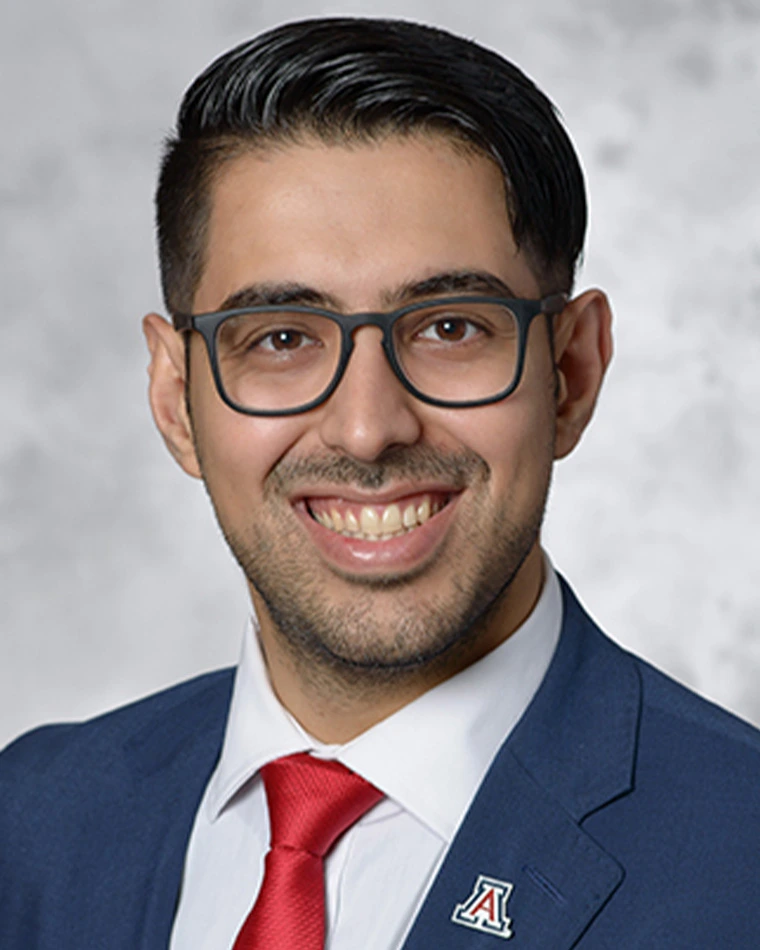
Soheil Salehi is a tenure-track Assistant Professor in the Department of Electrical and Computer Engineering at the University of Arizona, with a joint appointment in Systems and Industrial Engineering. He is the Director of the Privacy-preserving, Intelligent, and Secure Computing (PRISM) Lab, established in August 2022. Prior to this, he was an NSF-Sponsored Computing Innovation Fellow and Postdoctoral Research Fellow at the University of California, Davis. Ph.D., Electrical and Computer Engineering, University of Central Florida, 2020 M.S., Electrical and Computer Engineering, University of Central Florida, 2016 B.S., Isfahan University of Technology, Iran, 2014 Dr. Salehi's research focuses on the intersection of hardware, AI, and security. His work spans hardware and AI-enabled security in IoT , Generative AI for hardware design and security , neuromorphic and biologically-inspired AI hardware , emerging spin-based devices , reconfigurable architectures , low-power VLSI circuits , and digital twins and mixed reality for semiconductor workforce development . He also explores the application of Generative AI in personalized education . His recent publications, spanning 2023–2025, reveal a strong trend toward integrating AI and machine learning into hardware security and design. Key themes include automated secure IC design flows , AI-driven hardware obfuscation , firmware and side-channel attack analysis , security in neuromorphic and spiking neural networks , and educational frameworks using digital twins and generative models . His work appears in top venues like DAC, ICCAD, USENIX Security, IEEE TCAS-I, and ISCAS. Outstanding Reviewer Award, IEEE/ACM Design Automation Conference (DAC), 2023 Best Presentation of the Symposium Award, UC Davis Postdoctoral Research Symposium, 2021 UCF Excellence by a Graduate Teaching Assistant (University-Level), 2016 Nominated for 30-under-30 Award, UCF, 2020 Nominated for Postdoctoral Research Excellence Award, UC Davis, 2022 Dr. Salehi has secured significant research funding as PI and Co-PI, including a $300K NSF SaTC EAGER grant on Generative AI-based Personalized Cybersecurity Tutor, a $174,000 University of Arizona PIF Award, and multiple RII grants totaling over $198K. He has also received industry funding from CHEST. He actively mentors students and leads the PRISM Lab, which focuses on privacy-preserving and intelligent secure computing. His service includes roles as Technical Program Committee (TPC) Member and Session Chair at premier conferences such as DAC, ICCAD, CCS, NDSS, and GLSVLSI. The PRISM Lab, under his direction, conducts cutting-edge research in secure and intelligent hardware systems, with applications in IoT, edge computing, and workforce development. The lab emphasizes interdisciplinary collaboration and innovation in both research and education.
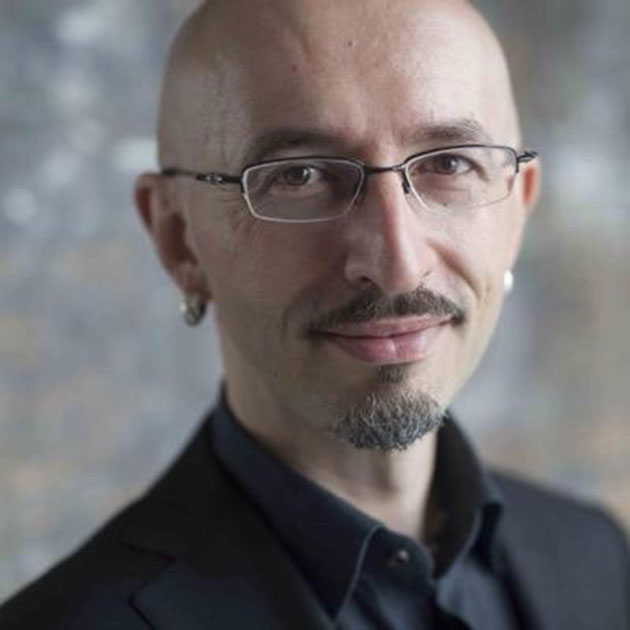
Antonio A. Casilli is a Professor of Sociology at Télécom Paris (Institut Polytechnique de Paris) and a researcher at the Interdisciplinary Institute of Innovation (i3) . He is an associate member of LACI-IIAC (formerly the Edgar Morin Center) at EHESS and serves as a Faculty Fellow at the Nexa Center for Internet and Society (Polytechnic University of Turin) since 2018. Research Focus: Digital labor, platform economy, AI ethics, and the social implications of technology Awards: Prix Étoiles de la SCAM, Prix Meilleur Documentaire de l'Année (Bangkok), selected as Nature Journal Top Science Pick His work analyzes how digital platforms reshape labor dynamics, privacy norms, and social inequalities. Recent studies explore global AI data work, including fieldwork in Latin America, Africa, and Europe. He advocates for ethical frameworks recognizing human labor behind automation. Media Engagement: Regular contributor to France Culture , Le Monde , Wired , and Rue89 . Authored En attendant les robots (2019) and Schiavi del clic (2020), investigating hidden digital labor structures.
Dean B. Carson is a researcher at Umeå University , affiliated with the Faculty of Medicine, Department of Epidemiology and Global Health , and the Arctic Research Centre . His work focuses on rural health systems, social care workforce challenges, sustainable rural development, and community-based approaches to healthcare and food security. Rural Health : Explores capacity-building in rural health research and medical education reform. Public Health : Analyzes service delivery models and co-creation frameworks for elderly care. Geography : Investigates spatial dynamics in northern peripheries, including food production networks and micro-urbanization. Recent publications (2024-2025) examine topics such as rural health research capacity frameworks , hospital-to-home transfer systems , and non-commercial food distribution networks . His studies often integrate theoretical models like Rural Nursing Theory and Beyond Periphery while emphasizing stakeholder engagement and policy translation. Grants and Collaborations : Funded by the Swedish Research Council Formas, American National Science Foundation (NSF), and Riksbankens Jubileumsfond. Collaborates with Arctic-FROST networks and Lifestyle Migration Hub researchers.
Hannes Zacher is a Professor of Work and Organizational Psychology at Leipzig University's Wilhelm Wundt Institute of Psychology. He previously held academic positions at Queensland University of Technology (Australia) and the University of Groningen (Netherlands). His research focuses on occupational health, proactive employee behavior, aging in the workplace, and sustainable organizational practices. He has been awarded grants from institutions like the German Science Foundation (DFG) and the Volkswagen Foundation. Zacher earned his Ph.D. in Psychology from Justus-Liebig-University Gießen in 2009, following a Diploma (equivalent to B.Sc./M.Sc.) in Psychology from the Technical University of Braunschweig (2000–2006). His research interests include occupational health and well-being, proactive and adaptive employee behavior, aging at work and career development, and environmentally sustainable behavior in organizations. He employs methodologies such as longitudinal surveys, experience sampling, and experiments. Key themes in his work address the interplay between work environments and employee well-being, with a focus on fostering sustainable practices and mitigating age-related challenges in the workplace. Zacher leads projects such as the Centre for Digital Work and studies like 'The Role of Work in the Development of Civilization Diseases.' His publications span topics from green workplace behavior to leadership dynamics during crises. He has no listed scientific awards but has secured significant grant funding for his research. Advising and grant details reflect his commitment to impactful research, though specific student names are not provided. His lab and team efforts emphasize translating psychological insights into organizational practices for sustainability and employee well-being.
Dr. Manish Kumar is a Professor in the Department of Mechanical Engineering at the University of Cincinnati, leading the Cooperative Distributed Systems (CDS) Laboratory and the UAV MASTER Lab. He specializes in robotics, unmanned aerial systems (UAVs), and swarm systems, with a focus on decision-making, control in complex systems, and multi-sensor data fusion. His research has been supported by grants from the National Science Foundation, Department of Defense, and industry partners. Education: Ph.D. in Mechanical Engineering, Duke University (2004) M.S. in Mechanical Engineering, Duke University (2002) Research Interests: Dr. Kumar's work addresses challenges in autonomous systems, including UAV coordination, swarm robotics, and emergency response technologies. He integrates machine learning, control theory, and optimization to develop robust systems for applications such as wildfire management, telehealth, and industrial automation. Grants & Labs: Directed projects funded by federal agencies (NSF, DoD) and industry, totaling over $5M. Co-directs the Collaboratory for Medical Innovation and Implementation and the UAV MASTER Lab. Key Contributions: Pioneered algorithms for UAV path planning and swarm coordination. Developed PDE-based models for epidemic spread prediction and control.