Seyed Masoud Sotoodeh Bahraini is an Assistant Professor at Sirjan University of Technology and Senior Research Fellow at the University of Birmingham. His career spans multiple institutions including Loughborough University (Research Associate/Teaching Fellow) and City, University of London (Postdoctoral Research Fellow). Current Affiliations: Assistant Professor, Sirjan University of Technology Senior Research Fellow, University of Birmingham Past Positions: Research Associate & Teaching Fellow, Loughborough University (2022-2024) Postdoctoral Research Fellow, City, University of London (2019-2021) Dr. Bahraini's research bridges robotics, control theory, and fractional calculus applications. His work focuses on: SLAM and visual odometry in dynamic environments Human-robot collaboration gestural interfaces Fractional-order control for chaotic systems Viscoelastic material modeling in microbeams Multi-robot cooperation for planetary exploration Deep learning integration in robotic perception His publications since 2013 demonstrate expertise in applying fractional calculus to mechanical systems and advancing SLAM algorithms through machine learning. Key trends include: 2013-2014: Foundational work on fractional derivative models for viscoelastic beams 2018-2021: Development of ML-RANSAC SLAM techniques and planetary exploration robotics 2023-2025: Expansion into fuzzy fractional control and human-robot interaction gestures
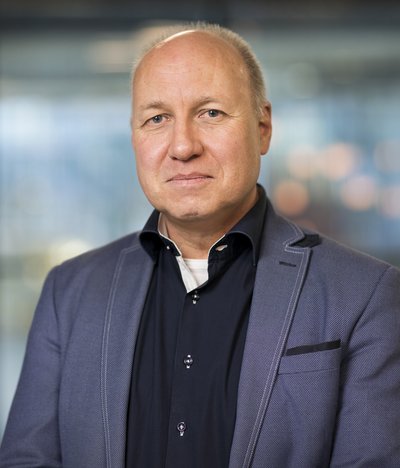
Huib Visser is a part-time Professor of 'Wireless Data and Power Transfer for Miniature and Environment-Independent Electronics' at Eindhoven University of Technology's Department of Electrical Engineering. His primary affiliation is with IMEC Netherlands at Holst Centre Eindhoven, where he leads Wireless Power Transfer research. He holds a PhD from TU/e and KU Leuven (2009) and an MSc in Electrical Engineering from TU/e (1989). Research focuses on optimizing rectennas, phased array antenna technology, and wireless power transfer for biomedical applications. Key areas include antenna miniaturization, near-field measurements, and MMIC design. He authored three books on antenna theory and served as chief editor of the NERG Journal. Publications emphasize advancements in radar-based life-sign detection, indoor tracking systems, and biomedical implant power solutions. His work bridges electromagnetic theory with practical applications in healthcare and sensor networks. Labs/Teams: Leads the Electromagnetics for Care + Cure Research Lab (EM4Care+Cure) and contributes to EIRES Research initiatives.
Roberto Gil Pita is a Professor at the University of Alcalá (Spain), affiliated with the Department of Signal Theory and Communications. He leads the AES3 research group focusing on acoustic and electromagnetic smart sensor networks and signal processing applications. His doctoral work (2006) centered on radar target classification using statistical and AI methods under the supervision of Dr. Manuel Rosa Zurera. His research spans signal processing, machine learning, and their applications in aerospace, biomedical systems, and smart cities. Key areas include UAV detection, emotion recognition from speech, and acoustic localization using microphone arrays. His academic background includes a doctorate from the University of Alcalá and extensive contributions to wireless acoustic sensor networks, hearing aid signal processing, and bioimpedance spectroscopy. He has developed energy-efficient algorithms for real-time audio analysis, acoustic violence detection systems, and robust methods for speech enhancement in noisy environments. His work bridges theoretical signal processing with practical engineering solutions for defense, healthcare, and urban monitoring. Research interests extend to aeroelastic flutter analysis in aviation, wearable biomedical sensors for stress assessment, and data-driven approaches for sound environment classification. He has pioneered the use of deep learning in flutter testing and acoustic event classification, contributing to datasets like REALISED for benchmarking machine learning models. Notable projects include acoustic localization of drones using microphone arrays, real-time emotion detection systems, and collaborative research in smart healthcare technologies. His work emphasizes computational efficiency and energy conservation, particularly for embedded systems and battery-operated devices.
Erman Ayday is an Associate Professor at the Department of Computer and Data Sciences within the Case School of Engineering at Case Western Reserve University. His research focuses on privacy-enhancing technologies, data security, and applied cryptography, with a particular emphasis on genomic privacy, cybersecurity in smart grids, and trust management in ad-hoc networks. He holds a PhD, MS, and BS in Electrical and Computer Engineering from Georgia Institute of Technology (2011) and Middle East Technical University (2005). Education: PhD in Electrical and Computer Engineering, Georgia Institute of Technology (2011) MS in Electrical and Computer Engineering, Georgia Institute of Technology (2007) BS in Electrical and Electronics Engineering, Middle East Technical University (2005) Research Interests: Dr. Ayday’s work addresses privacy challenges in genomic data sharing, secure collaborative learning, and trust management in wireless networks. He explores cryptographic solutions for genomic data protection, inference attack mitigation, and privacy-preserving frameworks for location-based services. His contributions span publications in top-tier journals and conferences, including IEEE Transactions on Dependable and Secure Computing and Bioinformatics. Key Research Trends: His articles highlight advancements in differential privacy for genomic data, secure watermarking techniques, and re-identification attack mitigation. Recent work emphasizes the intersection of machine learning, cryptography, and ethical genomic data use. Grants & Advising: While specific grants are not listed, his publications indicate sustained engagement with funding bodies in cybersecurity and genomics. He advises on projects related to privacy-preserving technologies and has collaborated with institutions like ETH Zurich and IBM Research. Labs & Teams: He leads research initiatives at the Case School of Engineering focused on privacy in big data and cybersecurity for emerging technologies like smart grids and M2M networks.
Ahmad Syahrir Ayub is a Teaching Fellow in the Department of Electronic and Electrical Engineering within the Faculty of Engineering at the University of Strathclyde, Glasgow, UK. He is recognized as a Senior Fellow of the Higher Education Academy (SFHEA), reflecting his commitment to excellence in teaching. Prior to his current role, he served as a Lecturer and Course Leader for the Graduate Apprenticeship BEng in Instrumentation, Measurement and Control at Robert Gordon University, and as a lecturer at Perth College, University of the Highlands and Islands. He also contributed as a researcher in the High Voltage Technologies (HVT) Group at the University of Strathclyde. His educational background includes a Bachelor of Engineering in Electrical and Electronic Engineering from Cardiff University and an ILM Level 3 Award in Leadership and Management. These qualifications underpin his technical and pedagogical expertise. Ahmad's research spans critical areas in electrical engineering and sustainability. His primary interests include lightning and lightning protection systems, cable diagnostics through partial discharge detection, renewable energy integration (particularly wind and solar), and engineering pedagogy. His work contributes to UN Sustainable Development Goals, especially in clean energy and climate action. He has actively participated in innovation projects focused on emissions monitoring, wireless communication for IoT, and energy efficiency in public infrastructure like ice rinks. The recent publications highlight a strong trend in condition monitoring of power systems, particularly through acoustic and signal processing techniques for fault diagnosis in cables. Additional work explores renewable energy modeling and materials science applications, indicating a multidisciplinary approach bridging engineering fundamentals with sustainable technology development. Senior Fellowship of Higher Education Academy (SFHEA) Fellowship of Higher Education Academy (FHEA) STAR Awards 2021 - Certificate of Recognition - Academic Staff OBI Most Inspiring Lecturer (HISA) 1st Paper Prize Award Ahmad has served as a co-investigator on multiple funded innovation projects, including those supported by Scottish Enterprise through Innovation Voucher Awards totaling over £37,000. These projects involved collaborations with industry partners on real-time CO2 emission sampling, drone-based wireless communication, landmine detection sensors, and energy efficiency in ice rinks. While no formal students are listed, his role as a teaching fellow and course leader indicates significant mentorship and curriculum development responsibilities. He has also contributed to climate education through participation in EnRoads climate simulator workshops. His research is conducted within interdisciplinary teams, often collaborating with experts in renewable energy, wireless systems, and environmental monitoring. These collaborations reflect a strong network across academia and industry, particularly in applied engineering solutions for sustainability challenges.
Young-Wook Jun, PhD , is an Associate Professor at the University of California San Francisco (UCSF) and Director of the Nano-Probing Single Biomolecule Dynamics Laboratory within the Department of Otolaryngology - Head and Neck Surgery (OHNS). His research focuses on nanoprobing systems to study single molecule dynamics in cellular processes like gene regulation, cell-to-cell communication, and neuron circuit formation. Education: PhD in Materials Chemistry (KAIST, 2005), Postdoc at Yonsei University (2007) and UC Berkeley (2010). Dr. Jun's work explores nanocrystal-molecules as probes for mechanobiology, integrating fabrication, surface chemistry, and magnetic/plasmonic coupling principles. His funding from the NIH spans projects such as spatiotemporal mechanobiology interrogation (R35GM134948) and Notch signaling analysis (R01GM112081). His publications (over 40) and book chapters (5) include breakthroughs in magnetic nanotools, plasmon rulers, and quantum dots for live-cell mechanogenetics. Awards include the Sandler Foundation New Innovator Award (2010), IUPAC Prize (2005), and recognition as a Highly Cited Researcher (2014).
Patrick Mayor serves as Head of Faculty Affairs for the School of Engineering (STI) at École Polytechnique Fédérale de Lausanne (EPFL), while concurrently holding roles as Coordinator of the STI Academic Evaluation Committee and Scientist in the PRN-MARVEL (NCCR MARVEL) administration. His institutional presence spans administrative leadership and research coordination within EPFL's engineering ecosystem. Research interests demonstrate a clear evolution from fundamental granular physics (2003-2008) to complex systems engineering (2010-2018). Early work established foundational insights into vibration-fluidized granular matter, Brownian motion analogies, jamming transitions, and impact cratering mechanics. Later contributions pivoted toward the Nano-Tera.ch initiative, focusing on engineering integrated systems for health monitoring, environmental sustainability, and energy infrastructure through nanotechnology applications. This trajectory reflects a strategic shift from theoretical physics toward applied transdisciplinary engineering solutions. Publication analysis reveals distinct thematic clusters: granular media studies predominantly appear in high-impact physics journals ( Nature , Physical Review Letters ), characterized by experimental investigations of non-equilibrium statistical mechanics. The Nano-Tera.ch series features in engineering and information technology venues, emphasizing system integration, sensor networks, and cyber-physical architectures. Both phases maintain rigorous methodological approaches while addressing increasingly complex real-world challenges. Administrative leadership positions indicate significant institutional responsibility, with Faculty Affairs oversight encompassing academic evaluations, strategic planning, and faculty development across EPFL's engineering school. PRN-MARVEL involvement connects to Switzerland's National Centre of Competence in Research, positioning Mayor at the intersection of academic governance and cutting-edge materials science initiatives. Research infrastructure engagement includes the PRN-MARVEL administration and Nano-Tera.ch consortium, facilitating cross-disciplinary collaboration between physicists, engineers, and computer scientists. These frameworks support large-scale projects addressing societal challenges through technological innovation, with Mayor contributing to both conceptual development and operational execution.
Prof. Horst Hellbrück is an esteemed academic at the Lübeck University of Applied Sciences , where he holds a professorship in Communication Systems and Distributed Systems since 2008. He leads the Center of Excellence CoSA (Communications - Systems - Applications) and focuses on wireless mobile networks, sensor networks, and their applications in medical and underwater technologies. His work bridges theoretical research with practical implementations, including projects like 5G-TELK-NF (autonomous driving/flying), Baltic Future Port (5G drone-based data optimization), and DAVE (digital twin for inland vessel navigation). Education: Diplom (equiv. to Master’s) in Electrical Engineering (1994, University of Saarland); PhD in Computer Science (2004, TU Braunschweig). Research Interests: Modern network structures, sensor systems for healthcare, underwater object detection, and 5G/AI integration. Scientific Contributions: His recent publications focus on UWB-based localization, 5G industrial deployments, and multisensor platforms for underwater applications. He has developed tools like ANSim (Ad-Hoc Network Simulator) and JGPSMap (GPS visualization). Leadership Roles: Active in GI/ITG Fachgruppe KuVS , program committee memberships, and long-term support for internationalization as part of the university’s governance bodies.
Dr. Yee Wei Law is a Senior Lecturer at the University of South Australia's (UniSA STEM) Mawson Lakes Campus. His research expertise spans cybersecurity, machine learning, and wireless sensor networks, with a focus on secure communication systems and autonomous vehicle localization. He serves as a Research Degree Supervisor and actively contributes to publications in IoT security, space systems, and privacy-preserving technologies. Research Trends : Recent work emphasizes domain adaptation for predictive maintenance, adversarial attack analysis in computer vision, and quantum key distribution for satellite-IoT networks. Key themes include security in smart grids, UAV-based gesture recognition, and collaborative privacy-preserving algorithms. Publications highlight interdisciplinary applications of machine learning in fault diagnostics, cloud detection via satellite, and secure networking protocols. His work bridges theoretical advancements with real-world implementations in hypersonic tracking and RFID security.
Andrea Nardin is a Fixed-term Assistant Professor at the Department of Electronics and Telecommunications (DET) within Politecnico di Torino. He is an active member of the Interdepartmental Center CARS@PoliTO (Center for Automotive Research and Sustainable Mobility), contributing to advancements in telecommunications and navigation systems. His research spans Digital Signal Processing Global Navigation Satellite Systems (GNSS) Signal Integrity Wireless Communication Andrea's scholarly work focuses on GNSS signal applications, ranging from combating electromagnetic interference to developing robust tracking architectures and orbit determination algorithms. His recent publications highlight innovations in jammer localization, lunar navigation, and Kalman filter optimization for space environments. Teaching engagements include collaborations on courses such as Numerical Estimation Methods for Radionavigation Hardware & Wireless Security Satellite Navigation Systems across multiple academic programs. He supervises PhD candidate Francesco Fiorina in the field of Electrical, Electronics, and Communications Engineering.
Hazem Ali is a Senior Lecturer at Halmstad University's School of Information Technology. He holds a Ph.D. in Electrical and Computer Engineering from Faculdade de Engenharia da Universidade do Porto (FEUP) and an M.Sc. in Computer Science and Engineering from Halmstad University. His research focuses on embedded systems, real-time systems, and dataflow programming models. He has expertise in hardware/software co-design, parallel computing, and optimization of real-time applications. Education: Ph.D. in Electrical and Computer Engineering (FEUP, Portugal) M.Sc. in Computer Science and Engineering (Halmstad University, Sweden) Recent publications highlight his work in cybersecurity for autonomous vehicles, GPU acceleration of MIMO systems, and optimization of dataflow models. His projects include ELLIIT B02 (Beyond 5G Wireless) and CyberInfra (Cybersecure Traffic Infrastructure). Proficiency in tools includes MATLAB, C/C++, Java, VHDL, and dataflow languages like CAL and Sigma-C, with extensive international experience in Sweden, Portugal, and Egypt.
Talip Tolga Sarı is a Research Assistant at the Department of Computer Engineering , Istanbul Technical University , where he has been affiliated since 2019. He holds a PhD in Computer Engineering (2021), a Master's in Computer Engineering (2018), and dual Bachelor's degrees in Computer Engineering and Electronics & Communication Engineering (2015). Education PhD in Computer Engineering, Istanbul Technical University (2021) Master's in Computer Engineering (2018) Bachelor's in Computer Engineering (2015) Bachelor's in Electronics & Communication Engineering (2015) Research interests span Computer Networks , Wireless Communication , and Unmanned Aerial Vehicles (UAVs) , with a focus on semantic communication , UWB localization , and topology control for resilient networks. His recent publications address UAV swarm coordination , smart campus frameworks , and assisted localization systems , reflecting interdisciplinary applications of computer science in real-world problems. Key trends in his 15 most recent articles include decentralized UAV networks, semantic communication architectures, and UWB-based indoor positioning. His work combines machine learning, cross-layer routing, and software-defined networking paradigms, with citations spanning Computer Science , Robotics , and Network Security . Awards : Highest Performance Award, Istanbul Technical University (2025)
Lauren Linderman is an Associate Professor at the Department of Civil, Environmental, and Geo- Engineering within the University of Minnesota's College of Science and Engineering. She serves as the Director of the Multi-Axial Subassembledge Testing (MAST) Laboratory, focusing on cyber-physical systems to enhance structural performance under dynamic loads like earthquakes and wind. Ph.D. in Civil Engineering, University of Illinois at Urbana-Champaign, 2013 M.S. in Civil Engineering, University of Illinois at Urbana-Champaign, 2009 B.S. in Civil Engineering, Washington University in St. Louis, 2007 Her research emphasizes vibration mitigation strategies, decentralized control, wireless sensor systems, and data acquisition techniques. Current projects leverage wireless smart sensors for real-time structural control and health monitoring, enabling multitasking networks that integrate control and diagnostics. Recent publications highlight advancements in wind engineering, structural monitoring, and wireless sensor networks. Key topics include aerodynamic design for highway structures, polymer-based sensing technologies, and robust control frameworks for seismic resilience. While no specific awards are listed, her work is widely disseminated through journals and conferences. Linderman's group actively advises both undergraduate and graduate students, with alumni contributing to structural dynamics and sensor development. The MAST Laboratory collaborates with experts in civil engineering, materials science, and computational systems.
Professor Agustin Agüera Perez is affiliated with the University of Cádiz, specifically in the Department of Automation, Electronics, Architecture and Computer Networks Engineering. He is associated with the Institute of Viticulture and Agri-Food Research (IVAGRO) and the TIC168 Computational Instrumentation and Industrial Electronics (ICEI) research group. His research focuses on power quality monitoring, with particular expertise in applying higher-order statistics (HOS) for the characterization of electrical phenomena. His work spans electronics, smart grid monitoring, and renewable energy systems integration. He has extensive publications in these domains from 2010 to 2025. His publications from 2023-2025 show continued focus on HOS techniques for power quality analysis, including sag detection, time domain and frequency domain measurements, and event detection strategies. This work has applications in smart grids and renewable energy integration. He has also published on the use of ESP32 microcontrollers for real-time synchronized sensor networks. He earned his PhD from the University of Cádiz in 2013 with a thesis titled 'Prediction of wind potentials from basic meteorological networks. Fuzzy logic applied to the characterization of local wind conditions' under the supervision of Dr. Antonio Moreno Muñoz and Dr. Juan José González de la Rosa.
Professor Ammar B. Kouki is affiliated with the École de Technologie Supérieure in the Department of Electrical Engineering . With a Ph.D. from the University of Illinois and academic roots at Pennsylvania State University, his work bridges microwave engineering, electromagnetism, and wireless systems. Research Axes: Aeronautics/Aerospace, Microwave Circuits, Electromagnetic Modeling Labs: LACIME Laboratory His research interests focus on: RF and microwave circuit design Antenna arrays for 5G and satellite communications Power amplifier efficiency and linearity LTCC (Low-Temperature Co-fired Ceramic) integration MEMS-based reconfigurable systems Thermoelectric energy harvesting Notable article trends include advancements in: LTCC cavity-backed phased arrays for Ka-band 3D microfabrication techniques Harmonic optimization for Class-GF amplifiers Fluidic tuners for microwave adaptability Electromagnetic education via AI Thermal management in GaN HEMTs Academic Leadership : Supervised 20+ graduate theses (PhD and Master’s) Collaborated with industry leaders (Ghannouchi, Gagnon, Landry) Authored 91 peer-reviewed journal articles and 150+ conference reports Holds 8 patents in RF duplexer and amplifier technologies