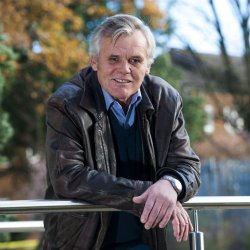
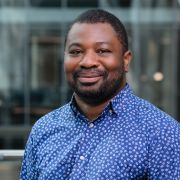
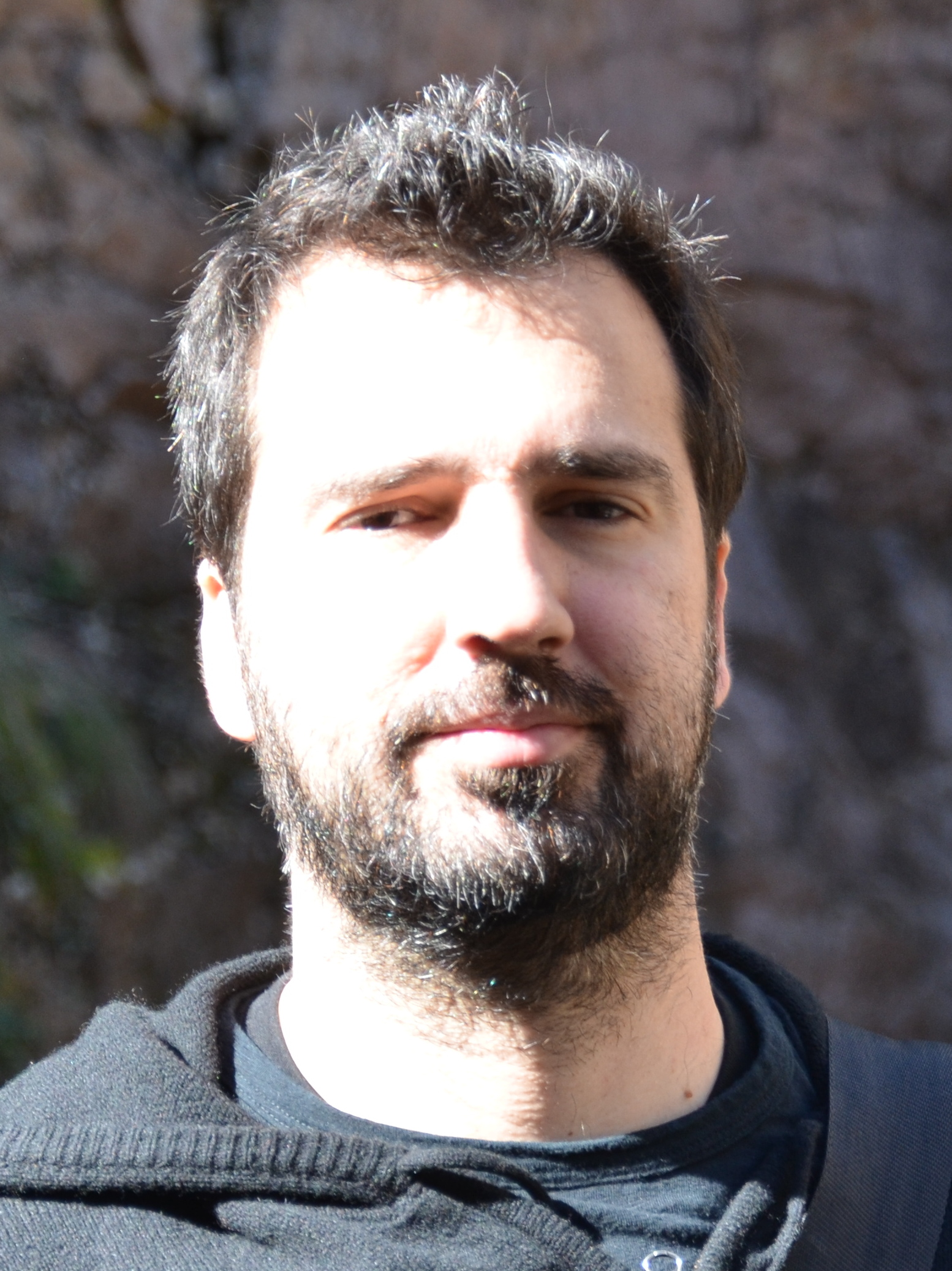
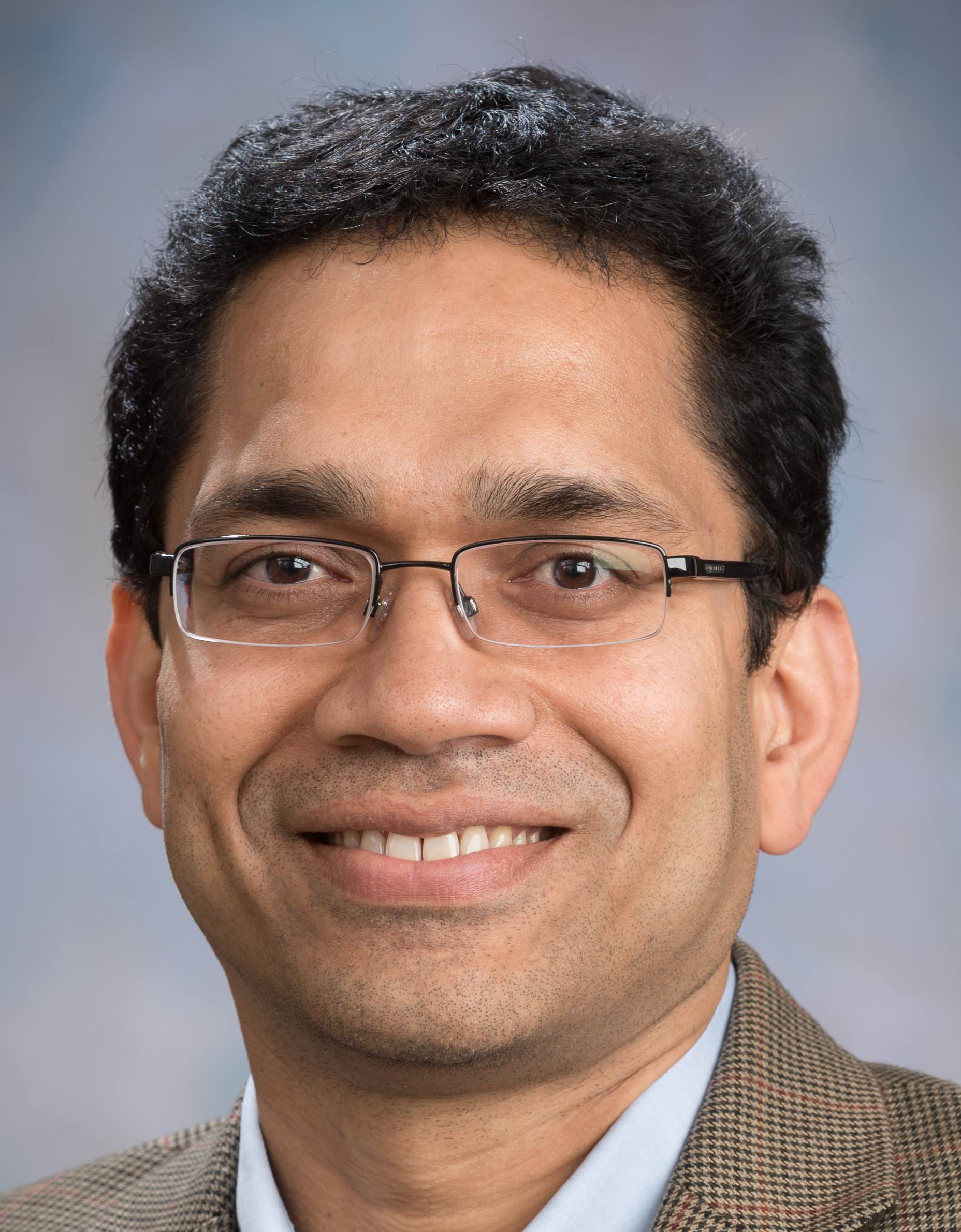
Dr. Saptarshi Sengupta is an Assistant Professor in the Department of Computer Science at San José State University (SJSU), leading the Machine Intelligence and Complex Systems (MICoSys) Lab. He advises the ACM student club at SJSU and holds a 'Alien of Extraordinary Ability' visa (Einstein Visa) from USCIS. His work focuses on resilient cyber-physical systems, risk analysis, and deep learning applications in healthcare and industrial systems. Education: Ph.D. in Electrical Engineering, Vanderbilt University M.S. in Electrical Engineering, Vanderbilt University B.Tech. in Electronics & Communication Engineering, West Bengal University of Technology Research Interests: Cyber-Physical Systems Security Healthcare AI for Cancer and Chronic Disease Prediction Battery Prognostics and Energy Systems Machine Learning for Complex Systems Analysis Key Achievements: Dr. T.M.A. Pai Gold Medal Award for Healthcare AI contributions Recipient of multiple best paper awards at international conferences Author of over 30 peer-reviewed publications Labs & Teams: Leads the MICoSys Lab, developing AI solutions for healthcare diagnostics, industrial prognostics, and smart infrastructure systems. Collaborations include interdisciplinary projects with biomedical and engineering domains.
Dr. Masoud Makrehchi is an Associate Professor in the Department of Electrical, Computer and Software Engineering at Ontario Tech University, part of the Faculty of Engineering and Applied Science. His research focuses on Natural Language Processing, Artificial Intelligence, Machine Learning, and Social Computing, with a strong emphasis on applications in network science and moral AI. He holds a PhD from the University of Waterloo (2007), along with earlier degrees from Shiraz University and Iran University of Science and Technology. Prior to academia, he worked as a Senior Research Scientist at Thomson Reuters (2008–2012) and completed a postdoctoral fellowship at the University of Waterloo (2007–2008). His research expertise includes text mining, social network analysis, and network science, addressing challenges such as signed social network analysis, document classification, and crime trend prediction using social media data. He has received several awards, including the NSERC Postgraduate Scholarship and the SBP Challenge Award (2012). His work spans over 50 peer-reviewed publications in journals like Expert Systems with Applications, Social Network Analysis and Mining, and Web Intelligence, with contributions to conferences such as GECCO and IEEE/ACM. Dr. Makrehchi’s publications highlight innovations in feature selection, text segmentation, and AI-driven frameworks for requirements elicitation. His recent work explores coherence graphs for text segmentation, generative AI in education, and bias detection in medical datasets. He has also contributed to patent applications related to sentiment analysis and text extraction systems.
David Karger is a Professor of Computer Science at MIT, affiliated with the Computer Science and Artificial Intelligence Laboratory (CSAIL). He holds a B.A. from Harvard University and a Ph.D. from Stanford University. His research spans algorithms, information retrieval, human-computer interaction, and theory of computation. He leads the Haystack group, focusing on information management systems and collaborative tools. Notable contributions include the Scatter/Gather browsing system, the Mavo web application framework, and projects like Wikum and Squadbox for online collaboration and harassment prevention. Education: A.B. Summa cum Laude in Computer Science, Harvard University (1989) Ph.D. in Computer Science, Stanford University (1994) Research Interests: Karger’s work integrates algorithmic theory with practical systems, emphasizing human-centered design. Current projects address misinformation detection, social interaction systems, and educational tools. His research bridges theoretical computer science and applied domains such as web technologies and healthcare informatics. Awards: ACM Doctoral Dissertation Award (1994) Mathematical Programming Society Tucker Prize (1997) National Academy of Sciences Award for Initiative in Research (2004) Advising & Grants: Karger has advised over 30 students, many of whom have gone on to leadership roles in academia and industry. His work has been supported by grants from the MIT Schwarzman College of Computing and collaborations with companies like Akamai and Google. Labs & Teams: He leads the Haystack Group within CSAIL, collaborating with interdisciplinary teams on projects such as Mavo, Wikum, and Eyebrowse. His research also intersects with the Theory of Computation and Algorithms groups at MIT.
Dr. Franjo Cecelja is a Reader in the School of Chemistry and Chemical Engineering at the University of Surrey. He holds a Dipl. Eng. from the University of Zagreb, an M.Sc. from Cranfield Institute of Technology, and a Ph.D. from Brunel University. His research focuses on systems engineering for energy and industrial applications, optimization, decision making, and semantic technologies. He has led projects such as the FP7 (Marie Curie LTN) initiative on renewable energy systems engineering (£425k, 2013–2018). His work spans ontology engineering applications in biorefining, waste valorization, and sustainable processing. Notable contributions include semantic frameworks for model and data integration in biorefineries and decision support systems for industrial symbiosis. Education: Ph.D., Brunel University (Optical Sensors for Electric Fields) M.Sc., Cranfield Institute of Technology (Control & Signal Processing) Dipl. Eng., University of Zagreb (Aerospace Technology) His research interests integrate ontology engineering with process systems engineering to address challenges in biorefining, industrial symbiosis, and sustainable resource management. Recent publications emphasize semantic technologies for waste valorization, PFAS treatment, and decision-making frameworks in biorefining. Dr. Cecelja’s FP7 project demonstrated leadership in renewable energy systems, leveraging semantic networking facilities and value chain optimization. His work bridges academic research with industrial applications, emphasizing circular economy principles and model-driven decision support. Labs/Teams: His research is conducted within the University of Surrey’s School of Chemistry and Chemical Engineering facilities, collaborating with interdisciplinary teams on biorefining and process systems engineering.
Evimaria Terzi is a Professor and Department Vice Chair at Boston University (BU), affiliated with the Data Management Lab@BU. Her research focuses on algorithmic data mining with applications in network analysis, recommendation systems, ranking, and clustering. She holds a PhD from the University of Helsinki and has held prior roles at IBM Almaden Research Center (2007–2009) and the Helsinki Institute for Information Technology (HIIT) before 2007. Her work spans theoretical and applied domains, including team formation algorithms, fairness in AI, and large language model evaluation. Notable contributions include studies on LSM tree optimization, counterfactual explanations for auditing fairness, and the dynamics of memorization in LLMs. Her recent publications emphasize flexibility in database systems and ethical AI practices. Evimaria’s research has been recognized through her contributions to conferences like WSDM and KDD, where she has served in organizing roles. The themes of her work consistently bridge algorithmic innovation with real-world applications in social networks, healthcare, and collaborative systems.
Dr. Olakunle Olayinka is a Senior University Teacher and Deputy School Director of Education in the Department of Computer Science at the University of Sheffield. He is a member of the Institute of Coding and has over a decade of experience in IT and academia. Prior to his current role, he worked as a Research Assistant at the University of Gloucestershire, teaching Cybersecurity and related modules. He holds a PhD in Computing from the University of Gloucestershire, alongside an MSc in Computer Forensics and BSc in Computer Science from Babcock University and University of Glamorgan respectively. His research focuses on Cybersecurity & Gamification , Digital Forensics , and Information Systems Adoption . He has contributed to studies on generative AI in education, cybersecurity training methodologies, and digital transformation strategies for small businesses. Recent work includes exploring AI-driven approaches to web application security and IoT threat hunting using bio-inspired models. His publications span journals like Sustainability and Journal of Applied Learning & Teaching , with a focus on bridging educational technology gaps and enhancing cybersecurity practices. He has co-authored book chapters on digital transformation in Nigerian enterprises and cybersecurity frameworks. Teaching responsibilities include Cybersecurity Team Project, Cyber Threat Hunting, and Software Engineering modules. He advocates for project-based learning approaches, as demonstrated in his work on Agile methodologies in software projects.
Dr. Tony Stockman is a Senior Lecturer at Queen Mary University of London's School of Electronic Engineering and Computer Science. His teaching focuses on Database Systems, Interaction Design, and Semi-structured Data Modelling across undergraduate and postgraduate programs. His research interests include Human-Computer Interaction, Auditory Displays, and Data Sonification, with a strong emphasis on accessibility and cross-modal interfaces. Dr. Stockman has contributed to over 100 publications, exploring topics such as biofeedback systems, assistive technologies for visually impaired individuals, and collaborative design methodologies. His work frequently bridges technical innovation with user-centric design principles. Notable projects include the development of non-visual navigation tools like the Audiom web-based map viewer and co-designed haptic wearables for music synchronization. His research also addresses challenges in education technology, such as dyslexia screening through serious games.
Ahmed AbuRa'ed is a Researcher at the Department of Information and Communication Technologies (DTIC) at Universitat Pompeu Fabra (UPF), Barcelona. He is affiliated with the TALN research group and the Large-Scale Text Understanding Systems Lab. His work focuses on advancing knowledge in scientific text summarization, information extraction, and machine learning. Education: PhD in Computer Science (2020), UPF, Barcelona, Spain M.Sc. in Computer Science (2015), University of Trento, Italy B.Sc. in Computer Information Systems (2007), An-Najah University, Nablus, Palestine Research Interests: Natural Language Processing (NLP), Machine Learning/Deep Learning, Semantic Web, Information Extraction, Data Mining, and Scientific Document Summarization. His projects include developing systems for automatic generation of state-of-the-art reports, scientific text summarization, and cross-document relation discovery. Publications Focus: His 15 most recent articles (2016–2021) emphasize advancements in scientific literature analysis, including citation detection, text simplification, and cross-document summarization. Notable works involve systems like LaSTUS/TALN for scientific text processing and OlloBot for Arabic health dialogue agents. Labs & Teams: Active member of the TALN research group and the Large-Scale Text Understanding Systems Lab at UPF's DTIC department. Open to collaborations in NLP, Machine Learning, and related fields via email or Skype.
Simone Ferlin is an Adjunct Senior Lecturer at Karlstad University working with 5G and Internet evolution. She completed her PhD in computer science in 2017 at the Simula Research Lab and Universitetet i Oslo under the supervision of Dr. Ozgu Alay and Prof. Michael Welzl. Her PhD dissertation focused on increasing robustness in multipath transport with MPTCP. Dr. Ferlin's educational background includes a PhD in Computer Science from the Simula Research Lab and Universitetet i Oslo (2017). Her doctoral research centered on enhancing robustness in multipath transport protocols, specifically focusing on MPTCP (Multipath TCP). She also completed undergraduate work that contributed to a book project with Prof. Friedrich Oehme on electronics and circuit technology. Dr. Ferlin's research spans multiple domains at the intersection of networking, systems, and performance engineering. Her primary interests include network and system measurements, performance analysis, security, and congestion control. She investigates how networks like the Internet evolve, examining technology development, adoption patterns, and their impacts on various entities. Additionally, she explores ways to harmonize security and privacy while making them more usable and assessable. Her work particularly focuses on transport layer and multipath transport protocols, examining their performance and security aspects. She also investigates application and transport layer performance, automation, and monitoring. Her research extends to network programming in both Linux kernel and user space, mobile broadband networks from 2G to 5G, and their intersection with the Internet. She is deeply engaged in observability, distributed and system performance monitoring, and automation. Analysis of Dr. Ferlin's recent publications reveals a strong focus on next-generation networking technologies. Her work spans multiple domains including 5G/6G networks, transport protocols (particularly QUIC and MPTCP), network virtualization, container orchestration, and the application of machine learning to networking problems. She has increasingly incorporated large language models into network configuration and automation research. Her publications demonstrate a consistent emphasis on performance measurement, optimization, and security across diverse networking environments from the edge to the cloud. Dr. Ferlin has received notable recognition for her research contributions: Best paper award at IEEE ICIN'21 for 'Learning-based Incast Performance Inference in Software-Defined Data Centers' Applied Networking Research Prize (ANRP)'25 winner for 'NetConfEval: Can LLMs Facilitate Network Configuration?' Dr. Ferlin is actively involved in mentoring the next generation of networking researchers. She has co-supervised numerous Master's and PhD students across multiple institutions including Karlstad University, KTH, TU Berlin, University of Oslo, and universities in Brazil. Her students have worked on diverse topics including NAT64 performance comparison, system tracing visualization, network observability, ML applications to multipath transport, FEC integration with QUIC, high-performance networking for 5G, congestion control, shared bottleneck detection, multipath IoT applications, and container runtime performance. She is also involved in several significant research projects including Vinnova's SEMLA (Securing Enterprises via Machine-Learning-based Automation), Horizon Europe's CODECO (Cognitive Decentralised Edge Cloud Orchestration), and the Knowledge Foundation of Sweden's DRIVE (Data-driven Latency-Sensitive Mobile Services for a Digitized Society). Dr. Ferlin serves as Workshop Chair for ACM SIGCOMM '25, is a member of the ACM/IRTF Applied Networking Research Workshop (ANRW) steering committee, and co-chairs the Internet Congestion Control Research Group (ICCRG) at the IRTF. She previously served as Associate Technical Editor for IEEE Communications Magazine and has been active on numerous program committees for major networking conferences including SIGCOMM, CoNEXT, IMC, and PAM.
Carolina Ruiz is the Associate Dean of Arts and Sciences and Harold L. Jurist Dean’s Professor of Computer Science at Worcester Polytechnic Institute (WPI). She holds a PhD in Computer Science from the University of Maryland College Park (1996) and has been at WPI since 1997, progressing from Assistant Professor to Full Professor. Her research focuses on Machine Learning, Artificial Intelligence, and Data Mining applied to medicine, health, and education. Notable projects include developing AI-driven methods for sleep analysis, behavioral health interventions like the SlipBuddy app, and interdisciplinary programs in Bioinformatics and Neuroscience. She leads the Knowledge Discovery and Data Mining Research Group and serves on WPI’s Academic Planning Committee. Ruiz has advised over 35 graduate students, 150 undergraduates, and 12 high school researchers, emphasizing vertical integration of research teams. She co-led a $1.2M NSF grant (2017-2021) bridging Biology and Computer Science education through transdisciplinary curricula. Key service roles include Associate Department Head of Computer Science and governance committees at WPI. Education: PhD Computer Science, University of Maryland (1996) MS Computer Science, Universidad de Los Andes (1990) BS Computer Science & Mathematics, Universidad de Los Andes (1988-1989) Ruiz’s research spans medical AI applications (stroke prediction, sleep modeling), educational technology (computational biology curricula), and wearable sensor analytics. Her work has been featured in media including Medical News Today and NSF-funded initiatives. She emphasizes translational research bridging academia and real-world societal challenges.
Panayiotis Tsaparas is an Associate Professor in the Department of Computer Science & Engineering at the University of Ioannina, Greece. He is also a Collaborating Senior Researcher at the Archimedes Research Center since 2023. His academic journey includes a Ph.D. from the University of Toronto, postdoctoral work at the University of Rome (La Sapienza) and the University of Helsinki, and research experience at Microsoft Research, Search Labs. Education: B.Sc., University of Crete, Greece Ph.D., University of Toronto, Canada, supervised by Allan Borodin His research focuses on algorithmic fairness, social network and media analysis, and data mining . He investigates how opinions form and spread in networks, how bias manifests in algorithms like PageRank, and how to design fair recommendation systems. His work bridges theoretical algorithm development with practical applications in social computing. His recent publications, appearing in top venues like WWW, KDD, WSDM, and SDM, reveal strong trends in fairness-aware algorithms, opinion dynamics, polarization modeling, and temporal network analysis . He has pioneered work on fairness in PageRank and link recommendations, and on measuring and moderating polarization in online communities. Scientific Awards: Best paper award at ACM SIGMOD Workshop on Data Bases and Social Networks (DBSocial), 2013 Best paper award runner-up at ACM KDD, 2006 He leads a research group and has advised students on topics including internet review analysis and election prediction using Twitter. He has secured significant funding, notably a Marie Curie Reintegration Grant (JMUGCS) , which supported research on jointly mining user-generated content across reviews, social networks, and behavioral data. His teaching includes undergraduate and graduate courses such as Data Mining and Online Social Networks and Media . He collaborates extensively with researchers like Evaggelia Pitoura, Nikos Mamoulis, Aristides Gionis, and others, forming a strong network in the data mining and social network analysis community.
Yasir Zaki is an Assistant Professor of Computer Science at New York University Abu Dhabi and a Global Network Assistant Professor at the Courant Institute of Mathematical Sciences, NYU. He leads the Communication Networks Lab, focusing on next-generation communication systems, performance optimization, and digital equity. University: New York University Abu Dhabi School: Courant Institute of Mathematical Sciences Department: Department of Computer Science Academic Rank: Assistant Professor Email: yz48@nyu.edu Dr. Zaki holds an MSc and PhD in Communication and Information Technology from the University of Bremen, graduating with honors. His research centers on communication and wireless networks, cellular systems, congestion control, and enhancing internet access in developing regions. His work bridges theory and real-world impact, especially in digital inclusion and AI's role in education. His recent publications span top venues like PNAS, IEEE TCSS, and ACM IMC, covering topics such as satellite network performance, digital inequality (Lite-Web), AI in education, and Big Tech's global influence. These works reveal a strong trend toward socially impactful computing, network measurement at scale, and algorithmic transparency. Big Tech Dominance Despite Global Mistrust Perception of AI in Education YouTube's Political Bias Lite-Web for Digital Equity Satellite Network Analysis His research has been recognized through high-profile media coverage in Nature and The National , and his PhD student Hazem Ibrahim received the MIT Technology Review Arabia’s Innovators Under 35 MENA 2023 award. This reflects the lab's excellence in computational social science and AI policy. Dr. Zaki mentors students in the Capstone and Research Seminar courses and actively advises PhD and research assistants. He has secured research funding through NYUAD and collaborative projects, enabling field deployments in 56 countries. His lab, the Communication Networks Lab, fosters interdisciplinary work, involving researchers from computer science, social sciences, and policy.
Shrideep Pallickara is a Professor in the Department of Computer Science at Colorado State University, where he also directs the Center for eXascale Spatial Data Analytics and Computing (XSD) . His research is funded by the National Science Foundation, Department of Homeland Security, Environmental Protection Agency, Department of Agriculture, and the UK's e-Science program. Research Interests: His research lies at the intersection of machine learning and large-scale systems, focusing on: Spatiotemporal data management and analytics Extreme-scale storage systems Stream processing for IoT and cyber-physical systems Deep learning over petabyte-scale, high-dimensional datasets Model construction for forecasting natural and urban phenomena His work addresses challenges in computational tractability, resource utilization, and convergence in distributed environments. Systems developed in his lab are deployed in domains such as urban sustainability, agriculture, epidemiology, environmental monitoring, healthcare, and defense. Research Trends in Publications: His recent publications demonstrate a strong focus on scalable analytics for geospatial and environmental data. Key themes include deep learning for soil moisture and salinity prediction, efficient visualization of massive satellite datasets, spatiotemporal search and summarization, and model performance profiling across spatial domains. The work integrates scientific domain knowledge with machine learning and systems innovation. Scientific Awards: NSF CAREER Award Board of Governors Award for Excellence in Undergraduate Teaching OLIE Award N. Preston Davis Award Monfort Professorship Best Paper Award at IEEE/ACM CCGrid 2019 Best Paper Award at BDCAT 2023 Best Paper Award at IEEE Cluster 2012 Best Student Paper Award at IEEE CloudCom 2010 Shortlisted for ACM DEBS-2015 Grand Challenge Award One of the Six Best Papers at ACM/IEEE GRID 2005 Advising and Grants: He advises numerous graduate students, many of whom are co-authors on his publications. His research is supported by major grants from NSF, DHS, EPA, USDA, and UK e-Science, enabling the development of open-source systems such as Granules, NaradaBrokering, Galileo, Funnel, and Spindle. Labs and Teams: He leads the XSD Center, which develops and maintains large-scale open-source software systems involving over 2500 classes and a million lines of code. These systems are used in academic, commercial, and defense applications.
Ciprian Bogdan Chirila is a Senior Lecturer at the University Politehnica of Timisoara (Faculty of Automation and Computer Science, Computing and Information Technology Department) and also teaches at Ioan Slavici University . His career spans over two decades, with roles in teaching, research, and software development. Education : PhD in Computer Science (2010, University Politehnica Timisoara & University Nice-Sophia Antipolis) Master's in Computer Science & Software Engineering (2002) Engineer Diploma in Automation & Computer Science (2001) Analyst-Programmer Diploma (1996) Research Interests : His work focuses on reverse inheritance for software reusability, generative learning objects for education, and software quality assessment using code metrics. He explores interdisciplinary applications in healthcare, mathematics education, and industrial IT services. Article Trends : Recent publications emphasize adaptive e-learning frameworks , gamification in education , and model-driven development . Key themes include automated assessment , dynamic content generation , and integration of standards like SCORM and xAPI . Scientific Awards : Microsoft Award, Student Scientific Communications Session (2001) Award, Student Scientific Communications Session (2002) Third Place, Mechanics and Robotics Contest (1998) Fourth Place, Traian Lalescu Mathematics Contest (1998) Teaching & Development : He has led laboratory sessions and lectures in Data Structures , Compiler Design , Operating Systems , and Heuristic Methods . He organizes programming contests and develops centralized materials management software as a volunteer engineer.
Auke Jan Ijspeert is a full professor at the École Polytechnique Fédérale de Lausanne (EPFL), where he serves as head of the Biorobotics Laboratory (BioRob). He holds a primary affiliation with the Institute of Bioengineering and a secondary affiliation with the Institute of Mechanical Engineering. His academic leadership and research excellence have established him as a leading figure in bio-inspired robotics and computational neuroscience. B.Sc./M.Sc. in Physics, École Polytechnique Fédérale de Lausanne (EPFL), 1995 Ph.D. in Artificial Intelligence, University of Edinburgh, 1999 Postdoctoral research at IDSIA/EPFL and University of Southern California (USC) SNF Assistant Professor at EPFL, 2002 Promoted to Associate Professor, October 2009 Promoted to Full Professor, April 2016 His research lies at the intersection of robotics, computational neuroscience, nonlinear dynamical systems, and applied machine learning. He investigates animal locomotion and movement control using numerical simulations and robotic platforms, aiming to understand biological principles and apply them to novel robot designs and controllers. His work has led to groundbreaking robots like the salamander-inspired Pleurobot and amphibious robotic systems. He also explores applications in assistive technologies such as exoskeletons and smart furniture for people with limited mobility. The recent publications reflect a strong trend in bio-inspired robotics, neuromechanical modeling, and the use of robots to understand biological locomotion. Key themes include spinal cord modeling for gait control, amphibious and aquatic locomotion, central pattern generators, and the evolutionary transition from swimming to walking. His work integrates neuroscience, biomechanics, and robotics to create physical models that serve both engineering and scientific discovery purposes. Scientific Awards and Honors: IEEE Fellow (2020) Best Paper Prize, CLAWAR 2019 Best Conference Paper Award, SAB 2018 Best Paper Award, IEEE RO-MAN 2014 Best Paper Award, IEEE Humanoids 2007 Overall Best Paper Award, IEEE ICRA 2002 Young Professorship Award, Swiss National Science Foundation Marie Curie Scholarship, European Commission Auke Ijspeert has been actively involved in academic service, serving as an associate editor for IEEE Transactions on Robotics (2009–2013) and Soft Robotics (2018–2021), and as an associate editor for IEEE Transactions on Medical Robotics and Bionics and the International Journal of Humanoid Robotics. He has secured major funding from the Swiss National Science Foundation, Human Frontier Science Program, European Commission (FP7, H2020), Human Brain Project, and other international agencies. He has organized seven major international conferences and served on over 50 program committees. His laboratory, BioRob, is a hub for interdisciplinary research, training students and researchers in biorobotics, and fostering collaboration across neuroscience, robotics, and biomechanics.