Dr. Yasmin Fedda is a Senior Lecturer in Film Studies at Queen Mary University of London, specializing in documentary filmmaking, interactive storytelling, and political sciences. She holds a PhD in Trans-Disciplinary Documentary Film from the University of Edinburgh and a Master's in Visual Anthropology from the University of Manchester. British School at Rome Residency National Theatre Immersive Storytelling Studio CPH:Lab Residency Mothlight Micro Cinema Residency Her research explores intersections between film, anthropology, and human rights, with focus areas in forced migration, representation ethics, disability studies, and activism. She leads the UKRI-funded Protracted Displacement Economies project (2020-2024) and co-created How We Work with 39 collaborators across five countries. Recent works include the immersive documentary The Pathogen of War (2024) about antibiotic resistance in Iraq, and the BAFTA-nominated Breadmakers (2007) on disability inclusion in Edinburgh bakeries. Her Syrian-focused films include Ayouni (2020) on forced disappearances and Queens of Syria (2014) about refugee women's theater. RAI Film Prize Commendation (2021) Best Documentary Director, Abu Dhabi FF (2014) Best Female Director, Carthage FF (2015) Best Doc, Arab FF Minneapolis (2016) Sundance Collection inclusion As Fellow at QMUL's Institute for Humanities and Social Sciences, Fedda combines academic research with practice-led filmmaking. She has programmed festivals like Reel Afghanistan and Reel Syria, and taught film globally through universities and NGOs.
Dr Wokje Abrahamse is an Associate Professor at the School of Geography, Environment and Earth Sciences, Victoria University of Wellington. She holds a PhD and MSc from the University of Groningen, Netherlands, and specializes in environmental psychology, focusing on the human dimensions of environmental change. Education: PhD, University of Groningen, Netherlands MSc, University of Groningen, Netherlands Her research examines psychological barriers to environmentally friendly behaviours, including social norms, habits, and spill-over effects . She evaluates interventions like information campaigns, feedback systems, and commitment strategies to encourage energy conservation and sustainable transport. Her recent publications address climate misinformation, environmental education fieldtrips, and composite environmental indices. Current projects include "Social Influence and Behaviour Change" (2024-2026) and "Co-creating an Intervention Trial" (2023-2024). She supervises doctoral and masters students on topics ranging from climate anxiety to sustainable commuting.
Kimberley O'Neill serves as a Lecturer in Design-Communication Design at The Glasgow School of Art. Her practice encompasses visual arts, media arts, and cross-disciplinary methodologies, often exploring intersections between installation art, digital media, and conceptual frameworks. 2023 : Featured in Berwick Film Festival through Screentime exhibition and screening. 2019 : Presented solo exhibition 'Enigma Bodytech' and participated in Artists Moving Image Festival. 2018 : Coordinated 'Rough Music Workshop' and exhibited at Plymouth Arts Centre. 2017 : Showcased 'Circuits of Bad Conscience' and contributed book chapter 'Slippery Women'. 2016 : Participated in 'Conatus TV' and 'Line of Sight' group exhibition. 2015 : Collaborated on 'Nos Algae's' and 'Amygdala N.O.S' projects. Her research focuses on experimental visual practices that synthesize technology, environmental themes, and spatial interventions. Recent works like 'Screentime' (2023) and 'Porpoise Escape' (2017) demonstrate her interest in abstract narrative structures and digital-physical intersections. Collaborative projects such as 'Visualising the Rite' (2013) highlight educational methodologies that bridge traditional and contemporary art approaches. Exhibition activity spans diverse contexts including Edinburgh Art Festival (2016), South London Gallery (2015), and Glasgow's Tramway (2019). While specific awards and student mentorship data aren't provided, her extensive exhibition record indicates significant contributions to contemporary art practices through installations, video works, and participatory formats.
Ronan Breslin is a Senior Lecturer at The Glasgow School of Art's School of Simulation & Visualisation, where he serves as Head of Sound. His work bridges academic research and professional practice in audio technology and immersive media. Research focuses on 3D audio for VR/AR and 360 media, emphasizing pedagogical strategies for creative communities Established composer and sound designer with credits in television, documentaries, and VR/AR experiences Continues consultancy work in audio broadcast engineering with BBC Scotland Partner in La Chunky Studios recording facilities His research agenda critically examines how 3D audio technology can be democratized for content creators, artists, and filmmakers, while analyzing the impact of technological evolution on studio practices within Scottish cultural contexts. Key Projects & Collaborations: AHRC-funded Laocoön Project for immersive sound design Collaboration with BBC Radio 3 on Fingal’s Cave-inspired immersive sound piece With prior experience as a BBC Scotland audio broadcast engineer, Ronan combines technical expertise with creative applications, maintaining an active role in both academic supervision and industry consultancy.
Ching Lin Pang serves as an Assistant Professor in the Department of Social and Cultural Anthropology within the Faculty of Social Sciences at KU Leuven. She is affiliated with the Leuven International and European Studies (LINES) unit and maintains an office at Parkstraat 45, box 3615 in Leuven. Her academic role includes membership in the Council of the Faculty of Social Sciences as an invited member and observer roles in the POC Rechten and POC Politieke wetenschappen committees. Her research program centers on urban anthropology, migration studies, and cosmopolitanism, with particular focus on Chinese-African relations and medical cooperation. She investigates dynamics of urban spaces, home-making practices, and identity negotiation among migrant communities in Brussels and Chinese cities like Guangzhou and Shanghai. Her ethnographic work explores intercultural and interracial relations across transnational contexts including Burundi and Taiwan. Recent publications (2020-2023) demonstrate consistent engagement with urban transformations and migration networks. Key themes include aesthetic cosmopolitanism in public spaces, South-South migration dynamics, and medical cooperation frameworks. Her work spans diverse settings from Brussels housing estates to jadeite markets on the China-Myanmar border, revealing interconnected global migration patterns. Dr. Pang currently leads multiple long-term research projects: A Floating Medical Network? China-Burundian Medical Cooperation (2020-2025) African Student Mobility in China (2018-2025) Urban Borderland in Brussels (2013-2025) Africans in Guangzhou and Shanghai (2011-2025) She has supervised doctoral research for C. Bosmans (2023), T. Shi (2021), and H-M. Lin (2020) on topics including urban housing, Hmong identity, and Taiwanese immigrant experiences. Within the LINES unit, she contributes to interdisciplinary research on global politics through collaborations spanning architecture, urban studies, and cultural anthropology to develop projective scenarios for sustainable urban futures.
Dr. Sicily Fung Fung Ting is a Lecturer at the School of Information Technology (SoIT), Monash University. She earned her Ph.D. in Engineering (2020) from Multimedia University, specializing in breast cancer classification and visualization using deep neural networks. Her research focuses on deep learning applications in medical image analysis, expert systems, and biomedical engineering. Notably, her work has been recognized with the 2020 WSIS Prize (Champion) and the 2023 FIT Dean's Education Excellence Award. Education: Ph.D., Engineering (2020), Multimedia University MEng.Sc., Visualisation for Early Brain Infarct Detection (2017), Multimedia University BEng (Hons), Electronics & Robotics (2014), Multimedia University Research Interests: Deep Learning for Medical Imaging Computer-Aided Detection (CAD) Telehealth Systems Biomedical Signal Processing Key Projects: FRGS 2022: RewardQNet Framework for Intracranial Aneurysm Segmentation GEMS 2025: AI-Driven Neuroimaging Tool for Aneurysm Detection Her publications span journals like Expert Systems with Applications and Computerized Medical Imaging and Graphics , with impactful contributions to breast cancer classification and brain lesion segmentation. She actively engages in academic outreach, including public lectures and industry collaborations.
Christoph Bernhardt is a Senior Researcher and former director of the research focus “Contemporary History and Archives” at the Leibniz Institute for Research on Society and Space (IRS) in Erkner. He is also an adjunct professor of modern and contemporary history at the Institute of History within the Faculty of Philosophy at Humboldt University of Berlin. His academic affiliations reflect a strong commitment to interdisciplinary urban and environmental history, particularly focusing on the built environment in the German Democratic Republic (DDR) and broader European contexts. Leibniz Institute for Research on Society and Space (IRS), Erkner: Senior Researcher, former Director (until April 2023), Deputy Director (2019–2022) Humboldt University of Berlin: Adjunct Professor, Institute of History, Faculty of Philosophy Member of the Sustainability Steering Group of the Leibniz Association and the Sustainable University Commission of Humboldt University Christoph Bernhardt’s research centers on European urban and environmental history, with a particular emphasis on Berlin, socialist urban planning in the DDR, Cold War architecture, and transnational urban development. His work critically examines the interplay between political power, spatial governance, and environmental change. He has explored topics such as the “autogerechte Stadt” (car-friendly city), polycentric governance along the Upper Rhine, and the role of urban spaces in totalitarian regimes. His methodological approach often bridges historical analysis with digital humanities, as seen in his work on 3D reconstructions of Nazi-era forced housing and digital archiving of architectural collections. An analysis of his most recent publications reveals a consistent focus on the political dimensions of urban space across different historical periods—from imperial Berlin and Nazi Germany to the DDR and Cold War transnational networks. His work increasingly engages with transnational and comparative frameworks, especially in environmental governance and socialist architecture, highlighting entanglements between East and West, Europe and Asia. He frequently collaborates on edited volumes and special journal issues, demonstrating a leadership role in shaping scholarly discourse in urban history. Christoph Bernhardt is actively involved in academic service and sustainability initiatives. He has served as co-editor of the journal Moderne Stadtgeschichte and the book series Beiträge zur Stadtgeschichte und Urbanisierungsforschung . He was a co-applicant for the DFG Research Training Group “Cultural and Technical Values of Historic Buildings” and a principal investigator in the Leibniz Research Network “Value of the Past”. He has also contributed to numerous third-party funded projects on urban transformation, Cold War planning, and historical governance. His leadership roles in academic commissions and editorial boards underscore his influence in the field. Co-editor, Moderne Stadtgeschichte Co-editor, Beiträge zur Stadtgeschichte und Urbanisierungsforschung (Franz Steiner Verlag) Full member, Historical Commission of Berlin Former board member, Society for Urban History and Urbanization Research (GSU, 2000–2022) Former member, International Committee of the European Association for Urban History (EAUH, 2018–2024) Bernhardt leads and participates in several major research projects, including “Crafting Entanglements: Afro-Asian Pasts of the Global Cold War” (2023–2026), “Urban Authenticity: Creating, Contesting, and Visualising the Built Heritage in European Cities Since the 1970s (UrbAuth)”, and studies on urban planning in Nazi Germany and the DDR. His work often involves interdisciplinary collaboration, especially in digital reconstruction, cartographic analysis, and transnational historical networks.
Erik Ahlgren is Professor of Energy Technology at Chalmers University of Technology, Sweden. His research centres on energy-system transitions across scales, integrating techno-economic and systems-dynamics modelling to address urban and rural energy challenges in both Nordic and East African contexts. Research focus Energy-system transitions connecting technology, economy and environment Urban energy systems and sector coupling Rural electrification and mini-grid planning in East Africa District heating and cooling futures Clean cooking with biogas He leads or co-leads 25 projects funded by the Swedish Energy Agency, Swedish Research Council (VR), SIDA, the EU and other bodies, and collaborates closely with Addis Ababa University, University of Rwanda and Eduardo Mondlane University. Teaching & outreach Responsible for the public digital evening course Climate – the science, measures and policy . Grants & projects Buildings in the integrated energy system (2024–2028, Swedish Energy Agency) A multiperspective analysis of cost-efficient batteries in rural mini-grids (2023–2026, VR) PhD Programme in Electrical Power and Control Engineering with Addis Ababa University (2018–2025, SIDA) BREEMRES – research training partnership programme (2018–2025, SIDA) Flexibility for Smart Urban Energy Systems (FlexSUS, 2019–2024) Collaborations & networks Active in international consortia including the Strategic Research Centre for 4th Generation District Heating (4DH), FutureGas, and numerous East African capacity-building initiatives.
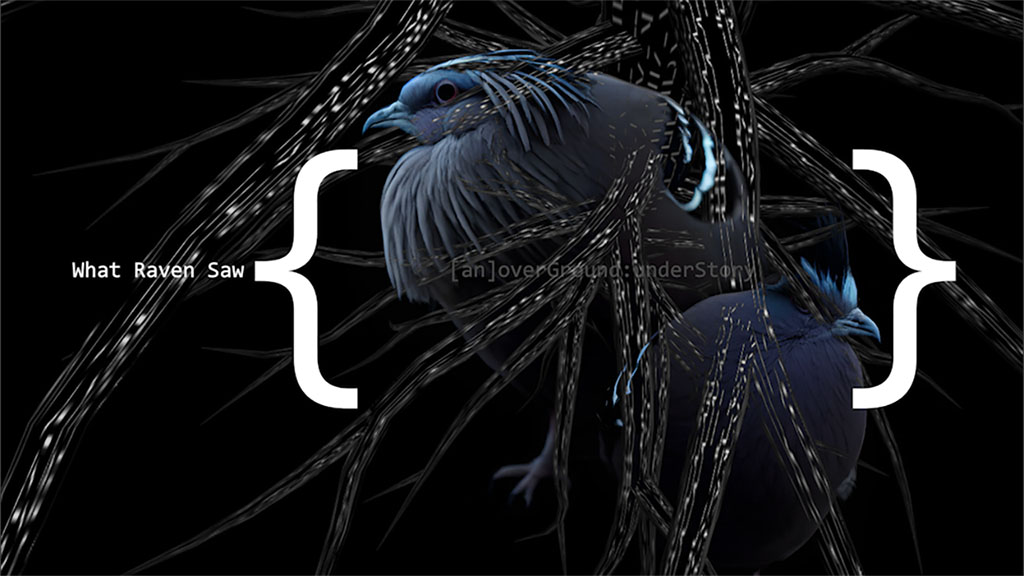
Dr. Andrew Burrell is a Senior Lecturer in Visual Communication at the University of Technology Sydney's Faculty of Design and Society. He is a practice-based researcher and educator exploring virtual and digitally mediated environments as sites for the construction, experience, and exploration of memory as narrative. His work sits at the intersection of digital media, virtual reality, and environmental humanities, with a particular focus on more-than-human ecologies and queer approaches to virtual environments. Andrew's research investigates the relationship between imagined and remembered narrative and how the multi-layered biological and technological encoding of human subjectivity may be portrayed within, and inform the design of, virtual environments. His networked projects in virtual and augmented environments have received international recognition, with recent works including "Twice, again" and "overGround:underStory," which explore the role of memory and forgetting in machine-mediated spaces and more-than-human encounters between physical and virtual ecologies. His creative practice informs his traditional research outcomes, which include publications in journals such as the Leonardo Electronic Almanac and Virtual Creativity. Andrew is particularly interested in how emerging and speculative technologies are implicated in more-than-human ecologies, and he uses creative practice to research and understand the complexities of these technologies. Andrew is a member of the UTS Visualisation Institute, a multidisciplinary research group focused on the creation of data visualizations, stories, and immersive experiences, and the School of Design's Critical Visualisation research group. He has received funding from various sources including the Australian Research Council (ARC) Discovery Projects and Create NSW. Research Interests Virtual and Augmented Reality as narrative spaces Memory construction in digital environments More-than-human ecologies and digital storytelling Queer approaches to virtual embodiment Creative applications of machine learning and AI Data visualization and environmental storytelling Accessibility and ethics in digital humanities Notable Projects Twice, again : Examines the role of memory and forgetting in machine-mediated spaces overGround:underStory : Explores entangled networks between physical and virtual ecologies Waves of Words : ARC Linkage initiative investigating language movement in pre-colonial times can't buy me love : A virtual environment collaboration with Amala Groom Layered Horizons : A geospatial humanities research platform Scientific Recognition MMUVE IT - Inter-Arts Office Australia Council Grant (2008) International presentations at conferences including ISEA (International Symposium on Electronic Art) Teaching and Supervision Andrew is an advocate for studio-based learning in which students design solutions to real-world questions through iteration and experimentation. He considers design as an anchor for interdisciplinary practice and regularly brings cross-disciplinary perspectives into his teaching. He currently supervises five PhD and master's students, with an interest in working with students at the intersection of traditional and practice-based research approaches. Research Themes in Recent Publications Andrew's recent publications demonstrate a consistent focus on the intersection of virtual environments, narrative construction, and ecological thinking. His work explores how digital technologies can be used to create new forms of storytelling that acknowledge our entanglement with non-human entities. There's a strong emphasis on ethical considerations in digital design, particularly regarding accessibility and representation. His research also investigates the application of machine learning technologies in creative practice, examining both their potential and limitations for representing human experience.
Pirita Seitamaa-Hakkarainen is a Professor of Craft Studies at the University of Helsinki and Docent at Aalto University. She leads the Co-inquiry, co-design, co-teaching, and co-regulation (Co4-Lab) laboratory and contributes to the Maker@STEAM research group. Her work bridges cognitive theories of design with collaborative learning environments, emphasizing materiality and knowledge building in education. University of Helsinki: Professor of Craft Studies Aalto University: Docent Her research focuses on: Cognitive theories of design processes and expertise development Collaborative learning and social creativity in maker education Role of external representations (sketching, visualization) in design Scaffolding mechanisms in craft and technology education Materiality in digital age pedagogy Knowledge building theory applications Recent publications (2020-2025) demonstrate sustained output in collaborative design education, virtual reality learning environments, and STEAM pedagogy. Her work consistently explores intersections between cognition, collaboration, and digital/material artifacts in educational settings.
Matthew Butler is an Associate Professor in the Department of Human-Centred Computing at Monash University's Faculty of Information Technology. His research focuses on Inclusive Technologies , particularly improving access to visual information for people who are blind or have low vision (BLV) through innovations like 3D printing, conversational agents, and multisensory interfaces. He has over 20 years of academic experience and held leadership roles including Deputy Dean (Education) and Associate Dean (Learning and Teaching). Education: PhD in Computing Education (Monash University, 2010) Graduate Certificate of Higher Education (Monash University, 2006) Bachelor of Engineering (Electronic and Computer Engineering, Monash University, 1996) Research Interests: Matthew’s work emphasizes participatory design with the BLV community, addressing challenges in data exploration, orientation/mobility, arts/culture access, and education . Key projects include accessible data visualization systems, inclusive museum experiences, and tactile navigation tools. His contributions align with UN Sustainable Development Goals related to education and disability inclusion. Grants & Projects: Accessible Data Exploration and Analysis for Blind People (Australian Research Council, 2023–2027) Inclusive Gallery Experiences: Bendigo Art Gallery Project (Helen Macpherson Smith Trust, 2019–2022) Co-leads the Monash Assistive Technology and Society Centre’s Education Pillar Awards: Senior Fellow of the Higher Education Academy Labs/Teams: Active contributor to Monash’s Assistive Technology and Society research initiatives, focusing on multisensory design for disability inclusion.
Dr. Mohammad Soorati is an Assistant Professor of AI at the University of Southampton , affiliated with the Department of Electronics and Computer Science. His research focuses on human-swarm interaction , swarm robotics , and explainable AI , with applications in trust modeling, aerial swarms, and distributed machine learning. He leads the eXplainable Human-swarm Systems project and co-investigates an EPSRC-funded initiative on 5G-connected UAVs. Dr. Soorati sits on the boards of the Center for Machine Intelligence and Center for Robotics. His research has been featured in outlets like IEEE Spectrum and Robohub . He serves as an associate editor for ICRA and academic editor for PLOS ONE, and holds editorial roles in high-impact robotics conferences (IJCAI, AAAI, AAMAS). His work explores tools for human operators to interpret multi-agent systems and enhance situational awareness. Dr. Soorati teaches Machine Learning Technologies , Interdisciplinary Team Project , and Programming I . He actively supervises PhD students in AI and robotics, with current advisees including Thomas Graham Kelly and William Hunt. His awards include the AAMAS Best Demonstration Award (2023) and a Best Paper Award at ACRS 2010.
Nancy Joy Lim is a Senior Lecturer in the Department of Geography at the University of Gävle. Her research focuses on Geospatial Information Science, particularly in flood risk management, environmental modeling, and urban resilience planning. She specializes in analyzing uncertainties in flood maps and their implications for decision-making, leveraging advanced geovisualization techniques and ensemble modeling approaches. Her educational background includes a PhD in Modelling, Mapping and Visualisation of Flood Inundation Uncertainties (2018). She has published extensively in journals like Geomatics, Natural Hazards and Risk and International Journal of Geographical Information Science , and contributed to books such as DEM Resolution and Roughness Effect in Relation to Model Performance (2023). Her work bridges theoretical geospatial analysis with practical applications in climate change mitigation and urban sustainability. Key research themes include the role of blue-green infrastructure in climate adaptation, DEM resolution impacts on flood modeling, and cartographic frameworks for visualizing uncertainty. She collaborates internationally, evidenced by co-authored papers with institutions in Sweden and beyond. While no academic awards are cited, her contributions to flood resilience planning and geospatial methodologies are notable. Nancy’s publications reflect a trajectory from foundational flood uncertainty studies (2014–2016) to contemporary urban resilience challenges (2021–2025), emphasizing interdisciplinary approaches to environmental challenges. Her conference presentations and doctoral work further highlight expertise in hydraulic modeling and spatial decision-support systems.
Dr David Jackson is a Senior Lecturer in Digital Visualisation at Manchester Metropolitan University's School of Digital Arts (SODA). As SODA Doctoral Student Lead and Research Degrees Coordinator, he explores the creative application of AI in narrative contexts, focusing on audience engagement, prosody in conversational agents, and parasocial dynamics. His work includes the Audience with a Hero project (Innovate UK-funded) and co-founding Algorithms for Marginalised People (AMP) , addressing AI biases through projects like Mood/Music . Research interests: His practice-led work bridges AI, digital storytelling, and immersive technologies. Key areas include conversational agent design, reparative approaches to algorithmic bias, transdisciplinary methodologies, and the psychological impact of voice-based interactions in VR environments. He investigates how prosodic features (tone, pitch, pace) affect audience perception of synthetic voices and the role of parasocial relationships in shaping interactions with digital personas. Scientific contributions: Notable works include the Storybox conversational agent framework and the D-PAF conversational storytelling methodology. His AHRC post-doctoral fellowship (2018) advanced techniques for integrating audience psychology into AI-driven narrative systems. Selected publications: Recent articles examine generative AI's cultural biases in creative education ( Brazilian Creative Industries Journal , 2023), speech-led VR documentaries ( XR-Metaverse Cases , 2023), and chatbot development for Shakespearean narratives ( Expert Systems with Applications , 2021). His 2026 book Listening In: How Audio Surveillance became Artificial Intelligence will explore surveillance technology's evolution.
Dr. Yomna Abdelrahman is a Professor of Usable Security and Privacy at the Bundeswehr University Munich . Her research focuses on thermal imaging for security and privacy , virtual reality usability, eye tracking , and biometric authentication . She collaborates with researchers like Florian Alt and Albrecht Schmidt on projects exploring how thermal sensing can enhance user identification and privacy awareness . Key Research Areas : Thermal Imaging, Human-Computer Interaction, Virtual Reality, Password Security, Biometric Authentication, Eye Tracking, Privacy Her recent publications address VR emotion detection , password usability , and privacy implications of thermal imaging . She has contributed to conferences like CHI, MUM, and INTERACT, often examining security-privacy trade-offs and non-invasive biometric systems . Notably, her work on thermal attacks reveals vulnerabilities in mobile authentication through thermal residue. She holds a PhD in Computer Science from the University of Stuttgart (2018), where her thesis, "Thermal Imaging for Amplifying Human Perception," laid the foundation for her later work on thermal-based interaction and cognitive load estimation . Her collaborations span diverse domains, from smart home notifications to industrial worker assistance , reflecting her interdisciplinary approach to usable security and interactive systems .