E. Eisemann is a Professor at the Computer Graphics and Visualisation department within the Faculty of Electrical Engineering, Mathematics and Computer Science at Delft University of Technology (TU Delft). Their research focuses on computer graphics, virtual reality, and 3D modeling, with recent publications addressing ray-box intersections, neural scene representations, and interactive modeling systems. Current research trends include Advancements in real-time rendering algorithms Applications of neural networks for 3D scene reconstruction Innovative approaches to human-computer interaction in VR environments Optimization techniques for large-scale environment rendering Research output spans 164 publications, with recent work appearing in venues like Computer Graphics Forum and ACM SIGGRAPH conferences. Supervised work includes 18 formal advisees.
Professor Edna Hardeman is a world-renowned translational cell biologist at the University of New South Wales , serving as Head of Cell Biology in the School of Medical Sciences and a member of the NHMRC Animal Welfare Committee . Her research focuses on the actin/tropomyosin cytoskeleton in mechanobiology, targeting therapies for cancer , platelet dysfunction , cataracts , and chronic inflammatory diseases . Developed anti-tropomyosin drugs for cancer and other conditions Co-convenes undergraduate courses: PATH3210 Visualising Disease and SOMS3232 Cellular Mechanisms of Health and Disease Current supervisory roles: Scinetia PhD Scholar Maria Lastra Cagigas , PhD candidates Xing Xu and Marco Heydecker Her laboratory at the Children's Medical Research Institute established mouse models for human muscle diseases, and her work with Professor Peter Gunning identified tropomyosin isoforms as druggable targets. She holds NHMRC Ideas Grant (2022) and ARC LIEF Grant (2021) for cytoskeleton research.
Professor Michael John Chantler is affiliated with the School of Mathematical & Computer Sciences at Heriot-Watt University in Edinburgh, UK. His work bridges machine learning, data visualization, and human-centric AI systems to enhance trust and usability in computational tools. Education: First-class degree in Electrical & Electronic Engineering (Glasgow, 1979); PhD in Image Processing (Heriot-Watt, 1994) Research Focus: Transparent AI, ethical crowdsourcing, and tools like Well Sorted for structuring collaborative research landscapes His lab emphasizes strategic thematic summaries of large project portfolios and smart support for research landscaping involving up to 100 stakeholders. Recent projects include human-inspired automation in optical system manufacturing and laser resonator beam alignment datasets. Scientific Awards include: Research Team of the Year (2022) Honourable Mentions at ACM CHI (2017) and ACM DIS (2017) Visualising Covid-19 Research award (2020) He has supervised over 25 PhD students, chaired international conferences, and secured multi-million-pound EU and national funding. External roles include collaboration with the Ocean University of China since 2007.
Bettina Gärtner is a researcher and educator specializing in digital innovations in art education . Affiliated with the State Academy of Fine Arts Stuttgart and previously the Ludwigsburg University of Education, she focuses on integrating digital tools , makerspaces , and Open Educational Resources (OER) into teacher training and school practices. Current Role : Project Manager for KuMuS-ProNeD (BMBF-funded digital teacher training initiative) Past Roles : Lecturer for Art Didactics (2019–2023), Pedagogy Academic Staff Member (2022–2023) Her research emphasizes creative technology integration , interdisciplinary collaboration , and digital-physical hybrid learning environments . Key projects include makEd_digital (didactic makerspaces) and digital.macht.schule (partner school networks for digital skill transfer). Recent publications highlight her work at the intersection of art, technology, and education , including VR applications in conservation studies and pandemic-era pedagogy. She actively organizes conferences like Fab:UNIverse and contributes to platforms such as the ABK FabLab . Scientific Awards : Erasmus Scholarship (1999) Gärtner's projects bridge art education, media literacy , and teacher development through initiatives like KOALA (teacher training cooperation) and Visualised Teachpod (innovative teaching methods).
Dr Simon Lock is a Senior Lecturer at the School of Computer Science, University of Bristol. His research and public engagement focus on pragmatic software engineering, open data, citizen science, and interactive applications for social spaces, with an emphasis on data visualization and IoT platforms. He can be contacted at simon.lock@bristol.ac.uk . Education : Not explicitly mentioned in the text. Simon's research interests span software engineering applications in educational and social contexts, including engineering education best practices, teaching and learning innovations, and the use of technology for public engagement. His publications (via ORCID) include seminal works on planetary collisions, lunar formation, and tidal evolution, indicating interdisciplinary contributions bridging computational methods and planetary science. His recent work explores planetary impacts and their thermodynamic consequences, atmospheric loss in giant collisions, and high-level models for Earth-Moon tidal evolution. Despite his computer science role, his research outputs extend deeply into astrophysics and geophysics, particularly Moon-forming giant impacts and planetary differentiation. Grants : Not explicitly mentioned in the text. Labs/Teams : Affiliated with the Engineering Education Research Group and the UK & IE EER Network.
Fiona Terry is an Honorary Professor at the School of Political Science and International Studies, University of Queensland. She serves as Head of the Centre for Operational Research at the International Committee of the Red Cross (ICRC) in Geneva, combining over three decades of field and management experience in humanitarian affairs across global conflict zones. Her work bridges academic scholarship and humanitarian practice. Research Interests: Terry specializes in humanitarian policies and politics, with a focus on conflict resolution, operational research, and the intersection of academic theory with real-world humanitarian challenges. Her scholarship contributes to understanding restraint in war and transforming aid policy through visual politics. Notable Work: Her book Condemned to Repeat: The Paradox of Humanitarian Action (2002) remains a seminal text in the field. She is a Partner Investigator in the Australian Research Council-funded project 'Visualising Humanitarian Crises: Transforming Images and Aid Policy' (2022–2025), collaborating with the ICRC and Prof. Roland Bleiker. Scientific Awards: Grawemeyer Award for Ideas Improving World Order (2002) for her book. Grants: Partner Investigator in the $1.2 million Australian Research Council Linkage Grant (2022–2025) for 'Visualising Humanitarian Crises.'
Elin Anna Topp is a Senior Lecturer in the Department of Computer Science at Lund University's Faculty of Engineering (LTH), holding the title of Excellent Teaching Practitioner (ETP) and serving as Head of Department. She manages projects including NEXTG2COM (a Vinnova Competence Centre) and contributes to Lund's Natural and Artificial Cognition and AI and Digitalization profile areas. Her research centers on establishing common ground between humans and machines through Artificial Intelligence, Cognitive Science, and Human-Robot Interaction. She develops robotic systems that communicate effectively with users in industrial/service robotics and autonomous system monitoring (e.g., drones, self-driving cars), focusing on resolving ambiguities from mismatched human-robot expectations. This work stems from her PhD research on Human Augmented Mapping and addresses critical needs for flexible, human-comprehensible interfaces in increasingly autonomous systems. Recent publications (2023-2025) reveal strong thematic cohesion in human-robot interaction for autonomous systems, with dominant trends in situational awareness assessment (UAV operations), conflict simulation (autonomous driving), and conversational interfaces. Her work consistently bridges cognitive theory with practical robotics applications, emphasizing human-centered design for safety-critical domains. Scientific recognition includes: Excellent Teaching Practitioner title from LTH's Pedagogical Academy (2022-present) She actively shapes graduate education as WASP Graduate School Management member (since 2019) and COMPUTE Graduate School Steering group member, coordinating specialized courses like WASP's Interaction, Collaboration, and Visualisation. Major research funding comes from AISA (AI-powered situational awareness, 2023-2026) and NextG2Com (2024-2028), supporting her work on shared autonomy and digital infrastructure. Her leadership extends to supervising PhD projects including 'Get a Grip - Accurate robot–human handovers'. Topp co-manages RobotLab LTH infrastructure and collaborates across Lund's robotics ecosystem through initiatives like Robotics Week for schools and the Natural and Artificial Cognition conference series, fostering interdisciplinary teams spanning computer science, engineering, and cognitive science.
Eileen Alexander is a Research Fellow and CASE Associate at the London School of Economics and Political Science (LSE), affiliated with the Department of Methodology and Social Policy. Her work focuses on using creative and collaborative methods to explore lived experiences of inequality, insecurity, and informal welfare practices. Research interests: Qualitative methods, Creative/Visual methods, Research ethics, Informal welfare, Care ethics, Poverty studies Teaching: Convenes an MY580 short course on creative methods (to be offered in 2025); recipient of teaching accolades from LSE Student Union and LSE Class Teacher award Her research emphasizes engaging vulnerable populations in coproduction, with projects like Why are things this way? Visualising life in post-austerity Britain (2024) and her PhD thesis The Ultimate Safety Net? Informal financial support among low-income households (2022) . She has contributed to understanding multidimensional poverty, welfare policies, and the impacts of austerity measures in the UK.
Professor David Andrews is Professor of Engineering Design in the Department of Mechanical Engineering at University College London (UCL). A globally recognised authority on naval architecture and ship design methodology, he has held continuous academic appointments at UCL since 1980, punctuated by distinguished service in the UK Ministry of Defence where he rose to Director of Frigates and Mine Countermeasures. Since 2000 he has occupied the Chair in Engineering Design at UCL, leading major research initiatives funded by EPSRC, ONR and the EU, and forging strategic industrial partnerships. Education Bachelor of Engineering, UCL (1970) MSc Naval Architecture, UCL (1971) PhD “Synthesis in Ship Design”, UCL (1984) Research Focus Professor Andrews is acknowledged as the world-leading expert in naval ship design methodology, with seminal contributions to early-stage design processes, submarine architecture, trimaran/multi-hull vessels, and distributed ship service systems. His pioneering Design Building Block approach and SURFCON CAD tool have been integrated into industry-standard platforms such as PARAMARINE. Current work addresses energy balance frameworks, computer-aided sketching, and philosophical foundations of engineering design. Across more than 150 publications, a clear trajectory emerges: from fundamental design theory through tool development to practical application in warship, submarine and advanced multi-hull projects. Recent outputs (2021-2024) emphasise automation of early-stage synthesis, network-based modelling of complex distributed systems, and integration of operational availability considerations into concept design. Honours & Awards Fellow of the Royal Academy of Engineering (2000) Fellow of the Royal Institution of Naval Architects (RINA) Fellow of the Society of Naval Architects and Marine Engineers (SNAME) William Froude Medal, RINA (2020) – highest award David W Taylor Medal, SNAME (2021) – lifetime contribution Advising & Grant Leadership Since flexible retirement in 2012 he continues to lecture and supervise MSc projects in Naval Architecture, Marine Engineering and Submarine Design CPD courses. He has led or co-led research grants exceeding £2 million from EPSRC, EU and industry (BAE Systems, Rolls-Royce, BMT, Dstl). These projects have funded numerous CASE studentships and collaborative PhD programmes that bridge UCL and industrial stakeholders. Research Team & Industrial Links Professor Andrews heads the Design Research group at UCL, mentoring successive MoD Professors of Naval Architecture and maintaining active Memoranda of Understanding with BAE Systems and other maritime primes. He chairs the tri-annual International Marine Design Conference’s Design Methodology Panel and has delivered keynote addresses worldwide, uniquely representing non-US expertise at successive US Navy Ship Design Process Workshops.
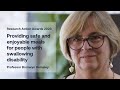
Professor Bronwyn Hemsley is Head of Speech Pathology at the University of Technology Sydney (UTS) and co-lead of the UTS Disability Research Network. As a Certified Practicing Speech Pathologist with over 15 years of postdoctoral experience, she has established herself as a leading expert in communication disability research, particularly focusing on Augmentative and Alternative Communication (AAC), dysphagia, and assistive technologies. Her educational background includes a Bachelor of Applied Science in Speech Pathology from the University of Sydney (1985-1988) and a PhD in Communication Sciences and Disorders from the University of Sydney (2008). She has held significant research positions including NHMRC PhD Scholarship (2005-2007) and NHMRC Postdoctoral Fellowship at the University of Queensland (2009-2012). Professor Hemsley's research program explores innovative applications of technology to enhance communication and quality of life for people with disabilities. Her current work spans virtual reality, augmented reality, social media, 3D food printing for dysphagia management, and telesupervision in speech pathology education. She leads the ARC Discovery project 'An Appetite for the Future: 3D Printed Food for People with Swallowing Disability' (2020-2024) and has secured over $4 million in research funding throughout her career. Her publication record shows a clear trajectory toward increasingly sophisticated applications of emerging technologies in disability support, with recent work focusing on AI, immersive technologies, and novel assessment methodologies. The research demonstrates strong interdisciplinary collaboration across health, technology, and design fields. Fellow of Speech Pathology Australia Fellow of the International Society for Augmentative and Alternative Communication Dean's Award for Research Excellence for a Mid Career Researcher at the University of Newcastle (2016) Faculty Dean's Award for Research Excellence at UTS (2021) NHMRC and ARC-funded research projects Professor Hemsley has successfully supervised multiple PhD students to completion, including Dr. Melissa Brunner (now lecturer at USYD) and Dr. Rebecca Smith (now lecturer at UTS). She currently supervises five PhD candidates across diverse topics including health literacy, 3D food printing, telesupervision, and hospital falls prevention. Her grant portfolio demonstrates sustained success in securing competitive funding from NHMRC, ARC, and industry partners, with a particular focus on translating research into practical applications that improve patient safety and quality of life. She serves as an active member of the UTS Ageing Research Collaborative and the Visualisation Institute, collaborating across disciplines to address complex challenges in disability support and healthcare communication.
Dr. Bonnie Boyana Buyuklieva is a Lecturer in Data Science for Society at University College London's Department of Information Studies. With a background in architecture and computation, including professional experience at Foster and Partners and academic work at Bauhaus University Weimar, she holds a PhD from the Bartlett Centre for Advanced Spatial Analysis (CASA, UCL). Her educational background includes: PhD from the Bartlett Centre for Advanced Spatial Analysis (CASA, UCL) Studies at Bauhaus University Weimar Professional experience at Foster and Partners Dr. Buyuklieva's research focuses on the intersection of the built environment and population studies through computational methods. Her interests span sustainability, data for policy, and household health outcomes, with particular emphasis on women's health. She applies spatial data analysis and visualization techniques to understand urban and regional planning challenges, population geography, and geoscience applications. Her work connects computational approaches with real-world societal issues, particularly in the domains of housing, energy efficiency, and urban sustainability. Her recent publications demonstrate a strong focus on urban sustainability challenges, housing markets, and energy transitions. She has published extensively on residential infrastructure, net-zero transitions, and advanced spatial analysis methods like Geographically Weighted Regression. Her research shows consistent interdisciplinary work bridging technical methods with social science questions, particularly examining spatial patterns in energy efficiency, housing markets, and demographic changes. Dr. Buyuklieva has received recognition through professional fellowships: Fellow of the Higher Education Academy (FHEA) Fellow of the Royal Geographical Society (FRGS) With nearly a decade of teaching experience across Russell Group universities, Dr. Buyuklieva has taught modules to groups ranging from one-on-one supervision to cohorts of 120 students. She has served as Department Course Director for UCL's BSc in Information Studies and currently leads the 'Internet Technologies' module. Her pedagogical approach emphasizes creating 'a safe environment of rigour and refuge where students and collaborators can be met 'where they are'', focusing on individual development and leveraging technology to scale personalized learning experiences. Dr. Buyuklieva's work connects with the UN Sustainable Development Goals, particularly Good Health and Well-Being (SDG 3), Sustainable Cities and Communities (SDG 11), and Life on Land (SDG 15), demonstrating her commitment to research with tangible societal impact.
Stuart Charters is an Associate Professor at the School of Landscape Architecture, Lincoln University, New Zealand. His academic career spans research and teaching in computational agroecology, human-computer interaction, and software engineering. He serves as the Programme Director for the Master of Applied Computing and was previously seconded to be the Director of SIGNAL ICT Graduate School. Currently, he holds the position of Director of the Centre for Geospatial and Computing Technologies at Lincoln University. Dr. Charters holds a PhD and BSc (Hons) from the University of Durham, United Kingdom. His educational background provides a strong foundation for his interdisciplinary research that bridges technology, agriculture, and ecology, with applications in landscape architecture and sustainable agricultural systems. Charters' research focuses on the intersection of technology, agriculture and ecology, which he terms 'computational agroecology,' and on human aspects of computing including Software Engineering, Visualisation and eResearch. His work investigates how humans engage and interact with technology, with emphasis on both the design and deployment of environmental and agricultural technology, data presentation for consumption, and processes around human engagement. He particularly emphasizes that 'the ability for people to effectively engage with technology and interpret data is essential for technology adoption and effective data based decision-making.' His work in Evidence based Software Engineering aims to improve research reporting quality and provide methods to assess research evidence impact on practice or policy. His recent publications reveal a strong interdisciplinary focus spanning computational agroecology, IoT security, digital tools for landscape planning, and human-computer interaction in agricultural contexts. His work frequently employs geospatial modeling, multi-agent systems, and visualization techniques to address challenges in sustainable agriculture, landscape management, and technology adoption. A notable trend is his increasing focus on integrating ecological health with technological solutions in agricultural settings, particularly in New Zealand high-country environments. Charters actively supervises postgraduate research across diverse areas including neural networks for agricultural vehicles, IoT trust systems, technology's impact on elderly quality of life, and agile software development. His teaching includes directing the Master of Applied Computing program, which helps people transition into tech careers from any degree background. He has examined numerous courses including Industry Project COMP693 and Research Essay COMP698. He maintains an active international research network, collaborating with colleagues in New Zealand, Australia, and the UK. His ORCID identifier is 0000-0002-1560-0805, and he is available for collaborative projects, industry engagement, and student supervision in Masters and PhD programs.
Dr. Jeroen CEYSSENS serves as a Researcher at Hasselt University within the Faculty of Sciences , specifically embedded in the Capacity group Computer Sciences . His institutional home is the Expertisecentrum voor Digitale Media (EDM) on Campus Diepenbeek, where he maintains dual affiliations with the Applied Computer Science Lab and Digital Future Lab . His research program centers on Human-computer interaction , Virtual reality systems , and Software engineering methodologies. This interdisciplinary focus drives practical innovations in augmented reality interfaces, particularly for industrial applications as demonstrated in his AR Cleaning Tool project. Academically, Dr. CEYSSENS contributes as a core instructor for Information Visualisation (course 2185) through 2026, bridging theoretical concepts with real-world data representation challenges. His current research portfolio includes the completed Market exploration of AR Cleaning Tool initiative (2022-2023), which assessed commercial implementation pathways for AR maintenance solutions. Available for consultation at Office EDM-1.09 , he is accessible via university phone ( +3211268421 ) with institutional email access facilitated through Hasselt University's internal systems.
Jamie McDonald serves as a Lecturer in the School of Computing, Engineering & Technology at The Robert Gordon University. His professional profile bridges academia and industry through co-founding a digital media/tech company and a community interest film production organization focused on Scotland's North East region. His research examines cutting-edge digital storytelling methodologies: VFX & 3D Visualisation for immersive experiences Virtual Reality production pipelines Game Development frameworks Text-to-Image AI creative applications Contemporary Film Production techniques McDonald's award-winning short films demonstrate applied research outcomes, while his teaching portfolio directly translates industry practices into academic instruction across digital media disciplines. His work maintains strong connections to regional creative communities through ongoing film production initiatives.
Dr. Joan Alza Santos is an early-career Research Fellow at the School of Computing, Engineering, and Technology within Robert Gordon University (RGU). She is affiliated with the Complex Optimisation Research Group and contributes to RGU's research themes in "Environment, Energy & Sustainability" and "Living in a Digital World." Her work bridges academic research in dynamic optimization with practical applications in sustainable logistics and other real-world domains. Dr. Alza Santos completed her educational journey with: BSc (Hons) in Computer Engineering from Universidad del País Vasco (University of the Basque Country), 2013-2017 Postgraduate Certificate from Robert Gordon University, 2018-2021 PhD in Computing from Robert Gordon University, completed in January 2025 with no corrections required - a rare distinction Her research focuses on addressing fundamental challenges in dynamic optimization. Dr. Alza Santos has made significant contributions to the field through three key innovations: developing a fitness landscape rotation framework for dynamic benchmarking, introducing the concept of "elusivity" to quantify algorithmic adaptability over complete restart, and creating methods for generating realistic synthetic instances from real-world logistic data. Her work aims to bridge the gap between academic research and practical applications, particularly in sustainable logistics where optimization under uncertainty is critical. Dr. Alza Santos's publication record shows a consistent focus on dynamic optimization problems, particularly in combinatorial spaces. Her research trajectory demonstrates progression from theoretical foundations of dynamic permutation problems to increasingly practical applications, culminating in methods for generating realistic benchmarks from real-world data. A notable trend in her work is the development of metrics like "elusivity" that provide quantitative ways to evaluate the true adaptive challenge in dynamic optimization problems, moving beyond simplistic representations of dynamism. Her scientific recognition includes: Membership in the International Graduate Student Research Cohort (2024) Presentation at the Arctic Circle Assembly (2024) PhD defense with no corrections required (2025) - noted as a rare distinction As an early-career researcher, Dr. Alza Santos actively supervises research projects and serves as a Demonstrator for "Applied Data Science" and "Data Visualisation" modules. Her industrial collaborations span multiple sectors including energy, transportation, and environmental sustainability. She has worked on projects evaluating offshore wind farm impacts, developing visualization tools for fleet management, simulating transportation demand, optimizing cargo transportation, creating VR flooding simulations, reviewing childhood obesity data, and developing predictive maintenance platforms for the oil and gas industry. Dr. Alza Santos leads research within the Complex Optimisation Research Group at RGU, where she continues to develop innovative approaches to dynamic optimization problems. Her current work focuses on applying simulation-optimization techniques to address real-world challenges, particularly in sustainable logistics. She is actively seeking new collaboration opportunities with both academic researchers and industry partners to expand the impact of her work on society and the economy.