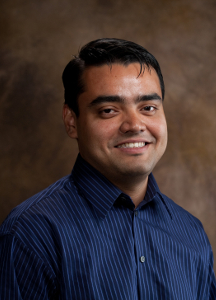
Steve Sprecher is a Lecturer in the Department of Computer Science at Northeastern University. His research focuses on network and web security, systems security, practical applications of machine learning in security, censorship measurement, and privacy. He holds a PhD from Northeastern University, advised by Engin Kirda, and earned his MS and BS in Computer Science from the University of Michigan, where he worked with J. Alex Halderman and Roya Ensafi on censorship, ransomware, and network measurement. His teaching experience includes serving as the Instructor of Record for Foundations of Computer Security & Privacy at Northeastern (Winter 2023), and as Head Graduate Student Instructor for the introductory computer security course at the University of Michigan (2017-2019). He has also held roles as a Teaching Assistant and Guest Lecturer in multiple security-related courses. Sprecher's publications address cutting-edge security challenges such as HTTP protocol vulnerabilities, third-party script management, and decentralized internet control mechanisms. His work bridges theoretical research with practical applications, emphasizing both technical depth and real-world impact.
Henrique O'Neill is an Associate Professor (with Habilitation) in the Department of Marketing, Operations and General Management at ISCTE - University Institute of Lisbon, Portugal. He is an Integrated Researcher at ISTAR-Iscte - Research Center in Information Sciences, Technologies and Architecture. His research focuses on information systems adoption, organizational strategy, and process optimization in healthcare, finance, and public administration. Education: PhD in Business Organization and Management - University of Cranfield (1995) Master's in Electrical and Computer Engineering - Higher Technical Institute (1987) Bachelor's in Electrical Engineering - Higher Technical Institute (1983) Research Interests: His work spans business/IT strategy, systems modeling, process analysis, and technology implementation. Key domains include healthcare informatics, banking systems, and Industry 4.0 applications. He emphasizes practical solutions for organizational performance through technology integration. Publication Trends: Recent articles explore intelligent business systems, telemedicine, design science methodologies, and supply chain innovation. His work consistently bridges theoretical frameworks with sector-specific applications in healthcare, education, and logistics. Professional Engagement: Member: Portuguese Telemedicine Association, Order of Engineers Commissioner: INEM (National Institute of Medical Emergency) reform study Director: Center for IT Development (2010-2014) Advising & Projects: Supervises 7 graduate students (1 PhD, 6 Master's). Leads EU-funded projects including: Atlantic Crossing (2024-2025): US-Portugal academic collaboration in AI/cybersecurity AAL4ALL (2011-2015): Ambient Assisted Living ecosystem UNITE (2000-2002): Ubiquitous teamwork platforms
Dr. Nilanjan Banerjee is a Professor in the Department of Computer Science and Electrical Engineering at the University of Maryland, Baltimore County (UMBC). He leads the Mobile, Pervasive, and Sensor System Lab, focusing on embedded and distributed systems for mobile, pervasive, and sustainability-based computing. His research spans renewable energy-driven systems, health diagnostics, mobile usability, and experimental testbed design. He holds a Ph.D. in Computer Science from the University of Massachusetts (2009), an M.S. from the same institution (2007), and a B.Tech. (Hons) from the Indian Institute of Technology (2004). Dr. Banerjee's work emphasizes interdisciplinary innovation, including low-power wearable devices for health monitoring (e.g., RestEaZe), cybersecurity frameworks for embedded systems (e.g., CARE), and sensor-based solutions for environmental sustainability. His contributions address challenges in mobility, energy efficiency, and accessibility, such as the Presight sidewalk localization system for visually impaired riders and the Inviz gesture-recognition textile sensors. His recent publications (2018–2021) reflect a focus on health technology, cybersecurity, and sustainable systems. Notable trends include: Integration of machine learning with sensor data for medical applications (e.g., sleep analysis, infection detection) Development of lightweight security protocols for embedded devices Exploration of renewable energy solutions for mobile and sensor networks No scientific awards are explicitly listed in the provided text. His academic advising and grant activities are not detailed here, but his lab's active research suggests significant collaborative projects. The lab also pioneers educational strategies in mobile app development and inclusive faculty recruitment through peer education programs like STRIDE.
Hassan Khan is an Associate Professor at the University of Guelph's School of Computer Science, with research spanning security, systems, and human-computer interaction (HCI). He is a member of the Centre for Advancing Responsible and Ethical Artificial Intelligence (CARE-AI). Research Interests: His work focuses on improving AI-driven mobile security systems through human-in-the-loop evaluations, addressing vulnerabilities in continuous authentication, shoulder surfing, and privacy in enterprise/repair settings. He explores how users interact with security mechanisms and designs interfaces to enhance usability. Scientific Recognition: He has received the NSERC Early Career Researcher Award and a NSERC Discovery Grant, with media coverage in outlets like Time Magazine, The Globe and Mail, and New Scientist. Teaching: Khan teaches courses such as Computer Security Foundations and Advanced Penetration Testing, emphasizing practical cybersecurity and AI systems architecture.
Dr Barney Craggs serves as a Lecturer in the School of Computer Science and concurrently holds the position of Chief Information Security Officer within IT Services at the University of Bristol, demonstrating a unique integration of academic research and institutional security leadership. His educational foundation includes a PhD, MRes, and BSc (Hons) degree, establishing his technical and research credentials in cybersecurity domains. Dr Craggs' research focuses on human-centered security systems, with core expertise in Security Ergonomics, Cyber Security, Human Factors, and Cyber Physical Systems. His work bridges theoretical computer science with practical security implementations, emphasizing usability and human behavior in cyber-physical environments. He actively collaborates with key researchers across Bristol's ecosystem including Dr Anya Skatova (Health Data Science), Professor Awais Rashid (Cyber Security), and colleagues at the Bristol Digital Futures Institute, fostering interdisciplinary approaches to modern security challenges.
Michael D. Ernst is a Professor in the Computer Science & Engineering department at the University of Washington's College of Engineering. His research aims to make software more reliable, more secure, and easier (and more fun!) to produce. Previously, he was a tenured professor at MIT and a researcher at Microsoft Research. Ernst's primary technical interests are in software engineering, programming languages, type theory, security, program analysis, bug prediction, testing, and verification. His research combines strong theoretical foundations with realistic experimentation, with an eye to changing the way that software developers work. He focuses particularly on programmer productivity and developing practical tools that can be integrated into developers' workflows. Analysis of his recent publications (2018-2025) reveals a continued focus on verification techniques, program analysis, and testing methodologies. His work spans from theoretical foundations of type systems to practical applications of NLP for test generation and LLMs for test oracle creation. A consistent theme is developing lightweight, modular approaches that can be practically applied in real-world development environments. Scientific Awards: ACM Fellow (2014) John Backus Award (2009) NSF CAREER Award (2002) ACM SIGSOFT Impact Paper Award (2013) 8 ACM Distinguished Paper Awards across multiple conferences ECOOP 2011 Best Paper Award Microsoft Academic Search ranked #2 in software engineering research (2013) Ernst has received significant research funding including the NSF CAREER Award, supporting his work on program analysis and verification techniques. His research combines theoretical rigor with practical impact, often resulting in tools that are adopted by the software engineering community. He actively collaborates with researchers across institutions and has served in leadership roles for major conferences in programming languages and software engineering. His research group develops practical tools that address real challenges in software development, with a focus on making verification and analysis techniques more accessible to working developers. Current projects include applying machine learning techniques to software engineering problems while maintaining strong theoretical foundations.
Güneş Acar is a tenured Assistant Professor in the Digital Security group at Radboud University's Faculty of Science. He is also affiliated with iHub, Radboud's interdisciplinary research hub on digitalization and society. His research focuses on security and privacy threats from websites, mobile apps, and IoT devices, with special emphasis on online tracking mechanisms, anonymous communication networks like Tor, and deceptive design patterns. Dr. Acar completed his PhD at KU Leuven under the supervision of Claudia Diaz and Bart Preneel. Prior to joining Radboud University, he was a Postdoctoral Research Fellow at KU Leuven's COSIC group and a Postdoctoral Research Associate at Princeton University's Center for Information Technology Policy. His research spans web security, privacy, online tracking, IoT security, Tor network analysis, and dark patterns. He investigates how websites, mobile apps, and IoT devices compromise user privacy through various tracking mechanisms and deceptive interface designs. His work combines large-scale measurements with user studies to understand both technical vulnerabilities and their real-world impact on users. Dr. Acar's publications reveal an evolving research trajectory from foundational web tracking mechanisms to increasingly sophisticated privacy threats. His work has expanded from browser fingerprinting to IoT privacy, children's online safety, and manipulative design patterns in subscription interfaces. A consistent theme across his research is the examination of how third-party trackers operate and circumvent privacy protections. 2022 CNIL-Inria Award for Privacy Protection (for Leaky Forms paper) Top Reviewer Award, Privacy Enhancing Technologies Symposium (2022) Future of Privacy Forum's Annual Privacy Papers for Policymakers Award (2020) Runner-up for multiple Caspar Bowden Awards for Outstanding Research in Privacy Enhancing Technologies Dutch Research Council (NWO) Vidi Grant (2025-2030) for "A Web Security and Privacy Observatory" Dr. Acar actively supervises PhD students including Zahra Moti, Tim Vlummens, and Luqman Zagi, with Asuman Senol recently completing her PhD in 2024. He has secured significant research funding including the NWO Vidi Grant and a project grant from armasuisse for the Mobile Web Inspector project. His research has influenced policy discussions with organizations including the OECD, US Federal Trade Commission, and European consumer protection authorities. As part of the Digital Security group at Radboud University, Dr. Acar contributes to a vibrant research ecosystem focused on practical security and privacy solutions. His work bridges technical security research with human-centered perspectives, often collaborating across disciplines to address complex privacy challenges in real-world contexts.
Professor Daniel Catchpoole serves as Deputy Head of School (Research) at the School of Computer Science, University of Technology Sydney (UTS), holding dual appointments at UTS and The Children's Hospital at Westmead. With over 20 years of research experience, he bridges computational sciences and pediatric cancer research through the Biomedical Data Science Lab in the Australian Artificial Intelligence Institute. His work integrates data analytics, artificial intelligence, and software development with molecular cancer biology to transform pediatric cancer treatment pathways. PhD in Cancer Cell Biology, University of New South Wales (1991-1995) Founding Fellow, Royal College of Pathologists Australasia (2010-present) Head, Children's Hospital at Westmead Tumour Bank (2001-present) Professor Catchpoole's research focuses on translational applications of genomics in childhood cancers, particularly acute lymphoblastic leukemia and neuroblastoma. His work combines high-throughput genomic technologies with advanced computational analysis to develop systems biology approaches for cancer patient assessment. Recent projects explore virtual reality applications for complex genomic data visualization and copper chelation therapies to enhance neuroblastoma immunotherapy. His research has received significant funding from Cancer Institute NSW, Sony Foundation, ARC, and NHMRC. His publication record spans biomedical data science, cancer genomics, and virtual reality applications in oncology. Recent work demonstrates leadership in 3D latent diffusion models for tumor segmentation, biobank economics, and innovative immunotherapies. His research consistently addresses the critical need for actionable knowledge from complex multidimensional biomedical data. Editorial Board Member, Cancers (2023) Associate Editor, Innovations in Digital Health, Diagnostics and Biomarkers (2019) Founding member and first President, Australasian Biospecimens Network Association Professor Catchpoole has supervised 17 Honours students (including 6 First Class Honours), 3 MSc students, and 12 PhD candidates across multiple institutions, with 6 current PhD students. His collaborative research bridges UTS's Faculty of Engineering and IT with The Children's Cancer Research Unit at The Children's Hospital at Westmead. Significant research funding includes Cancer Institute NSW grants, Sony Foundation VR projects, and ARC Discovery Projects focused on genomic data analysis and clinical decision support systems. His leadership extends to building frameworks for translational research, managing biobanks and clinical data linkages, and navigating governance requirements for cancer research. The Tumour Bank at Kids Research, CCRU, represents his long-standing commitment to pediatric cancer infrastructure development.
Prof. Dr. Moritz Petersen is an Associate Professor of Sustainable Supply Chain Practice and Co-Director of the Center for Sustainable Logistics and Supply Chains (CSLS) at Kühne Logistics University (KLU) in Hamburg, Germany. His academic career began at Hamburg University of Technology, where he completed his doctoral studies in 2017 under Prof. Dr. Wolfgang Kersten, and he has been at KLU since 2016. Research Focus: Decarbonization of logistics, Circular Economy, Blockchain applications in supply chains, and sustainable product development Teaching: Courses on Supply Chain Sustainability, Circular Product Development, and Lean Logistics Operations across KLU’s Bachelor to MBA programs Outreach: Co-hosts the podcast “Das Gleiche in Grün?!”, collaborates on educational children’s books about logistics, and frequently speaks at industry events like the Deutscher Logistik-Kongress Research Trends from his 15 most recent articles center on: Blockchain technology’s role in sustainable logistics Decarbonization strategies across maritime and road freight Circular economy implementation through product design and waste stream analysis Behavioral and organizational barriers to sustainability Public-private partnerships in European logistics Information sharing as a CE enabler Scientific Awards: 2020 Best Paper Award, International Journal of Operations & Production Management (IJOPM) Research Projects include: CREAToR: EU Horizon 2020 project on polymer recycling GATE: German Ministry of Economy-funded GHG emissions data exchange HANSEBLOC: Blockchain applications in logistics ChainLog: Blockchain use cases Development of Logistics Competence Assessment Toolkit
Patrick C. Shih is an Associate Professor of Informatics in the Luddy School of Informatics, Computing, and Engineering at Indiana University Bloomington, where he also serves as the Director of Graduate Studies for Data Science and Co-Director of the Animal Informatics MS and PhD track. He directs the Societal Computing Lab (SoCo Lab) and is a core faculty member of the Health Informatics PhD track. Dr. Shih's research focuses on how to better support health and wellbeing, specifically that of underserved and vulnerable populations, through the design, development, and evaluation of sociotechnical systems and community-based mechanisms. His work also designs technologies to amplify human and animal capabilities in animal-assisted interventions, improve animal welfare, and cultivate empathy for others. His research spans human-computer interaction, social media, collective intelligence, crowdsourcing, and online and geographic communities, with a particular emphasis on leveraging awareness of individual and community activities embedded in social media for civic engagement platforms. His recent publications reveal a strong trend toward health equity research, particularly focused on African American/Black communities, Alzheimer's disease and related dementias, breast cancer survivorship, and autism spectrum disorder. His work increasingly integrates generative AI, mobile health applications, and community-based participatory design approaches to address health disparities in vulnerable populations. ACM Senior Member (2020) NSF CAREER Award recipient Indiana University Trustees Teaching Award (2018-19) IU Groups Scholars Program STEM Mentor of the Year (2018-19) Multiple best paper awards at top-tier conferences Dr. Shih has successfully secured significant funding for his research, including a $3.7 million award to investigate inequities in environmental stressors and cognitive decline in urban and rural older adults. He serves on numerous editorial boards and program committees for leading HCI and computing conferences. His teaching portfolio includes courses on usable AI, mobile and pervasive design, and social computing. He leads the Societal Computing Lab, which focuses on developing technologies that address societal challenges through community engagement and participatory design.
Alberto Rodrigues da Silva is a Professor at the Institute Superior Técnico , part of the University of Lisbon . He teaches Fundamentals of Information Systems , primarily during the 1st Semester of the 2025/2026 academic year. His scientific interests revolve around Information Systems , Model-Driven Engineering (MDE), Requirements Engineering (RE), Social Computing , and Software Engineering . He has extensively contributed to the development of rigorous requirements specification languages like RSL (Requirements Specification Language) and its extensions (e.g., RSL-IL4Privacy for privacy policies). His collaborative work spans automated acceptance testing, GDPR compliance, and domain-specific languages (DSLs) for applications such as mobile development , digital twins , and legal contexts (e.g., LegalLanguage ). His research trends focus on integrating model-driven engineering with privacy policies , IoT applications , and low-code platforms . He has also explored tools like Maestro for data classification and usability testing, and RiverCure for flood simulation. Email: alberto.silva@tecnico.ulisboa.pt .
Andrea Burattin is an Associate Professor at the Department of Applied Mathematics and Computer Science, Technical University of Denmark. His work bridges formal methods and practical process analysis, focusing on process mining, business process management, and hybrid modeling techniques. He actively contributes to research in healthcare process optimization, streaming data analysis, and system verification through Petri nets and CCS transformations. UN Sustainable Development Goals: Poverty eradication, environmental protection, and prosperity for all (via process optimization) Active projects: Immersive Process Mining (2024-2027), Usability and Understandability of Hybrid Process Models (2018-2021) His research explores large language model integration with process mining, proposing frameworks like Tiramisù for multi-faceted process visualization and PN2CCS for formal model translation. Recent work emphasizes real-time monitoring, conformance checking, and IoT-driven process analytics. Key trends in his publications include: 1) Streaming process mining pipelines (2022-2025); 2) LLM-plan generation frameworks (2024); 3) Formal verification techniques (Petri nets, CCS); 4) Healthcare process modeling (2019-2023); 5) Behavioral pattern analysis in process compliance. Scientific Awards Best Demo Award (2022, 2016) Best Process Mining Dissertation Award (2014) Best Workshop Paper (EDBA and PODS4H, 2023) As advisor, he supervises PhD projects on process mining and hybrid modeling. His editorial roles include Information Systems reviewer (2024-2025) and past editor for Engineering Applications of AI (2022-2023). Collaborations span Denmark, Italy, and the Netherlands.
Carlo A. Furia is an Associate Professor at the Software Institute within the Faculty of Informatics at Università della Svizzera italiana (USI). He leads the ATOM research group and is actively involved in advancing formal methods in software engineering. His work bridges theoretical rigor with practical applicability, particularly in verification, automated repair, and empirical analysis of software systems. PhD in Computer Science, Politecnico di Milano Master of Science in Computer Science, University of Illinois at Chicago Laurea in Computer Science and Engineering, Politecnico di Milano His research focuses on making formal methods practical through automation, combining diverse techniques, and conducting thorough empirical evaluations. He is particularly interested in using Bayesian data analysis to assess software engineering data. His work spans program verification (e.g., AutoProof), contract inference, API usability, and multilingual program analysis. His recent publications highlight trends in automated program repair, JVM bytecode analysis, Android security, and empirical methodologies. These works reflect a consistent emphasis on correctness, reliability, and empirical validation in software development. Scientific service includes: Associate Editor, Empirical Software Engineering (EMSE) journal Program Committee member, FM 2026, FormaliSE 2026, ASE 2025, iFM 2025 He has advised students and leads the ATOM group, which develops tools for software analysis. He teaches courses such as Software Analysis, Programming Fundamentals, and Software Design & Modeling. Current research directions include improving empirical evaluation rigor and enhancing verification at lower code levels like bytecode.
Camellia Zakaria is an Assistant Professor at the University of Toronto, holding appointments in the Biostatistics Division and Institute of Health Policy, Management, and Evaluation (IHPME) at the Dalla Lana School of Public Health (DLSPH), and the Faculty of Information (FoI). She was recently named Canada Research Chair (Tier 2) for mobile health solutions. Her research focuses on integrating mobile technologies and machine learning to develop equitable health monitoring systems. Education: University of Toronto (Present) University of Massachusetts Amherst (2020–2023) Singapore Management University (2014–2019) Research interests span mobile health, applied machine learning, and human-computer interaction, with a focus on creating inclusive health applications. Her work addresses challenges in environmental sensing, sleep monitoring, and mental health tracking through innovative sensor technologies and data analytics. Key articles (2024–2016) explore medical decision-making, aerosol emissions, and group behavior modeling. Her work has been recognized in venues like BMJ , IMWUT , and CHI . Awards : Canada Research Chair (Tier 2, 2024) Projects like StressMon and WATCHME highlight her commitment to scalable health monitoring systems. She collaborates on lab initiatives such as sensAILabs, advancing interdisciplinary health technology solutions.
Paul M Thibado is a Professor in the Department of Physics within the College of Arts & Sciences at the University of Arkansas. With over 100 refereed publications and 51 patents worldwide, his work focuses on cutting-edge research in graphene physics and energy harvesting technology. He has secured over $12 million in external research funding from sources including NSF, DoD, and the Walton Foundation, with current support from the WoodNext Foundation. Education: Ph.D. in Physics, 1994, University of Pennsylvania, Philadelphia, PA B.S. in Physics, 1990, San Diego State University, San Diego, CA B.S. in Mathematics, 1990, San Diego State University, San Diego, CA Professor Thibado's primary research focuses on the physical properties of novel two-dimensional systems, particularly pristine freestanding graphene and chemically-functionalized graphene. His work investigates electronic, mechanical, electromechanical, spin-dependent tunneling, and transport properties. A significant portion of his recent research centers on developing multimodal energy harvesting technology using graphene, with power sources including kinetic, solar, thermal, ambient radiation, acoustic, and nonlinear thermal energy. His groundbreaking discovery that thermal fluctuations in graphene can be harnessed to generate usable electrical power represents a paradigm shift in nanoscale energy generation. Analysis of his recent publications (2023-2025) reveals a clear progression from fundamental studies of graphene properties to the development of functional energy harvesting devices. Key research themes include spectrum analysis of thermally driven curvature inversion in graphene ripples, transient thermal energy harvesting at single temperatures using nonlinearity, and creating arrays of graphene solar cells on silicon wafers. His work demonstrates how Brownian motion in two-dimensional materials can be converted into electrical energy through innovative device architectures. Scientific Awards: Senior Member of the National Academy of Inventors NSF CAREER Awardee ONR award recipient NSF MRSEC funding NSF FRG funding NSF MRI funding NSF REU funding NSF-EM funding NRC Post-doctoral Fellow, Naval Research Laboratory (1994-96) Master Researcher Award, Fulbright College (2014) Professor Thibado has successfully mentored numerous students and postdocs, including Dr. Vince LaBella who was elected APS Fellow for clicker development work. His research has been supported by over $12 million in external funding from diverse sources. His laboratory combines advanced scanning tunneling microscopy techniques with electrical measurements to study and harness the unique properties of two-dimensional materials. Future work appears directed toward scaling up graphene energy harvesting technology for practical applications and commercialization, with several patents recently granted for energy harvesting devices and sensors.