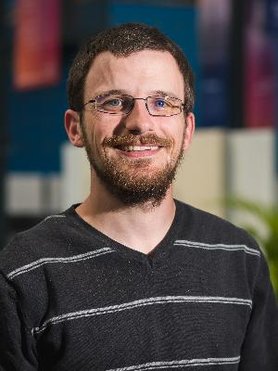
Jacky Bourgeois is an Assistant Professor of Data-Centric Design at Delft University of Technology's Faculty of Industrial Design Engineering (IDE), leading the Data-Centric Delft Design Lab. His work bridges Human-Computer Interaction, Data Science, and Participatory Design, focusing on methods like data donation to empower collaborative data exploration. He holds a computer science background, previously researching ubiquitous technologies for domestic energy practices of 'energy farmers' (solar households). Key projects include the PROMISE study on patient-led oncological care and the Data Donation initiative promoting ethical data practices. Education: Background in Computer Science; academic focus on sustainable design engineering and IoT. Teaching includes courses like 'Data-Centric Design for...' (2024) and 'Digital Product Development' (2023). Research Interests: Data as subjective inquiry material, data intimacy, data commons, and human-data interaction in home contexts. Notable contributions include PAIRcolator for collaborative data reflection and Tangi for 360° video insights. Awards include Best Paper at CHI 2025 and DIS '24 Best Paper. Grants & Collaborations: NWO-funded research on hospital sounds (2024), IoT Rapid Proto Labs for industry-academia partnerships, and ancillary role as a scientific employee at The Open University (2025–2027). Labs & Teams: Director of the Data-Centric Delft Design Lab; collaborates with the HCI Data & Design SIG. Current projects address ethical frameworks for data donation and patient-centered healthcare systems.
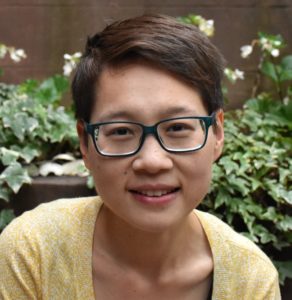
Sunny Xiang is an Associate Professor of English at Yale University, where she teaches and conducts research at the intersection of literature, race, war, and empire. Her work critically examines U.S. military empire in Asia and the Pacific, particularly through aesthetic, cultural, and documentary forms from the mid-twentieth century. She is affiliated with the Department of English in the Faculty of Arts and Sciences at Yale. Ph.D., University of California, Berkeley B.A., Northwestern University Her research focuses on the cultural genealogies of American empire, with an emphasis on how war and militarism shape perception, knowledge, and everyday life. Key areas include Cold War aesthetics, Asian American studies, Pacific studies, critical militarization studies, and feminist science studies. She is particularly interested in how literary and cultural forms reveal the intimate, quotidian, and often invisible operations of empire. Her publications span journals such as ASAP/Journal , Radical History Review , PMLA , and Public Books . Her first book, Tonal Intelligence: The Aesthetics of Asian Inscrutability During the Long Cold War (Columbia University Press, 2020), explores the visual and narrative trope of Oriental inscrutability in relation to U.S. intelligence operations. Her current project, Chemical Apophenia: Air Conspiracies and Skin Connections in the Toxic Tropics , investigates how WWII military science in the Pacific generated new paradigms for detecting toxicity. The articles reflect a consistent engagement with themes of militarized domesticity, aesthetic excess, diasporic memory, and the entanglement of fashion, food, and war in imperial contexts. Mundane Militarisms: War, Archives, and Everyday Life (2024) Militarized Comfort: How to Feel Naked While Wearing Clothes (2023) Bikinis and Other Atomic Incidents: The Synthetic Life of the Nuclear Pacific (2022) Wars of Contemporary Life (2020) Global China as Genre (2019) Sunny Xiang has not been mentioned in relation to any scientific awards or fellowships in the provided text. She teaches courses such as War and Everyday Life, Readings in Comparative World English Literatures, and The Teaching of English. While her advisees or research teams are not listed, her scholarship demonstrates deep engagement with interdisciplinary methodologies and collaborative work, such as with the Mundane Militarisms Collective. She has not indicated any lab affiliations, but her research involves critical archival work and analysis of visual, literary, and cultural materials.
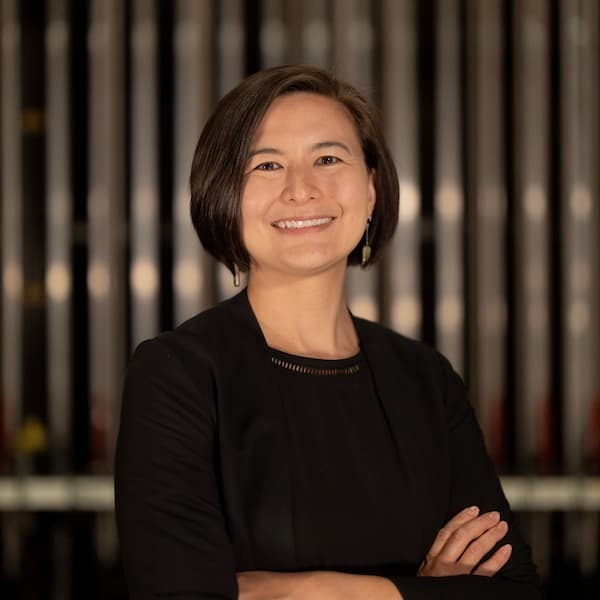
Kyle Bellucci Johanson serves as a Visiting Critic in Cornell University's College of Architecture, Art, and Planning, Department of Art. Holding an MFA from California Institute of the Arts and a BA in Art and Reconciliation Studies from Bethel University, he merges artistic practice with critical theory through performance architecture and collaborative media. Whitney Independent Study Program (2022–23) Founding fellow at land's edge free school (Los Angeles) Teaching experience at SAIC, UIC, CUNY, and Cooper Union His research investigates: Power structures through spatial interventions Critical theory applications in art practice Post-capitalist imaginaries Hauntology and historical materialism Transdisciplinary approaches to social critique Project trends reveal: Reinterpretation of Soviet design principles Investigation of worker identity in post-industrial contexts Temporal and spatial dislocation in artistic practice Monument critique through performative methods Quantum theory-inspired architectural concepts Reimagining of common spaces as political sites Scientific awards include: Creative Research Grant (2025) Whitney ISP participation (2022–23) Automata Studio Residency (2022) Artists Run Chicago Grant (2021) BOLT Residency (2020–21) Through projects like KLUB WRKR —a nomadic workers' club reimagined for the gig economy—and table (2018–2022), a Chicago-based experimental space for artistic practice, he interrogates institutional frameworks while fostering community through discursive meals and collaborative exhibitions.
Adam Drazin is a Tutor in the Department of Anthropology at University College London (UCL), specializing in design anthropology, material culture, and consumption. He works at the intersection of academia and public engagement, collaborating with NGOs, corporate clients, and research clusters such as the ‘Business of Fashion, Textiles and Technology’ at the London College of Fashion. His research explores domesticity, care ethics, and material practices in Romania, Ireland, and the UK. Research Focus: Design anthropology, material culture, domestic consumption, and transnational home-making practices. Geographic Scope: Romania, Ireland, UK, with attention to Romanian diaspora communities. Editorial Roles: Co-editor of Home Cultures , former editor of Journal of Material Culture . Projects: Studio of Material Life, ethnographic consultancy via UCL’s Ethnographic Insights Lab. His recent work emphasizes textile innovation, care ethics in domestic spaces, and critiques of material cultures within design. Publications include Design Anthropology in Context (2021) and The Social Life of Materials (2015). He mentors postgraduate researchers and contributes to public anthropology through consultancy.
London School of Economics and Political Science (LSE)United Kingdom
Fabian Broeker is an ESRC Postdoctoral Fellow in the Department of Media and Communications at LSE. His research focuses on technology's role in everyday life, particularly examining social media, dating apps, and their intersections with intimacy, identity, and urban environments. He holds a PhD from King’s College London (2021) and an MSc in Digital Anthropology from UCL. Broeker’s monograph, Love and Technology (Routledge, 2023), details his Berlin-based ethnography of dating app users. Broeker is an Associate Member of the Digital Anthropology Lab at the University of Tübingen. His work merges academic research with filmmaking, having collaborated with institutions like the BFI and British Independent Film Awards. He also consults for tech firms like Google on digital media topics. His research interests include digital ethnography, platform studies, and the spatial dynamics of dating apps. Recent publications analyze dating app rituals, location-porting in tourism, and the evolving digital dynamics of intimacy. Broeker’s work often bridges anthropology, sociology, and urban studies to explore how digital technologies shape contemporary social practices.
Professor Ruth Holliday holds the position of Professor of Gender and Culture at the University of Leeds since 2006, where she has also served as Director of Studies for the Centre for Interdisciplinary Gender Studies, Director of Research and Innovation, and Director of Recruitment and Admissions for the School of Sociology and Social Policy. Previously, she worked at Staffordshire University and Birmingham City University, and served as a Visiting Professor at the University of Technology Sydney (UTS). Her research expertise spans cultural sociology, body studies, material culture, medical tourism, and gender relations, with a focus on low fertility and East Asian cultural contexts. Her academic qualifications include a PhD in Sociology and a BA in Electronics and Management Science. She has contributed to over 50 articles and 7 books, including the award-winning Beautyscapes (2019), which explored global cosmetic surgery tourism and won the Foundation for the Sociology of Health and Illness Book Prize in 2020. Her work on kitsch aesthetics and visual methodologies has also been influential, particularly in understanding class, gender, and race through taste politics. Ruth’s current research projects include studying low fertility cultures’ impacts on gender identities and a project on the cultural meaning of the penis in gender construction. She teaches modules such as Theorizing Gender and Contested Bodies at the MA level, emphasizing critical approaches to gender and embodiment. Key Projects: ESRC-funded 'Building Capacity in Visual Research' and collaborative work on medical tourism in East Asia and Europe. Awards: 2020 Foundation for the Sociology of Health and Illness Book Prize. Supervision: Active in mentoring PhD students researching the body, intimacy, and low fertility in China and Korea. Her interdisciplinary approach bridges sociology, cultural studies, and visual methodologies, with a commitment to ethnographic fieldwork and global comparative analysis.
Professor Stephen Cave is the Academic Director of the Leverhulme Centre for the Future of Intelligence (CFI) and Co-Director of the Institute for Technology and Humanity at the University of Cambridge. With a PhD in Philosophy from Cambridge, he previously served as a policy advisor and diplomat in the British Foreign Office for nearly a decade before returning to academia. Education: PhD in Philosophy, University of Cambridge Current Roles: Academic Director (CFI), Co-Director (Institute for Technology and Humanity) Media Engagement: Regular contributor to Financial Times , Guardian , New York Times , and media appearances on BBC and NPR His research bridges philosophy and ethics of technology , with two primary strands: (1) the ethics of AI and robotics , focusing on responsible AI development and societal impact through works like AI Narratives and Feminist AI ; and (2) the ethics of life-extension and immortality , explored in Immortality and Should You Choose to Live Forever? . Recent publications analyze algorithmic fairness, gender representation in AI narratives, and digital death. The articles listed reflect his engagement with responsible AI frameworks , cultural portrayals of AI , and existential implications of life extension . His work often synthesizes historical, ethical, and cultural perspectives to address contemporary challenges in AI governance and mortality philosophy.
Ian Condry is a Professor of Japanese Culture and Media Studies at MIT, affiliated with the Department of Anthropology. He holds a BA in Government from Harvard (1987) and a PhD in Anthropology from Yale (1999). His research focuses on Japanese popular culture, media globalization, and creative industries. He is best known for his seminal work on hip-hop in Japan and anime production, emphasizing collaborative creativity and cultural hybridity. Condry leads the MIT Spatial Sound Lab, exploring immersive audio technologies, and co-founded the music discovery platform Hearby.com. He hosts the 'Near and Far' Japanese hip-hop radio show on WMBR 88.1FM since 2018 and releases music as Leftroman. Condry’s academic roles include former Head of Global Studies and Languages at MIT and Executive Committee member of the Technology Broadcasting Corporation. His work bridges academic research with creative practice, including organizing the Dissolve Music conference and curating multimedia projects. He has pioneered open-access publishing, making his books available under Creative Commons licenses. His research spans media anthropology, youth culture, and digital media’s societal impact. Key projects include the MIT/Harvard 'Cool Japan' research initiative and studies on post-3/11 cultural recovery. Condry’s interdisciplinary approach integrates ethnographic methods with technological innovation, addressing themes of global cultural flows and participatory media production.
Rosalind Gill is a prominent Professor at Goldsmiths, University of London, with a distinguished career spanning gender studies, media studies, and cultural studies. Her extensive publication record demonstrates leadership in critical analyses of postfeminism, neoliberalism, and digital culture. Gill's research interests focus on the intersections of gender, media, and neoliberal subjectivity, with particular attention to postfeminist discourse, digital culture, embodiment, and creative labor. Her work critically examines how contemporary media cultures shape gendered subjectivities, with significant contributions to understanding the 'postfeminist sensibility' as a dominant cultural framework. She has pioneered research on the affective dimensions of neoliberalism, particularly how it shapes women's experiences of confidence, self-care, and embodiment in digital environments. Analysis of Gill's recent publications reveals a consistent scholarly trajectory examining the psychological and affective dimensions of contemporary culture. Her work increasingly focuses on digital embodiment, social media practices, and the 'editable self,' exploring how visual culture and digital technologies reshape bodily experiences and self-perception. Gill's research demonstrates a sophisticated understanding of how neoliberal imperatives intertwine with postfeminist discourse to create new forms of gendered subjectivity. Gill has produced significant scholarly collaborations, particularly with researchers like Shani Orgad, Julia Coffey, and Akane Kanai. Her influential book 'Confidence Culture' (2022, co-authored with Orgad) offers a critical analysis of how confidence has become a moral imperative within contemporary neoliberal feminism. Her academic contributions extend to professional activities, including submissions of evidence to UK Parliamentary committees on employment rights, demonstrating her engagement with policy-relevant research. Gill's work consistently bridges theoretical sophistication with attention to contemporary social issues, making significant contributions to feminist scholarship and cultural studies.
Tarryn Chun is an Associate Professor in the Department of Film, Television, and Theatre at the University of Notre Dame, with a concurrent appointment in the Department of East Asian Languages and Cultures. She is also a Faculty Fellow at the Liu Institute for Asia and Asian Studies. Her research focuses on modern and contemporary Chinese theatre, with an emphasis on intersections between performance, technology, and media. She holds a Ph.D. from Harvard University and completed a postdoctoral fellowship at the University of Michigan’s Lieberthal-Rogel Center for Chinese Studies. Her work explores topics such as technological modernization in Chinese theatre, intercultural performance, and the role of digital media in contemporary performance. Key publications include Revolutionary Stagecraft: Theatre, Technology, and Politics in Modern China (2024) and articles on topics like digitally enhanced Chinese performance and Mao-era theatrical practices. She serves on the boards of the Association for Asian Performance and the Association for Chinese and Comparative Literature, and is the Online Editor for Theatre Journal . Her research has been supported by awards such as the 2021 National Endowment for the Humanities Fellowship. She teaches courses on global theatre history, Asian theatre, and intercultural performance.
Dr Ulla McKnight is an Assistant Professor in Sociology (Sociology and Criminology) at the University of Sussex, School of Law, Politics and Sociology. Her interdisciplinary research focuses on racialised and gendered health inequalities, particularly in reproductive and sexual health for ethnic minority and migrant women in the UK. Her educational background includes a PhD in Sociology from Goldsmiths, University of London (2016), an MA in Postcolonial Studies (Goldsmiths, 2006), a BFA in Photography (San Francisco Art Institute, 2001), and a Postgraduate Certificate in Learning and Teaching in Higher Education (Goldsmiths, 2018). Dr McKnight’s research lies at the intersection of Science and Technology Studies (STS), Black Feminist Hauntology, and participatory methodologies. She investigates how crises such as antimicrobial resistance (AMR), environmental collapse, and political inequity shape health futures. A key contribution is her conceptualisation of the HIV diaspora , which captures the transnational care experiences of people living with HIV in high-resource settings. Her work critically examines the entanglements of race, infectious disease, and political uncertainty using speculative and sensory methods. Her recent publications and research projects reveal a strong focus on maternal morbidity, speculative futures in sexual health, and the social justice dimensions of AMR. She employs arts-based and collaborative methods to explore the 'unsayable' in healthcare experiences. Nominated for Education Awards 2024 Nominated for Education Awards 2025 Dr McKnight is actively involved in supervising student research and has taught courses such as 'Doing Social Research', 'Health across the Lifecourse', and 'Sociology Research Proposal'. She is a Co-Investigator on the AHRC-funded project 'Reproductive Borders and Bordering Reproduction' and collaborates with the Wellcome Trust-funded project 'Inequalities and Tackling Antimicrobial Resistance in Sexual Health'. She has also secured a grant from the National Institute for Health Research for an arts-based workshop on 'unsayable' experiences. She is actively engaged in academic and public discourse through invited talks, conference presentations, and peer review for journals including Sociology of Health and Illness and Journal of the International AIDS Society .
Trine Mygind Korsby is an Assistant Professor at the Department of Anthropology, University of Copenhagen, Faculty of Social Sciences. Her research is centered on the anthropology of transnational crime, with a focus on human trafficking, sex work, pimping, and criminal livelihoods. She conducts long-term ethnographic fieldwork in Romania, Italy, Portugal, and Denmark. Her primary research interests include: Anthropology of the body, desire, and labor Morality, perpetration, and ethnographic unease Skills and social relationships in criminal economies Collaborative concept-work and experimental research methods Her recent publications (2023–2025) reflect a deep engagement with the lived realities of traffickers and victims, the ambiguities of fieldwork in criminal settings, and the moral complexities of perpetration. Themes such as agency, visibility, time, and freedom recur across her work, particularly in urban and transnational contexts. She has received significant recognition, including: Marie Skłodowska-Curie Global Fellowship (2022) Elite Research Travel Grant from the Danish Ministry of Higher Education and Science (2013) Individual Postdoc Grant from the Independent Research Fund Denmark (2015) Korsby is affiliated with the Centre for Global Criminology and was a visiting scholar at UC Berkeley (2013) and a postdoc at Stanford University (2016–2018). In 2023–2024, she was selected for the UCPH Forward program for research leadership. Her current project, TRAFFICKER, explores the social relationships of convicted human traffickers and their integration of legal and illegal work, with a research stay at CUNY Graduate Center (2024–2025). She has co-edited a special issue on transnational street economies in Migration & Society (2023) and has contributed to public discourse through media appearances and articles challenging simplistic narratives about traffickers and victims.
Nikhil Anand is the Daniel Braun Silvers and Robert Peter Silvers Family Presidential Professor of Anthropology at the University of Pennsylvania , where he serves as Interim Director of the Center for the Advanced Study of India (CASI) and Director of Envirolab . His research explores the political ecology of cities through the lens of water infrastructure, focusing on urbanism, state power, and climate change in South Asia and the United States. Education: Ph.D. in Anthropology, Stanford University (2011) MESc in Forestry and Environmental Studies, Yale University (2004) B.A., Reed College (1998) His research examines how water infrastructure shapes citizenship and state formation , particularly in coastal cities facing climate change. Key projects include Hydraulic City (award-winning book on Mumbai's water systems), Urban Seas (coastal planning), and collaborative initiatives Rising Waters and Inhabited Sea , which analyze climate-induced urban transformations. Themes in his recent 15 articles span infrastructure breakdowns, climate adaptations, and water-related citizenship struggles. These works often intersect urban anthropology , political ecology , and postcolonial studies , emphasizing coastal vulnerability , hydraulic governance , and slow violence against marginalized communities. Scientific Awards: Junior Scholar Prize, Anthropology and Environment Society (2014) Fellowships at Princeton's IAS, University of Minnesota, and Stanford Grants: National Science Foundation Wenner-Gren Foundation SSRC Penn Global Inquiries Fellowship Anand leads collaborative research initiatives involving architects, scientists, and policymakers to reimagine coastal cities. His work bridges anthropology, environmental humanities, and urban planning , with a focus on Mumbai and Philadelphia as sites of climate vulnerability and innovation.
Darshana Sreedhar Mini is an Assistant Professor in the Department of Communication Arts at the University of Wisconsin–Madison, where she teaches and conducts research at the intersection of feminist media, gender & sexuality studies, transnational media, migrant media, and South Asian screen cultures. She is also the Director for Media and Gender Justice at the 4W Initiative and holds affiliations with the Center for Southeast Asian Studies, Gender and Women’s Studies, Center for Visual Cultures, Center for South Asia, and the Havens Wright Center for Social Justice. Ph.D., Division of Cinema and Media Studies, University of Southern California M.Phil., Center for Studies in Social Sciences, Calcutta (CSSSC), India Dr. Mini’s research centers on Global Media Cultures, Transnational Cinemas and Migration, South Asian Cinema, and Feminist Media. Her work critically examines soft-porn cinema in India, media publics, censorship, labor in the entertainment sector, and migrant media practices. Her first book, Rated A: Soft-Porn Cinema and Mediations of Desire in India (UC Press, 2024), is a groundbreaking study that combines archival and ethnographic methods to explore the social and cultural impact of Malayalam soft-porn from the 1970s to the 2000s. Her second book project, Telegeographies of Indian Migration , investigates media flows between South Asia and Southeast Asia, focusing on colonial-era labor migration and its lasting effects on identity and community formation. Her recent publications span a diverse range of topics including South Asian pornographies, digital intimacy, anti-caste activism, #MeToo and intersectional feminism, transnational empathy in cinema, and media infrastructures. These works reflect a strong trend toward interdisciplinary, feminist, and decolonial scholarship that challenges dominant canons in film and media studies. Edward Cameron Dimock, Jr. Prize in the Indian Humanities, AIIS, 2024 Early Career Award, NCA, 2024 Race, Ethnicity and Indigeneity Fellow, IRH, UW-Madison, 2024 Byerly Award for Feminist Political Economy, ICA, 2023 First Book Award, The Center for Humanities, UW-Madison, 2022 SCMS Student Writing Award, 2017 Dr. Mini has been actively involved in academic service and leadership, including directing the Media and Gender Justice initiative, co-organizing seminars on migrant media, and contributing to feminist and anti-caste scholarship. Her research has been supported by prestigious grants from the Social Science Research Council (SSRC), American Institute of Indian Studies (AIIS), National Endowment for the Humanities (NEH), and the University of Wisconsin–Madison. She also leads a significant grant-funded project as Principal Investigator for the 'South Asian Film and Media Collection' at UW-Madison. She is a key member of several collaborative research environments, including the Center for Visual Cultures and Performance Studies (CVCPS), the Wisconsin Center for Film and Theatre Research (WCFTR), and the 4W Initiative, where she directs programming on media and gender justice. These affiliations reflect her commitment to interdisciplinary, socially engaged scholarship and the creation of inclusive academic communities.
Dr. Reine van der Wal is an Associate Professor at the Faculty of Social and Behavioural Sciences , Utrecht University, specializing in Social, Health and Organisational Psychology . Her work focuses on the intersection of social relationships, forgiveness, and organizational dynamics. Research Themes: Forgiveness, interpersonal relationships, workplace psychosocial risks, and interdisciplinary teaching. Collaborations: Graduate School of Life Sciences, UWV (Dutch Employee Insurance Agency), Netherlands Labour Authority. Her research explores relationship imbalances in organizations and families, including restoring social safety after trust breakdowns, forgiveness in post-divorce co-parenting, and workplace aggression. She integrates findings into policy development on social safety at Utrecht University. Key Publications (2024-2017) address forgiveness in late childhood, romantic relationships, work-family guilt during the pandemic, and dyadic coping in chronic illness. These works span psychology, organizational ethics, and developmental studies, emphasizing emotional regulation and social cohesion. Scientific Awards: SPSP Service Award (In-Mind Magazine, 2016) Advising: Supervises PhD research on social safety in academia (Julia Houben) and institutional trust (Michiel Kuik). Involved in workplace psychosocial risk research with Netherlands Labour Authority.