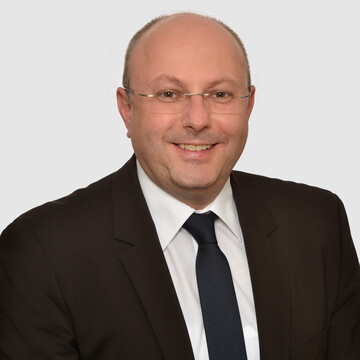
Gabriele Sicuro holds a Researcher position, with a focus on theoretical physics and statistical mechanics. He earned a Doctor of Science in Physics from Università di Pisa (2012–2015), a Master of Science from University of Salento (2011), and a Bachelor of Science from the same institution (2009). His research interests include high-dimensional systems, random graphs, and machine learning applications. Notable contributions address superstatistical features, dimer models, and hypergraph matching problems. He collaborates internationally, with work published in journals like Physical Review E and Journal of Statistical Mechanics . His publications explore topics such as regularization in high dimensions, graph alignment algorithms, and asymptotic analysis of Gaussian mixtures. With 220 citations, his work bridges theoretical frameworks and computational methods, contributing to advancements in statistical physics and data science.
Prof. Dr. Raik Stolletz is a Professor of Production Management at the Business School of the University of Mannheim, leading the Chair of Production Management within the Area Operations Management. His research focuses on business analytics, quantitative decision support for manufacturing and service systems, and stochastic modeling for operations optimization. Area Operations Management, Business School, University of Mannheim Research Interests : Stolletz specializes in predictive and prescriptive business analytics, with applications in Industry 4.0, airport operations, automotive production, workforce planning, and distribution center management. His work emphasizes tools for decision-making in deterministic and stochastic environments. Research Trends : His recent publications address time-dependent queueing systems, buffer allocation in stochastic flow lines, assembly line balancing, and revenue management in production. Keywords span Operations Management, Supply Chain Analytics, and Industrial Engineering, with sub-fields including Stochastic Optimization, Dynamic Scheduling, and Service Systems. Grants & Collaborations : Projects are funded by industry partners, the European Union, and the German Science Foundation (DFG), focusing on automotive production networks, airport logistics, and manufacturing system optimization.
Selcuk Koyuncu is an Associate Professor in the Department of Mathematics at the University of North Georgia. His work focuses on advanced matrix theory, topology, operator theory, and combinatorial mathematics. He holds a prominent role in the Mathematics academic programs, contributing to both research and education. His research interests include structural analysis of matrices (e.g., Toeplitz, centrosymmetric, doubly stochastic), topological properties of mathematical objects, and applications in fields like evolutionary biology and signal processing. He has published extensively in journals covering matrix theory, combinatorics, and operator theory. Recent work explores topics such as extreme points of matrix polytopes, sub-defect variations in substochastic matrices, and Lie group structures of Toeplitz operators. His contributions have addressed applications ranging from numerical methods to algebraic topology. Dr. Koyuncu has no listed scientific awards or grants in the provided information. He can be contacted at selcuk.koyuncu@ung.edu and is located in the Watkins Academic Building, Gainesville campus.
Argimiro Alejandro Arratia Quesada is a Professor at the Universitat Politècnica de Catalunya-BarcelonaTech (UPC), affiliated with the IDEAI-UPC - Intelligent Data Science and Artificial Intelligence Research Group and the SOCO - Soft Computing sub-group . He works in the Department of Computer Science under the College of Industrial, Aerospace and Audiovisual Engineering (ESEIAAT) . Research Interests: Time series analysis, machine learning, descriptive computational complexity, and financial engineering. Projects: Developed the clustAnalytics R package for network clustering assessment, contributed to Bayesian modeling of pandemic data, and designed entropy-based portfolio optimization techniques. Conference Participation: Actively involved in the International Conference on Time Series and Forecasting (2021-2023) and the Catalan Association for Artificial Intelligence conferences. Scientific Output Trends: Recent publications span finance (portfolio optimization, cryptocurrency forecasting), epidemiology (Covid-19 burden estimation), network science (clustering evaluation), and mathematical finance. Methodologies emphasize statistical inference, entropy optimization, and machine learning.
Dr. Usman Hadi serves as an Assistant Professor in the School of Engineering within Ulster University's Faculty of Computing, Engineering and Built Environment at the Jordanstown campus. His academic trajectory includes a Ph.D. in Electronic Engineering from the University of Bologna (2020), followed by postdoctoral research at Aalborg University and industry experience as an External Research Engineer at Nokia Bell Labs in Denmark (2019-2021). His educational foundation comprises: PhD in Electronic Engineering, University of Bologna (2020) Master's in Digital Predistortion for Compensation of Nonlinearities in Radio over Fiber Links, University of Bologna Dr. Hadi's research spans cutting-edge domains in wireless communications and AI-driven networking solutions. His primary focus includes 5G/6G technologies, Time Sensitive Networks, Radio over Fiber systems, and machine learning applications in telecommunications. Recent work emphasizes AI-enhanced signal detection for MIMO systems, UAV-based communication frameworks, and IoT security architectures, with significant contributions to optical front-haul optimization and wireless sensor networks. Analysis of his publication record reveals a strategic emphasis on AI integration for next-generation wireless systems. Key trends include deep learning applications for MIMO detection in 6G networks, digital twin implementations for UAV fault detection, and secure IoT frameworks for drone communications. His work consistently bridges theoretical advancements with practical implementations in optical and wireless front-haul systems, particularly through the MADNI (Made in UU) drone platform. Notable recognitions include: Top 2% Cited Researcher designation for three consecutive years (2021-2023) Research and Impact Fund Award (2023) Dr. Hadi supervises two PhD students: Ms. Cara Rose (Department of Economy-funded, 2023-present) and Mr. M.Y. Daha (Vice Chancellor's Research Studentship, 2022-present). His active research portfolio includes drone-based climate resilience initiatives funded by the British Council (2025-2026) and IoT-driven cybersecurity frameworks supported by Innovate UK (2025), alongside participation in EPSRC-funded infrastructure projects. He leads the MADNI drone research platform, which integrates state-of-the-art 5G connectivity, object detection, and facial recognition capabilities. His laboratory maintains active collaborations with Nokia Bell Labs, University of Manchester, University of East Anglia, Manchester Metropolitan University, University of Texas, and Boise State University, focusing on next-generation communication technologies and sustainable development applications aligned with UN SDGs.
Professor Keith Knight is affiliated with the Department of Statistical Sciences at the University of Toronto , where he has served since 1988 and held the Chair from 2002 to 2008. Educational Background: B.Sc. in Mathematics, University of British Columbia (1982) Ph.D. in Statistics, University of Washington (1986) His research focuses on theoretical statistics , particularly the asymptotic theory of non-regular estimation, quantile regression, and extreme value theory. Recent work explores the asymptotic distribution of L_infinity estimators in linear regression, algorithmic leveraging in regression analysis, and modifications to the Hill estimator for robustness and bias reduction. Earlier contributions include studies on shrinkage estimation, model averaging, and penalized least squares methods. The articles reflect his expertise in statistical theory, with recurring themes in regression analysis, extreme value theory, and econometric modeling. Keywords span statistics, machine learning, and applied mathematics, while sub-fields include quantile regression, bias correction, and Bernstein polynomials.
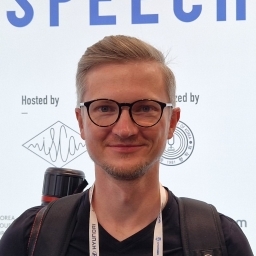
Dr. Marcin Witkowski is an Assistant Professor at the AGH University of Science and Technology in Cracow, Poland, specializing in the Department of Electronics and Telecommunications . His work focuses on signal processing with particular emphasis on speaker verification, speech dereverberation, and multichannel audio analysis. He holds a Ph.D. (2022) and master's degree (2012) in Electronics and Telecommunication from AGH UST, alongside a B.E.E. in Acoustics Engineering (2013). Research Interests: Far-field speaker verification, speech dereverberation techniques, robust audio processing, and blind source separation. His projects include developing anti-spoofing systems and enhancing distant speech recognition in reverberant environments. Recent work explores neural network hallucinations in Whisper ASR and VR-based voice training tools. Labs/Teams : Core member of the Signal Processing Group at AGH UST. Active in EU-funded projects on multichannel signal processing and speaker recognition systems.
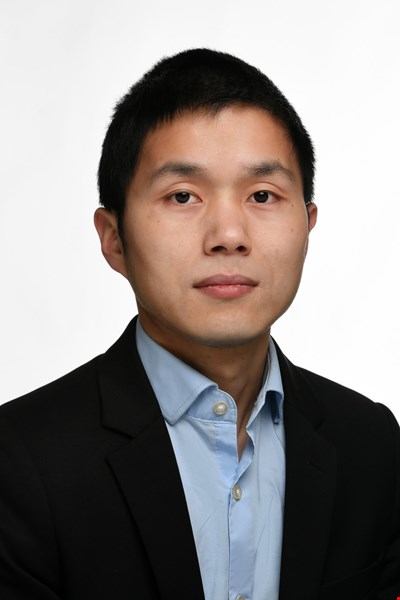
Dr. Shaoqing Hu is a Lecturer in Electronic and Electrical Engineering at Brunel University of London's College of Engineering, Design and Physical Sciences, and serves as an Adjunct Professor at Hangzhou Dianzi University. He holds a PhD from Queen Mary University of London (2020), with prior degrees from University of Electronic Science and Technology of China. His academic roles include Departmental Level 4 Coordinator, Brunel University London Pathway College liaison tutor, and external reviewer. His educational background includes: B.Eng in Vacuum Electronics (UESTC, 2013) M.Eng in Physical Electronics (UESTC, 2016) PhD in Electronic Engineering (QMUL, 2020) Dr. Hu's research centers on millimeter wave/THz security detection, sparse imaging, antennas, and wireless communication. His work bridges theoretical signal processing with practical security applications, particularly in personnel screening and target detection systems. Current projects focus on MIMO mmWave 3D imaging for future screening systems and advanced millimeter-wave imaging with sparse arrays. His group develops specialized hardware including 220 GHz imaging systems and multi-band antennas. Analysis of his recent publications reveals strong emphasis on sparse array configurations (MIMO planar/sparse arrays), algorithmic innovations (back-projection, low-rank matrix recovery), and emerging applications in security screening (2025 Signal Processing Magazine overview). The research spans THz to microwave frequencies with increasing integration of deep learning techniques since 2022. His scientific recognition includes: Fellow of the Higher Education Academy (2024) First Prize Best Student Paper Award (UCMMT 2020) Student Paper Award (IEEE AP CAP 2015) VinFuture Prize Official Nominator (2023) Dr. Hu actively supports early-career researchers through supervision of PhD students (including Shiwei Hu and Wenyi Yan) and MSc candidates. He has secured multiple research grants including Brunel Research Initiative and Enterprise Fund (BRIEF 2022-23), Brunel Research Development Fund, and NSFC collaboration grants. He serves as referee for major awards like UK Doctoral Researcher Award and supports fellowship applications including RAEng and Marie Curie schemes. His laboratory specializes in mm-wave/THz sparse imaging systems, featuring a 1.5m x 1.5m planar scanning setup and 220 GHz MIMO imaging capabilities. The team develops specialized antennas including GNSS arrays, dual-polarized horns, and quasi-Yagi structures for applications ranging from security screening to health sensing.
Dr. Johannes Storn is affiliated with the Faculty of Mathematics at Universität Bielefeld. His research focuses on numerical analysis, partial differential equations, and stochastic processes, with a particular emphasis on stochastic non-Newtonian fluids and their regularity and numerical solutions. He is involved in the Collaborative Research Center (SFB) 1283 project, specifically the sub-project B7 addressing 'Stochastic Non-Newtonian Fluids: Regularity and Numerics.' His research interests span numerical methods for PDEs, finite element techniques, adaptive mesh refinement, and iterative solvers for nonlinear problems. Recent work includes studies on minimal residual methods, p-Laplacian equations, and interpolation operators in negative Sobolev spaces. Dr. Storn contributes to interdisciplinary projects at the intersection of mathematics and fluid dynamics, leveraging advanced numerical analysis to address complex physical phenomena. Key trends in his publications emphasize robust numerical schemes for challenging PDE systems, including those with large exponents or stochastic elements, and the development of efficient adaptive algorithms. His work often intersects with applied mathematics, targeting real-world applications in engineering and physics.
Dagmara Kulig, PhD, Eng., serves as a Lecturer at the Department of Particle Interactions and Detection within the Faculty of Physics and Applied Computer Science at AGH University of Science and Technology in Kraków, Poland. Her research focuses on advancing radiation measurement technologies for medical applications, particularly in radiotherapy quality assurance and dosimetry innovation. Her primary research domains include Radiation Dosimetry, Medical Physics, and Radiotherapy, with specialized expertise in Optically Stimulated Luminescence (OSL) and Thermoluminescence (TL) phenomena. Kulig investigates novel luminescent materials—especially LiMgPO 4 -based compounds—and develops 3D-printed scintillators for precise dose measurement. Her work bridges experimental physics with clinical oncology through computational modeling and deep learning applications for treatment planning optimization. Analysis of her 15 most recent publications (2016-2025) reveals a consistent trajectory in radiation monitoring systems, with increasing emphasis on modular detector architectures and AI-driven medical imaging. The Dose-3D project represents a significant computational contribution, while her material science work on LiMgPO 4 dosimeters addresses critical challenges in signal stability and sensitivity. Recent publications demonstrate growing integration of 3D printing and deep learning for personalized radiotherapy solutions. Scientific awards: No awards documented in provided information Advising and grants: No student supervision details available No external funding sources specified Laboratory engagement: Core contributor to Dose-3D project developing Monte Carlo simulation platforms Experimental work on radiation detector systems at Department of Particle Interactions and Detection Material synthesis and characterization for luminescent dosimeters
Jeremy N. Kunz is an Assistant Professor in the Department of Radiation Oncology at the University of Utah and a Medical Physicist at Huntsman Cancer Hospital. He is board-certified in Therapeutic Medical Physics by the American Board of Radiology. BS in Physics and Applied Mathematics from Weber State University MS in Medical Physics from the University of Toledo PhD in Quantum Biophotonics from Baylor University His research focuses on clinical and theoretical aspects of radiation oncology, including: Brachytherapy (HDR, interstitial, gynecological) Stereotactic radiosurgery and VMAT techniques (CSI, TMI) Patient safety, quality assurance, and advanced imaging systems The 15 most recent articles highlight his work in cone-beam CT optimization, Acuros algorithm validation for TBI, HDR brachytherapy commissioning, and real-time linac quality assurance using novel detectors. Keywords span Medical Physics , Radiation Oncology , and Biophysics , with sub-fields like Image-Guided Radiotherapy and Dose Calculation Algorithms .
Peter Jan Van Leeuwen is a Professor specializing in data assimilation methodologies with applications across geophysical sciences. His research develops advanced techniques for high-dimensional systems with particular emphasis on particle filtering approaches. His research innovations include: Development of implicit equal-weights particle filters for high-dimensional systems Nonlinear data assimilation frameworks using particle flow filters Ensemble methods for model error estimation Advanced Bayesian inference techniques for geophysical applications Novel approaches for causal discovery in complex systems Recent publications demonstrate wide applications from oceanography and atmospheric science to flood forecasting and astrophysics. His work consistently addresses fundamental challenges in high-dimensional uncertainty quantification and nonlinear system behavior. Research contributions include significant methodological advances in: Particle filter efficiency for ocean and atmospheric models Time-correlated model error estimation Riemannian data assimilation frameworks Causal inference in non-intervenable systems Preconditioning strategies for 4D-Var assimilation Dr. Van Leeuwen has collaborated extensively on projects including the SEASTAR satellite mission concept for ocean submesoscale dynamics and contributed to major data assimilation initiatives like MERCATOR and MERSEA.
Marco Van De Wiel is a Senior Lecturer at Coventry University's Centre for Agroecology, Water and Resilience , specializing in computational geomorphology through numerical modeling of landscape evolution. His research bridges geomorphological, hydrological, and ecological processes, particularly in river floodplains and Martian environments. PhD in Geomorphology (University of Southampton) Experience at Aberystwyth University and University of Western Ontario Research Focus : Climate change impacts on hydrological extremes Soil water repellency and erosion dynamics Microplastics transport in terrestrial systems Development of the CAESAR landscape evolution model Applications in flood risk management and planetary geomorphology Recent Publications highlight work on: Climate change projections for West African droughts/floods Hydrological-mechanical erosion interactions Microplastic-soil infiltration relationships Vegetated drainage systems in Nepal Flood hazard variability in Sub-Saharan Africa Projects include: CU/Trailblazer: Low-cost stormwater management in Nepal Cost-Effective Flood Consequences Assessment (FCA) UNDERTREES: Agroforestry ecosystem services Waterborne pollen transport modeling
Dr. Johannes Köhler is a Lecturer at the Department of Mechanical and Process Engineering at ETH Zürich, Switzerland. His research focuses on advanced control systems, particularly model predictive control (MPC), robust control of nonlinear systems, and data-driven control strategies. He holds a Master's degree in Engineering Cybernetics from the University of Stuttgart (2017) and a Ph.D. in Mechanical Engineering (2021), for which he received the 2021 European Systems & Control PhD Award. His work emphasizes safety, optimization, and adaptability in control systems, with applications ranging from autonomous navigation to energy-efficient building systems. Key academic achievements include the 2022 ETH Zurich Career Seed Award for his work on data-driven predictive control, and the 2020 Best Publication Award at the University of Stuttgart for applying MPC to combat the COVID-19 outbreak. He has authored over 60 peer-reviewed articles, with recent contributions in stochastic MPC, robust nonlinear control, and safety-aware exploration strategies. Education: Ph.D. in Mechanical Engineering, University of Stuttgart (2021) Master of Engineering Cybernetics, University of Stuttgart (2017) His research group at ETH Zürich develops algorithms for real-time control of complex systems, with a focus on embedded MPC for robotics and energy systems. Current projects include safe autonomous navigation, adaptive control under uncertainty, and data-driven methods for nonlinear systems.
Bozorg Mokhtar is an Associate Professor at the School of Engineering and Management of the Canton of Vaud (HEIG-VD) , part of the University of Applied Sciences and Arts Western Switzerland (HES-SO). His research focuses on power systems, smart grids, and renewable energy integration. BSc and MA in Electrical Engineering from HES-SO Key projects: SCCER FURIES Phase 2 (WP3 on hybrid AC-DC grids), funded via CTI and HES-SO Research Interests include grid stability, power electronics, and energy storage optimization. He explores probabilistic flexibility indices , grid-forming inverters , and digital twin platforms for distribution networks. His work addresses challenges like peak shaving , carbon trading mechanisms , and dynamic state estimation . Scientific Contributions span 15 recent articles on DER aggregation, rail-to-EV energy recycling, and voltage control algorithms. His collaborations include researchers like Rachid Cherkaoui (EPFL) and Mauro Carpita (HEIG-VD).