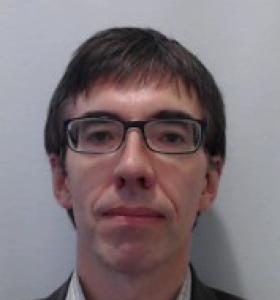
Riccardo Mereu is a Doctoral Researcher affiliated with the Department of Computer Science at Aalto University. His research focuses on machine learning, computer vision, and neural network architectures, particularly addressing challenges in 3D scene reconstruction, sequential learning, and sparse representations. Recent publications highlight his work on uncertainty quantification in deep learning for computer vision tasks, function-space parameterization of neural networks, and sparse modeling techniques for improved computational efficiency. These contributions span conferences like ECCV and ICLR, emphasizing robustness and optimization in visual and sequential data processing. Dr. Mereu's collaborations include researchers from Aalto University, with co-authors such as Arno Solin and Joni Pajarinen. His work bridges theoretical advancements in neural network modeling with practical applications in computer vision and sequential learning frameworks.
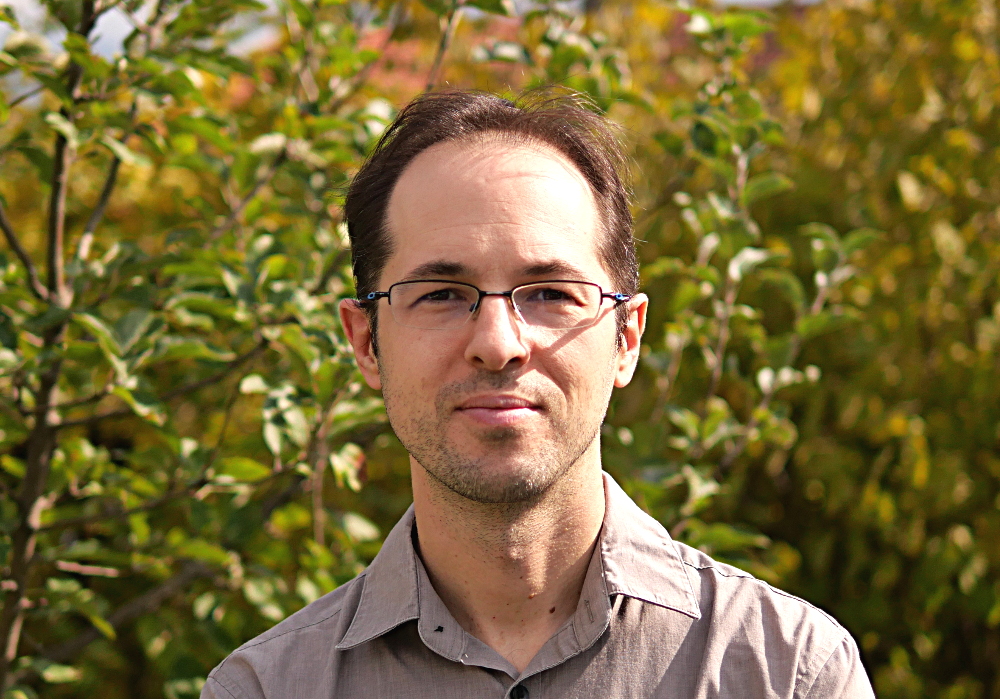
Max Pfeffer is an Assistant Professor at the Institute for Numerical and Applied Mathematics within Georg-August-Universität Göttingen (since 2023). He previously held research and adjunct positions at TU Chemnitz, SimulaMet Oslo, Johannes-Gutenberg-Universität Mainz, and MPI MiS Leipzig. His work bridges numerical mathematics with data science applications. Current affiliations: Universität Göttingen (Junior Professor), TU Chemnitz (Adjunct Professor) Collaborators: Martin Stoll (TU Chemnitz), Evrim Acar Ataman (SimulaMet), Markus Bachmayr (Mainz), Bernd Sturmfels (MPI MiS) Research Focus Matrix/Tensor factorizations for high-dimensional data Riemannian optimization on manifolds Cancer classification through machine learning Quantum chemistry numerical methods for matrix product states Parametric PDE solutions for biomedical applications Recent Publications Highlight His 2023-2025 publications demonstrate cross-disciplinary impact: tensor decompositions for temporal data analysis, Gaussian process acceleration with tensor structures, and biomedical applications in melanoma gene selection. The work intersects numerical mathematics, machine learning, and quantum computing. Academic Background PhD in Mathematics (2018), M.Sc. (2014), B.Sc. (2011) from TU Berlin DFG-funded project on constrained matrix/tensor factorizations (2021-2023)
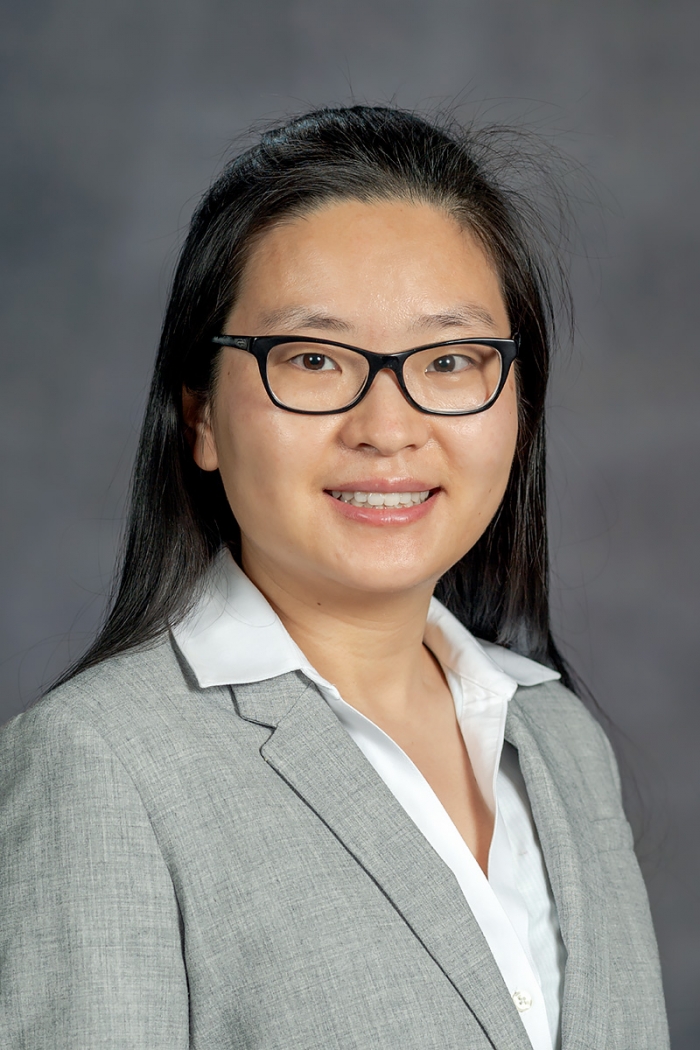
Dr. Dan Xu is a Postdoctoral Researcher at the Visual Geometry Group (VGG) within the Department of Engineering Science at the University of Oxford. His research focuses on computer vision, machine learning, and deep learning, particularly for 2D/3D scene understanding tasks including depth estimation, object detection, and image generation. Ph.D. in Computer Science (2018), University of Trento Research Assistant, Chinese University of Hong Kong Dr. Xu's research spans computer vision and deep learning , with specific interests in scene depth prediction , visual SLAM , object contour detection , and generative adversarial networks . Recent work explores 3D Gaussian splatting , diffusion models , and multi-task learning . Key research trends include 3D scene reconstruction , controllable video generation , and multi-modal alignment . His publications emphasize neural radiance fields , attention mechanisms , and generative models for advanced visual tasks. Best Paper Award Nominee at ACM Multimedia 2018 Best Scientific Paper Award at ICPR 2016 Student Travel Grant (SIGMM/ACM Multimedia 2016) Dr. Xu contributes to open-source projects and provides training/testing code for his research. He actively reviews for premier journals and conferences including CVPR , NeurIPS , and TPAMI .
Jean-Christophe Pesquet is a Professor affiliated with the Laboratory Digital Vision Center. His work spans optimization, inverse problems, artificial intelligence, signal and image processing . He actively collaborates on advanced algorithm design and computational methods for imaging and signal recovery. Key research areas: Optimization, Wavelet Analysis, Blind Source Separation, Deep Learning Recent publications focus on nonconvex optimization, primal-dual splitting, and deep unfolding techniques. His methodological contributions include proximal algorithms, stochastic subspace approaches, and Bregman divergences. Applications range from biomedical imaging (e.g., PET, CT scans) to seismic data analysis and aerospace defect detection. Notable collaborations include researchers like Emilie Chouzenoux , Audrey Repetti , and Caroline Chaux . Current projects integrate neural networks with classical signal processing frameworks (e.g., lifting schemes, MCMC algorithms).
Durga Prasad Bavirisetti is an Associate Professor (Universitetslektor) at the University of Gävle, Sweden, specializing in computer vision and machine learning. His research spans geospatial information science, image fusion, and autonomous driving systems, with a strong focus on applying deep learning to real-world problems in energy, healthcare, and transportation. His educational background includes: PhD in Signal and Image Processing from VIT University, India (2016) Postdoctoral research at Shanghai Jiao Tong University Bavirisetti's research interests center on advancing computer vision through deep learning, particularly in multi-sensor image fusion (infrared-visible, MRI-CT), autonomous vehicle perception in challenging conditions (e.g., Nordic winters), and applications in renewable energy forecasting and medical diagnostics. His work bridges theoretical innovation with practical deployment, as evidenced by industry collaborations with Alibaba and SINTEF. Analysis of his recent publications reveals a strong trend toward multi-modal deep learning architectures, with increasing focus on autonomous systems and healthcare applications. His 2023-2025 output shows expansion into dysarthria detection, cyberbullying monitoring, and photovoltaic forecasting, demonstrating interdisciplinary reach while maintaining core expertise in image processing. No scientific awards were mentioned in the provided sources. While specific grant details are not provided, Bavirisetti's research demonstrates significant industry and international collaboration, including positions at Alibaba Group Innovation Center, SINTEF Industries, and visiting roles at UBC Okanagan and the University of Warsaw. His advising activities are not explicitly detailed, but his extensive publication record suggests active mentorship of students and junior researchers. He is part of collaborative research teams including the mobility department at SINTEF Industries (focusing on machine vision for autonomous driving) and works with researchers like Gabriel Kiss at NTNU on projects involving surgical environments and autonomous vehicle perception. His work often integrates expertise from computer science, electrical engineering, and medical fields.
Gerlind Plonka-Hoch is a Professor of Applied Mathematics and Deputy Director of the Institute for Numerical and Applied Mathematics (NAM) at the University of Göttingen. She leads research in numerical analysis and signal processing, with a focus on mathematical methods for image reconstruction and analysis. Her work bridges theoretical mathematics with practical applications in medical imaging and data science. Professor Plonka-Hoch's research spans several key areas in applied mathematics: Numerical Fourier analysis and fast algorithms Wavelet theory and sparse signal representation Regularization methods and nonlinear diffusion Applications in signal and image processing, particularly medical imaging Phase retrieval and parameter estimation problems Her recent publications demonstrate a strong focus on medical imaging applications, particularly using Optical Coherence Tomography (OCT) data. She has developed innovative approaches combining wavelet analysis, deep learning, and sparse representation techniques for image reconstruction and classification. Her work on ESPIRA (Estimation of Signal Parameters by Iterative Rational Approximation) has provided new methods for reconstructing exponential sums from limited data, with applications across multiple scientific domains. Professor Plonka-Hoch leads an active research group at the University of Göttingen, mentoring several doctoral students including Dr. Yurii Kolomoitsev, M.Sc. Benjamin Kocurov, M.Sc. Anahita Riahi, M.Sc. Yannick Nicola Riebe, and M.Sc. Janina Schmidt. Her working group has produced numerous publications on numerical methods and their applications, with a strong emphasis on both theoretical foundations and practical implementation.
Mårten Sjöström is a Professor in Signal Processing at Mid Sweden University, where he serves as the highest representative of the research subject Computer and System Sciences and is part of the managerial group of the Department of Information and Communication Systems (IKS). He leads the Realistic 3D research group and has extensive experience in both academic and industrial settings. His educational background includes a Master of Science from Linköping University (Applied Physics and Electrical Engineering, 1992), a Technical Licentiate degree from the Royal Institute of Technology, Stockholm (Signal Processing, 1998), and a PhD from Ecole Polytechnique Federale de Lausanne (Modelling of Non-linear Systems, 2001). He obtained his Docent degree (Associate Professor) in 2008 and Professor's degree in Signal Processing in 2013. His primary research focuses on Multi-Dimensional Signal Processing with emphasis on System Modelling and Identification. He has successfully applied these techniques to Image and Video Processing, Multi-media Communications, and currently specializes in Multi-Scopic 3D and Light Field Technology including capture, processing, coding, and presentation/visualization. His work spans theoretical foundations to practical implementations across various application domains. His recent publication record demonstrates a clear trajectory toward advanced light field and 3D imaging technologies, with significant contributions to compression algorithms, depth estimation techniques, quality assessment metrics, and telepresence applications. His research bridges theoretical signal processing with practical industrial implementations, particularly in remote operation, mining applications, and immersive visualization systems. Best Paper Award at MMEDIA 2013 Quality Reviewer Award at ICME 2013 Professor Sjöström has supervised an extensive number of doctoral and licentiate students, with numerous current PhD candidates expected to complete their degrees in 2025. His teaching portfolio covers a wide range of subjects including Applied Signal Processing, Automatic Control, Computer Hardware and Architecture, and specialized PhD courses in Video Processing and Realistic 3D. He has led numerous research projects both current and completed, including IMMERSE, PLENOPTIMA, and various initiatives in 3D video technology and visualization. As founder and head of the Realistic 3D research group, he directs activities focused on synthesis and capture of 3D images and video, rendering techniques for virtual perspective views, system modeling for 3D capture and presentation, coding of 3D content, quality metrics and assessments, and remote control and measurement systems. The group maintains strong industrial collaborations across multiple sectors.
Hermann Schichl is an Associate Professor at the University of Vienna , affiliated with the Faculty of Mathematics and Department of Mathematics. His work spans mathematical modeling, global optimization, and numerical analysis.
Arash Amini is a Professor at the Electrical Engineering Department of Sharif University of Technology, Tehran, Iran. He received dual B.Sc. degrees in Electrical Engineering (Communications) and Petroleum Engineering (Reservoir) in 2005, followed by M.Sc. and Ph.D. degrees in Electrical Engineering (Signal Processing) in 2007 and 2011, respectively, all from Sharif University of Technology. During his doctoral studies, he spent a year (2009–2010) as a visiting scholar at the Biomedical Imaging Group (BIG), EPFL, Switzerland. Current Position: Professor (since May 2025) Previous Roles: Assistant Professor (2013–2018), Associate Professor (2018–2025), Researcher at BIG, EPFL (2011–2013) Editorial Role: Associate Editor for IEEE Signal Processing Letters (2014–2018) Research Interests : Theoretical and Statistical Signal Processing Graph Signal Processing Large Language Models Signal Processing for Communications Compressed Sensing Recent Publication Trends focus on graph signal processing, compressed sensing, biomedical imaging, and mathematical optimization. Key subfields include harmonic retrieval, subspace-informed matrix completion, sparsity-driven algorithms, and AI alignment benchmarks. Scientific Awards : Silver medal at the International Mathematical Olympiad (IMO2000) Advising includes 15+ Ph.D. and Master’s students, with collaborative projects involving institutions like EPFL and researchers such as Prof. F. Marvasti and Prof. S. Rini.
Jennifer Erway is a Professor of Mathematics and Affiliate of Computer Science at Wake Forest University. Her primary research focuses on Computational Mathematics , specializing in Numerical Optimization, Computational PDEs (particularly finite element methods), and Numerical Linear Algebra. She leads research on large-scale optimization algorithms and develops computational methods for scientific applications. Her research interests center on: Trust-region methods and quasi-Newton updates Numerical software development for optimization Applications in machine learning and imaging Sparse recovery and compressed sensing Matrix computations and eigenvalue problems Her publications demonstrate consistent focus on developing efficient algorithms for optimization problems, with recent work expanding into machine learning applications. Research is primarily supported by NSF grants including DMS-08-11106, CMMI-1334042, and IIS-1741264. Awards & Honors: Best Paper Award at World Congress on Engineering (2010) ORAU Ralph E. Powe Junior Faculty Enhancement Award Multiple NSF grants supporting computational mathematics research Research Training: Has supervised numerous graduate and undergraduate students in mathematics and computational research, including PhD candidates and master's students working on optimization algorithms and numerical methods.
Giacomo Boracchi is an Associate Professor of Computer Engineering at the Department of Electronics, Information and Bioengineering (DEIB) at Politecnico di Milano. He obtained his Ph.D. in Information Technology from Politecnico di Milano (2008) and a Mathematics degree from Universitá Statale di Milano (2004). Since 2016, he has taught PhD courses at Politecnico di Milano and Tampere University, Finland. His research spans: Image processing and analysis techniques Machine learning in non-stationary environments Anomaly and change detection systems Domain adaptation methods Deep learning applications in computer vision His publications focus on industrial applications including visual quality inspection and health monitoring, with recent work on convolutional sparse representations and deep autoencoders. Awards & Honors: IBM Faculty Award (2015) IEEE TNNLS Outstanding Paper Award (2016) Nokia Visiting Professorship (2017) nVidia Research Grant (2021) Multiple Best Paper awards (ICIAP 2023, STAG 2022, ICIAP 2021) He leads industrial collaborations with STMicroelectronics, Gilardoni Raggi X, and Cisco, and serves as Associate Editor for IEEE Transactions on Image Processing since 2018. He advises graduate students and organizes special sessions at major conferences including IEEE IJCNN and SIAM Imaging Science.
Charlotte Frenkel is a Tenure-Track Assistant Professor in the Microelectronics Department at Delft University of Technology (TU Delft), where she leads research in neuromorphic engineering and low-power AI hardware. Her work bridges the gap between biological intelligence and artificial neural networks, focusing on energy-efficient computing at the edge. Dr. Frenkel's research spans digital and mixed-signal IC design, computer architecture, learning algorithms, and neuroscience. She directs the Cognitive Sensor Nodes and Systems (CogSys) lab, which develops neuromorphic processors like ODIN, MorphIC, SPOON, and ReckOn that demonstrate competitive advantages over conventional neural network accelerators. Her publications reveal a strong focus on spiking neural networks, event-based processing, and on-chip learning. Key trends include developing hardware that leverages sparsity for energy efficiency, creating bio-inspired learning algorithms that solve weight transport and update locking problems, and establishing frameworks for benchmarking neuromorphic systems through initiatives like NeuroBench. Scientific Awards: IBM Innovation Award 2021 Nokia Bell Labs Scientific Award 2021 IEEE ISCAS 2020 Best Paper Award NEUROTECH/NICE Best Early Researcher Presentation 2021 AiNed Fellowship Grant Dr. Frenkel is actively expanding her research group through PhD and postdoc positions. She serves as Associate Editor for IEEE Transactions on Biomedical Circuits and Systems and Frontiers in Neuroscience, and has held numerous leadership roles in conference organization including Program Chair for tinyML Research Symposium 2024 and Neuro-Inspired Computational Elements conference 2023-2024. Her service includes extensive reviewing activities for top IEEE journals and conferences in her field.
Julien Mairal is a Senior Research Scientist at Inria Grenoble within the Thoth research team, focusing on machine learning, optimization, and computer vision. His research spans theoretical foundations and practical applications across multiple domains including signal processing, bioinformatics, and neuroimaging. His primary research interests include machine learning , particularly optimization algorithms for large-scale problems, computer vision with applications in image restoration and super-resolution, and kernel methods for structured data. His work demonstrates strong connections between theoretical optimization and practical implementations, as evidenced by his Cyanure toolbox for empirical risk minimization. Analysis of his recent publications reveals a consistent focus on optimization techniques for machine learning, with increasing emphasis on large-scale applications, self-supervised learning, and connections between kernel methods and deep learning architectures. His work shows strong interdisciplinary applications spanning computer vision, neuroscience, and remote sensing. ERC Consolidator Grant (2023) for the Apheleia project ICML Test of Time Award (2019) ERC Starting Grant (2016) for the SOLARIS project Mairal serves extensively in editorial capacities as area chair for major conferences including ICML, NeurIPS, CVPR, and ECCV. He is an associate editor for the Journal of Machine Learning Research (JMLR) and previously served for IEEE PAMI and IJCV. His Cyanure toolbox has become a significant contribution to the field of large-scale optimization in machine learning. His research demonstrates strong connections between theoretical foundations and practical implementations across multiple application domains.
Dr. Xin Yang is an Assistant Professor in the Department of Computer Science at Middle Tennessee State University (MTSU) . With a focus on Machine Learning , Deep Learning , and Neuroimaging Data Analysis , he bridges computational methods with biomedical applications. His teaching responsibilities include CSCI-2170 Computer Science II , CSCI-3080 Discrete Structures , and CSCI-4410 Web Technologies . PhD, MTSU (2016) MS, MTSU (2014) ME, North China University of Technology (2012) BE, Qingdao University (2008) Dr. Yang’s research explores Autism Spectrum Disorder (ASD) classification using functional MRI data, image fusion techniques (visible and infrared), and imbalanced data handling . His work applies methods like Group ICA , Dictionary Learning , and Spearman’s Rank Correlation to analyze brain networks. Recent publications span 2024 to 2010 , with a focus on ASD classification , fMRI analysis , and image processing . Trends include convolutional neural networks , adversarial defense , and signal processing for biometric applications. USDA grant ($181,819, Co-PI, 2023) MT-IGO award ($10,000, PI, 2022) MTSU URECA and CBAS Scholar Week awards NSF EPSCoR and REU Site grants He mentors students in machine learning research and software development , including projects like Dijkstra’s algorithm for pathfinding and web-based calculators . His lab emphasizes hands-on AI applications and interdisciplinary collaboration in healthcare and data science.
Alex Cayco Gajic is a Junior Professor and Principal Investigator in the Department of Cognitive Studies at École Normale Supérieure (ENS), part of PSL University in Paris. She leads a research team within the Group for Neural Theory (GNT), which is embedded in the Laboratoire de Neurosciences Cognitives et Computationelles. Her work sits at the intersection of machine learning, mathematical modeling, and systems neuroscience, with a particular focus on understanding how neural populations represent behavior and change over learning. Dr. Cayco Gajic received her Ph.D. in Applied Mathematics from the University of Washington in 2015, where she worked under Eric Shea-Brown, followed by a postdoctoral fellowship in Angus Silver's lab at University College London. She established her independent laboratory at ENS in 2019, integrating her mathematical training with experimental neuroscience to study cerebellar function and neural dynamics during learning. Her research interests span computational neuroscience, cerebellar function, neural coding, dimensionality reduction techniques, reinforcement learning, and dynamical systems. Dr. Cayco Gajic aims to identify fundamental principles of how task-relevant neural dynamics emerge over learning, particularly focusing on the cerebellum but also exploring its interactions with the motor cortex and basal ganglia during motor and cognitive learning. Her recent publications reveal a strong trend toward developing novel dimensionality reduction methods for analyzing large-scale neural recordings, with particular emphasis on understanding how neural representations evolve during learning. Her work bridges theoretical modeling with experimental neuroscience, often collaborating closely with experimental teams to validate computational approaches with real neural data, as evidenced by her development of slice tensor component analysis (sliceTCA) for identifying multiple classes of covariability in neural data. Dr. Cayco Gajic currently supervises several PhD students in her lab, including Helen Todd (working on cerebellar interneuron synchronization), Leonardo Agueci, Mattia Della Vecchia, and Hugo Ninou. Her team is actively working on understanding how interacting circuits in the brain control behavior, with particular focus on the cerebellum's role in both motor and cognitive functions. She maintains affiliations with multiple research centers including the ENS Quantitative Biology Centre and the Paris Artificial Intelligence Research Institute, reflecting the interdisciplinary nature of her work that spans neuroscience, mathematics, and artificial intelligence.