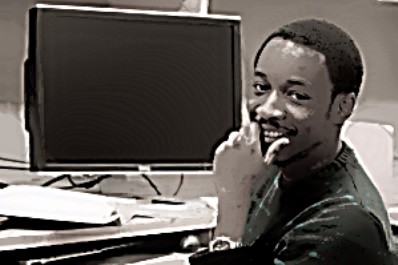
A. Kevin Tang is a Professor of Electrical and Computer Engineering (ECE) at Cornell University, affiliated with the School of ECE. His research focuses on computer networks, control systems, optimization, and information theory. He teaches advanced courses such as ECE 5800 (Control and Optimization of Information Networks) and ECE 6960 (Interplay between Economics and Systems). His work bridges theoretical foundations and practical network applications, including network coding, distributed control, and protocol design. Recent contributions address privacy-preserving data sharing, network routing stability, and optimization techniques for heterogeneous systems. Tang’s publications span top venues like NeurIPS, ICML, NSDI, and IEEE Transactions. His research group explores cutting-edge topics in networked systems, with applications to distributed storage, software-defined networking, and multipath communication protocols. He advises on interdisciplinary projects combining control theory, optimization, and networking. His lab collaborates closely with industry partners to translate theoretical insights into real-world network solutions.
Abd El Rahman Shabayek is a Research Scientist at the Interdisciplinary Centre for Security, Reliability and Trust (SnT) within the University of Luxembourg, leading research in AI-driven Computer Vision for space and energy sectors. His interdisciplinary background includes contributions across prestigious universities in France, the UK, Spain, and Egypt. He holds an Erasmus Mundus MSc and a PhD in Computer Vision and Robotics from France. Current Affiliations: CVI² Research Group (SnT), University of Luxembourg. Former Roles: Assistant Professor at Suez Canal University, adjunct positions at Sinai University and the Information Technology Institute. Research focuses on optimizing deep neural networks for spatial/terrestrial applications, with over 50 publications and an h-index of 16. Notable contributions include work on 3D deformation transfer, anomaly detection in battery thermal imaging, and hybrid attention models for pedestrian detection. His work bridges academia and industry through collaborations in healthcare, 3D scanning, and space tech. He has received two best paper awards and actively reviews for IEEE/Springer journals and top conferences like IROS, AAAI, ICCV, and CVPR. Teaching includes the Computer Vision module in the International Space Master’s program and AI summer camps for adolescents. Awards: Two best paper awards (3D deformation and skeletal feedback). Grants: Successfully led proposals for Luxembourg National Research Fund (FNR) projects under PPP and CORE programs. Key projects include the Zero-G Lab for space operations emulation and development of the STARR system for stroke rehabilitation. His labs focus on AI-driven solutions for energy systems, robotics, and biomedical applications.
Prasad Theeda is a Research Fellow at the Malaysia School of Information Technology, specializing in signal processing, medical imaging, and computational mathematics. His work focuses on compressed sensing, tomographic reconstruction, and optimization techniques applied to imaging systems. He has contributed to advancements in minimizing radiation exposure in CT scans through preconditioned sensing matrices and sparse-view algorithms. Key research areas: Compressed sensing, frame theory, medical imaging optimization His publications span topics like sparse sampling strategies for X-ray tomography and nullspace property analysis in invertible operators. Collaborations include work with institutions on global optimization and inverse problems. No formal awards or grants are listed, though his research demonstrates significant technical contributions to imaging science.
Professor Yi Ma is a faculty member at the Department of Electrical Engineering and Computer Sciences (EECS) at the University of California, Berkeley, and holds the Chair Professor in AI at the School of Computing and Data Science (CDS), University of Hong Kong. He serves as Director of both CDS and the Institute of Data Science (IDS) at HKU since 2024 and 2023, respectively. His research spans artificial intelligence , computer vision , compressive sensing , and machine learning , with a focus on low-dimensional models for high-dimensional data analysis . He has pioneered work in robust principal component analysis , sparse representation , and deep learning theory , as reflected in his textbook High-Dimensional Data Analysis with Low-Dimensional Models (Cambridge, 2021) and recent position papers. Key contributions include organizing conferences like the Conference on Parsimony and Learning (CPAL) and developing course EECS 208 at Berkeley, which explores computational principles for AI and data analysis. His work is affiliated with research hubs such as the Berkeley Artificial Intelligence Research (BAIR) , Center for Augmented Cognition , and Vive Center for Enhanced Reality . Scientific Honors: Society for Industrial & Applied Mathematics (SIAM) Fellow (2020) Association for Computing Machinery (ACM) Fellow (2017) Institute of Electrical & Electronics Engineers (IEEE) Fellow (2013) Office of Naval Research Young Investigator (2005) NSF CAREER Award (2004) CS TCPAMI ICCV Best Paper Award/David Marr Prize (1999) He has held leadership roles at institutions including ShanghaiTech University and Microsoft Research Asia, blending theoretical and applied research in structured data modeling and vision-based robotics .
Nils Sturma is a Research Fellow at the Chair of Mathematical Statistics (Technical University of Munich), working under Prof. Mathias Drton. His research spans Causal Inference , Graphical Models , High-dimensional Statistics , and Algebraic Statistics . PhD in Mathematical Statistics (2024, TU Munich, advisor: Mathias Drton) Master in Mathematical Finance and Actuarial Science (2021, TU Munich) Bachelor in Mathematics (2018, University of Freiburg) His work applies algebraic geometry to statistical problems, particularly in causal discovery and model identifiability . Recent publications focus on testing polynomial constraints, latent variable models, and multi-domain causal learning. Notable collaborations include Caroline Uhler (MIT/Broad Institute), Chandler Squires (MIT), and Dennis Leung. He will join EPFL in September 2025 as a postdoc under Mats Stensrud and Victor Panaretos.
Michael Lewicki is a Professor in the Computer and Data Sciences Department at the Case School of Engineering, Case Western Reserve University, where he develops theoretical models of computation and representation in sensory coding and perception. His educational background includes: PhD in Computation and Neural Systems from the California Institute of Technology (1996) Bachelor of Science in Math and Cognitive Science (double major) from Carnegie Mellon University (1989) Lewicki's research bridges computational neuroscience and machine learning, focusing on efficient coding principles in sensory systems. He investigates neural representation mechanisms in vision and audition using information theory, probabilistic modeling, and unsupervised learning techniques. His work reveals how biological systems optimize sensory processing through population coding, sparse representations, and adaptation to natural stimulus statistics, with significant implications for artificial intelligence and neural engineering. Analysis of his publication record shows consistent contributions to understanding neural coding frameworks across visual and auditory domains. His work demonstrates how unsupervised learning principles—particularly independent component analysis (ICA) and sparse coding—explain the emergence of complex neural properties from natural scene statistics, with applications spanning computer vision, auditory processing, and theoretical neuroscience. Lewicki's research has been published in premier journals including Nature, Nature Neuroscience, and Neural Computation, reflecting substantial impact in interdisciplinary computational sciences. As a professor, Lewicki has advised graduate students in computational neuroscience and machine learning; however, specific student names and grant funding details are not documented in the provided information.
Dr. Dragan Rangelov is a Senior Lecturer in Psychology and Cognitive Neuroscience at the School of Health Sciences, Swinburne University of Technology. He holds a PhD in Systemic Neuroscience from Ludwig-Maximilians-Universität München and leads the Economic Brain Lab, focusing on the neural basis of risky choices and metacognition. His research integrates behavioral testing, brain imaging (EEG, MEG, MRI), and non-invasive neuromodulation (TMS, neurofeedback) to explore perception, attention, memory, and decision-making in health and disease. His educational background includes: PhD, Systemic Neurosciences, Ludwig-Maximilians-Universität München, Germany MSc, Neuro-Cognitive Psychology, Ludwig-Maximilians-Universität München, Germany BSc (Hons), Psychology, University of Belgrade, Serbia Dr. Rangelov’s research interests center on the neural and cognitive mechanisms underlying decision-making, with a focus on metacognition, perceptual processing, and working memory. He investigates how the brain adapts to environmental changes and trauma, particularly in stroke patients, and plans to extend this to anxiety, depression, and compulsive gambling. His work combines computational modeling with high-temporal-resolution neuroimaging to dissect the dynamics of evidence accumulation and attentional control. His recent publications reveal a strong trend in understanding the neural underpinnings of decision-making, with emphasis on metacognitive processes, sensory adaptation, and working memory. Key themes include the role of the centro-parietal positivity (CPP) in metacognition, parallel evidence accumulation in perceptual decisions, and white matter microstructure's influence on memory precision. His work frequently appears in top journals such as Journal of Neuroscience , PNAS , and Cerebral Cortex . Dr. Rangelov serves as an Associate Editor for: Attention, Perception, & Psychophysics Journal of Experimental Psychology: Human Perception and Performance Cortex (2024) He is actively funded by major grants, including: Australian Research Council : 'Understanding the neural dynamics of integrated perceptual decisions' (2022–2025) Australian Research Council : 'Cognitive control of attention and its role in regulating brain function' (2012–2018) Deutsche Forschungsgemeinschaft : 'Effects of task-irrelevant features over cognitive control' (2012–2017) Swinburne University : 'Monitored Minds: Neurosurveillance and Dehumanisation in the Modern Workplace' (2025–2026) He supervises Honours, Master’s, and PhD students and collaborates extensively with researchers such as Prof. Jason Mattingley. He leads the Economic Brain Lab, which investigates risky choices and metacognitive training, aiming to improve behavior and well-being in both clinical and general populations.
Max Pfeffer is an Assistant Professor at the Institute for Numerical and Applied Mathematics within Georg-August-Universität Göttingen (since 2023). He previously held research and adjunct positions at TU Chemnitz, SimulaMet Oslo, Johannes-Gutenberg-Universität Mainz, and MPI MiS Leipzig. His work bridges numerical mathematics with data science applications. Current affiliations: Universität Göttingen (Junior Professor), TU Chemnitz (Adjunct Professor) Collaborators: Martin Stoll (TU Chemnitz), Evrim Acar Ataman (SimulaMet), Markus Bachmayr (Mainz), Bernd Sturmfels (MPI MiS) Research Focus Matrix/Tensor factorizations for high-dimensional data Riemannian optimization on manifolds Cancer classification through machine learning Quantum chemistry numerical methods for matrix product states Parametric PDE solutions for biomedical applications Recent Publications Highlight His 2023-2025 publications demonstrate cross-disciplinary impact: tensor decompositions for temporal data analysis, Gaussian process acceleration with tensor structures, and biomedical applications in melanoma gene selection. The work intersects numerical mathematics, machine learning, and quantum computing. Academic Background PhD in Mathematics (2018), M.Sc. (2014), B.Sc. (2011) from TU Berlin DFG-funded project on constrained matrix/tensor factorizations (2021-2023)
Patrick L. Combettes is a Professor in the Department of Mathematics at North Carolina State University , where he was hired in 2016 as part of the Chancellor’s Faculty Excellence Program in Data-Driven Science . His work centers on numerical nonlinear analysis and optimization , particularly applications to data science , signal processing , and image recovery . Prior to NC State, he held positions at the City University of New York (1990–1999) and Université Pierre et Marie Curie in Paris (1999–2016), where he achieved the rank of Professeur de Classe Exceptionnelle . Education : PhD in Mathematics (1989) from NC State, Habilitation from Université Paris Sud (1996) Research Interests : Convex optimization, proximal algorithms, monotone operator theory, and their applications to high-dimensional data analysis, signal/image processing, and inverse problems. Scientific Awards : SIAM Fellow (2024) for contributions to convex optimization IEEE Fellow (2005) for signal/image processing Best Paper Award (IEEE Signal Processing Society, 1993) Grants and Leadership : Founding director of the CNRS research consortium MOA (2009–2013), focusing on mathematical optimization and applications. His recent publications highlight advancements in proximal methods , stochastic iterations , and monotone operator splitting , with applications to image decomposition , signal reconstruction , and statistical modeling . Collaborations span institutions in France, the U.S., and Chile, emphasizing cross-disciplinary approaches to data science and computational mathematics .
Dr. Jian Lin, an ACM Senior Member (2023), is a prominent researcher in machine learning and computer vision, with a focus on graph-based models, hashing techniques, and cross-modal learning. His work bridges theoretical advancements with practical applications in areas like medical imaging and video analysis. Scientific Awards : ACM Senior Member (2023) His research spans robust self-expression learning, latent graph inference, and dimensionality reduction, emphasizing adaptive algorithms and semi-supervised/unsupervised frameworks. Key trends include integrating uncertainty quantification, contrastive learning, and attention mechanisms to enhance model performance across diverse domains. Dr. Lin has contributed extensively to the field of artificial intelligence through publications on asymmetric transfer hashing, deep neural architectures, and graph convolutional methods. While details about his academic affiliations or teaching roles are not explicitly provided, his body of work underscores a commitment to advancing machine learning methodologies and their applications.
Demba Ba is an Associate Professor of Electrical Engineering and Bioengineering at Harvard University's School of Engineering and Applied Sciences (SEAS). He serves as the Dean of Undergraduate Studies for Bioengineering since 2020 and joined SEAS in 2015 after a postdoctoral fellowship at MIT (2007-2014). His research bridges computational neuroscience and artificial intelligence, focusing on sparse signal representations, interpretable AI, and neural network theory. Fluent in Wolof, Fulani, French, Spanish, English, and Arabic, he also contributes to signal processing, statistical learning, and dynamic systems. PhD in EECS from MIT (2011) MS in EECS from MIT (2006) BS in Electrical Engineering from University of Maryland (2004) His work explores connections between sparse coding and neural networks through publications in top venues like NeurIPS, ICML, and IEEE Transactions. Articles emphasize convolutional dictionary learning, Bayesian frameworks, and applications to neural data analysis. He has received the 2016 Sloan Fellowship in Neuroscience and 2021 Roslyn Abramson Award for undergraduate teaching excellence. 2021: Gaussian process convolutional dictionary learning (Submitted) 2020: Deep residual auto-encoders for dictionary learning 2018: Multitaper time-frequency analysis for neuroscience Demba Ba leads the CRISP research group and holds advisory roles at Harvard. His awards include: 2021 Roslyn Abramson Award 2016 Alfred P. Sloan Foundation Fellow 2010 ICME Best Student Paper Award He teaches courses like ES 201 (Decision Theory) and ES 157 (Biomedical Signal Processing), while maintaining interdisciplinary collaborations in neuroscience, machine learning, and signal processing.
George Atia is an Associate Professor at the Department of Electrical and Computer Engineering, University of Central Florida, directing the Data Science and Machine Learning Lab (DSML). Previously, he was a postdoc at the Coordinated Science Laboratory (CSL) at UIUC and earned his Ph.D. from Boston University, where he was affiliated with the Information Systems & Sciences Lab (ISS) and Center for Information & Systems Engineering (CISE). His research spans big data analytics, sparsity-based learning, controlled sensing, and verifiable planning , with applications in machine learning, cyberphysical systems security, and optical/neural signal processing. His work emphasizes robust algorithms for high-dimensional data, adversarial attacks in machine learning, and inverse problems in optical imaging. Recent projects include tensor completion for visual data recovery and multi-agent reinforcement learning with robustness guarantees. He has secured major funding from NSF, DOE, and ONR, including the NSF CAREER Award. Notable scientific contributions include Robust Tensor Completion for Visual Data Game-Theoretic Frameworks for Cloud Security Adversarial Sample Synthesis in Hierarchical Classifiers Steady-State Policy Synthesis in MDPs His teaching includes graduate courses in random processes and detection theory.
Dr. Andreas Kretschmer is a scientific collaborator in the Algebraic Geometry group led by Prof. Gavril Farkas at the Institute of Mathematics, Humboldt University of Berlin, within the Faculty of Mathematics and Natural Sciences. Previously, he spent five months as a member of the Nonlinear Algebra group at the Max Planck Institute for Mathematics in the Sciences (MPI MiS) in Leipzig. He completed his PhD in September 2024 at Otto von Guericke University Magdeburg (OvGU) under the supervision of Professors Benjamin Nill and Thomas Kahle, where he was part of the MathCoRe research training group. His academic journey includes a master's degree from Bonn University with Georg Oberdieck and a bachelor's degree from Friedrich-Alexander University Erlangen-Nuremberg (FAU). Dr. Kretschmer's research focuses on the intersection of algebraic geometry, commutative algebra, and combinatorics. His work addresses fundamental problems in enumerative geometry, particularly concerning cubic hypersurfaces, as well as the study of lattice polytopes through their local h*-polynomials. He has made significant contributions to algebraic statistics, exploring generalizations of Gaussian graphical models. His research demonstrates a strong connection between theoretical mathematics and practical applications, bridging abstract algebraic concepts with concrete combinatorial structures. His publication record shows a consistent trajectory of high-quality research in top mathematics journals, with a clear focus on the structural properties of algebraic varieties and their combinatorial representations. Recent work demonstrates increasing sophistication in handling complex algebraic structures while maintaining connections to geometric intuition. Dr. Kretschmer is actively engaged in the mathematical community, regularly presenting his work at international conferences including SIAM Conference on Applied Algebraic Geometry, MEGA conferences, and specialized workshops at institutions like Oberwolfach. He has also supervised research interns through the RISE Germany program of the DAAD, demonstrating commitment to mentoring the next generation of mathematicians. His current work within the Algebraic Geometry group at HU Berlin continues to explore deep connections between algebraic structures and geometric phenomena, with particular emphasis on the combinatorial aspects that underlie complex algebraic varieties.
Stephan Eckstein is a junior professor in the Department of Mathematics at the University of Tübingen and a member of the university's machine learning cluster. His research bridges probability theory and machine learning with particular focus on stochastic optimization and numerical approximation. Research interests include: Optimal transport theory and its computational aspects Regularization techniques for high-dimensional problems Causal models and probabilistic structures Graphical models in machine learning Graph neural networks Recent publications analyze dimensional stability in optimal transport, exponential convergence rates for Sinkhorn algorithms, and causal modeling in financial time series generation. Contact: stephan.eckstein@uni-tuebingen.de
Shenlong Wang is an Assistant Professor at the Department of Computer Science, University of Illinois at Urbana-Champaign (UIUC), with affiliations to Computer Vision @ UIUC , Illinois Robotics Group , and the Center for Immersive Computing @ UIUC . He holds a PhD in Computer Science from the University of Toronto and previously worked as a Research Scientist at Uber under Raquel Urtasun. His research bridges 3D computer vision with robotics, focusing on algorithms for 3D world perception, physics-informed simulations, and applications in autonomy, immersive computing, and climate change-related domains. Education : PhD in Computer Science (University of Toronto), prior academic positions at Uber His group has produced 42 publications (15 shown) across top venues like CVPR , NeurIPS , ICRA , and CoRL , with recent work on 4D modeling, inverse rendering, and physics-grounded generation. Awards include the NSF CAREER , Dean's Award for Excellence in Research , and Amazon Research Award . He teaches CS598: 3D Vision and CS446: Machine Learning, and mentors PhD students in areas spanning 3D vision, robotics, and AI. Scientific Awards : Dean's Award for Excellence in Research (2025) NSF CAREER Award (2024) Amazon Research Award (2022) CVPR Best Paper Candidate (2021) IROS Best Application Paper Finalist (2020) Grants from NSF Foundational Research in Robotics , Meta Research , and NVIDIA support his work on digital twins, radar perception, and generative models. His lab collaborates with institutions like Tsinghua University, Peking University, and industry partners including NVIDIA and Meta.