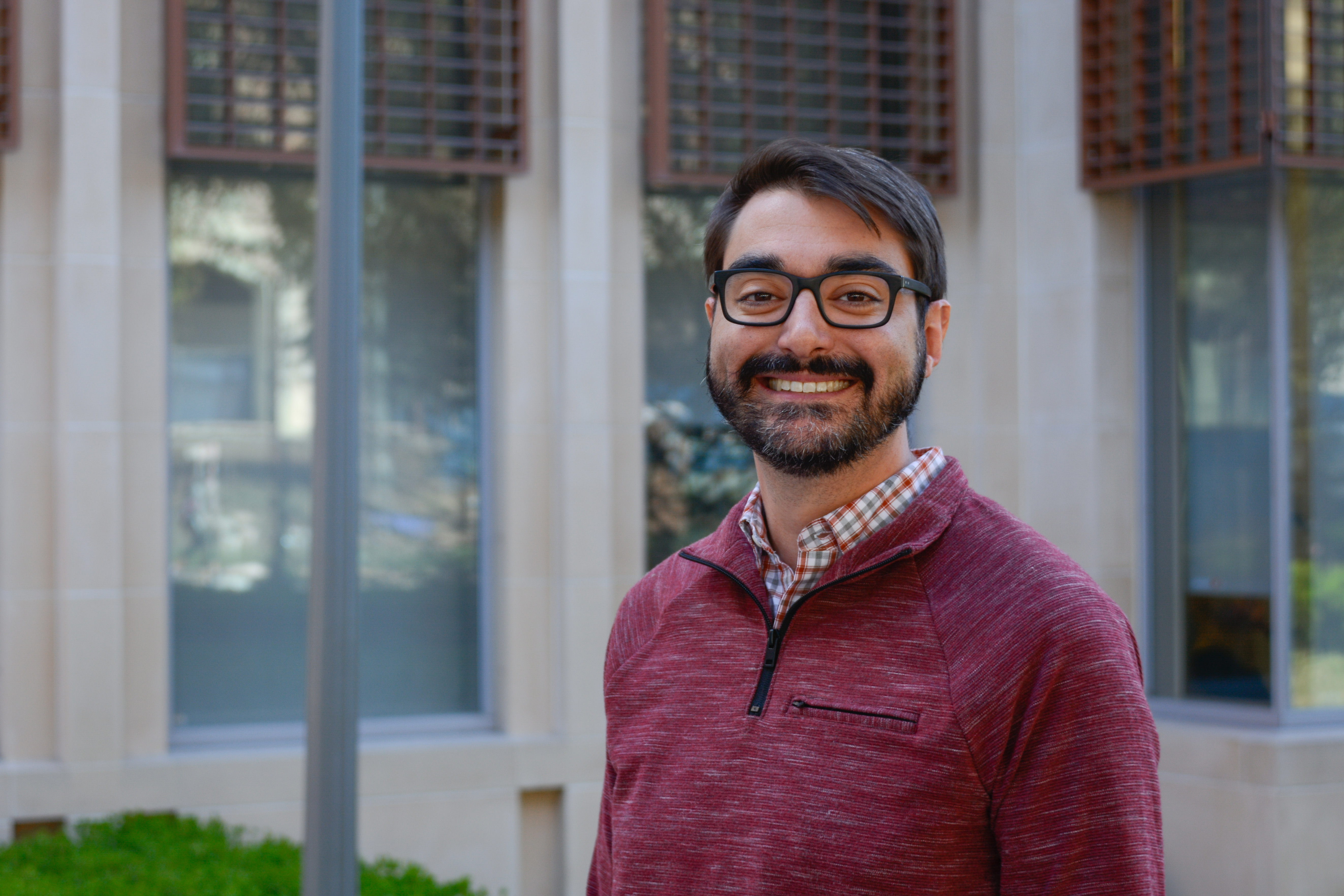
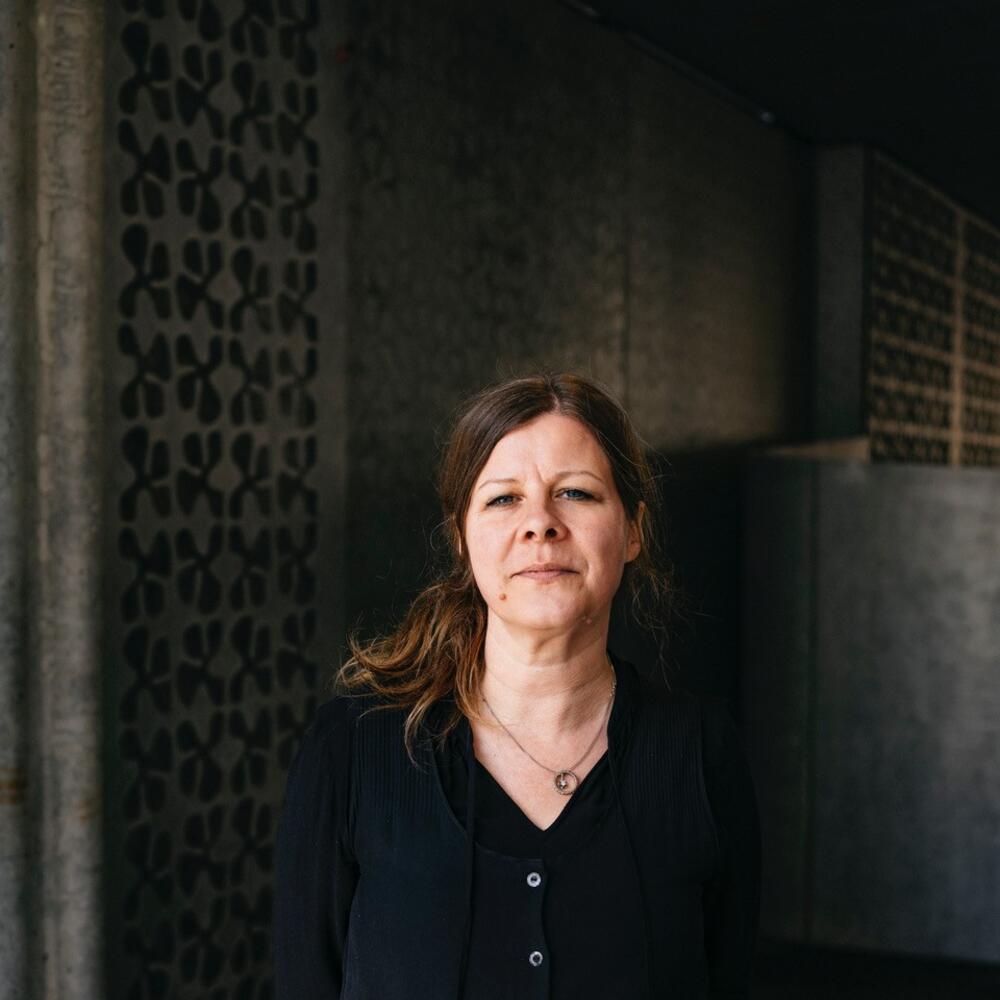
Dan Spielman is the Sterling Professor of Computer Science and holds joint appointments as Professor of Statistics and Data Science and Mathematics at Yale University. He is affiliated with the Department of Mathematics within the Faculty of Arts and Sciences. His research focuses on spectral graph theory, algorithms, linear systems, and their applications in computer science, mathematics, and statistics. He has been recognized as an ACM Fellow for his contributions to theoretical computer science and mathematics. Dr. Spielman's work bridges theoretical and applied domains, with notable advancements in graph sparsification, Laplacian solvers, and the resolution of the Kadison-Singer problem. His research also encompasses algorithmic design, optimization, and probabilistic methods. Key grants include NSF funding for projects like 'Generalized Algebraic Graph Theory: Algorithms and Analysis' (2016). His scientific awards include the ACM Fellowship (2011), acknowledging his impactful contributions to algorithms and complexity theory. Spielman’s interdisciplinary approach integrates spectral graph theory with practical applications, addressing fundamental problems in computation and mathematics.
M.Sc. Maximilian Mühlbauer is a researcher at the Chair of Sensor-Based Robot Systems and Intelligent Assistance Systems at Technische Universität München (TUM), part of the Faculty of Computer Science. His work focuses on robotics, artificial intelligence, and space robotics, particularly in areas like in-orbit manufacturing, virtual fixtures, and human-robot interaction. He contributes to projects such as the ACOR initiative and the AI-In-Orbit-Factory, exploring fault-tolerant processes and adaptive robotic systems for space applications. Research Interests: Maximilian’s research emphasizes AI-driven robotics , space robotics , and control systems . He develops methodologies for virtual fixtures , reconfigurable robotic systems , and teleoperation with shared control . His work integrates probabilistic models and machine learning for resilient systems in challenging environments like space. Publications: His recent work spans topics from in-orbit manufacturing and force-sensitive space manipulators to multi-modal haptic teleoperation , reflecting a focus on practical robotic applications in aerospace and industry. Grants/Advising: Maximilian oversees available theses on topics like mixture of experts fixture learning and virtual fixture adaptation , inviting collaboration on AI-driven robotics projects. He collaborates with Prof. Alin Albu-Schäffer and contributes to TUM’s research initiatives in autonomous systems. Labs: He is part of the Sensor-Based Robot Systems lab, advancing robotics for human-centric and space-oriented applications.
Professor Christian F. Doeller is a leading cognitive neuroscientist serving as Director of the Department of Psychology at the Max Planck Institute for Human Cognitive and Brain Sciences (MPI CBS) in Leipzig and Vice President of the Max Planck Society (since 2023). His roles include honorary professorships at the University of Leipzig (2019) and TU Dresden (Cognitive Neuroscience of Learning and Memory). He holds a PhD in Psychology from Saarland University (2005) and has held positions at institutions such as UCL (London), Radboud University (Nijmegen), and NTNU (Trondheim). His research focuses on spatial navigation, memory systems, and cognitive mapping in the human brain, leveraging neuroimaging (fMRI, EEG) and computational modeling. Key areas include hippocampal/entorhinal cortical function, grid cells, and the neural basis of spatial and conceptual representations. Recent work explores non-Euclidean spatial cognition, value-based decision making using grid-like maps, and hormonal influences on navigation. His lab combines experimental psychology, neuroimaging, and theoretical neuroscience to understand how brains build predictive models of environments and concepts. Publications emphasize cognitive maps, neural representations of space/value, and memory formation mechanisms. Over 100 journal articles span high-impact journals like Nature Neuroscience , Neuron , and Current Biology . His work bridges basic research and translational applications in neurodegenerative disorders and spatial cognition deficits.
Nicole Wein is an Assistant Professor in the Department of Electrical Engineering and Computer Science at the University of Michigan, where she is a member of the Theory of Computation Lab within the Computer Science and Engineering Division. Her research focuses on theoretical computer science, particularly graph algorithms and lower bounds across various domains including distance-estimation, dynamic, parameterized, distributed, and online algorithms. Education: PhD in Computer Science from MIT, advised by Virginia Vassilevska Williams Master's in Computer Science from Stanford University B.S. in Computer Science/Mathematics from Harvey Mudd College Nicole's research centers on theoretical aspects of graph algorithms and computational complexity. She investigates fundamental questions about how algorithms can efficiently handle changing data, extract information from graphs in linear time, and understand the structure of shortest paths, especially in directed graphs. Her work spans multiple algorithmic paradigms including dynamic algorithms that adapt to changing inputs, parameterized approaches for hard problems, and fine-grained complexity that establishes precise relationships between problem difficulty. Analysis of Nicole's recent publications reveals a strong focus on graph algorithms, particularly shortest path problems, spanners, and hardness results. Her work often bridges theoretical insights with practical implications, developing novel techniques for distance estimation, dynamic graph processing, and approximation algorithms. A significant portion of her research examines the structural properties of graphs that enable or constrain efficient computation, with applications across computer science. Nicole actively mentors students at various levels. She currently advises PhD student Jubayer Nirjhor and has worked with undergraduate researchers including Sam Hiken (now a pre-doc at MIT), Michael Wang, and Tony Zhang. Her teaching includes foundational courses like EECS 376: Foundations of Computer Science and specialized courses such as EECS 598: Graph Algorithms. Nicole contributes to the academic community through service as a program committee member for major conferences including SOSA 2025, FOCS 2025, SODA 2025, and others. She co-organized the June 2023 DIMACS workshop on Modern Techniques in Graph Algorithms and previously organized Algorithms Office Hours at MIT to improve communication between theory and applications of algorithms.
Michael Levine is the Anthony B. Evnin '62 Professor in Genomics and Professor of Molecular Biology at Princeton University, where he also serves as Director of the Lewis-Sigler Institute for Integrative Genomics. He joined Princeton in 2015 after a distinguished career at UC Berkeley, where he was Professor of Genetics and held leadership roles in genetics and genomics programs. His research focuses on how noncoding regions of the genome regulate gene expression in space and time during development. His lab has pioneered studies in Drosophila and the protovertebrate Ciona intestinalis , uncovering fundamental mechanisms such as enhancer function, transcriptional bursting, short-range repression, and long-range enhancer-promoter interactions. His work has also revealed evolutionary insights into the origins of vertebrate innovations like the neural crest and neurogenic placodes. Levine's recent publications demonstrate a strong emphasis on quantitative and live-imaging approaches to dissect gene regulation dynamics. His work integrates experimental embryology with computational modeling, especially using deep learning to predict transcriptional outcomes. Themes across his recent articles include biomolecular condensates, chromatin architecture, and the physical principles underlying enhancer function. Elected to the National Academy of Sciences (1998) Molecular Biology Award, National Academy of Sciences (1996) Wilbur Cross Medal, Yale University (2009) EG Conklin Medal, Society of Development Biology (2015) Dr. Levine has trained numerous researchers and co-authored studies with emerging scientists, indicating active mentoring and grant-funded research. His leadership roles at major institutes and sustained publication record reflect a robust, well-supported research program. He has also contributed to national genomics initiatives, including service at the DOE Joint Genome Institute. His lab operates at the intersection of molecular biology, genomics, and quantitative developmental biology, utilizing model organisms and cutting-edge imaging and computational tools to unravel the logic of gene regulatory networks.
Dr. Jonathan Gair is a Group Leader in the Astrophysical and Cosmological Relativity Division at the Max Planck Institute for Gravitational Physics (Albert Einstein Institute) in Potsdam, Germany. Previously, he served as Professor of Astrostatistics at the University of Edinburgh (2018-2019) and as Reader (Associate Professor) in Statistics at the same institution (2015-2018). Dr. Gair's research focuses on gravitational wave data analysis and its applications to cosmology and fundamental physics. His work spans multiple areas of gravitational wave astronomy, with particular emphasis on: Developing and applying new methodologies for gravitational wave data analysis Using gravitational wave observations to derive cosmological parameters, particularly the Hubble constant Developing data analysis tools for the LISA space-based gravitational wave detector Exploring the scientific potential of gravitational wave observations for testing general relativity Creating computationally efficient techniques for parameter inference in gravitational wave astronomy Dr. Gair plays a leading role within the LIGO/Virgo collaboration in deriving cosmological constraints from gravitational wave observations. He currently chairs the LISA Science Group, overseeing the development of data analysis tools for the planned ESA-led LISA mission. His research has significantly contributed to our understanding of how gravitational wave observations can serve as "standard sirens" for measuring cosmic distances and probing the expansion history of the universe. Dr. Gair's work involves both theoretical development and practical application of data analysis techniques. He has developed methods for handling selection effects in rate estimation of gravitational wave events, techniques for mapping gravitational wave backgrounds using methods adapted from cosmic microwave background analysis, and approaches for incorporating model uncertainties into gravitational wave parameter estimation.
Garrett Warnell is a Visiting Researcher in the Department of Computer Science at The University of Texas at Austin, specializing in artificial intelligence, computer vision, and robotics with applications in autonomous navigation systems. Education: PhD in Electrical Engineering, University of Maryland Master's in Electrical Engineering, University of Maryland B.S. in Computer Engineering, Michigan State University Research Interests: Dr. Warnell's work focuses on machine learning for robotic control , computer vision for scene understanding , and autonomous navigation in challenging environments . His contributions span imitation learning with limited demonstrations, preference-aware path planning, and off-road mobility. Recent research integrates vision-language models and transformer architectures for social navigation and terrain adaptation, emphasizing human-robot collaboration and robustness in constrained spaces. Publication Trends: Analysis of Dr. Warnell's 2023-2025 publications reveals dominant themes in off-road navigation robustness, with emphasis on particle filtering, diffusion models, and transformer networks for geo-localization and terrain adaptation. A significant trend involves human preference alignment through extrapolation techniques and open-vocabulary models for costmap generation, reflecting growing integration of natural language understanding in robotic systems. Scientific Awards: No awards specified in available documentation. Advising and Grants: Public records indicate no listed advisees or grant funding details. Labs and Teams: Affiliated with UT Austin's Computer Science Department, though specific research group affiliations remain undocumented in provided materials.
Olga Fernández López is an Associate Professor at the Department of History and Theory of Art, Universidad Autónoma de Madrid, and holds a PhD in Geography and History (History of Art) from Universidad Complutense de Madrid (UCM). She collaborates with institutions including Intermediae (Matadero Madrid), CA2M Madrid, and Andalusian Center for Contemporary Art Seville. PhD Curating Contemporary Art, Royal College of Art (2017) PhD in History of Art, UCM Master’s in Cultural Management, Fundación Ortega y Gasset Her research focuses on: History of exhibition models and curatorial practice Contemporary art in Spain and Latin America Visual culture and political philosophy Museum decolonization Recent publications explore: Urban curatorial practices (2016-2021) Postwar European visual culture (2019) Decolonial exhibition strategies (2020) Scientific awards include: Salvador de Madariaga grant (2020) for research at Columbia University Key projects: PUBLISHERS: Publics of Contemporary Art (2019-2021) European Forum for Advanced Practices (2019-2022) Decentralized Modernities: Cold War Art (2018-2020)
Gedas Bertasius is an Assistant Professor in the Department of Computer Science at the University of North Carolina at Chapel Hill. Previously, he served as a postdoctoral researcher at Meta AI (Facebook AI) and earned his PhD in Computer Science from the University of Pennsylvania. His academic journey began with a bachelor’s degree in Computer Science from Dartmouth College. Dr. Bertasius specializes in computer vision and machine learning with specific interests in: Video understanding First-person vision (egocentric vision) Human behavior modeling Multimodal deep learning Transfer learning Computer vision for sports analytics Video+robotics integration His research produces practical frameworks like Video ReCap for hierarchical captioning of long videos, SiLVR for language-based video reasoning, and BASKET for fine-grained skill estimation. He focuses on developing models that can process videos across multiple temporal granularities while maintaining computational efficiency. Key research themes in his work include: Recursive video processing architectures Space-time attention mechanisms Generative video modeling LLM integration with vision systems 3D-aware representation learning Continual learning for video QA He has received notable recognition, including: CVPR 2024 Egocentric Vision (EgoVis) Distinguished Paper Award CVPR 2020 Best Paper Award Nomination First Place at CVPR 2025 Multi-Discipline Lecture Understanding Workshop Dr. Bertasius collaborates with prominent researchers like Mohit Bansal and Lorenzo Torresani . His recent publications demonstrate expertise in advancing video-language models, with applications in semantic alignment, temporal grounding, and cross-modal reasoning. For detailed information about his research, publications, and ongoing projects, please visit his official website .
SangHyung Ahn is a Lecturer at the School of Civil Engineering , University of Queensland (UQ), since 2017. He joined UQ as a postdoctoral research fellow in 2015 after earning his PhD in Civil Engineering (Construction Engineering and Management) from Purdue University, USA. Prior to his academic career, he worked as an assistant manager at Hyundai Engineering and Construction Co., Ltd. (2003-2007) and holds an MBA in international business from Hanyang University and a B.Sc in Civil Engineering from Korea University. Research Focus: Construction process modelling with virtual reality, decision support systems for construction, automation of data-driven simulation modelling, sensor-based operations analysis, and integration of Building Information Modelling (BIM). Teaching: Coordinates undergraduate courses Introduction to Project Management (CIVL3510) and Construction Engineering Management (CIVL4522) . Research Trends: His recent publications highlight interdisciplinary work in transportation engineering, structural design, and AI-driven simulation tools. Key themes include application of machine learning to car-following models, drone-based vehicle identification, and optimization of public transport systems using agent-based simulations. Supervision: Available for supervision, with completed supervision of PhD and Master’s theses on topics such as BIM-LCA integration, pedestrian trajectory analysis, and AI-driven driving behavior models.
Professor Jürgen Richter-Gebert is a full professor of Geometry and Visualization at the Technical University of Munich (TUM), working within the TUM School of Computation, Information and Technology. Born in 1963, he has been at TUM since 2001, following positions at ETH Zurich (1997-2001) and TU Berlin (1994-1997). His educational background includes studies at TU Darmstadt (1983-1988) and dual PhDs from TU Darmstadt and KTH Stockholm (1991-1992). Richter-Gebert's research spans combinatorial and computer-oriented geometry, with particular expertise in polytope theory and mathematical visualization software. He develops processes for the automatic generation of geometric problem solutions and is actively involved in raising the public profile of mathematics. Richter-Gebert's publications and research focus on the intersection of mathematics and computer science, with particular emphasis on projective geometry, dynamic geometry, polytope theory, and combinatorial geometry. His work demonstrates how mathematical structures can be made accessible through computerized interactive visualizations. His most notable publications include "Perspectives on Projective Geometry" (2011) and "Geometriekalküle" (2009), along with numerous papers on dynamic geometry systems. Ars Legendi Prize for excellent university teaching (2011) Karl Max von Bauernfeind Medal of the TUM (2010) MedidaPrix - media didactic university prize (2008) EASA - European Academic Software Award (2000) Communicator Preis for science communication (2021) As founder and director of the ix-quadrat mathematics exhibition at the Garching Campus, Richter-Gebert has made significant contributions to mathematics education and outreach. He has developed influential mathematical visualization tools including Cinderella, CindyJS, and iOrnament, which have received multiple awards for educational software excellence. His research group focuses on mathematical foundations, authoring systems, and mathematical visualizations with applications in education and public scenarios.
Claudia Lehmann is a University Professor of Film Art & Visual Communication at the Institute for Open Arts, Department of Scenography at Mozarteum University Salzburg. She has been a professor at Mozarteum University since 2019 and previously served as a visiting professor at the Berlin Weissensee Art Academy. As a faculty member, she contributes to the Institute management, teaches as a Teacher, and serves on the Curricular Commission. Dr. Lehmann holds a doctorate in physics (Dr. rer. nat.) with her dissertation "GAUGE COVARIANT MULTISCALE ANALYSIS OF COMPLEX SYSTEMS" published through DESY-Publications in 2004. Her academic journey reflects a unique interdisciplinary trajectory from scientific research to artistic practice. Claudia Lehmann's research interests center around the intersection of art and science, with particular focus on perception, reality, and systemic phenomena. Her work spans documentaries, feature films, music videos, art videos, installations, and performances, constantly searching for new forms and formats. She develops visual concepts, video stage sets, and unique live video performances, often in collaboration with Nicolas Stemann. Through her work, she explores diverse possibilities for new structures, especially in the form of artistic collaboration. Her recent artistic output shows a consistent trend toward interdisciplinary work that blends theater, film, and digital media. Lehmann frequently collaborates with Nicolas Stemann and Konrad Hempel, creating innovative performances that integrate video technology with traditional stagecraft. Her work often addresses social and political themes while experimenting with form and presentation. The Institute for Experimental Affairs (IXA), which she co-founded with Konrad Hempel, serves as a platform for exploring the interfaces between science and art through various projects and research initiatives. Dr. Lehmann has received several prestigious awards for her work: Samsung Smartfilm Award 2013 Shocking Shorts Award 2007 Nomination for German Documentary Film Music Prize 2013 Nomination for Studio Hamburg Young Talent Prize for Best Screenplay As an educator and researcher, Lehmann has developed numerous collaborative projects and performances that have been featured at major international festivals including the Berlin International Film Festival, Leipzig Documentary Film Festival, and various theater festivals. Her work with IXA represents a significant research initiative at the intersection of science and art. Lehmann co-founded the Institute for Experimental Affairs (IXA) with visual artist and composer Konrad Hempel. Through IXA, she conducts research and realizes projects at the interfaces between science and art. Her collaborative work spans theater productions, film projects, and interactive installations that have been presented at venues including the Schauspielhaus Zürich, Münchner Kammerspiele, Opéra Comique Paris, and various international festivals.
Prof. Yair Weiss is a faculty member at the School of Computer Science and Engineering, The Hebrew University of Jerusalem . He holds a PhD in Brain and Cognitive Sciences from MIT and an MSC in Applied Mathematics from Tel-Aviv University. Education: MSc in Applied Mathematics, Tel-Aviv University (1993) PhD in Brain and Cognitive Sciences, MIT (1998) His research focuses on Human and Machine Vision , Machine Learning , Bayesian Methods , and Neural Computation . Recent work explores adversarial examples, generative models, and robustness in neural networks. Recent publications highlight trends in: Understanding neural network representations Advancements in GANs and adversarial training Image restoration and translation techniques Perceptual distance modeling Bayesian approaches to computer vision Mathematical analysis of deep learning architectures
Eliese-Sophia Lincke is a Junior Professor at the Department of History and Cultural Studies, Freie Universität Berlin, since May 2022. Her work bridges computational methods with Egyptology, focusing on digital tools for studying ancient texts. Bachelor's and Master's in Egyptology, Humboldt-Universität zu Berlin (2007) PhD in "The Conception of Spaces in Language" (TOPOI Cluster, 2012) Research interests include: Digital Humanities : Developing machine learning models for Hieroglyphic, Demotic, and Coptic text processing Linguistic Typology : Analyzing classifier systems in Ancient Egyptian and Sign Languages Spatial Linguistics : Investigating prepositions and spatial adverbs in Egyptian-Coptic Recent publications focus on Neural Lemmatization , OCR for Coptic , and Classifier Semantics , demonstrating her commitment to computational Egyptology. Scientific awards include the Humboldt-Preis 2008 for best Master's thesis and the Prize for Good Teaching 2014 . She has co-organized workshops like "Wege zum Ägyptischen" and served as Co-Editor for Lingua Aegyptia . Her teaching contributes to the Digital Studies of Ancient Texts Master's program.
Yu Lan is a Research Fellow at the Yale School of Public Health , specializing in spatial epidemiology and health geography . Her work integrates genomic data (e.g., WGS) with geographic information systems (GIS) to analyze transmission patterns of infectious diseases like COVID-19 and tuberculosis . Education: PhD in Geography, University of North Carolina at Charlotte MA in Geography, University of North Carolina at Charlotte Research Interests focus on space-time disease modeling , infectious disease transmission , and data-driven public health tools . She develops web-based systems for real-time disease surveillance and environmental risk assessment, including tools for private well contamination and urban neighborhood dynamics . Scientific Awards include the SISMID Scholarship (2024) , Student Honors Paper Competition Finalist (2023) , and David Woodward Digital Map Award (2021) . Collaborations include work with the Ted Cohen Lab and researchers like Joshua Warren and Eric Delmelle . Her publications emphasize genomic-spatial integration and cluster detection algorithms for diseases such as tuberculosis and SARS-CoV-2.