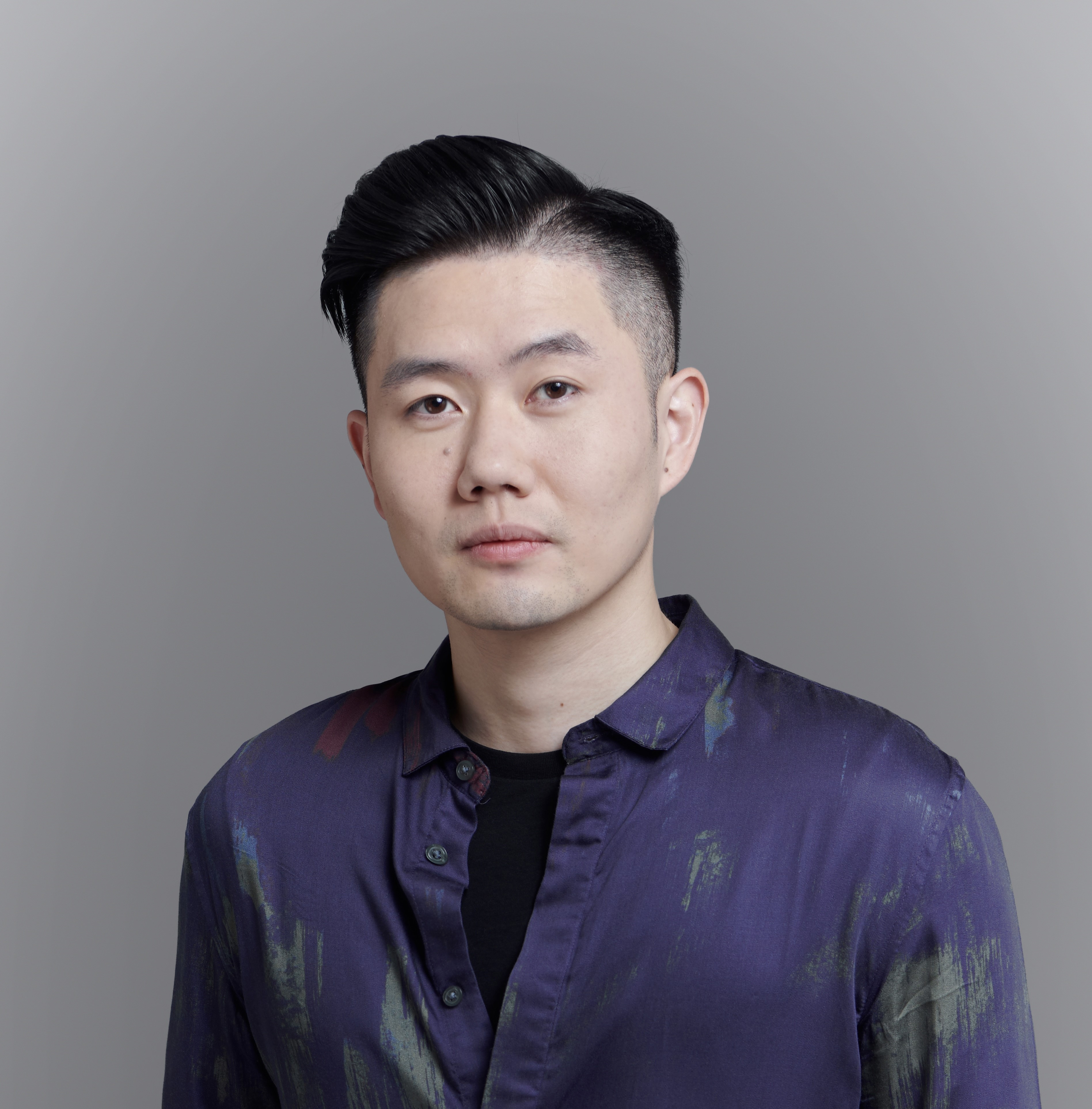
Andrew T. Duchowski is a Professor at Clemson University, specializing in Eye Tracking Methodology, Human-Computer Interaction, and Computer Graphics. His work spans over two decades with significant contributions to gaze-based interaction systems, foveated rendering, and cognitive load measurement. He authored three editions of the influential textbook Eye Tracking Methodology (Springer, 2003/2007/2017). Duchowski's research integrates eye movement analysis with applications in virtual reality, medical imaging (e.g., colonography viewers), and aviation safety. He actively collaborates with institutions globally and serves on editorial boards for journals like Proceedings of the ACM on Human-Computer Interaction . His recent projects include developing real-time gaze analytics pipelines and exploring entropy-based metrics for visual attention analysis. Publications (selected 15 recent): Focus on advancing gaze interaction in immersive environments, optimizing 3D visualization, and measuring cognitive load through pupillary activity and microsaccades. Key co-authors include Krzysztof Krejtz, Matias Volonte, and Donald House.
Martin Diehl is a computational materials scientist affiliated with KU Leuven (Departments of Computer Science and Materials Engineering) and the Max-Planck-Institut für Eisenforschung GmbH in Germany. His work focuses on crystal plasticity simulations, computational materials engineering, and multi-physics modeling of metallic systems. Research interests include: Crystal plasticity finite element method (CPFEM) and spectral solvers Microstructure evolution and damage mechanics Machine learning applications in materials design Development of the DAMASK simulation toolkit Multi-phase steel alloys and heterogeneous deformation Integrated computational materials engineering (ICME) Key trends in his publications since 2021 highlight advancements in: Multi-physics DAMASK framework for coupled chemo-mechanical and thermal simulations AI-driven inverse design of steel microstructures Damage modeling in dual-phase steels Collaborative software development for materials science Experimental-simulation integration for stress-strain partitioning High-resolution spectral methods for finite strain analysis He actively collaborates with institutions like Harbin Institute of Technology, University of Oxford, and research groups across Europe and Asia.
Marco Polverini is an active computer networking researcher with a prolific publication record spanning over a decade, with 59 publications documented from 2012 to 2025. His work primarily focuses on advanced networking technologies including Segment Routing, Software Defined Networking, and Network Function Virtualization. His research interests center around network routing optimization, traffic engineering, and network monitoring. He has made significant contributions to Segment Routing technology, developing novel behaviors for low-latency communication, black hole detection mechanisms, and traffic matrix assessment techniques. His recent work integrates artificial intelligence approaches, particularly reinforcement learning, with traditional networking protocols to create more adaptive and efficient network systems. He has also been exploring the application of Digital Twin technology for network management and optimization. Analysis of his publication trends shows a clear evolution from foundational work on energy-efficient networking and traffic engineering to more recent innovations in Segment Routing, in-band network telemetry, and AI-driven network optimization. His publications consistently appear in top networking venues including IEEE JSAC, IEEE Transactions on Network and Service Management, INFOCOM, and NOMS, demonstrating his standing within the networking research community. Throughout his career, Polverini has maintained strong collaborative relationships, particularly with Antonio Cianfrani (54 joint publications), Marco Listanti (33 publications), and Francesco Giacinto Lavacca (16 publications), suggesting he works within a well-established research group focused on next-generation networking technologies.
Zhongxin Liu is an Assistant Professor at the College of Computer Science and Technology , Zhejiang University , China. He earned his Ph.D. from the same institution in 2021. His research focuses on Intelligent Software Engineering (AI4SE) , leveraging software "big data" to improve code understanding, generation, and security through machine learning techniques. Published in top-tier venues: TSE, TOSEM, ICSE, FSE, ASE, ISSTA Active in academic service: Reviewer for TSE, TOSEM, ASEJ, etc. Visiting Professor at University of Stuttgart (2024-2025) His recent work explores Large Language Models (LLMs) for code intelligence, security hardening, and vulnerability detection. Papers emphasize cross-domain applications, zero-shot learning, and API/code dependency analysis. Scientific awards include: ACM SIGSOFT Distinguished Paper Awards (ASE 2018, 2019, 2020; ISSTA 2025) Zhejiang University Qizhen Scholar (2021) CCF TCSE Doctoral Dissertation Award (2023) Recruiting undergraduate interns, graduate students (MS/Ph.D.), and postdocs for code intelligence research. Contact: liu_zx@zju.edu.cn .
Prof. Dr.-Ing. Bastian Welsch serves as a Professor in the Department of Civil and Environmental Engineering at Bochum University of Applied Sciences, where he holds key leadership roles including Head of the Renewable Energy Systems program, Chairman of the Renewable Energy Systems Committee, and member of both the Departmental Council and founding board of the Energy Transition Institute (EnWI). His academic focus centers on geothermal energy systems and renewable energy integration within sustainable infrastructure frameworks. Welsch's research expertise spans medium-deep borehole thermal energy storage, geothermal probe modeling, and renewable energy system optimization. His work addresses critical challenges in seasonal heat storage, district heating integration, and groundwater interaction with geothermal systems. He has pioneered simulation tools like BASIMO for optimizing borehole heat exchanger arrays and investigated permeability changes affecting regulatory approvals. His research bridges technical engineering with environmental and economic sustainability assessments. Analysis of his 15 most recent publications (2015-2020) reveals a strong trajectory toward practical implementation of geothermal storage solutions, with increasing emphasis on economic viability, environmental impact metrics, and integration with 4th generation district heating grids. His work consistently combines numerical modeling with real-world system design, demonstrating growing sophistication in optimization algorithms and multi-system coupling approaches. As an educator, Welsch teaches across both bachelor's and master's programs, covering foundational courses like Geology and Georesources alongside specialized subjects including Geothermal Energy Systems, Renewable Energies and Energy Supply, and advanced Geothermal Systems courses focusing on heating/cooling storage and electricity generation. He maintains regular consultation hours for students during academic terms.
Miryung Kim is a Professor and Vice Chair of Graduate Studies in UCLA's Computer Science Department, where she directs the Software Engineering and Analysis Laboratory. She is renowned for her pioneering work in software evolution, code clone management, and establishing the emerging field of Software Engineering for Data Intensive Computing (SE4DA and SE4ML). Her research focuses on automated testing and debugging for Apache Spark, developer tools for heterogeneous computing, and conducting systematic studies of refactoring practices in industry. She led the first large-scale study of data scientists in industry and developed JDebloat, a Java bytecode debloating tool that made significant tech transfer impact to the Navy. Her recent publications demonstrate strong trends in fuzz testing for big data analytics and heterogeneous computing, with a focus on natural input generation, co-dependence awareness, and leveraging hardware probes for acceleration. Her work bridges software engineering with data-intensive and heterogeneous computing paradigms. ACM SIGSOFT Influential Educator Award (2022) ICSME Most Influential Paper Award (2023 and 2020) NSF CAREER award Google Faculty Research Award Okawa Foundation Research Award Humboldt Fellow ACM Distinguished Member As an academic advisor, she has produced eight tenure-track faculty members at institutions including Columbia, Purdue, and Virginia Tech. Her research has been supported by National Science Foundation, Air Force Research Laboratory, Google, IBM, Intel, Okawa Foundation, Samsung, and Office of Naval Research. She previously served as Program Co-Chair of ESEC/FSE 2022 and has delivered keynotes at ASE 2019 and ISSTA 2022. She maintains active industry collaborations, serving as an Amazon Scholar at Amazon Web Services and having spent time as a visiting researcher at Microsoft Research.
Claire Le Goues is a Professor of Computer Science at Carnegie Mellon University, primarily affiliated with the Software and Societal Systems Department (S3D) within the School of Computer Science (SCS). She serves as the Associate Department Head for Faculty within S3D and leads the squaresLab research group. Le Goues also co-directs the REUSE@CMU summer program and teaches software engineering and program analysis at undergraduate, master's, and PhD levels. Her research spans software engineering and programming languages, with a particular focus on how to construct, maintain, evolve, improve/debug, and assure high-quality software systems. Le Goues has made significant contributions to automated program repair, program analysis, and defect detection. Her work often bridges theoretical foundations with practical applications, addressing real-world challenges in software development and maintenance. Le Goues' recent publications demonstrate a clear trend toward integrating large language models and generative AI with traditional software engineering techniques. Her research examines how these technologies can enhance program repair (BatFix, AdverIntent-Agent), vulnerability detection (Interpretable Vulnerability Detection Reports), and testing (LWDIFF for WebAssembly). This represents an evolution from her earlier foundational work in program repair (GenProg) toward leveraging contemporary AI advancements. She has mentored numerous students through her squaresLab research group and has been instrumental in developing educational programs that prepare the next generation of software engineers. Le Goues is also known for her advocacy for double-blind review processes in academic conferences, having implemented this approach when co-chairing the Symposium for Search-Based Software Engineering in 2014.
Jinqiu Yang is an Associate Professor in the Department of Computer Science and Software Engineering at Concordia University in Montreal, Canada. Her research focuses on improving software reliability and quality assurance, particularly in the context of machine learning systems and autonomous vehicles. She leads active research projects in software testing, automated program repair, and mining software repositories, with strong connections to both academic and industrial applications. Her research interests span software reliability, quality assurance of machine learning systems including autonomous vehicles, software testing, automated program repair, text analytics of software artifacts, and mining software repositories. She has developed novel approaches for testing deep learning libraries, evaluating robustness in autonomous driving systems, and tracking the evolution of static code warnings. Her work bridges traditional software engineering with emerging challenges in AI systems, addressing critical issues of reliability and safety in complex software environments. Yang's recent publications (2021-2025) demonstrate a clear trajectory toward AI/ML system reliability, with increasing focus on autonomous vehicles, concept drift detection, and security aspects of large language models. Her work spans both theoretical foundations and practical applications, often involving empirical studies of real-world systems and development of practical tools to address identified challenges. ACM SIGSOFT Distinguished Paper Award Dr. Yang actively mentors graduate students and is currently recruiting Master's and PhD candidates. She has secured significant research funding including NSERC Discovery Grants (2019-2025), Gina Cody Research and Innovation Fellowship (2024-2026), and participation in the NSERC CREATE Program SE4AI (2021-2026). Her research is supported by multiple grants including NOVA – FRQNT-NSERC PROGRAM (2024-2027) and Volt-Age Seed Grant (2024-2026). She leads research in the O-RISA Lab at Concordia University, focusing on reliability and security aspects of intelligent software systems. Her team collaborates with industry partners including IBM, where she previously worked at IBM Watson Research Lab and IBM CAS, bringing practical experience to her academic research.
Dongdong She is an Assistant Professor in the Department of Computer Science and Engineering at The Hong Kong University of Science and Technology (HKUST). His research focuses on the intersection of security and machine learning, applying data-driven approaches to solve security problems. He has established himself as a prominent researcher in software security and fuzzing techniques with publications in top conferences including IEEE S&P, CCS, and USENIX Security. Dr. She received his Ph.D. from Columbia University's Department of Computer Science, where he worked with Professors Suman Jana and Baishakhi Ray. Prior to Columbia, he conducted research with Zhiyun Qian on Android Security at the University of California, Riverside. He completed his undergraduate studies at Huazhong University of Science and Technology. His research spans two main areas: LLM Security, which investigates the security of large language models and LLM-powered systems, and LLM for Traditional Security, which leverages LLMs to solve traditional security problems such as program analysis and vulnerability discovery. His work often combines machine learning techniques with traditional security approaches to develop innovative solutions for software security challenges. Dr. She's publication record shows a consistent evolution from foundational work in neural network-assisted fuzzing (NEUZZ) toward more advanced applications in LLM security and program analysis, demonstrating both theoretical rigor and practical impact with techniques adopted by the security community. Among his notable achievements: Distinguished Paper Award at ISSTA 2025 Distinguished Paper Award at IEEE S&P 2025 Best Paper Award Runner-Up at CCS 2022 Second Place in SBFT 2024 Fuzzing Competition Finalist in 2019 NYU CSAW Applied Research Competition Dr. She currently advises several Ph.D. students including Yuchong Xie, Shuangjie Yao, and Qiao Zhang, who began their studies in Fall 2024. He serves on program committees for major conferences including ASE 2025, where he is a PC Member for the Research Papers track. His research is supported by grants enabling his team to pursue innovative approaches at the intersection of machine learning and security. His research group maintains active collaborations with institutions worldwide and contributes to open-source security tools that are widely used in both academia and industry, with a particular focus on developing advanced techniques for software security analysis through the application of machine learning.
Jingling Xue is a Scientia Professor at the School of Computer Science and Engineering at the University of New South Wales (UNSW) in Sydney, Australia. As an IEEE Fellow of the Computer Society, he leads the Programming Languages and Compilers research group, focusing on practical applications of compiler optimization and program analysis techniques. His work bridges theoretical foundations with real-world software systems, particularly in developing open-source tools for large-scale program analysis. Professor Xue received his B.Eng and M.Eng degrees from Tsinghua University in 1984 and 1987, respectively, followed by a PhD from the University of Edinburgh in 1992. His academic journey has established him as a leading figure in programming languages and compiler technology. Xue's research spans programming languages, compiler technology, and program analysis with emphasis on practical relevance. His current projects include compiler techniques for improving parallelism and locality, pointer/alias analysis for million-line-scale programs, and static/dynamic analysis for detecting bugs and security vulnerabilities in real-world applications like web browsers and Android apps. His group actively develops open-source tools to support scientific replicability and reproducibility in these areas. His recent publications demonstrate a strong focus on applying program analysis techniques to modern challenges including AI compilers, homomorphic encryption, security vulnerability detection, and graph processing systems. The work shows evolution from traditional compiler optimization to addressing emerging domains like privacy-preserving computation and deep learning systems while maintaining rigorous theoretical foundations. Scientific Awards: Best Paper Award at CGO'13 Best Paper Award at CGO'16 Distinguished Paper Award at ECOOP'16 Distinguished Paper Award at ICSE'18 Distinguished Paper Award at ISSTA'19 Distinguished Paper Award at ASE'19 Distinguished Artifact Award at ISSTA'23 Best Artifact Award at FSE'23 Distinguished Paper Award at ASE'23 Test-of-Time Award at CGO'21 Professor Xue has successfully supervised 30 PhD students to completion, many of whom now work as professors or researchers in academia and industry. He has served as Program Chair for major conferences including LCTES'13, CC'18, CGO'20, and General Chair for LCTES'20. His group currently focuses on memory safety in Rust, smart contract analysis, AI compilers, compilation for privacy-preserving computation, and adversarial attacks in deep learning. The Programming Languages and Compilers group maintains strong connections with industry partners, translating theoretical advances into practical tools for real-world software development challenges. Their work on pointer analysis, memory safety, and compiler optimizations continues to influence both academic research and industrial practice.
Daye Nam is an Assistant Professor in the Department of Informatics at the University of California, Irvine, where they design, build, and evaluate AI tools for developers using natural language processing techniques. Their work sits at the intersection of software engineering, artificial intelligence, and human-computer interaction, with a strong focus on creating useful and usable tools that make software development more accessible, efficient, and enjoyable. Education PhD in Software Engineering, Carnegie Mellon University (2018-2024) MS in Computer Science, University of Southern California (2016-2018) BS in Computer Science, Yonsei University (2012-2016) Research Interests Dr. Nam's research focuses on designing, building, and evaluating AI tools for programmers at all levels, with an emphasis on making these tools both useful and usable. Their work spans several key areas including machine learning for software engineering (ML4SE), developer experience, and human-AI interaction. They employ a user-centered approach that involves conducting empirical studies to understand programmers' needs, building and training machine learning models based on those insights, creating tools for programmers, and evaluating them using human-computer interaction methods. Their research has particular relevance to AI-powered developer tools, API documentation and discovery, and educational applications of AI for programming students. Publications and Research Trends Dr. Nam's recent publications demonstrate a clear trajectory toward understanding and improving how developers interact with AI systems. Their work increasingly focuses on empirical studies of developer-AI interaction, particularly with large language models for code generation and understanding. There's a strong emphasis on understanding trust in AI systems among developers, measuring the actual impact of AI on development speed, and designing tools that balance automation with user control. Their research methodology often combines log analysis, user studies, and the development of novel AI-powered tools that address specific developer pain points. Scientific Awards and Honors Best Tool Paper Award at ASE ACM Student Research Competition 2nd Place SIGSOFT CAPS Student Travel Award for FSE ACM SIGSOFT NSF Travel Award NSF Travel Award for ICSE SIGSOFT Best Research Award from University of Southern California Teaching and Service Dr. Nam teaches SWE 233: Intelligent User Interfaces at UC Irvine, guiding students through the design and evaluation of AI-powered interfaces for software development. They have previously served as a Teaching Assistant and Co-Instructor for Foundations of Software Engineering at Carnegie Mellon University. In terms of service, they've been on program committees for major software engineering conferences including ICSE, ASE, and FSE, and have reviewed papers for journals like TOSEM and Empirical Software Engineering. They've also been active in student support programs, organizing and mentoring for graduate applicant support initiatives.
Dr. Hamid Zargariasl is a Researcher in the Computer Engineering Department at BTU Cottbus-Senftenberg. His work focuses on IoT systems, RFID technology, social network analysis, and distributed computing. He leads the UBICO Team and contributes to the Computer Engineering Group, exploring interdisciplinary applications of telecommunications and sensor networks. His research integrates theoretical frameworks with practical implementations, addressing challenges in smart city infrastructure, healthcare systems, and educational technology. Key research areas include optimizing RFID and sensor performance, analyzing social object interactions in IoT networks, and developing protocols for distributed computing. His experimental studies bridge academic performance metrics with mobile social network dynamics, and he has pioneered methodologies for network integration and centrality analysis in evolving systems. Publications span 15 years (2009–2024), emphasizing real-world data analysis and system optimization. Notable work includes enhancing digital thread functionality in aerospace engineering and evaluating smart parking sensor technologies. His contributions inform both technical systems and socio-economic policy recommendations. Dr. Zargariasl collaborates within interdisciplinary teams, contributing to the BTU's research initiatives while maintaining active engagement in the academic community through lectures and student mentorship.
Dr. Gabriella Mosca is a Junior Group Leader at the Centre for Biochemistry (ZMBP) at the University of Tübingen, leading the Biomechanical Modeling of Morphogenesis (BM²) Lab within the Department of Genetics. Her research focuses on understanding the interplay between biomechanics and morphogenesis in plant systems, particularly using computational tools like MorphoMechanX . This software integrates finite element methods to model 3D tissue growth, cell wall mechanics, and genetic signaling in plant development. Her work bridges computational modeling with experimental data from partner labs, addressing questions such as how mechanical forces influence growth patterns and cell fate decisions. Key areas include explosive seed dispersal mechanics, leaf shape diversity, and ovule primordium development. She collaborates internationally on projects involving plant cell mechanics, tissue stiffness, and developmental constraints. Publications highlight contributions to understanding plant cell geometry, cytokinin signaling in roots, and the role of organ geometry in reproductive cell fate. Current projects emphasize developing customizable computational frameworks to simulate plant growth dynamics from confocal imaging data. The lab actively recruits students with backgrounds in physics, computer science, and mathematics to tackle interdisciplinary challenges in plant morphogenesis.
Dr. Birgit Kemmerling is a research group leader at the Center for Plant Molecular Biology (ZMBP) within the Faculty of Science at the University of Tübingen, Germany. Her research focuses on molecular mechanisms of plant innate immunity, particularly the role of leucine-rich repeat receptor-like kinases (LRR-RLKs) in pathogen recognition and defense signaling. Key projects include studying BAK1 and BIR3 kinases involved in immune receptor complex formation and regulation. She collaborates with institutions worldwide and has secured funding from DFG and EU programs such as AFGN, Bravissimo, and SFB1101. Teaching responsibilities include lectures and seminars on comparative immunity in plants and animals, practical courses in molecular mechanisms of innate immunity, and supervision of bachelor/master theses. Her group actively engages in interdisciplinary projects, integrating nanotechnology studies to assess immune responses to nanoparticles across species. Notable collaborators include Prof. Thomas Boller (Basel), Cyril Zipfel (Norwich), and Frans Tax (Tucson). Research highlights include discovering BAK1's dual role in brassinosteroid signaling and immune response regulation, as well as identifying novel LRR-RLK genes activated by pathogen infection. Current work explores nanomaterial biocompatibility and immune system interactions, leveraging advanced microscopy techniques like super-resolution imaging (OneFlowTraX software development).
Andreas Strohmayer is a Professor and Managing Director of the Institute of Aircraft Design at the University of Stuttgart, leading research in aircraft design, electric/hybrid propulsion, and lightweight construction. His work focuses on sustainable aviation solutions, including electric aerotow systems, hydrogen tank integration, and hybrid-electric regional aircraft. He previously held senior industry roles at Grob-Werke, Sky Aircraft, and SST Flugtechnik before joining academia in 2015. Education & Career: 1989–1995: Studied Aerospace Engineering at TU Munich 1995–2002: Research Assistant at TU Munich's Aerospace Chair 2002–2009: Managing Director of Grob Aerospace GmbH 2009–2013: Deputy Director at Sky Aircraft (Metz) 2013–2015: Vice President at SST Flugtechnik GmbH 2015–Present: Full Professor at University of Stuttgart Research Focus: Electric and hybrid-electric propulsion systems Lightweight structural design and simulation Flight testing of demonstrators like the e-Genius-Mod Hydrogen storage integration in aircraft fuselages Aerodynamic optimization and wing tip propulsion Open-source tools for aircraft design (SUAVE) Recent Projects: Development of the e-Genius-Mod for electric aerotow and autonomous flight Hydrogen tank modeling for zero-emission aviation FUTPRINT50 initiative for 50-seat regional aircraft sustainability Investigation of distributed electric propulsion systems Academic Contributions: Over 50 peer-reviewed publications since 2015 Active in industry-academia collaborations (EASN, European projects) Supervisor of numerous master's and Ph.D. students Teaching courses on aircraft design and propulsion systems