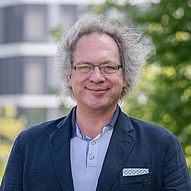
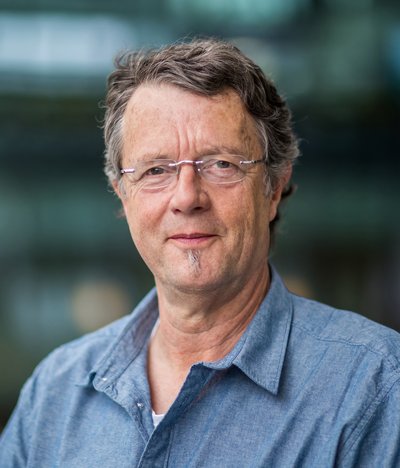
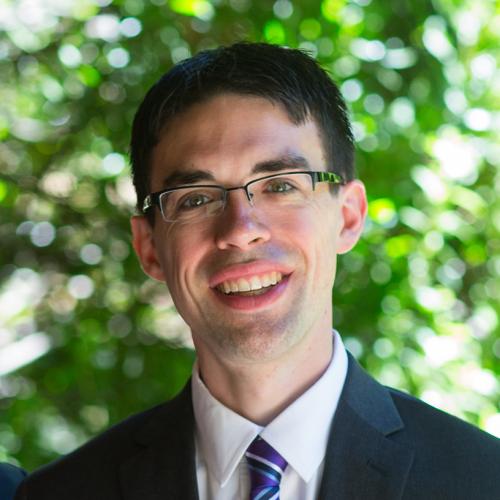
Gias Uddin is an Associate Professor at York University's Lassonde School of Engineering and an Adjunct Professor at the University of Calgary . His research bridges Software Engineering (SE) and Artificial Intelligence (AI) , focusing on AI Trustworthiness Assessment (SE4AI) and AI-Driven Productivity Tools (AI4SE) . PhD in Software Engineering & AI, McGill University (2018) MSc in Software Engineering, Queen’s University (2008) BSc in Computer Science & Engineering, Bangladesh University of Engineering and Technology (2004) His research explores: Metamorphic Relations for LLM Hallucination Detection AI-Enhanced Software Documentation Foundational Models for Runtime System Modernization Developer-Centric AI Tooling Recent article trends show expertise in LLM Trustworthiness , Low-Code Platforms , and IoT Developer Communities . Awards include Distinguished Paper at FSE 2025 , multiple IBM Champion recognitions, and York Research Award . He leads the Data Intensive Software Analytics (DISA) Lab and mentors PhD students in SE-AI Intersections .
Yingfei Xiong is an active Associate Professor at Peking University, China, specializing in software engineering and programming languages. With a consistent research trajectory from 2013 through 2026, Xiong has established themselves as a prominent figure in the software engineering research community, regularly contributing to top-tier conferences including SPLASH, ICSE, ASE, and PLDI. Dr. Xiong's research primarily focuses on program synthesis, automated program repair, and software analysis techniques. Their work bridges theoretical programming language concepts with practical software engineering applications, particularly in developing novel approaches for code generation, bug fixing, and program optimization. The research demonstrates strong interdisciplinary connections between traditional software engineering, programming languages theory, and emerging AI techniques. Analysis of Xiong's publication trends reveals a clear evolution in research focus, beginning with foundational work in API transformations and program adaptation around 2013-2016, shifting toward program repair techniques from 2017-2020, and most recently incorporating machine learning and neural approaches into program synthesis and repair (2021-2026). The work consistently addresses practical challenges in software development while maintaining theoretical rigor, with increasing integration of AI techniques in recent years. Dr. Xiong has served in various leadership roles across the software engineering conference ecosystem, including program committee membership and session chair positions at major conferences. Their extensive service demonstrates recognition by peers as a subject matter expert in software engineering and programming languages research. While specific grant information isn't detailed in the provided text, the sustained publication record suggests successful research funding.
George Haller is a Professor at the Department of Mechanical and Process Engineering at ETH Zurich . He leads the Institute of Mechanical Systems and holds the Chair in Nonlinear Dynamics . His research focuses on: Nonlinear dynamical systems theory Data-driven model reduction Spectral submanifolds (SSMs) Coherent structure identification in fluids and solids Control of complex nonlinear systems His recent work emphasizes equation- and data-driven modeling across solids, fluids, and control systems . Key contributions include: SSMTool - a MATLAB package for nonlinear model reduction SSMLearn - open-source software for data-driven modeling Transport barrier detection algorithms with oceanographic applications Scientific accolades include: 2025 Lyapunov Award (ASME) 2023 Stanley Corrsin Award (APS) Fellowships: ASME, APS, SIAM External Member, Hungarian Academy of Sciences His group has trained notable alumni: Thomas Breunung (Assistant Professor, University of Wisconsin-Madison) Shobhit Jain (Assistant Professor, Delft University of Technology) Mattia Serra (Assistant Professor, UCSD) Publications span Nonlinear Dynamics, Nature Communications , and Physical Review Fluids , with a 2025 book Modeling Nonlinear Dynamics for Equations and Data (SIAM Press). Current projects include: Reduced-order modeling of fluid-structure interactions Control of soft robots via nonlinear dynamics Identifying material barriers in turbulence
Dr Michael Boemo is an Assistant Professor at the University of Cambridge, holding dual appointments in the Department of Pathology and Department of Genetics. He leads research at the intersection of computational biology, DNA replication, and cancer genomics, developing machine learning tools to analyze replication stress and genomic instability. Academic Background: BA in Mathematics (Rutgers University), PhD in Physics (University of Oxford) Research Focus: Genomic instability in cancer, DNA replication/repair defects, computational modeling using machine learning and high-performance simulations Teaching: Lectures in Natural Sciences Tripos (mathematical biology, genetics, systems biology), module organizer for cancer biology and biological modeling His research group leverages nanopore sequencing and AI to map replication fork dynamics, revealing how stalled forks generate mutations in cancer cells and pathogens. Recent work examines extrachromosomal DNA replication vulnerabilities and transcription-replication conflicts. Dr Boemo collaborates across computational biology and cancer research domains, with publications spanning journals like Nature Methods, Cell, and PLoS Computational Biology. His lab develops tools such as DNAscent for replication fork analysis and explores therapeutic targeting of replication stress.
Jason Hein is an Associate Professor in the Department of Chemistry at the University of British Columbia's Faculty of Science. His research focuses on the development of automated reaction analysis technology and self-driving laboratories that integrate robotics with synthetic organic chemistry. Dr. Hein leads the Hein Lab, which pioneers innovative solutions for mechanistic organic chemistry, catalytic reaction mechanisms, and chemical manufacturing processes. His research interests center on creating modular robotic tools and integrated analytical hardware for automated reaction profiling, with applications in pharmaceutical manufacturing, battery materials processing, and sustainable chemistry. The lab's work combines advanced robotics, artificial intelligence, and process analytical technology to develop self-optimizing chemical systems that accelerate discovery and improve manufacturing efficiency. Analysis of Hein's recent publications reveals a strong focus on AI-driven laboratory automation, with particular emphasis on crystallization optimization for battery materials, computer vision for process monitoring, and interoperable software systems for self-driving laboratories. His work bridges fundamental mechanistic understanding with practical industrial applications, particularly in lithium extraction from waste brines and pharmaceutical process development. NSERC Postdoctoral Fellowship Dr. Hein's research program includes significant grant funding supporting the development of self-driving laboratory technologies and their application to challenging chemical problems. His lab actively collaborates with industry partners in pharmaceuticals and clean energy sectors to translate fundamental insights into deployable technologies. Current projects focus on battery-grade lithium carbonate production, continuous manufacturing processes, and AI-optimized chemical synthesis. The Hein Lab operates as a multidisciplinary research environment combining expertise in organic chemistry, robotics engineering, computer science, and data analytics to create the next generation of autonomous chemical discovery systems.
Yaping Luo is a part-time Assistant Professor at the Mathematics and Computer Science school of Eindhoven University of Technology (TU/e) , Netherlands. She also serves as the Research Lead of the Software Engineering and Automation team at ING Tech R&D since 2018. Her academic journey includes a PhD from TU/e (2016) and MSc/BSc degrees in Computer Science from Beihang University , China. PhD in Computer Science (2016) - Eindhoven University of Technology MSc in Computer Science - Beihang University BSc in Computer Science - Beihang University Her research spans two major domains: automotive safety engineering and software engineering methodologies . She pioneered model-based techniques for functional safety assessment in automotive systems and developed systematic approaches for safety evidence collection and metric design. Her recent work focuses on: Conceptual modeling and meta-modeling Low-code development platforms Business process modeling (BPM) Test automation and model-based testing Her publications demonstrate interdisciplinary applications of: Goal Structuring Notation (GSN) for safety cases Automotive architecture design ISO26262 safety standards Systematic evidence collection frameworks GSN pattern categorization She collaborates across sectors while maintaining her academic affiliation at TU/e.
Yan Chen is an Assistant Professor at the Virginia Tech College of Engineering , where he leads the PRIME Lab (Programming with Intelligent Machines & Environments) . His work focuses on creating interactive Human-AI systems to enhance real-time data analysis and programming education, particularly addressing barriers in collaborative learning environments. University of Toronto (Postdoctoral Fellow) University of Michigan (Ph.D., Information Science) University of Colorado, Boulder (BS/MS in Applied Math & Electrical & Computer Engineering) His research bridges Human-Computer Interaction (HCI) and Computer Science Education , with a focus on real-time data analysis , AI-driven programming assistance , and scalable learning tools . He employs LLMs and human-centered design to simplify complex computational processes, enabling data workers to detect critical patterns efficiently. Recent publications highlight trends in generative AI for education , proactive AI programming support , and collaborative analytics . Key themes include real-time classroom insights , intergenerational smartphone learning , and automated feedback systems . Scientific recognition includes: 🏆 Best Paper at L@S 2024 🏅 Best Paper Honorable Mention at CHI 2023 🏅 Best Paper Honorable Mention at UIST 2022 🏆 Best Short Paper at VL/HCC 2020 He mentors a team of PhD and MS students in projects spanning AI-assisted education, web automation, and collaborative coding tools, with active recruitment for future research directions.
Professor Mark Howells is a Principal Research Fellow at the Centre for Environmental Policy within Imperial College London's Faculty of Natural Sciences. His work focuses on energy systems modelling and policy analysis for sustainable development in low and middle-income countries, with a particular emphasis on open-source frameworks and context-specific transition pathways. His research spans energy transition modelling, environmental policy, and sustainable development, utilizing tools like OSeMOSYS and CLEWs to address energy trilemma challenges across Africa, Asia, and South America. Key interests include integrating qualitative factors into quantitative models, green hydrogen planning, power sector reliability, and resource nexus management, with significant contributions to country-specific energy planning in Ghana, Nigeria, Kenya, Egypt, and Indonesia. Analysis of his 2023-2025 publications reveals a strong focus on open-source energy modelling applications for decarbonization, with recurring themes of data kit development, grid flexibility solutions, and water-energy-land nexus assessments. His work consistently bridges technical modelling with policy implementation needs, particularly in contexts of infrastructure constraints and climate vulnerability. No scientific awards were mentioned in the source materials. Professor Howells operates within Imperial College London's Centre for Environmental Policy, an interdisciplinary hub conducting research on global environmental challenges through integrated systems approaches that connect technical, economic, and policy dimensions of sustainability transitions.
Aravind Machiry is an Assistant Professor at Purdue University's Electrical and Computer Engineering Department and a founding member of the Purdue Systems and Software Security (PurS3) Lab . His research focuses on system security, particularly vulnerability detection, prevention, and secure system development using static/dynamic program analysis, fuzzing, type systems, and machine learning. Designing practical solutions for software and embedded system security Recipient of NSF CAREER and Amazon Research awards Active participant in SPLASH 2025 as OOPSLA Review Committee member His recent work includes automated vulnerability detection in embedded software, spatial memory safety enhancements, and security analysis of GitHub workflows. He has received recognition for his research through multiple distinguished paper awards and industry funding. Selected scientific awards include NSF CAREER Award (2024) Amazon Research Award (2022) Test of Time Award at FSE 2023 for DynoDroid Distinguished Paper Award at OOPSLA 2022 for 3c Qualcomm Innovation Fellowship (2025) His research team has developed frameworks like ARGUS for taint analysis of CI/CD workflows and FuzzUEr for UEFI interface fuzzing, discovering hundreds of critical vulnerabilities in open-source projects and thousands of command injection flaws in GitHub repositories.
Christian Wolff is a University Professor and Chair of Media Informatics at the Institute for Information and Media, Language and Culture at the University of Regensburg. Since April 2022, he has served as the founding Dean of the Faculty of Computer Science and Data Science, while maintaining secondary membership in the Faculty of Languages, Literature and Cultural Studies (SLK). His academic career spans over three decades with significant contributions to multiple disciplines at the intersection of computer science and humanities. Wolff's research interests center around multimedia and multimodal information systems, electronic publishing, and text technology, particularly text mining. His work bridges computer science with digital humanities, legal informatics, and social media analysis. Recent publications demonstrate a strong focus on large language models, sentiment analysis applications across various domains, legal technology innovations, and virtual reality research for cognitive studies. His interdisciplinary approach has produced significant contributions in both technical and humanities domains. His recent publication trends reveal a strategic shift toward applied AI research, particularly in legal technology (LegalTech), social media analysis, and sentiment analysis using large language models. The publications show increasing collaboration across disciplines, connecting computer science with law, political science, literature, and psychology. His work on the digital basis document for legal proceedings represents a major practical application of his research in the German justice system. East Bavarian Cultural Prize Doctoral Award of the University of Regensburg Wolff has led numerous interdisciplinary research projects connecting computer science with humanities and legal studies. His leadership extends to institutional roles including Dean of Research, Vice Dean, and Dean of Faculty positions. He has been instrumental in establishing the new Faculty of Computer Science and Data Science at the University of Regensburg, demonstrating significant impact on institutional development and research infrastructure. Wolff directs research initiatives focused on text technology, digital humanities, and legal informatics. His work with the INDIGO - Internet and Digitization Eastern Bavaria initiative and the TRIO project demonstrates commitment to regional technology transfer and innovation. The interdisciplinary nature of his research groups connects computer scientists with legal scholars, linguists, and social scientists to address complex digital transformation challenges.
Ming Lu is a Professor in the Department of Civil and Environmental Engineering at the University of Alberta, Faculty of Engineering. Specializing in Construction Engineering and Management (CEM), he leads the Construction Automation Lab (AutoLab) since 2010, focusing on integration, automation, and optimization in construction. Dr. Lu holds professional engineering licensure (PEng) in Alberta and has extensive academic experience across Canada, Hong Kong, and China. PhD in Civil Engineering (University of Alberta, 2000) B.Eng. in Road & Traffic Engineering (Tongji University, 1994) His research spans Construction Automation , Project Scheduling , and Resource Optimization , with over 150 publications in top journals. Recent work emphasizes model trees , time-window constraints , and labor cost regression . Publications appear in Automation in Construction , Journal of Computing in Civil Engineering , and ASCE Journal of Construction Engineering and Management . Notable awards include the 2022/23 CSCE Stephen G. Revay Award , Fiatech STAR Award (2013) , and multiple Best Paper Awards from ASCE. His software tools like SDESA and S3 revolutionized construction simulation and resource-constrained scheduling. Dr. Lu supervised numerous graduate students in projects involving BIM applications , earthwork optimization , and steel fabrication scheduling . He developed key courses like CIV E 406 (Construction Estimating) and CIV E 607 (Productivity Modeling), integrating simulation-based learning into construction education.
Constant Hak is an Assistant Professor with the Building Acoustics research group at the Department of Built Environment, Eindhoven University of Technology (TU/e). His work focuses on reducing adverse health effects caused by human-induced noise while promoting positively perceived sound environments through computational and experimental acoustic methods. Dr. Hak specializes in room and hall acoustics, developing advanced acoustic measurement techniques based on impulse responses. His research includes analyzing how orchestra members influence stage acoustic parameters across multiple concert hall stages and orchestra pits, as well as creating methods for accurate impulse response measurements in large open-air theaters. Software and measuring equipment developed by Hak is used worldwide for research and engineering applications. His recent publications demonstrate expertise spanning building acoustics, plasma physics, and indoor environmental quality measurement. The research shows consistent focus on measurement techniques, with applications in architectural acoustics, concert hall design, and educational tools for environmental quality assessment. Dr. Hak teaches multiple courses including Architectural Acoustics, The Science of Sound, Techniques in Architectural Acoustics, and various Master's projects related to Building Physics and Services. His educational work includes developing the SvS (Senses versus Sensors) device, which helps students understand indoor environmental quality through hands-on measurement of temperature, humidity, light, and sound.
Prof. Dr. Nuri Başoğlu is a Professor at Izmir Institute of Technology (IYTE). His educational background includes a BSc in Industrial Engineering from Boğaziçi University, and both MSc and PhD in Production Management from Istanbul University. Research Focus His research spans interdisciplinary domains with emphasis on: Technology Adoption : Healthcare systems, mobile services, and education. Innovation Processes : Sociotechnical systems, product design, and decision support. Information Systems : Strategic implementation and human-computer interaction. Recent publication trends (2010–2013) highlight technology diffusion in healthcare, including telemedicine, health informatics, and e-learning. Cross-cultural studies on mobile services and ERP optimization in manufacturing also feature prominently. No awards, grants, or supervised students are documented in the provided materials.
Dr Nour Ali is a Reader in the Department of Computer Science at Brunel University London , where she co-heads the Brunel Software Engineering Lab and serves as Vice-Dean of Education for the College of Engineering, Design and Physical Sciences. She holds a PhD in Software Engineering from Universidad Politecnica de Valencia, Spain, and a Major in Computer Science from Bir-Zeit University, Palestine. Research Interests: Software architecture for distributed and adaptive systems, integrating techniques like Model-Driven Engineering, Reverse Engineering, and Machine Learning. Teaching: Module leader for Software Project Management and supervisor of undergraduate group projects and final-year projects. Scientific Contributions: Over 70 publications in journals, conferences, and books. Key research areas include microservice architecture recovery, autonomic healthcare systems, and mobile self-adaptive architecture. Scientific Awards: Fellow of the Higher Education Academy (HEA). Membership: Deputy Editor-in-Chief for IET Software, member of multiple conference program committees, and reviewer for EPSRC, NWO, and other funding bodies.
Matthew Turk is an Assistant Professor at the University of Illinois' School of Information Sciences and holds a Research Assistant Professor appointment in the Department of Astronomy. His work bridges computational astrophysics and data science, focusing on data analysis tools, human-computer interaction, and the social structures of scientific software communities. PhD in Physics from Stanford University (2009) Postdoctoral work at University of California, San Diego NSF Fellowship in Transformative Computational Science at Columbia University Turk's research centers on data visualization , reproducibility in scientific workflows , and computational infrastructure for astrophysics . He has developed tools like yt, a widely-used astrophysical simulation analysis toolkit, and explores how researchers interact with data through software and visualization techniques. His recent publications highlight trends in scientific software sustainability , machine learning applications in cosmology , and interdisciplinary data sonification . Turk's work demonstrates a consistent focus on integrating computational methods with human-centric approaches to scientific discovery. NSF Fellowship in Transformative Computational Science Turk contributes to scientific education through courses like Data Visualization (IS445ACG) and Independent Study (IS589MJT). His involvement in grants and collaborative projects, including the yt toolkit development and the Data Storytelling Toolkit for Libraries (DSTL), showcases his commitment to expanding computational literacy across domains.