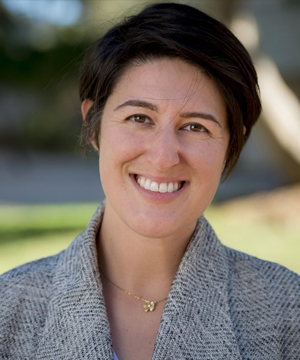
Prof. Sanne Kruikemeier is a Professor of Digital Media and Society at Wageningen University & Research (WUR). She leads the ERC Starting Grant (HUNTING) and a NORFACE consortium grant, coordinating research across four European universities (2020–2024). As director of the Digital Data and Democracy Lab and member of the AlgoSoc Gravitation Program, she explores digitalization's societal and democratic impacts. Her research focuses on data-driven political targeting, social media's role in polarization, privacy behavior, and digital journalism. She holds roles on the editorial boards of journals like Human Communication Research , International Journal of Press/Politics , and Digital Journalism . Awards include the KNAW Early Career Award and ICA Herbert S. Dordick Dissertation Award. Her work bridges digital media, political communication, and societal change, addressing challenges like misinformation and democratic engagement. Kruikemeier advises PhD candidates on projects like data-driven campaigning's impact on democracy and polarization strategies. She engages in public discourse through media commentary on social media's role in politics and news consumption trends. Her interdisciplinary approach integrates communication science with computational methods to analyze modern political and social dynamics.
Professor Luke Prendergast is the Deputy Dean of the School of Computing, Engineering & Mathematical Sciences (SCEMS) at La Trobe University (LTU) and holds a Professorship in the Department of Mathematics and Statistics. He previously served as Head of Department (2014–2020) and led LTU's Statistics Consulting Platform. His research focuses on robust statistics, meta-analysis, dimension reduction, and applied statistics, leading the DRAMA research group. Collaborations span fields like endocrinology, disability studies, and respiratory health. He actively contributes to research grants, including projects on Prader-Willi syndrome and exercise for disability populations. Professor Prendergast's recent work emphasizes statistical software development (e.g., the rquest package) and applications in biostatistics, such as metabolomics analysis and health intervention fidelity. His articles address topics like quantile-based hypothesis testing, geospatial accessibility for disability care, and motivational interviewing efficacy. Professional roles include NHMRC grant review panels, editorial boards for Nutrients and Respirology , and leadership in the Statistical Society of Australia (SSA Vic). His teaching includes courses in meta-analysis, linear models, and data-based critical thinking. Grants funded projects on exercise programs for cerebral palsy populations and community-university partnerships for disability inclusion. Luke's work bridges statistical theory with real-world health challenges, emphasizing robust methodologies and interdisciplinary collaboration.
Filip Biljecki is an Assistant Professor jointly appointed at the Department of Architecture within the College of Design and Engineering and the Department of Real Estate at the NUS Business School, National University of Singapore. He is the founder and principal investigator of the NUS Urban Analytics Lab and was awarded the prestigious NUS Presidential Young Professorship in 2020. With over 150 peer-reviewed publications, his research bridges geomatic engineering, geospatial technologies, and urban data science to advance digital twins and data-driven urban planning. Dr. Biljecki's educational background includes: PhD in 3D GIS (cum laude), Delft University of Technology, Netherlands (2017) MSc in Geomatics, Delft University of Technology, Netherlands (2010) BSc in Geodesy and Geoinformatics, University of Zagreb, Croatia (2008) His research interests focus on emerging urban data sources, particularly urban imagery, and their application in 3D city modeling, digital twins, and GeoAI. He explores how crowdsourcing and open science can inform cutting-edge techniques for urban sensing and analytics at city-scale. His work significantly contributes to establishing smart cities through innovative methods that integrate recent advancements in computer science, geomatics, and urban data science. Analysis of his recent publications reveals a strong focus on street view imagery applications for urban analytics, digital twin development, and geospatial AI. His research spans multiple domains including urban morphology, environmental assessment, public health applications, and urban comfort analysis. The interdisciplinary nature of his work is evident in collaborations with researchers from diverse fields, producing impactful studies that address complex urban challenges through innovative methodological approaches. His notable scientific achievements include: Annual Teaching Excellence Award (ATEA), 2025 College Educator Award AY2023/2024, 2025 Urban Informatics Paper of the Year Award, 2023 Top 2% scientists worldwide (Stanford University), 2021 Presidential Young Professorship (NUS), 2020 As an educator, Dr. Biljecki has supervised dozens of students leading to publications in leading journals and placements at top universities and organizations. He has delivered talks at over 120 universities and organizations worldwide including MIT, Stanford, Harvard, and ETH Zurich. His research is supported through various grants and affiliations including his role as Principal Investigator at the Future Cities Lab Global at the Singapore-ETH Centre. The NUS Urban Analytics Lab, which he established, brings together scholars from diverse disciplines to drive research on making cities smarter and more data-driven. The lab has developed innovative tools like ZenSVI for street view imagery analysis and has produced influential research on urban digital twins, urban morphology, and GeoAI applications. Through his leadership, the lab continues to pioneer methods that advance data-driven urban planning and smart city development.
Amanda Giang serves as Assistant Professor at the University of British Columbia's Faculty of Applied Science, Department of Mechanical Engineering, holding a Canada Research Chair in Environmental Modelling for Policy. She maintains a joint appointment with the Institute for Resources, Environment and Sustainability (IRES). Her educational background includes a B.A.Sc. from the University of Toronto, followed by M.S. and Ph.D. degrees from MIT, with postdoctoral training at MIT and Harvard. Dr. Giang's research employs interdisciplinary approaches to develop modeling tools for environmental policy analysis, focusing on pollution assessment, environmental injustice, and the intersection of air quality, decarbonization, and equity. Her work emphasizes action-oriented partnerships with community organizations and government health/environment agencies. Current projects address freight transport decarbonization equity, cumulative impact assessment methodologies for overburdened communities, and holistic environmental impact evaluation in technology design. Her recent publications demonstrate expertise across environmental modeling, policy analysis, and justice frameworks, with significant contributions to understanding spatial inequities in environmental risk distribution and developing community-engaged research methodologies. UBC Killam Research Prize, 2023 Dr. Giang actively collaborates with community groups and government authorities through her LEAP (Learning, Environmental Assessment, and Policy) research group. Her work integrates technical modeling with real-world policy applications, particularly in urban environmental planning contexts where equity considerations are paramount. She has developed innovative frameworks for cumulative impact assessment and environmental justice analysis that directly inform regulatory decision-making processes. Her research laboratory focuses on developing open-source modeling tools for environmental policy analysis while maintaining strong community partnerships that ensure research addresses pressing local environmental justice concerns.
Lilly Irani is an Associate Professor in the Department of Communication at the University of California, San Diego. She holds multiple interdisciplinary affiliations including Science Studies, the Design Lab, the Institute for Practical Ethics, and Critical Gender Studies. As Faculty Director of the UC San Diego Labor Center and co-director of the Just Transitions Initiative, she plays a significant role in shaping labor and technology policy discussions at the university and beyond. Dr. Irani's educational background includes a Ph.D. in Informatics (with Feminist Emphasis) from UC Irvine, and both an M.S. and B.S. in Computer Science from Stanford University, with a focus on Human-Computer Interaction. Her unique combination of technical training and social science expertise informs her research approach, bridging practical design work with critical analysis of technology systems. Her research investigates the cultural politics of high-tech work practices with a focus on how actors produce "innovation" cultures. She specializes in the cultural politics of high-tech work in the context of South Asian development and global AI economies. As an ethnographer of work, she analyzes interactional, organizational, and cultural dynamics as mediated by technology. Her work draws on and contributes to Science and Technology Studies, Human-Computer Interaction, and South Asia studies, with particular attention to how technological systems create and reinforce hierarchies of value, gender, race, and cultural positioning. Dr. Irani's publications reveal consistent engagement with issues of digital labor, platform economies, and the politics of innovation. Her work shows a trajectory from examining specific platforms like Amazon Mechanical Turk to broader critiques of innovation culture and entrepreneurial citizenship, with recurring themes of worker power, surveillance, and democratic control of technology. 2020 International Communication Association Outstanding Book Award 2019 Diana Forsythe Prize Honorable mention at CHI 2019 Dr. Irani has received research funding from prestigious organizations including the Ford Foundation, Fulbright-Nehru Doctoral Fellowship, Open Society Foundation, National Science Foundation Graduate Research Fellowship, and NSF Virtual Organizations as Sociotechnical Systems Program. She serves on the editorial advisory boards of Design and Culture, New Technology, Work, and Employment, and Catalyst: Feminism, Theory, Technoscience, and is part of the editorial collective of Public Culture. Collaboratively, she has designed software tools like Turkopticon and Dynamo that intervene in and demonstrate alternatives to existing platforms, with Turkopticon evolving into a worker-run advocacy organization. Her research group and collaborations span multiple disciplines, working closely with scholars in Science and Technology Studies, Human-Computer Interaction, and labor studies. The Just Transitions Initiative she co-directs represents a significant ongoing project focused on democratic control of technology and worker power in the digital economy.
Professor Arcot Sowmya is a distinguished academic at the University of New South Wales, serving as Professor in the School of Computer Science and Engineering. With a strong background in both computer science and mathematics, she has established herself as a leading researcher in machine learning and computer vision applications, particularly in medical imaging and diagnostics. Dr. Sowmya earned her PhD in Computer Science from the Indian Institute of Technology, Bombay, along with an MTech in Computer Science, MSc in Mathematics, and BSc in Mathematics from the same institution. Her academic journey has positioned her at the intersection of theoretical computer science and practical medical applications. Her research interests span multiple domains with a primary focus on Machine Learning for Computer Vision . She has made significant contributions to learning object models, feature extraction, segmentation, and recognition techniques. Her work extends into medical image analysis, computer-aided diagnostics, high-resolution remote sensing, and biomedical informatics. More recently, she has applied similar techniques to social sciences domains, developing improved forecasting models for genocide and politicide. Her earlier work also includes contributions to real-time, concurrent, and embedded systems. Analyzing her recent publications reveals a strong trend toward medical applications of computer vision and deep learning. Her work spans from OCT-based glaucoma diagnosis to tumor segmentation, lung disease detection, and breast cancer prognosis. She has successfully bridged computer science with clinical medicine, developing practical tools for disease diagnosis and prediction that incorporate explainable AI approaches. Professor Sowmya's collaborative approach is evident in her extensive publication record across multiple journals and conferences. She has worked with researchers from diverse fields including ophthalmology, oncology, neurology, and public health, demonstrating the interdisciplinary nature of her research. Her laboratory work focuses on developing robust deep learning architectures for medical image analysis, with particular attention to segmentation networks, transformer models, and multimodal data fusion techniques. Her team has developed specialized networks for lung segmentation, tumor detection, and disease classification that address specific challenges in medical imaging.
Ali Abbas is a Senior Researcher and Methods Fellow at the MRC Epidemiology Unit within the University of Cambridge's School of Clinical Medicine. His academic background includes a PhD in Computer Science from Manchester Metropolitan University, an MSc in Media Informatics from RWTH Aachen University, and a BS in Computer Science from Mohammad Ali Jinnah University. With over two decades of research experience, he specializes in data-driven approaches including exploratory analysis, statistical modelling, and interactive visualization. His core research focuses on developing environmentally sustainable transport systems with positive public health outcomes, particularly through: Agent-based modeling of transport behaviors Cycling infrastructure and active travel interventions Health impact assessment of urban mobility policies Spatial analysis using GIS technologies Complex systems approaches to public health He leads several major research initiatives including the JIBE project (integrating transport and built environment models), GLASST (global health impact assessment), TIGTHAT (integrated global transport-health tool), National Propensity to Cycle Tool, and Impacts of Cycling Tool. His publication portfolio demonstrates consistent focus on transport-health interactions, physical activity epidemiology, and urban health modelling, with recent work emphasizing policy applications and global scalability. As an advocate for open science, he maintains active GitHub repositories of his computational models. He additionally manages junior researchers and contributes to training initiatives within his unit.
Robert Fletcher is a Researcher at the University of Cambridge, affiliated with the Department of Zoology and the C-CLEAR Doctoral Training Partnership . His work focuses on applied ecology and conservation science, utilizing landscape and population ecology to address biodiversity challenges globally. Research Areas : Conservation biology, population ecology, landscape ecology, environmental informatics Collaborations : Partners in North America, Europe, Africa, and Southeast Asia Key Themes : Species extinction prevention, landscape conservation prioritization, and rapid biodiversity data delivery Email : rf497@cam.ac.uk Fletcher's interdisciplinary approach integrates fieldwork (e.g., Everglades endangered species, African elephants) with advanced modeling of habitat loss, fragmentation, invasive species, and climate change impacts. His recent work emphasizes: Drivers of species decline and recovery strategies Landscape management and restoration techniques Interdisciplinary collaborations with engineers, social scientists, and computer scientists His publications span topics like savanna ecosystem dynamics, community science applications, and conservation forecasting, reflecting a commitment to actionable science for global biodiversity preservation.
Duncan Astle is the Gnodde Goldman Sachs Professor of Neuroinformatics at the Department of Psychiatry, University of Cambridge. He serves as a Programme Leader at the Medical Research Council's Cognition and Brain Sciences Unit (MRC CBU) and is a Fellow of Robinson College. Astle heads the 4D Lab (Development, Dynamics, Disorders, Data Science), which provides a research home for approximately 15 Early Career Researchers working at the intersection of developmental cognitive neuroscience and advanced data science methodologies. Astle's research focuses on understanding childhood development through innovative analytical approaches. His work employs transdiagnostic methods to study children with attention, learning, and memory difficulties, moving beyond traditional diagnostic categories. He investigates how neural systems develop in childhood, how they relate to developmental disorders, and how they respond to intervention. His research integrates network science, machine learning, and generative modeling to capture the complexity of neurodevelopmental diversity, examining how cognitive skills, literacy, numeracy, and mental health interrelate over developmental time. His publication record reveals a strong focus on brain connectivity and organization across development. Recent work explores structural and functional neurodevelopmental trajectories, brain wiring economics, and the impact of environmental factors on neural development. Astle's research frequently employs advanced data science techniques to identify sub-populations of children with different cognitive or brain profiles, regardless of diagnosis, and to map non-linear relationships between brain organization and cognitive difficulties. His work has increasingly focused on transdiagnostic approaches to understanding developmental disorders and the application of computational models to developmental neuroscience. Astle actively supervises PhD students and has built a substantial research group that contributes to major projects including the Centre for Attention Learning and Memory (CALM) and Resilience in Education and Development (RED). His work has been supported by prestigious funding bodies including the Royal Society, the British Academy, the Medical Research Council, and the Economic and Social Research Council, as well as multiple charitable foundations. The 4D Lab, under Astle's leadership, utilizes state-of-the-art facilities at the University of Cambridge, including on-site magnetic resonance imaging and magnetoencephalography scanners. The lab contributes to building specialist cohorts such as CALM (800 children with cognitive difficulties plus 200 comparison children) and RED, which study children's development, resilience, and educational outcomes. Astle's team explores how growing up in adverse environments affects children's brains, behavior, and mental health, with the aim of identifying early markers of risk and resilience.
Zhaoli Song is an Associate Professor at the Department of Management and Organisation within NUS Business School, Singapore. His research bridges behavioral genetics with organizational behavior, focusing on leadership, AI in the workplace, cross-cultural management, and work-family dynamics. PhD in Human Resources and Industrial Relations (2004), University of Minnesota Master in Statistics (2004), University of Minnesota Master in Applied Psychology (1999), Chinese Academy of Sciences Bachelor in Optics (1995), Sichuan University Dr. Song pioneered molecular genetics applications in management research, achieving media recognition in Economist and Washington Post . His work spans AI strategy formulation, pandemic scenario modeling, and team innovation across Asia. He has taught organizational behavior, HRM, and research methods at undergraduate, Master's, EMBA, and executive levels. Recent publications analyze AI adoption frameworks, emotional dynamics in leader-member exchanges, and genetic determinants of creativity. He served as Academic Director for NUS Asian Pacific EMBA (Chinese) program (2013-2017), demonstrating educational leadership alongside scholarly contributions.
Jonathan S. Phillips is an Assistant Professor in the Program in Cognitive Science at Dartmouth College , with affiliations in the Department of Psychological and Brain Sciences and the Department of Philosophy . He directs the PhilLab , which explores cognition through interdisciplinary methods integrating philosophy, psychology, linguistics, and computer science . Education: B.A., University of North Carolina, Chapel Hill Ph.D., Yale University (Philosophy/Psychology) Research focuses on modal cognition , including how humans represent possibilities ( possible worlds ), moral judgment , causal reasoning , and theory of mind . The lab investigates how these representations influence language and decision-making , with empirical work spanning fMRI studies , computational modeling , and developmental psychology . Recent publications examine modal decomposition , counterfactual neural substrates , and moral constraints on possibility representation . Collaborators include scholars from Harvard, Yale, Stanford, and MIT. The lab has trained graduate students in Cognitive Science and Psychology , with alumni pursuing computational, moral, and developmental research.
Ben Seiyon Lee is an Assistant Professor in the Department of Statistics at George Mason University's College of Science. His work bridges computational statistics, climate modeling, and environmental risk assessment. Education: PhD in Statistics, Pennsylvania State University (2020) Lee specializes in computational methods for high-dimensional spatiotemporal data and uncertainty quantification in climate models. His research explores climate change impacts on extreme hydrological events, wildfire emissions, and medical decision-making. Recent publications focus on Bayesian spatiotemporal frameworks for extreme precipitation analysis, zero-inflated spatial models, and multisector uncertainty quantification. His work addresses challenges in flood risk assessment, agricultural yield projections, and healthcare compliance metrics.
Hsei Di Law is a Research Fellow at the National Centre for Epidemiology and Population Health (NCEPH), part of the Australian National University (ANU). She is concurrently pursuing an MSc in Computational Data Analytics at the Georgia Institute of Technology . Her work focuses on data linkage, machine learning, and epidemiological study design using whole-of-population linked datasets. Research Affiliations National Centre for Epidemiology and Population Health (ANU) Centre of Epidemiology for Policy and Practice Linked Data for Better Health group Health Experience and Health Services Research collaborator Research Interests : Hsei Di Law's work centers on large-scale linked administrative datasets and longitudinal data analysis , with applications in environmental contamination (PFAS, asbestos), healthcare economics (out-of-pocket costs), and epidemiology of diseases. She specializes in integrating machine learning techniques with epidemiological study design to address policy-relevant questions. Publication Trends : Her recent publications (2025–2023) analyze healthcare affordability in Australia, PFAS environmental health impacts , and data linkage methodologies . Over 2022–2015, she studied cardiovascular risk under-treatment , COVID-19 healthcare outcomes , and immune system disorders using mouse models. Projects Led : She is involved in multiple projects, including the ACT Asbestos Health Study II , PFAS Health Study , and Whole-of-population linked data project . These projects examine the health effects of asbestos and PFAS contamination , healthcare utilization, and epidemiological modeling . Contact : Email: hsei-di.law@anu.edu.au Phone: +61 2 6125 0547 Location: Building 62A, Room 2.56, ANU
Jeff Shamma is the Department Head and Professor of Industrial and Enterprise Systems Engineering (ISE) at the University of Illinois at Urbana-Champaign, holding the Jerry S. Dobrovolny Chair. He is also courtesy Professor in Aerospace Engineering and Mechanical Science and Engineering. Formerly, he held the Julian T. Hightower Chair at Georgia Institute of Technology and faculty positions at KAUST. Dr. Shamma earned his PhD in Systems Science and Engineering from MIT (1988) and a BS in Mechanical Engineering from Georgia Tech (1983). He is a Fellow of IEEE and IFAC, recipient of the IFAC High Impact Paper Award, AACC Donald P. Eckman Award, and NSF Young Investigator Award. His research spans Decision and Control , Game Theory , and Multi-Agent Systems , focusing on human-machine networks, distributed autonomy, and adaptive robotic systems. Recent work examines crowd dynamics, risk-sensitive control, and feedback linearization for constrained optimization. Jeff has served as Editor-in-Chief of IEEE Transactions on Control of Network Systems (2020–2024) and held editorial roles in journals like Annual Reviews in Control and IEEE Transactions on Robotics . His 15 most recent publications (2024–2025) analyze learning dynamics, multi-agent optimization, and UAV-crawler systems, reflecting trends in autonomous systems, game-theoretic modeling, and industrial inspection technologies. Scientific distinctions include: Fellow of IEEE and IFAC IFAC High Impact Paper Award (2020) AACC Donald P. Eckman Award (1996) NSF Young Investigator Award (1992) Mohammed Dahleh Distinguished Lecture Award (2013) Dr. Shamma advises current PhD students Hassan Abdelraouf, Aya Hamed, and Nawaf Otaibi, with former advisees including Sarah Toonsi (2025) and Fat-hy Rajab (2025). His lab integrates theoretical research with applied projects like FalconScan, a UAV-crawler system for industrial inspection, and develops magnetic legs for curved surface UAV landing.
Jeff Linderoth is the Harvey D. Spangler Professor in the Department of Industrial and Systems Engineering at the University of Wisconsin-Madison. His research focuses on large-scale numerical optimization, mixed-integer nonlinear programming, and stochastic programming, with applications in energy systems, global routing, and industrial processes. Education: BS in General Engineering (highest honors) from University of Illinois at Urbana-Champaign, MS in Operations Research from Georgia Institute of Technology, PhD in Industrial Engineering from Georgia Institute of Technology. Linderoth's work addresses theoretical and applied challenges in optimization, including developing algorithms for mixed-integer programming, analyzing knapsack polytopes, and creating tools like the Minotaur optimization toolkit. His recent publications explore integer programming techniques for subspace clustering, complementarity constraints, and customized coverage instrumentation. Selected trends in his research include advancements in stochastic programming, orbital branching for symmetric integer programs, and congestion analysis in power systems. His group contributes to optimization software and data-driven libraries like MIPLIB. Scientific Award: Harvey D. Spangler Professor.