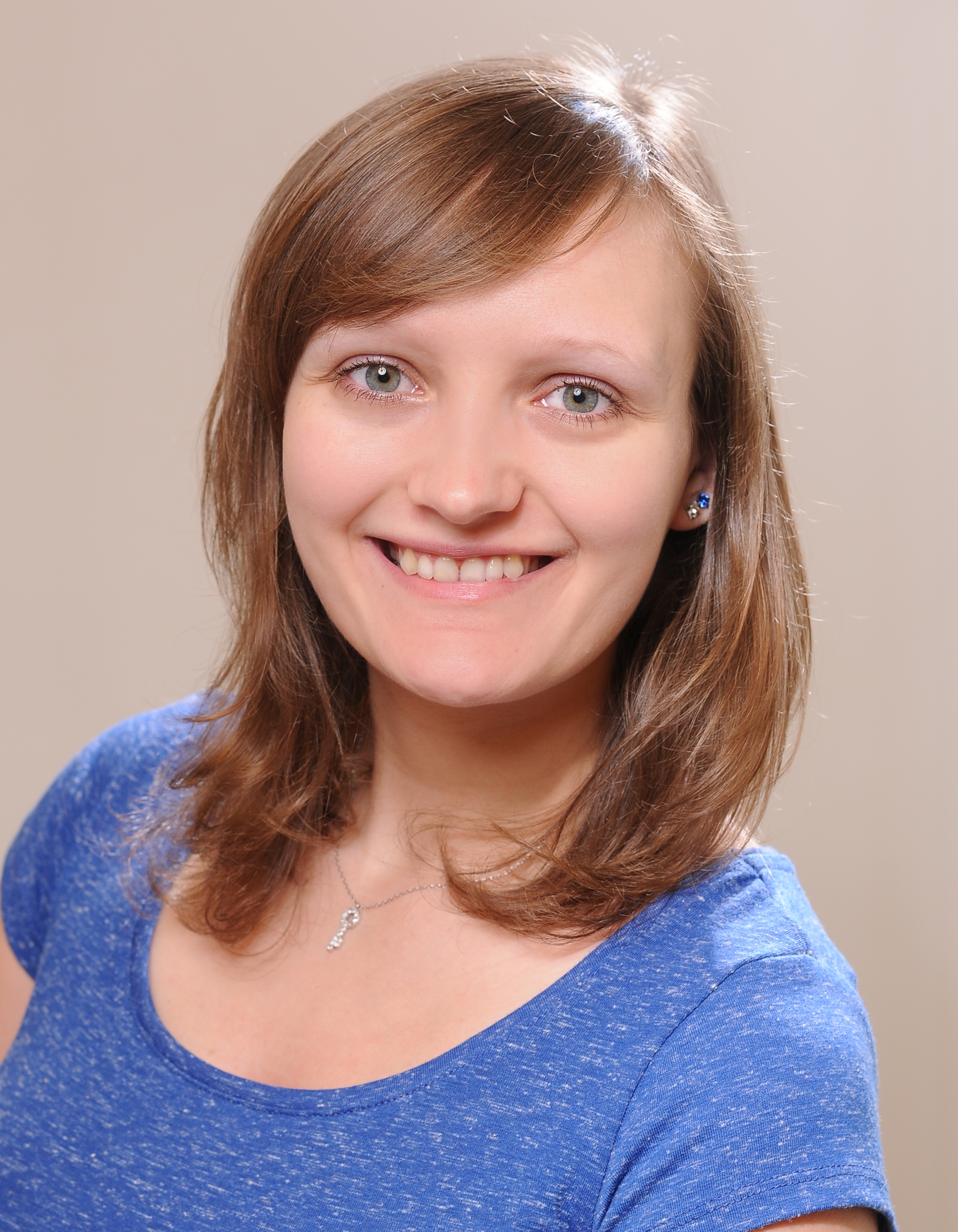
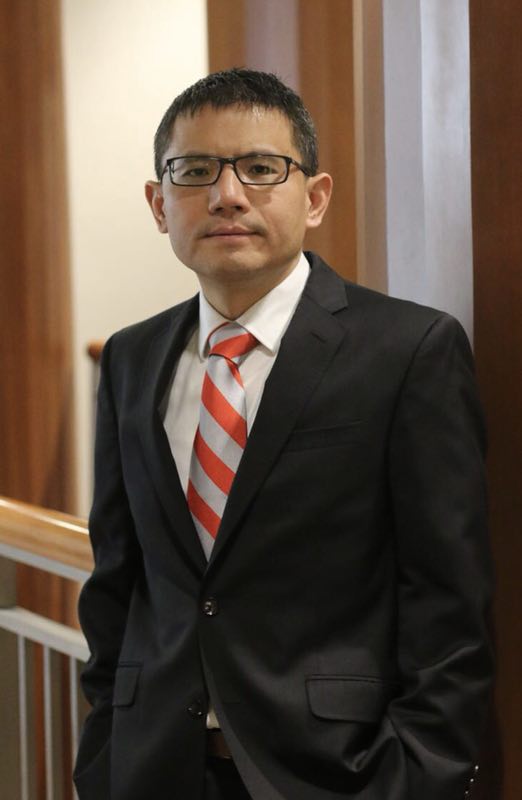
Franziska Mueller is a Research Scientist at Google Zurich , specializing in Augmented Perception . Prior to joining Google, she earned her Ph.D. in Computer Science at Saarland University under the supervision of Prof. Dr. Christian Theobalt, focusing on real-time hand reconstruction from RGB and depth images. Ph.D. in Computer Science (2016-2020) at Saarland University Master’s and Bachelor’s in Computer Science at Saarland University Research visits at Stanford University (2018) and Reality Labs Research (2019) Her research emphasizes the integration of model-based techniques and machine learning components for real-time 3D hand pose estimation, occlusion handling, and hand-object interaction tracking. Key contributions include methods for single-camera reconstruction and datasets like HandSeg. Scientific Awards : Dr. Eduard Martin Award (2021) Google PhD Fellowship (2017) Günter-Hotz-Medal (2016) Bachelor Award (2015) Völklinger Abiturpreis (2012)
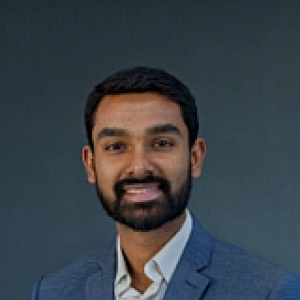
Harish Ravichandar is an Assistant Professor at the School of Interactive Computing , Georgia Institute of Technology, and a core faculty member of the Institute for Robotics and Intelligent Machines (IRIM) . He leads the Structured Techniques for Algorithmic Robotics (STAR) Lab , focusing on structured computational frameworks and learning algorithms with inductive biases to enhance robot efficiency, reliability, and self-sufficiency in human-robot collaboration and complex applications like dexterous manipulation and multi-agent coordination. His research bridges robot learning , human-robot interaction , and multi-agent systems , emphasizing stable, frugal, and safe skill acquisition from human demonstrations. Key themes include intention inference , trajectory optimization , and heterogeneous team coordination , often leveraging Koopman operators , hypernetworks , and graph-based methods . Scientific recognition includes the NSF CAREER Award , IEEE MRS Best Paper Award , and Georgia Tech’s College of Computing Outstanding Post-Doctoral Research Award . His work also received the ASME DSCC Best Student Paper Award and P&W Institute Graduate Fellowship . Harish’s educational background includes a Ph.D. in Electrical and Computer Engineering from the University of Connecticut (2018) , an M.S. from the University of Florida (2014) , and a B.E. in Instrumentation and Control Engineering from Anna University (2012) . He previously held postdoctoral and research scientist roles at Georgia Tech before his current position.
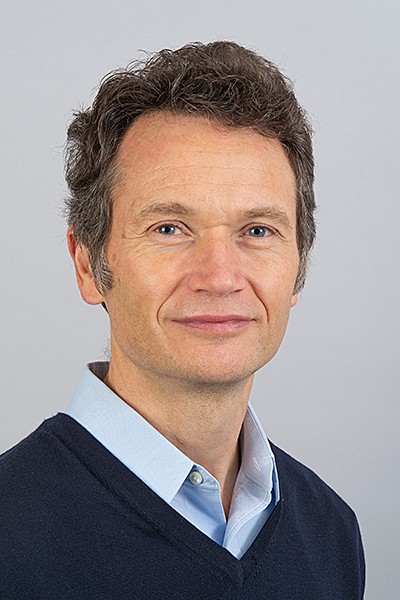
Tanja Lange is a Full Professor at the Department of Mathematics and Computer Science at Technische Universiteit Eindhoven. She chairs the Coding Theory and Cryptology group and serves as scientific director of the Eindhoven Institute for the Protection of Systems and Information (Ei/Ψ). Additionally, she holds a visiting professor position at Academia Sinica, Taiwan. Research & Teaching Her research focuses on cryptography and number theory , with leadership in post-quantum cryptography (including code-based, lattice-based, hash-based, and isogeny-based systems). She has taught courses like Introduction to Cryptology and Selected Areas in Cryptology at TU/e, covering quantum algorithms, cryptographic protocols, and mathematical foundations. Key Contributions Co-author of 5 recent publications (2023-2025) on differential addition chains, ROLLO-I analysis, CSIDH fault injection, and KpqC evaluations Recipient of the Best Master Lecturer 2016 award Active in NIST Post-Quantum Cryptography competition (e.g., NTRU Prime) Affiliated with the Center for Quantum Materials and Technology Eindhoven Contact MetaForum 5.062, TU/e Email: tanja@hyperelliptic.org (primary) | t.lange@tue.nl (TU/e)
Eugene Demler is a Full Professor at the Department of Physics, ETH Zurich. Previously, he held academic positions at Harvard University from 1998 to 2021, including Assistant Professor (2001-2004), Associate Professor (unspecified dates), and Full Professor (2005-2021). His work bridges theoretical condensed matter physics, atomic and molecular physics, quantum optics, and quantum simulations. Education: MSc in Physics, Moscow Institute of Physics and Technology (1993) Diploma work, Lebedev Physics Institute (1992-1993) PhD in Theoretical Physics, Stanford University (1998), supervised by S.C. Zhang Demler's research focuses on strongly correlated quantum systems, spintronics, quantum sensing, and photo-induced phase transitions. His recent publications explore topics such as quantum polarons, Josephson plasmons, magnon dynamics, and terahertz spectroscopy in superconductors. He has pioneered hybrid quantum-classical methods for electron-phonon systems and cavity-mediated quantum materials. His Google Scholar articles (2023-2025) span theoretical and experimental domains, with keywords including Quantum Physics , Condensed Matter Physics , and Quantum Optics . Subfields include Quantum Control , Superconductivity , Spin Waves , Quantum Sensing , Non-Equilibrium Dynamics , and Quantum Simulation . Scientific Awards: Hamburg Prize for Theoretical Physics (2021) Simons Investigator (2021) Moore Distinguished Scholar (2020) Hanna Visiting Scholar (2019) Highly Cited Researcher (2017-2020) Senior Fellow at ETH Zurich's Institute for Theoretical Studies (2015) Simons Fellowship (2015) Distinguished Scholar at Max Planck Institute of Quantum Optics (2015) Thomson Reuters Highly Cited Researcher (2014) Siemens Research Award (2006) Johannes Gutenberg Lecture Award (2006) NSF Career Award (2002) Sloan Fellowship (2002) Demler teaches courses such as Statistical Physics and Strongly Correlated Systems in Atomic and Condensed Matter Physics . His work integrates theoretical modeling with experimental collaborations, particularly in quantum optics and condensed matter systems.
Dr. Rajkumar Buyya is a Redmond Barry Distinguished Professor at the University of Melbourne and Founder & CEO of Manjrasoft , a spin-off commercializing cloud innovations. He has held visiting roles at Imperial College London , University of Birmingham , and Tsinghua University . Research Interests : His work spans Cloud Computing , Edge Computing , Grid Systems , and Energy-Efficient Computing , focusing on utility-driven resource allocation, simulation tools, and scalable IoT application frameworks. He pioneered the CloudSim toolkit and Aneka Cloud technologies. Scientific Awards : IEEE Fellow (2015), Web of Science Highly Cited Researcher (2016-2021) Khwarizmi International Award (2020), Scopus Researcher of the Year (2017) Frost & Sullivan New Product Innovation Award (2010), IEEE TCSC Medal (2009) Impact : Authored over 850 publications, including the widely adopted textbook Mastering Cloud Computing . Graduated 54 PhD students now in leadership roles at institutions like Newcastle University and companies such as IBM , Google , and Amazon . His research has driven global adoption of cloud/edge technologies in 50+ countries.
Zion Zibly, MD, MBA is an Associate Professor in the Department of Neurosurgery at Yale School of Medicine . He holds multiple leadership roles including Director of the Center of Neuromodulation , Director of the Center of Neurosurgical Cancer Pain , and Head of Stereotactic & Functional Neurosurgery and the Focused Ultrasound Institute . Previously served as Chair of Neurosurgery at Sheba Medical Center after graduating from Technion’s Faculty of Medicine (MD) and Coller School of Management (MBA). Research Interests: Specializes in Neuromodulation for movement disorders (Parkinson’s, tremors, dystonia), Deep Brain Stimulation , Gene Therapy for pediatric neurodegenerative conditions, Oncological Neurosurgery , and Neurological Pain Management . Combines Functional Neurosurgery with Focused Ultrasound technology. Scientific Contributions: Participated in pioneering Alzheimer’s brain stimulator procedures and Gene Therapy applications. Active member of the North American Association of Functional Neurosurgery and Israeli Neurosurgical Society . Clinical Expertise: Implantation of electrostimulators for Parkinson’s and essential tremor, treatment of Benign/Malignant CNS Tumors , and management of Neurological Pain Conditions . Affiliated with Yale Cancer Center and Center for Brain & Mind Health .
Prof. Dr. Patrick Huber is a leading physicist and Institute Director at the Hamburg University of Technology (TUHH) , heading the Institute for Materials and X-Ray Physics (M-2) . He also leads the High-Resolution X-Ray Analytics of Materials group at DESY through a cooperative professorship. His research spans condensed matter physics , nanoporous materials , and X-ray analytics , with significant contributions to molecular water science and soft matter in confinement . Education: PhD in Physics (1999, Saarland University), Diploma in Physics (1995, Saarland University) Professional Career: Full Professor at TUHH (2020-present), Member of CRC 1615 (2023-present), Spokesperson for CMWS (2024-present), Cluster of Excellence BlueMat (2025) Research Interests focus on multi-scale material behavior under extreme confinement, particularly hierarchical porous silicon and silica systems . His work examines adsorption-induced deformation , elastocapillarity , fluid transport in nanopores, and metamaterial design principles using electrolytes , polymers , and liquid crystals . Fundamental studies include fluid interface thermodynamics and microscopic hydrodynamics . Scientific Awards include the Top Reviewer Award (2018) from Applied Physics Letters and the Dr.-Eduard-Martin Award (2000) for his dissertation. He contributes to 130+ publications with an h-index of 36 (2021). Advising and Grants involve supervising 18 doctoral and master's students , including Manuel Brinker , Marc Thelen , and Stella Gries . He participates in Collaborative Research Centre CRC 1615 , Cluster of Excellence EXC 3120 BlueMat , and the United Nations University Hub on Climate Engineering . Laboratory and Teams include the Institute for Materials and X-Ray Physics (M-2) at TUHH, the High-Resolution X-Ray Analytics group at DESY, and contributions to the Centre for Hybrid Nanostructures (CHyN) .
Matthieu Cord is a Professor at Sorbonne University and Scientific Director of valeo.ai, leading research in computer vision, deep learning, and computational cooking. He heads the MLIA team at ISIR Lab, focusing on multimodal models, transformers, and efficient architectures. Research areas include computer vision, large language models with vision, and AI-driven food analytics. Key projects: VISA-DEEP AI chair, Foundation VaViM models, and SmolVLA collaboration with Hugging Face. His recent work examines scalable multimodal models , trajectory prediction , and diffusion-based segmentation , with studies on in-context learning and biased shortcut learning in visual question answering. Articles highlight DeiT variants , fishr for OoD generalization , and STEEX for counterfactual explanations . Scientific awards include IUF Honorary Membership (2009), BMVC 2017 Best Paper, and ICIP 2018 Best Paper. As an advisor, he supervised PhD theses on topics like GAN editing , semantic segmentation , and multimodal retrieval . Current roles involve mentoring the 'Research Band' at MLIA and leading EU-funded initiatives like SCAPE. His work bridges theoretical AI exploration with practical applications in autonomous driving and food technology.
Varun Jog is Professor of Information Theory and Statistics in the Department of Pure Mathematics and Mathematical Statistics (DPMMS) at the University of Cambridge, Faculty of Mathematics. Previously, he served as Assistant Professor at the University of Wisconsin-Madison (2016-2020) and at the University of Cambridge (2021-2024). His academic background includes a B.Tech. in Electrical Engineering from IIT Bombay (2010) and a Ph.D. in Electrical Engineering and Computer Sciences from UC Berkeley (2015). Professor Jog's research centers on fundamental questions at the intersection of information theory, statistics, and machine learning. He develops theoretical frameworks for statistical inference under constraints such as limited communication and privacy requirements, with significant contributions to hypothesis testing, differential privacy, adversarial risk analysis, and information-theoretic inequalities. His work bridges abstract mathematical principles with practical applications in data science and robust machine learning. Recent publications demonstrate a concentrated focus on distributed inference systems, particularly examining sample complexity limits in hypothesis testing under information constraints and privacy-preserving mechanisms. His research consistently reveals deep connections between information theory and statistical learning, with increasing emphasis on adversarial robustness and foundational inequalities. His scientific contributions have earned recognition through prestigious awards: NSF-CAREER Award (2020) R. Narasimhan Memorial Lecture Award (2020) Eli Jury Award from UC Berkeley EECS Department (2015) Jack Keil Wolf student paper award at ISIT (2015) Professor Jog maintains an active research group, currently supervising one PhD student while having graduated four PhD students and four Master's students. His mentorship extends to postdoctoral researchers including Amir Asadi, Deepanshu Vasal, and Andre Wibisono. Research funding includes the competitive NSF-CAREER grant. He co-organizes the Cambridge Information Theory Seminar, fostering academic exchange and collaboration within the theoretical research community.
Marcia C. Linn is the Evelyn Lois Corey Professor of Instructional Science in the Berkeley School of Education at the University of California, Berkeley. She serves as Chair of the Graduate Group in Science and Mathematics Education (SESAME) and has made significant contributions to the field of science education for over five decades. Dr. Linn is a member of the National Academy of Education and a Fellow of multiple prestigious organizations including the American Association for the Advancement of Science (AAAS), the American Psychological Association (APA), the Association for Psychological Science (APS), the American Educational Research Association (AERA), and the International Society of the Learning Sciences (ISLS). Dr. Linn earned her B.A. in Psychology and Statistics (1965), M.A. in Educational Psychology (1967), and Ph.D. in Educational Psychology (1970) from Stanford University, where she worked under Lee Cronbach. Her early career included working with Jean Piaget at the Institute Jean Jacques Rousseau in Geneva, Switzerland (1967-68), serving as a Fulbright Professor at the Weizmann Institute of Science in Israel (1983), and conducting research at University College in London. She has been a fellow at the Center for Advanced Study in Behavioral Sciences three times and a Writing Resident at the Rockefeller Foundation Bellagio Center twice. Dr. Linn's research focuses on how students learn science and how technology can be used to improve science education. She developed the Knowledge Integration framework, which has become widely used in science education. Her work explores the intersection of cognitive science and educational practice, with particular attention to how students develop understanding of complex scientific concepts. She has pioneered the use of technology in science education, developing the Web-based Inquiry Science Environment (WISE) and directing the NSF-funded Technology-Enhanced Learning in Science (TELS) center. Dr. Linn's recent publications demonstrate a clear trajectory toward integrating artificial intelligence with science education. Her work increasingly focuses on how AI can support knowledge integration, facilitate science learning opportunities, and promote equitable educational experiences. She examines how technology can help students develop deeper understandings of scientific concepts through inquiry-based learning while addressing issues of social justice in science education. Scientific Awards and Honors National Association for Research in Science Teaching Award for Lifelong Distinguished Contributions to Science Education American Educational Research Association Willystine Goodsell Award Council of Scientific Society Presidents first award for Excellence in Educational Research Fulbright Professor (1983) Apple Wheels for the Mind grant (1985) National Institute of Education grant (1983) Throughout her career, Dr. Linn has secured significant funding for educational research, including multiple National Science Foundation grants. She directed the NSF-funded Technology-Enhanced Learning in Science (TELS) center and has led numerous projects investigating the cognitive consequences of computer environments for learning. She has advised countless students and researchers in the field of science education, shaping the next generation of educational researchers and practitioners. Dr. Linn directs the Web-based Inquiry Science Environment (WISE) project and has been instrumental in developing technology-enhanced learning environments for science education. Her laboratory has been at the forefront of creating and testing innovative learning technologies that support students in developing deep understanding of scientific concepts through inquiry-based approaches.
Yu Sun is an assistant professor in the Department of Electrical and Computer Engineering at Johns Hopkins University with a joint appointment at the Data Science and Artificial Intelligence (DSAI) Institute. His research integrates machine learning, computer vision, optimization, and physics to advance computational imaging frameworks for reliable AI-driven imaging systems. He earned a BEng in electronics and information from Sichuan University (2015) and a PhD in computer science from Washington University in St. Louis (2022), where his dissertation received the Turner Dissertation Award. His academic journey includes a postdoctoral fellowship at Caltech's Department of Computing and Mathematical Sciences. Dr. Sun's research spans biomedical imaging, computational imaging, inverse problems, and machine learning, focusing on interpretable AI integration for next-generation imaging. His work bridges theoretical foundations with practical applications in medical and scientific imaging domains. Recent publications reveal a dominant trend in diffusion models for scientific imaging problems, including plug-and-play priors for reconstruction (NeurIPS 2024) and benchmarks for diffusion-based scientific problem-solving (ICLR 2025 Spotlight), demonstrating cross-disciplinary impact from biomedical engineering to cell biology. Key honors include: Turner Dissertation Award for doctoral contributions Rising Star Award from the Conference on Parsimony and Learning (CPAL, 2025) He serves as a consultant associate editor for the IEEE Open Journal of Signal Processing and actively participates in the IEEE Signal Processing Society’s Computational Imaging Technical Committee. His research is supported by institutional funding through the Hopkins Computational Imaging Group. The Hopkins Computational Imaging Group, which he leads, unites AI, mathematics, and data science to develop principled algorithms for imaging systems, with emphasis on biomedical applications and novel computational frameworks.
Ralf Haefner is an Assistant Professor in the Departments of Brain & Cognitive Sciences and Physics & Astronomy at the University of Rochester, holding this joint appointment since 2014. His interdisciplinary research bridges neuroscience and physics to investigate computational principles of perception and decision-making. Education and professional background: PhD, Oxford University, 1999 Visiting Research Fellow, Department of Neurobiology, Harvard Medical School Swartz Fellow, Sloan-Swartz Center for Theoretical Neurobiology, Brandeis University Haefner's research program centers on computational neuroscience , with primary focus on how the brain forms perceptual beliefs and uses them for decisions through Bayesian modeling . He employs machine learning tools to construct mathematical models explaining neural responses and behavior, particularly in the visual domain. His work addresses neural representation of uncertainty, causal inference mechanisms, and probabilistic computation in cortical circuits. Analysis of recent publications (2023-2025) reveals three dominant trends: (1) causal inference frameworks applied to motion perception and segmentation, (2) Bayesian modeling of perceptual biases and confidence computations, and (3) integration of generative and discriminative neural computations. His work extends beyond traditional neuroscience into scientific methodology through 'Generative Adversarial Collaborations' for improving research discourse. Honors and Awards: Swartz Fellowship, Sloan-Swartz Center for Theoretical Neurobiology NSF CAREER Award (2022) for 'Approximate inference at the intersection of neuroscience and machine learning' Haefner secured significant research funding through his NSF CAREER award, which supports foundational work on probabilistic inference at the neuroscience-ML interface. While specific students aren't listed, his active publication record and lab infrastructure suggest ongoing mentorship of graduate students and postdocs. His research has clinical relevance as shown by studies on perceptual abnormalities in autism spectrum disorder, indicating translational potential for understanding neurological conditions.
Dr. Michael Baym is an Associate Professor of Biomedical Informatics at Harvard Medical School with affiliate appointments in Microbiology and the Laboratory of Systems Pharmacology, and as an Associate Member of the Broad Institute. He leads the Baym Lab, which studies microbial evolutionary genomics and antibiotic resistance through a hybrid of experimental, computational, and theoretical approaches. His research focuses on: Antibiotic Resistance Evolution and practical interventions Mobile Genetic Elements (plasmids, phages, transposons) Computational Genomic Algorithms for big data analysis Synthetic Biology tools and technologies Key recent publications explore phage discovery systems , phylogenetic compression of microbial genomes, and RNA-guided gene drives in plasmids. His work is supported by multiple NIH/NIGMS and NSF grants including a MIRA award. Scientific honors include: Packard Fellowship (2018) Pew Biomedical Scholarship (2020) Sloan Research Fellowship (2020) A. Clifford Barger Excellence in Mentoring Award (2021) SSQBio Mentorship Award (2022) The lab actively trains PhD students and postdoctoral fellows with alumni occupying academic and industry positions globally. Current team members include researchers from interdisciplinary backgrounds working at the intersection of experiment, computation, and theory .
Lu Zhang is The John W. Galbreath Chair in Finance and Professor of Finance at Fisher College of Business, The Ohio State University. He also serves as a Research Associate at the National Bureau of Economic Research (Asset Pricing program) and as Associate Editor for the Journal of Financial Economics and Journal of Financial and Quantitative Analysis. Previously, he taught at the University of Michigan and University of Rochester. Research Focus: Dr. Zhang specializes in asset pricing, integrating macroeconomics, corporate finance, labor economics, and capital markets research in accounting. His groundbreaking contributions include the investment CAPM and the q-factor model, which address asset pricing anomalies and serve as foundational tools in academic and investment management sectors. Recent Publications: His recent work spans topics such as firm-level irreversibility, endogenous disasters in economic modeling, and the integration of expected growth into the q-factor model. These studies reflect his focus on bridging macroeconomic dynamics with financial markets. Scientific Awards: Smith-Breeden Award for Best Paper (2005) Spängler IQAM Best Paper Prize (2019) Editor’s Choice, Lead Article (2015) Teaching: Dr. Zhang teaches courses ranging from undergraduate to PhD levels, including Investment Management, Derivative Securities, and Advanced Asset Pricing. In 2015, he received the Outstanding Working Professional MBA Elective Faculty Award at Ohio State.
Dr. Andrew Hines is a Researcher at the School of Computer Science, University College Dublin, specializing in machine learning applications for signal processing in speech, audio, and video domains. His work focuses on Quality of Experience (QoE) modeling, speech quality assessment, and immersive media analysis. He has held leadership roles in European COST Actions like Qualinet and CryptoAction, and previously worked in industry as a Director of Engineering. University: University College Dublin Role: Director of Research, Innovation and Impact Key Collaborations: IEEE (Senior Member), Audio Engineering Society (Ireland) Research interests center on machine learning for QoE optimization, audio-visual integration, and healthcare applications like heart sound classification and stroke rehabilitation. His recent publications explore self-supervised learning, neural speech codecs, and contextual factors in speech/audio quality assessment. Scientific contributions include awards like IEEE Senior Membership, and his work spans both academic research and industrial engineering in finance and aviation sectors. He leads the QxLab research team at UCD and develops open-source platforms such as WARP-Q and AQP for quality metrics.