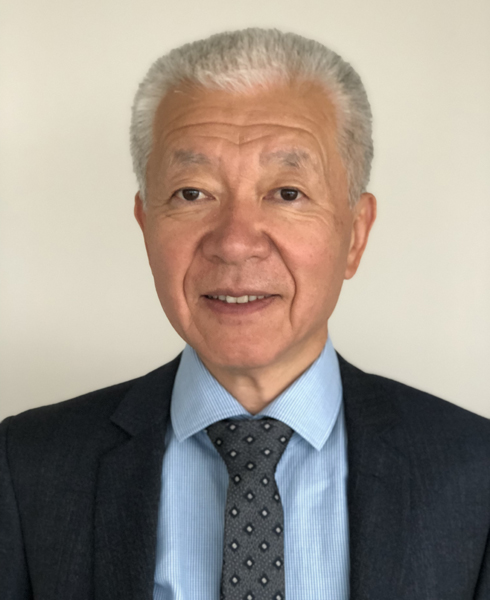
Zhang Yi-Cheng is a Full Professor of Theoretical Physics at the University of Fribourg, Switzerland, since 1992. His academic career includes visiting professorships at Nordita (Denmark) and INFN (Italy), and postdoctoral research at Brookhaven National Lab (USA). He specializes in interdisciplinary fields such as Econophysics , Statistical physics , and Complex network sciences , focusing on applications in financial markets, social systems, and global trade networks. His research explores topics like market dynamics, network structures, and algorithmic ranking systems. Notable awards include the 2011 Honorary Director of the Complexity Sciences Research Center and recognition as a 2011 Chinese '1000 Talents' awardee . His work bridges physics-based methodologies with socio-economic systems, addressing challenges in information-driven economies and networked societies. Zhang has contributed to influential studies on ranking algorithms, percolation theory in networks, and the interplay between economic complexity and trade. His interdisciplinary approach has led to advancements in understanding systemic risks, market inefficiencies, and the role of information in shaping global economic interactions.
Orfeu M. Buxton is a Professor of Biobehavioral Health at Pennsylvania State University's College of Health and Human Development. He serves as Associate Director of both the Penn State Clinical and Translational Science Institute and the Penn State Social Science Research Institute. Dr. Buxton directs the Sleep, Health & Society Collaboratory and serves as Editor in Chief of Sleep Health (2019-2025). His academic journey includes positions at Harvard University, where he held appointments at the Harvard Chan School of Public Health and Harvard Medical School's Division of Sleep Medicine. Dr. Buxton's research focuses on the causes of chronic sleep deficiency in workplace, home, and societal contexts, along with their health consequences and underlying physiological and social mechanisms. His work spans multiple research areas including sleep health in biopsychosocial frameworks, biomarkers of health and wellbeing (including digital biomarkers), acoustic disruption and enhancement of sleep, and successful aging across the life course. He leads interdisciplinary studies examining sleep health in free-ranging humans of all ages, with current projects including the Child and Family Well-Being Study and the Einstein Aging Study. His most recent publications demonstrate expertise in sleep health across the lifespan, examining connections between sleep patterns and outcomes ranging from cognitive decline in older adults to academic functioning in adolescents. His research employs diverse methodologies including actigraphy, biomarker analysis, and large-scale epidemiological studies. Dr. Buxton's work has particular emphasis on sleep disparities across different demographic groups and the social determinants of sleep health. 2025 Pattishall Outstanding Research Achievement Award Editor in Chief, Sleep Health (2019-2025) Dr. Buxton maintains an active NIH-funded research program with multiple principal investigator and co-investigator roles. His grant portfolio includes studies on sleep health and cognitive decline in older adults (R01AG062622), the Einstein Aging Study (P01AG003949), and investigations into sleep-related disparities in U.S. children's learning difficulties (R03HD104796). His work with the Work, Family, and Health Network has examined how workplace interventions affect sleep and health outcomes. As director of the Sleep, Health & Society Collaboratory, Dr. Buxton leads a multidisciplinary team examining the complex relationships between sleep, health, and societal factors. His research has been featured in major media outlets including the New York Times, Wall Street Journal, and NBC Nightly News, particularly regarding workplace sleep health and the impact of noise on sleep quality.
Dr. Sara Ahmadian is a Researcher at the University of Waterloo's Department of Combinatorics and Optimization. She completed her Ph.D. in 2017 under the supervision of Prof. Chaitanya Swamy, earning the 2017 University of Waterloo Outstanding Achievement in Graduate Studies award. Her research focuses on designing efficient algorithms for optimization problems in machine learning and big data analysis, particularly in facility location and clustering. She has held visiting research positions at the University of Alberta, Hausdorff Research Institute for Mathematics, and École polytechnique fédérale de Lausanne. Education: Ph.D. in Combinatorics and Optimization, University of Waterloo (2017) Master's in Combinatorics and Optimization, University of Waterloo (2010) Bachelor's in Computer Engineering, Sharif University of Technology (2008) Research interests include approximation algorithms, online algorithms, and algorithmic game theory applied to clustering and facility location problems. Her work has led to advancements in k-means and k-median problems, with a notable improvement in the fundamental k-means algorithm. Scientific Awards: 2017 University of Waterloo Outstanding Achievement in Graduate Studies (Ph.D.) designation Advising and Grants: No specific advising or grant information is provided in the text. Labs/Teams: No specific lab or team affiliations mentioned.
Gita Reese Sukthankar is a Professor in the Department of Computer Science at the University of Central Florida (UCF) , where she directs the Intelligent Agents Lab . Her research focuses on activity and plan recognition , with applications in multi-agent systems, robotics, and human-robot interaction. She earned her Ph.D. from the Robotics Institute at Carnegie Mellon University and joined UCF in fall 2007. Research Interests: Her work spans activity recognition , intent inference , multi-agent coordination , and human-robot teams . She has applied these techniques to domains such as adversarial games (e.g., military simulations, Unreal Tournament), assistive technologies, and cooperative robotics. Her research integrates AI, machine learning, and probabilistic models to understand and predict complex team behaviors. Publication Trends: Her publications emphasize spatio-temporal modeling , probabilistic graphical models (e.g., HMMs, CRFs) , and multi-agent plan recognition . She frequently publishes in top venues like AAMAS, AAAI, and ICRA, with a focus on robust recognition of team behaviors, transfer learning, and real-world AI applications. Scientific Awards: NSF CAREER Award (2009) AFOSR Young Investigator (2009) ONR Summer Faculty Fellow (2008) UCF Faculty Excellence for Doctoral Mentoring (2012) CECS Dean's Research Professorship (2013) AAAI Senior Member (2021) ACM and IEEE Senior Member Advising and Grants: She mentors graduate students in AI and robotics and has led research funded by DARPA, AFOSR, and ONR. Her lab develops systems for intelligent agents that can understand and collaborate with humans. She has served on numerous program committees and editorial boards, including ACM Transactions on Autonomous and Adaptive Systems . She teaches courses such as Intelligent Systems , Robotics , and Machine Learning , and has been recognized for both research and teaching excellence. Labs and Teams: She leads the Intelligent Agents Lab at UCF, which focuses on data-driven social informatics and AI for human-agent teams. Her group collaborates with researchers in robotics, computer vision, and cognitive science to build adaptive, intelligent systems.
Shahin Jabbari is an Assistant Professor in the Computer Science Department at the College of Computing & Informatics, Drexel University, where he is a member of the EconCS research group. His research lies at the intersection of machine learning, game theory, and algorithmic fairness, with a focus on ethical AI and its societal implications. Prior to Drexel, he was a CRCS postdoctoral fellow at Harvard University's School of Engineering and Applied Sciences, hosted by Milind Tambe, and affiliated with the EconCS group. Education: PhD in Computer and Information Science, University of Pennsylvania (2013–2019), advised by Michael Kearns Master's in Computing Science, University of Alberta, advised by Robert Holte and Sandra Zilles Bachelor's in Computer Engineering, Sharif University of Technology His research interests center on machine learning, algorithmic fairness, and game theory, particularly focusing on how AI systems can be designed to be more equitable, interpretable, and robust. He investigates ethical aspects of algorithmic decision-making, aiming to ensure AI technologies contribute positively to society. His work often integrates human behavior modeling and experimental validation, especially in cybersecurity and public health domains. His recent publications span top venues including ICML, NeurIPS, AAAI, AAMAS, PNAS, and TMLR. The research trends show a consistent focus on fairness in AI, explainability, robustness, and strategic interactions in complex systems. Topics include fair influence maximization, adaptive phishing training, cyber deception games, and ethical machine learning frameworks. These works reflect a multidisciplinary approach combining theoretical rigor with real-world applicability. Scientific Awards and Recognitions: Best Paper Finalist, AAMAS 2021 Best Paper, GameSec 2020 Spotlight Presentation, ICML 2021 Best Paper, KI 2012 Shahin Jabbari actively contributes to the academic community through advising, teaching, and service. He teaches graduate courses such as CS 589: Responsible Machine Learning and CS 590: Privacy. He has served on the senior program committees of ICML and NeurIPS, is an Action Editor for TMLR, and has reviewed for numerous top-tier conferences and journals. He mentors students through research projects and invites prospective PhD candidates to apply through Drexel’s formal channels. He is involved in the Drexel Computer Science Theory Reading Group and contributes to advancing responsible AI practices. He is affiliated with the EconCS group at Drexel, which focuses on economic and computational aspects of AI, including game theory, mechanism design, and multi-agent systems. His lab integrates tools from machine learning, behavioral modeling, and optimization to develop AI systems that are not only intelligent but also fair and trustworthy. Future work is expected to further explore human-AI collaboration, ethical AI deployment, and policy-aware algorithm design.
Sohail K. Mirza, MD, MPH is a Professor of Engineering at Dartmouth College's Thayer School of Engineering, specializing in biomedical engineering and orthopaedic surgery. His dual roles as a clinician and researcher focus on spinal biomechanics, surgical innovation, and healthcare policy. He received a BA in Physics from Colorado College (1985), an MD from the University of Colorado (1989), and an MPH from the University of Washington (2005). Research Interests: Dr. Mirza's work bridges clinical practice and engineering, with a focus on improving spinal surgery outcomes through advanced imaging techniques (e.g., intraoperative stereovision), reducing surgical overuse via policy analysis, and developing evidence-based guidelines for lumbar fusion procedures. His innovations include systems for pain measurement post-surgery and handheld stereovision tools for surgical navigation. Awards & Recognition: 2014 American Academy of Orthopaedic Surgeons Kappa Delta Award 2002/2008 University of Washington Service Excellence Award 1998 Cervical Spine Research Society Award Grants & Collaborations: His research has been supported by the National Institutes of Health and the Dartmouth College NSF I-Corps. He collaborates with biomedical engineers like Keith Paulsen and clinicians such as Roberts DW on projects like image-based registration for spine surgery. Labs & Teams: Leads the Spinal Surgery Innovation Lab at Thayer School, focusing on translating engineering solutions into clinical practices. Co-directs the Dartmouth Center for Surgical Innovation.
Renaud Lambiotte is Professor of Networks and Nonlinear Systems at the Mathematical Institute, University of Oxford. He holds a PhD in Physics from Université libre de Bruxelles and has held research and faculty positions at ENS Lyon, Université de Liège, UCLouvain, Imperial College London, and the University of Namur. He is currently an active academic in applied mathematics and network science. His research focuses on complex systems, particularly dynamics on networks, temporal networks, and stochastic processes. He applies these to social and brain networks, data mining, and urban systems. His work bridges theoretical modeling and real-world data, emphasizing the structure and evolution of complex systems. His recent publications demonstrate strong trends in network theory, including hypergraphs, community detection, multidimensional dynamics, and data quality in network interventions. He also explores applications in urban air quality and gentrification, showing a commitment to socially relevant complex systems research. Scientific Awards: Prix Wernaers 2013 Prix Wernaers 2016 Prix Wernaers 2020 Verdickt-Rijdams 2016 de l'Académie royale de langue et de littérature françaises He is the co-founder of L’Arbre de Diane, a publishing initiative at the science-literature interface, which received multiple awards. He teaches advanced courses such as Differential Equations II and Networks. He is affiliated with the Machine Learning and Data Science and the Oxford Centre for Industrial and Applied Mathematics research groups. He has authored or co-edited key texts in the field, including A Guide to Temporal Networks and Modularity and Dynamics on Complex Networks , and has published around 130 peer-reviewed articles. His research is supported by ongoing collaborations and active publication output, indicating sustained academic leadership.
Anders Rønn-Nielsen is an Associate Professor at the Department of Finance and Center Coordinator at the Center for Statistics at Copenhagen Business School (CBS). He holds a M.Sc. in Statistics from University of Copenhagen and a PhD in Statistics and Probability Theory from Aarhus University. His research focuses on applied probability theory, particularly Lévy-based spatial models, and statistical efficiency analysis. His academic credentials include: M.Sc. in Statistics, University of Copenhagen PhD in Statistics and Probability Theory, Aarhus University Research interests span: Lévy processes and spatial stochastic modeling Extreme value theory applications in finance and natural sciences Nonparametric production frontier analysis Efficiency measurement methodologies His publications (18+ articles) emphasize theoretical probability and statistical applications in efficiency analysis. He has served as external examiner at Aarhus University and Copenhagen University for master’s and PhD examinations (2017–2019). His teaching responsibilities include advanced probability theory courses and statistical methods training for economics students.
Benjamin Fehrman is an Assistant Professor in the Department of Mathematics at Louisiana State University, specializing in stochastic analysis with a focus on stochastic partial differential equations and their applications to statistical physics. His research encompasses diffusion processes in random environments, stochastic homogenization, and randomized optimization algorithms in machine learning. His research interests center on the mathematical theory of stochastic partial differential equations, particularly those arising in statistical physics. Fehrman investigates fluctuating hydrodynamics, non-equilibrium systems, and the connection between interacting particle systems and their continuum limits. His work often involves developing well-posedness theory for challenging SPDEs with conservative noise structures and analyzing large-scale behavior in random media. Analysis of his recent publications reveals a strong focus on conservative stochastic PDEs and their connection to interacting particle systems, particularly the zero-range process and symmetric simple exclusion process. His research shows increasing attention to large deviation principles, kinetic formulations of skeleton equations, and the mathematical foundations of fluctuating hydrodynamics. The interdisciplinary nature of his work bridges probability theory, partial differential equations, and mathematical physics. Fehrman's research has been supported by prestigious grants including the National Science Foundation DMS-Probability Standard Grant 2348650, the Simons Foundation Travel Grant MPS-TSM-00007753, and the Louisiana Board of Regents RCS Grant 20130014386. He has supervised PhD students Andrea Clini (University of Oxford, 2020-2024) and Shyam Popat (University of Oxford, 2021-present), as well as postdoc Simone Floreani (University of Oxford, 2022-2023). Fehrman has also organized significant academic events including the "Interacting Particles, Fluctuating Systems, and SPDEs" workshop at the University of Oxford in June 2023, funded by an EPSRC Early Career Fellowship. His teaching portfolio includes advanced courses in stochastic analysis, stochastic differential equations, and stochastic homogenization at both Louisiana State University and the University of Oxford, where he previously held a position.
Murphy Yuezhen Niu is an Assistant Professor and Stansbury Chair in Computer Science at the University of California, Santa Barbara (UCSB), since 2024. She holds an adjunct role as Adjunct Assistant Professor at the University of Maryland, College Park, and the University of Maryland Institute for Advanced Computer Studies. Niu earned her Ph.D. in theoretical and mathematical physics from MIT (2018) and a B.A. in Physics from Peking University. Her research focuses on quantum computing paradigms, including quantum control optimization, quantum error correction, quantum machine learning, and scalable quantum architectures. Her work applies deep reinforcement learning and generative models to quantum systems, with contributions to superconducting qubit-based processors, ion traps, photonic systems, and neutral atom qubits. Niu's research emphasizes reducing the computational cost of quantum digitization while achieving real-world impacts. Notable achievements include the Claude E. Shannon Research Assistantship for her work in photonic quantum computation and quantum cryptography. Niu’s publications (2021–2025) span topics like quantum error correction thresholds, hybrid analog-digital quantum simulators, and machine learning-driven quantum decoding. Her research bridges theoretical physics and applied quantum computing, with a focus on fault-tolerant architectures and scalable quantum control protocols. Education: Ph.D., Physics, MIT (2018) B.A., Physics, Peking University Awards: Claude E. Shannon Research Assistantship Labs/Teams: Google Quantum AI Team (former role) UCSB Quantum Computing Research Group
Ming Gu is a Professor in the Department of Mathematics at the University of California, Berkeley . He specializes in Numerical Linear Algebra and Scientific Computing , with a focus on developing efficient algorithms for structured matrices and large-scale data analysis. Organized Matrix Computations and Scientific Computing Seminars (2009-2017) Published 15+ papers on QR algorithms , Toeplitz matrices , randomized algorithms , and low-rank approximations His research addresses rank-revealing factorizations , randomized subspace iteration , and preconditioning techniques , often bridging numerical analysis with applications in machine learning and optimization . Students advised by him (e.g., Jiaming Wang, Onyebuchi Ekenta) have explored spectrum-revealing CUR decomposition and truncated SVD . Contact: mgu@math.berkeley.edu Office: 861 Evans Hall, UC Berkeley
Mia Minnes is a Teaching Professor and the Vice Chair for Undergraduate Education in the Computer Science and Engineering Department at UC San Diego's Jacobs School of Engineering. She teaches discrete math for CS, introduction to computability, and TA training classes, while leading initiatives that connect academic learning with professional development. Her research focuses on Automata Theory and Computability education, Scholarship of Teaching and Learning (SoTL), and projects supporting student professionalization pathways including industry internships, peer mentor development, and ethics in computing. She has pioneered initiatives like the Summer Internship Symposium and CSE-PACE (Peer-led Academic Cohort Experiences) to enhance student experiences in large computing programs. Minnes' publication portfolio reveals strong trends in computing education research, particularly in internship experiences, TA professional development, assessment methods, and interventions for large classes. Her work consistently bridges theoretical computer science with practical educational applications, demonstrating a commitment to evidence-based teaching practices and student success metrics. UC San Diego Academic Senate Distinguished Teaching Award (2020) Jacobs School of Engineering Teacher of the Year (2013-2014) Multiple NSF grants as PI including DUE-2337253 (2024-2027) UC San Diego Student Centeredness Award (2023-2024) Teaching+Learning Commons Faculty Fellow (2018-2019) She has advised numerous undergraduate and graduate students through research projects examining internship disparities, TA professional development, educational technology tools, and student experiences in computing programs. Her leadership extends to projects like FlapJS (an interactive visualization tool for formal computation), ComputingPaths (resources for computing career paths), and OCCTIVE (supporting computational problem solving in non-CS courses).
Dominique Unruh is a Professor at RWTH Aachen University , leading the Chair for Quantum Information Systems . Additionally, they hold a Professorship in Cryptography at the Institute of Computer Science of the University of Tartu , Estonia. Their research spans quantum computing , quantum cryptography , post-quantum cryptography , and formal verification of cryptographic protocols and programs. Research Focus : Quantum programs, zero-knowledge proofs, lattice-based cryptography, and quantum random oracle model. Key Contributions : Advancements in NTRU encryption efficiency, quantum Hoare logic, and rewinding techniques for security proofs. Tools : Active development in the EasyCrypt framework for cryptographic verification. Email : unruh@cs.rwth-aachen.de
Tony Stillfjord is an Associate Professor at the Centre for Mathematical Sciences, Lund University, Sweden. He previously held postdoctoral positions at the Max Planck Institute for Dynamics of Complex Technical Systems and Chalmers/University of Gothenburg. Ph.D. and MSc in Numerical Analysis from Lund University Funded by WASP (Wallenberg AI, Autonomous Systems and Software Program) Research Interests : Numerical methods for partial differential equations, splitting schemes, stochastic optimization, and large-scale differential Riccati equations. His work focuses on developing low-rank approximations and robust optimization algorithms. Recent Publications highlight advancements in Lie/Strang splitting for operator-valued Riccati equations, stochastic descent methods, and GPU-accelerated splitting schemes. Software Contributions : Developed DREsplit (MATLAB package for differential Riccati equations) and BST20_CODE for stochastic optimization experiments. Contact : Office at MH:562E, Lund University. Email: tony.stillfjord@math.lth.se . URL: tonystillfjord.net
Rameshwar Pratap is an Associate Professor in the Department of Computer Science and Engineering at the Indian Institute of Technology Hyderabad (IIT Hyderabad). Previously, he served as an Assistant Professor at the School of Computing and Electrical Engineering, IIT Mandi for three years. Education: Ph.D. in Theoretical Computer Science, Chennai Mathematical Institute Research Interests: His research lies at the intersection of theory and practice, focusing on extremely simple yet practical approximation algorithms with provable guarantees . Key themes include: Sketching and dimensionality reduction algorithms for tensors and similarity measures Improving speed, scalability, and accuracy of existing sketching methods Applications in machine learning: node embedding in large-scale networks, itemset mining, model compression He extensively employs techniques from matrix and tensor algebra, sampling, random projection, and randomized hashing . Publications Overview: Across 2021–2025 his work has appeared in top venues such as IEEE Globecom, Theoretical Computer Science, Acta Informatica, Information Processing Letters, Algorithmica, UAI, ICALP, Machine Learning, TKDE, and ACML. Recurring themes are randomized sketching, locality-sensitive hashing, compressed matrix multiplication, variance reduction, and subspace approximation , demonstrating both theoretical depth and practical impact. Awards & Honors: Early Career Research Grant (PM-ECRG) 2025, Anusandhan National Research Foundation (ANRF) Best Paper Award, COCOON 2020 Students & Funding: First Ph.D. student: Bhisham Dev Verma (co-advised with Prof. Manoj Thakur) graduated June 2025 MS by Research student: Punit Pankaj Dubey graduated October 2022 Currently hiring 1 Junior Research Fellow for the PM-ECRG project “Improving Similarity Search in Practice” Labs & Teams: Works within the Algorithms & Theory group at IIT Hyderabad, collaborating with national and international researchers. Erdös number is 3.