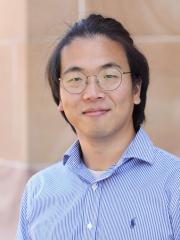
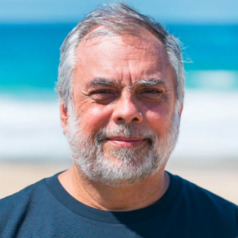
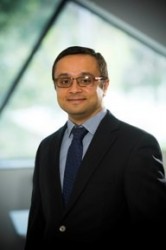
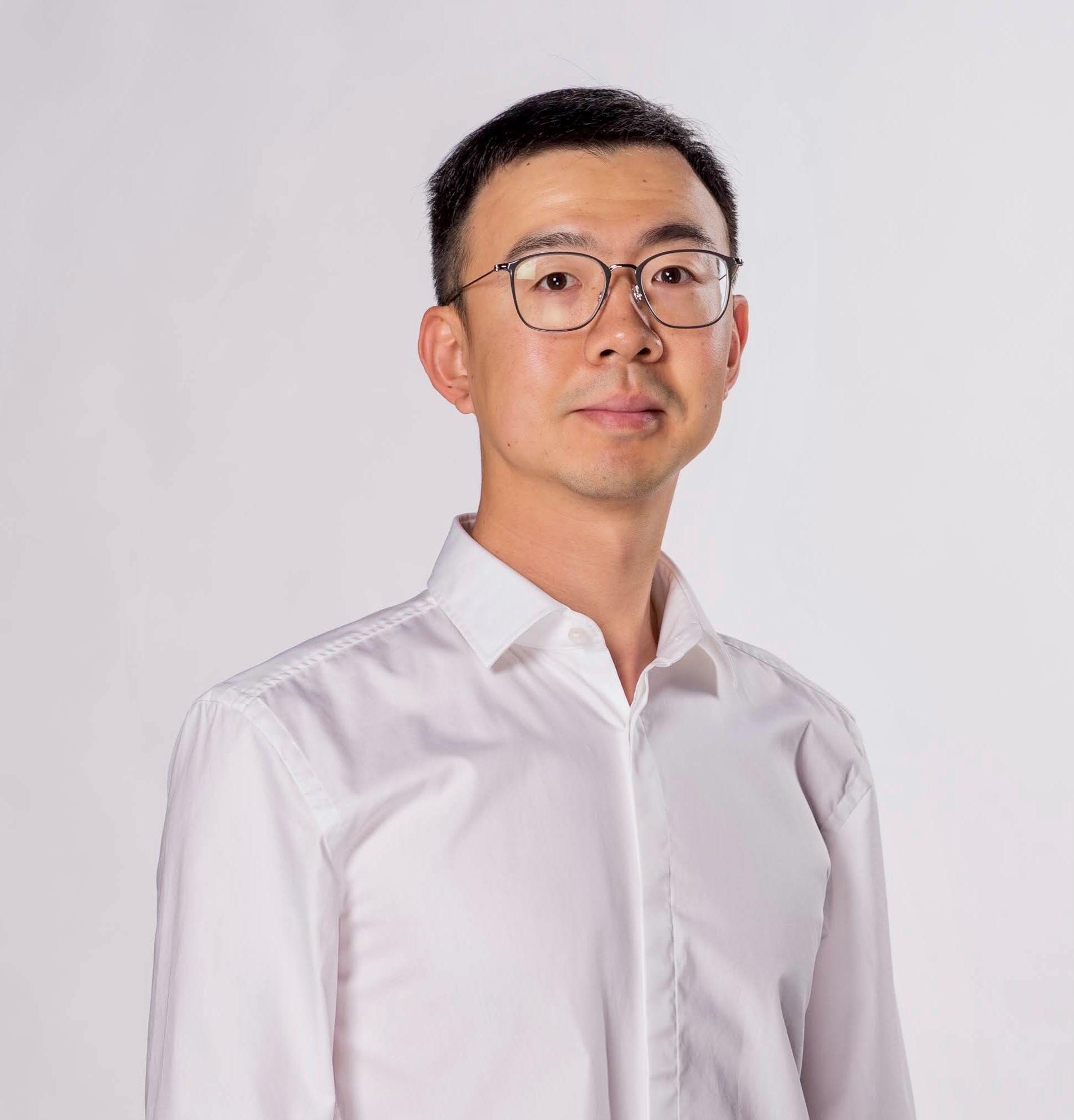
Dr. Ying He is a Senior Lecturer at the School of Electrical and Data Engineering, University of Technology Sydney (UTS). Her research focuses on wireless communication networks, particularly integrating machine learning with satellite and terrestrial systems. She holds a BEng from Beijing University of Posts and Telecommunications (2009) and a PhD from UTS (2017). Prior to her academic role, she worked on TD-LTE chip design at the Chinese Academy of Sciences. Affiliations : Faculty of Engineering and Information Technology Global Big Data Technologies Centre (GBDTC) Education : BEng in Telecommunications Engineering, Beijing University of Posts and Telecommunications (2009) PhD in Engineering (Telecommunications), UTS (2017) Her research interests include satellite communication (GEO-LEO integration), spectrum sharing, vehicular communication, and applying machine learning to physical layer algorithms. Notable contributions include optimizing beam design in LEO networks and developing secure IoT systems. She supervises PhD/Master’s students and teaches courses like CCNA and capstone projects. Funded projects span satellite networks, IoT security, and supply chain tracking. Recent grants include SmartSat CRC initiatives and collaborations with industry partners like Intel and Ericsson. Her work addresses challenges in 6G, UAV-enabled computing, and resilient quantum algorithms.
Dr. Sungyong Ahn is a Lecturer in Digital Media and Cultures at the School of Communication and Arts, University of Queensland, and an affiliate of the Centre for Digital Cultures & Societies. His research focuses on digital ontology, new materialism, and speculative (capitalist) realism, examining how smart technologies reshape human perception and governance. He holds a PhD in Media Studies from the University of Illinois at Urbana-Champaign. Education: Bachelor of Philosophy (Yonsei University), Master of Film and Television (Chung-Ang University), PhD in Media Studies (UIUC). His research investigates the interplay between technology, capitalism, and cultural production, particularly through the lens of the Internet of Things (IoT), quantum physics as cultural imagination, and French philosophy (Foucault, Deleuze, Badiou). Recent work includes analyzing IoT’s role in self-governance and the ontological anxieties of digital existence. Publications span journals like Media Theory , Journal of Cultural Economy , and Postmodern Culture . He is the author of Internet-ontologies-Things: Smart Objects, Hidden Problems, and Their Symmetries (2023). Available for supervision in media studies, digital cultures, and science/technology studies. Active in interdisciplinary collaborations, including the Centre for Digital Cultures & Societies.
Dr. James Saunderson is a Senior Lecturer and Director of Education in the Department of Electrical and Computer Systems Engineering at Monash University. He holds a PhD in Electrical Engineering and Computer Science from MIT and has held postdoctoral roles at Caltech and the University of Washington. His expertise spans convex optimization, semidefinite programming, and quantum information theory. Education : PhD in EECS, MIT (2015) MS in EECS, MIT (2011) Bachelor of Engineering (Honours) and Bachelor of Science (Honours), University of Melbourne (2008) Research Interests : Convex optimization, quantum information theory, signal processing, and algorithm design. Focuses on algebraic and geometric aspects of optimization, with applications in engineering and quantum systems. Recent Projects : Exploiting duality in quantum relative entropy optimization Hyperbolic programming and conic optimization Applications in nanotechnology and bioinformatics Teaching : Courses include Control System Design, Signals and Systems, and Optimization for Engineers. Awards : SIAM Optimization Best Paper Prize (2020) Grants and Collaborations : Australian Research Council Discovery Early-Career Research Fellow (2020–2024) Leading projects in quantum optimization and bioengineering applications.
Prof. Tansu Alpcan is a Professor and Reader in the Department of Electrical and Electronic Engineering at The University of Melbourne, Australia. He holds a PhD from the University of Illinois at Urbana-Champaign (UIUC) and has held academic positions at Technical University Berlin and Deutsche Telekom Laboratories. His research focuses on AI/ML applications in engineering, game theory, cybersecurity, Industry 4.0, quantum machine learning, smart grids, and communication networks. Education: PhD in Electrical and Computer Engineering (UIUC, 2006); MSc (UIUC, 2003); BEng (Bogazici University, 1999). Research interests include adversarial machine learning, cybersecurity games, quantum computing, and renewable energy systems. Authored over 200 papers and two books, including Network Security: A Decision and Game Theoretic Approach (Cambridge, 2011). Recipient of IEEE Senior Membership (2012) and multiple best paper awards. He leads the WILAB and has secured grants such as the ARC Training Centre in Optimisation Technologies. Current projects include quantum machine learning, adversarial reinforcement learning, and smart grid modeling. Supervised 17 PhD and 3 Master’s students.
Gerhard (Gerry) F. Swiegers is a Professor of Chemistry at the University of Wollongong , with affiliations to the Australian Institute for Innovative Materials and Intelligent Polymer Research Institute . He holds an Australian Research Council Industry Laureate Fellowship (2023 - present) and has been a key figure in commercializing fundamental research, bridging academia and industry. Previously, he was a Principal Research Scientist at CSIRO (1998-2009) and has founded 7 spin-off companies, licensing 3 technologies. PhD in Chemistry (1991) , University of Connecticut BSc with Honours (1982) , Nelson Mandela University His research focuses on electrochemical catalysis , particularly hydrogen generation from water using renewable electricity. He explores electrocatalytic process engineering and synergistic effects in catalysis with interacting supports. His book Bioinspiration and Biomimicry in Chemistry (Wiley) received a Prose Award (2012). Recent publications highlight advancements in capillary-fed electrolysis for cost-competitive green hydrogen, DFT studies on oxygen evolution by manganese complexes, and electrochemical process modeling . His work spans materials engineering , renewable energy , and industrial electrochemistry . American Publishers Award (Prose Award) for Chemistry (2012) DuPont Innovation Awards (2011, 2008) for 'Intelliseed' and 'Datatrace' National Australia Bank Excellence in Agribusiness Award (2010) Copper Theft Campaign Award (2009) for 'Datatrace' Professor Swiegers has participated in $24.5 million of competitive academic grants and is actively supervising PhD students in electrochemical engineering. His inventions are deployed in pharmaceuticals, energy, and agriculture industries through 66 patent families and 436 individual patents .
Professor Xiaoke Yi is a faculty member at the University of Sydney's School of Electrical and Computer Engineering, serving as Associate Head of Research and Director of the Photonics Research Group. He holds a BEng, MEng, and PhD from Nanyang Technological University (NTU). His research focuses on nanophotonics and integrated microwave photonics, addressing challenges in high-frequency signal processing for communications, defense, and healthcare. Notable achievements include developing non-invasive glucose monitoring technology and contributions to silicon carbide photonics. Awards include the 2018 Women in Industry Award and 2017 Bradfield Award. Research Interests : Professor Yi’s work bridges microwave engineering and optoelectronics, with applications in high-speed communication systems, radar, and biomedical sensors. His current projects involve machine learning-enhanced microwave photonic sensors and integrated photonics for defense and healthcare. Recent breakthroughs include athermal sensors using microring resonators and silicon carbide electro-optic modulators. Publications & Recognition : His work spans over 100 peer-reviewed articles in journals like Nature Communications and Journal of Lightwave Technology . Key themes include sensor design, signal processing algorithms, and photonic materials. Recent trends emphasize machine learning integration for sensor optimization and biomedical applications. Awards : 2018: Women in Industry Award (Engineering category) 2017: Bradfield Award (Engineers Australia) 2017: Australia’s Most Innovative Engineers (Engineers Australia) 2017: Sydney Accelerator Fellowship (SOAR) 2016: Vice-Chancellor’s Award for Research Engagement Labs & Teams : Leads the Photonics Research Group, collaborating with interdisciplinary teams at Sydney Nano Institute. Current projects include inverse design of photonic devices using neural networks and high-resolution optical spectrum analysis.
Professor Trina Myers serves as the Head of School for the School of Information Technology at Deakin University's Faculty of Science Engineering and Built Environment. With extensive experience in academia and research leadership, she plays a pivotal role in shaping IT education and research directions at Deakin. She is also an active member of the Australian Council of Deans of ICT (ACDICT), having served as its immediate past President. Her educational background includes: Doctor of Philosophy in Computer Science from James Cook University Master of Business Administration from James Cook University Master of Information Technology from James Cook University Professor Myers' research focuses on semantic technologies, ontology engineering, Internet of Things, knowledge management, natural language processing, and human-computer interaction . Her work emphasizes interdisciplinary collaboration, bridging technology with fields such as healthcare, marine science, environmental conservation, and business. She has pioneered approaches in academagogy (academic gamification) to enhance online learning engagement, particularly for adult learners. Her IoT research has significant applications in healthcare space optimization, environmental monitoring, and resource management. Her recent publications demonstrate a strong trajectory in applying AI and IoT technologies to solve real-world problems, particularly in healthcare, education, and resource optimization. There's a clear pattern of interdisciplinary work connecting computer science with healthcare, education, and environmental science. Her research increasingly focuses on human-centered technology design, especially for vulnerable populations like adolescents with autism spectrum disorder. Her notable achievements include: Fellow of the Australian Computer Society (2023) Australian Awards for University Teaching (AAUT) Teaching Award (2020) Women in IT Professional Leadership Award Finalist (2020) Asia-Pacific International Triple E Entrepreneurial Educator of the Year Award (1st runner-up, 2020) Australian Computer Society, National Digital Disruptor ICT Educator of the Year (2019) Professor Myers actively supervises doctoral students across diverse research areas including gamification in language learning, brain tumor analysis using deep learning, AI in higher education, AI for refugee resilience, data integrity in edge environments, and quantum-driven satellite networking. She has secured significant research funding, including a recent grant for "Indiginizing ICT Curriculum: A Starter Framework for the Community of Practice" through the Australian Council of Deans of ICT. Her teaching philosophy emphasizes active learning methodologies, Process Oriented Guided Inquiry Learning (POGIL), blended learning, and collective intelligence approaches.
Professor Nikhil Medhekar is a faculty member in the Department of Materials Science and Engineering at Monash University, Australia. He holds a PhD from Brown University and has extensive expertise in computational materials science, focusing on energy storage, nanotechnology, and sustainable engineering. His research employs advanced simulations to design novel materials for next-generation technologies, including batteries and optoelectronics. He is an active member of the ARC Centre of Excellence in Future Low Energy Technologies (FLEET) and the ARC Industrial Transformation Research Hub on Advanced Manufacturing of Two-Dimensional Materials (AM2D). Education: PhD in Engineering, Brown University, USA Sc. M. in Applied Mathematics, Brown University, USA M.Tech in Mechanical Engineering, IIT Bombay, India B.Eng in Mechanical Engineering, University of Pune, India Research Interests: Computational mechanics, nanoscale materials, quantum dots, nanowires, graphene, and energy applications. His work integrates quantum mechanical simulations, molecular dynamics, and phase-field modeling. Grants & Collaborations: Current projects include investigations into magnesium batteries, solid-state precipitates in aluminum alloys, and 2D materials manufacturing. He leads or co-leads six major research projects funded by the Australian Research Council and industry partners. Awards: 2014 Young Tall Poppy Award, 2008 Materials Research Society Silver Award, and 2008 William N. Findley Award. Labs & Teams: Leads the Computational Materials Lab at Monash, focusing on atomistic simulations and materials design. Collaborates with global institutions like MIT, Tsinghua University, and the Max Planck Society.
Professor Carsten Rudolph serves as Deputy Dean at Monash University's Faculty of Information Technology and directs the Oceania Cyber Security Centre (OCSC). He holds a PhD in Information Security from Queensland University of Technology (2002) and a Diplom in Computer Science from Goethe University Frankfurt (1997). His interdisciplinary research focuses on cybersecurity foundations, including cryptographic protocols, AI-driven security, human factors, and national cybersecurity policy. Key areas include securing smart grids, digital health systems, and transnational energy networks. Notable contributions include establishing the OCSC, leading Pacific region cybersecurity maturity reviews with Oxford University, and advancing frameworks for firmware security in virtual power plants. He chairs major projects like RAI4IoE (Responsible AI for Energy) and Post-Quantum Cryptography initiatives. Teaching responsibilities include cybersecurity modules like FIT3173 and FIT3168. Rudolph's research outputs (137+ publications) emphasize phishing detection via AI, blockchain-based energy trading, and resilient smart grid systems. He collaborates internationally on policy development and has advised 12 major research projects funded by agencies like the U.S. Bureau of East Asia and Pacific Affairs.
Zhe Hou is a Senior Lecturer at the School of Information and Communication Technology , Griffith University, Australia. His academic journey includes a PhD in automated reasoning for separation logic from the Australian National University (2015) and prior research roles at Nanyang Technological University, Singapore (2015-2017). He joined Griffith University in 2017 and became permanent faculty in late 2019. Research Interests : Formal methods for software verification Automated reasoning with logical frameworks Blockchain technology and security Quantum computing verification Integration of LLMs with rigorous reasoning Sports analytics via model checking Recent Publications demonstrate expertise in neural-symbolic reasoning, blockchain security, quantum SAT solvers, and runtime verification frameworks. His work combines formal logic with machine learning for applications in cybersecurity and AI trustworthiness. Scientific Awards : ACM SIGSOFT Distinguished Paper Award (2025) Supervision Roles : Principal/Associate Supervisor for 6+ doctoral projects in blockchain security, AI verification, and network security. Professional Activities : Editor for Springer-Nature and Formal Aspects of Computing special issues, conference chair for ICFEM, ICECCS, and ISACE symposia.
Aldeida Aleti is a Professor in the Department of Software Systems & Cybersecurity at Monash University. Her research focuses on Automated Software Engineering, leveraging AI and optimization techniques for tasks like software design, testing, and repair. She has held roles including Chief Examiner for units like FIT4002 and FIT5136, and has contributed to teaching FIT3077 and FIT1008. Education: PhD in Software Engineering (Swinburne University of Technology, 2012), Master of Computer Engineering (Polytechnic University of Tirana, 2008), and Bachelor Honours in Computer Engineering (Yildiz Technical University, 2005). Research Interests: Automated software engineering, fitness landscape analysis, optimization, and search-based techniques. She leads projects like RAISE (Responsible AI Software Engineering) and collaborates on quantum computing and healthcare AI initiatives. Awards include the FIT Dean's Award (2016), Best Paper Awards (2015, 2011), and the Heidelberg Laureate Forum invitation (2014). She has been a grant assessor for the Australian Research Council since 2015. Advising: Accepting PhD students in AI-driven software engineering, optimization, and automated testing. Active in committees like the Faculty Research Committee and Early Career Researcher committee.
Muhammed Esgin is a Lecturer in the Department of Software Systems & Cybersecurity at Monash University's Faculty of Information Technology (FIT). He holds a PhD in Cybersecurity from Monash University (2020) and has extensive postdoctoral experience at Monash and CSIRO's Data61, alongside an IBM Research internship in Zurich. His research focuses on quantum-resistant cryptography, privacy-enhancing technologies, and blockchain protocols, with applications in cybersecurity and social good. Education: Doctor of Philosophy (Cybersecurity), Monash University, 2020 Research Internship, IBM Research - Zurich (hosted by Vadim Lyubashevsky) Research Interests: Post-quantum cryptography (lattice-based schemes) Privacy-preserving protocols (e.g., zero-knowledge proofs) Secure blockchain technologies (confidential transactions, ring signatures) Cryptographic primitives for decentralized systems Recent Projects: Securing Privacy-Preserving Cloud Computation Against Active Attacks (2025–2028) More Efficient Post-Quantum Multi-Signatures (2024–2025) Quantum Information Technology: Industry Readiness & Applications (2023–2027) Teaching Roles: Lecturer for FIT units: Network Security, Introduction to Computer Architecture, Advanced Security Topics Tutor/Admin Tutor for multiple cybersecurity courses
Dr. Nicolas Francois is an Associate Professor in the Department of Materials Physics at Australian National University (ANU), specializing in experimental geomaterials physics, soft matter, and fluid hydrodynamics. He leads the X-ray Tomography and Applications Research Group, combining curiosity-driven and applied research in out-of-equilibrium systems. ARC Industry Fellow (2024-2030): Improving Australian iron ore comminution for green steel production ARC DECRA Fellow (2016-2018): Biofilms in two-dimensional turbulent flows His research spans fundamental questions in: Fragmentation of solid materials Autonomous devices powered by chaotic flows Hydrodynamic waves Stochastic thermodynamics Granular matter Polymer rheology and applied areas in: Comminution of geomaterials Mechanics of fractured rocks Wave-energy conversion Environmental fluid mechanics Publications reveal a trajectory focused on X-ray tomography applications, granular dynamics, and turbulence-driven systems. He utilizes advanced imaging techniques to study material failure mechanisms and fluid-structure interactions, contributing to fields ranging from green steel production to biofilm dynamics. Current student projects and grants emphasize sustainable resource processing and fundamental fluid physics.
Dr. Yu Zhang is a Lecturer of Data Science at the School of Business, UNSW Canberra. His academic career focuses on text mining, knowledge and information management, social computing, and bibliometric analysis, with interdisciplinary applications in areas such as sustainable logistics, supply chain management, and net-zero energy solutions. Fields of Interest: Text Mining, Information Management, Social Computing, Bibliometric Analysis, Machine Learning for Information Systems, Heterogeneous Network Analysis, Data Mining for Asset Management, Sustainable Logistics, Supply Chain Management, Net-zero Energy in Green Buildings, and Transportation. Grants: Served as CI in projects like "Online health monitoring in Li-ion batteries via trustworthy AI" (ACT Government, $1.22M) and "Delivering net-zero energy buildings" (TRaCE Lab to Market, $1.05M). Awards: Best Paper Award (Runner-up) at ADMA 2024 and Excellent Paper Award at ICEBE 2024. Teaching: Coordinated courses in Data Analytics, Workforce Planning Research, Business Capstone, and Logistics Intelligence with Big Data Analysis. Supervision: Guided research on topics like federated learning for healthcare fraud detection, blockchain-based carbon offset management, and tier-based supply chain visibility. His publications span materials science and photovoltaic technologies, with a focus on thin-film solar cells and defect passivation methods. For collaboration or supervision inquiries, contact him at m.yuzhang@unsw.edu.au .
Prof Ben Buchler is a Professor at The Australian National University (ANU), affiliated with the Physics Education Centre and the ARC Centre of Excellence for Quantum Computation and Communication Technology. His research focuses on quantum optics, atomic sensors, and optomechanics. He leads projects on quantum memory systems, gravitational wave detection, and exotic physics searches using global magnetometer networks. Research Interests: Quantum Communication and Information Cold Atom Physics Optical Sensors and Magnetometry Optomechanical Systems Gravitational Wave Detection Technologies Recent work highlights advancements in room-temperature quantum memory, cross-phase modulation in atomic systems, and applications of optomechanics for single-phonon control. Collaborations include global initiatives like the GNOME (Global Network of Optical Magnetometers) for dark matter and gravitational wave studies. Grants and Projects: ARC Centre of Excellence for Quantum Computation and Communication Technology (2018–2025) Projects on atomic sensors for dark matter, rotation, and magnetic field detection Labs/Teams: Active in the Physics Education Centre and collaborates with international teams on quantum optics and sensor technologies.