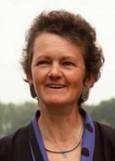
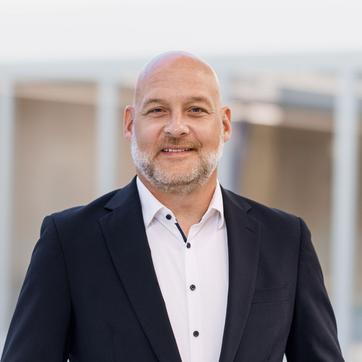
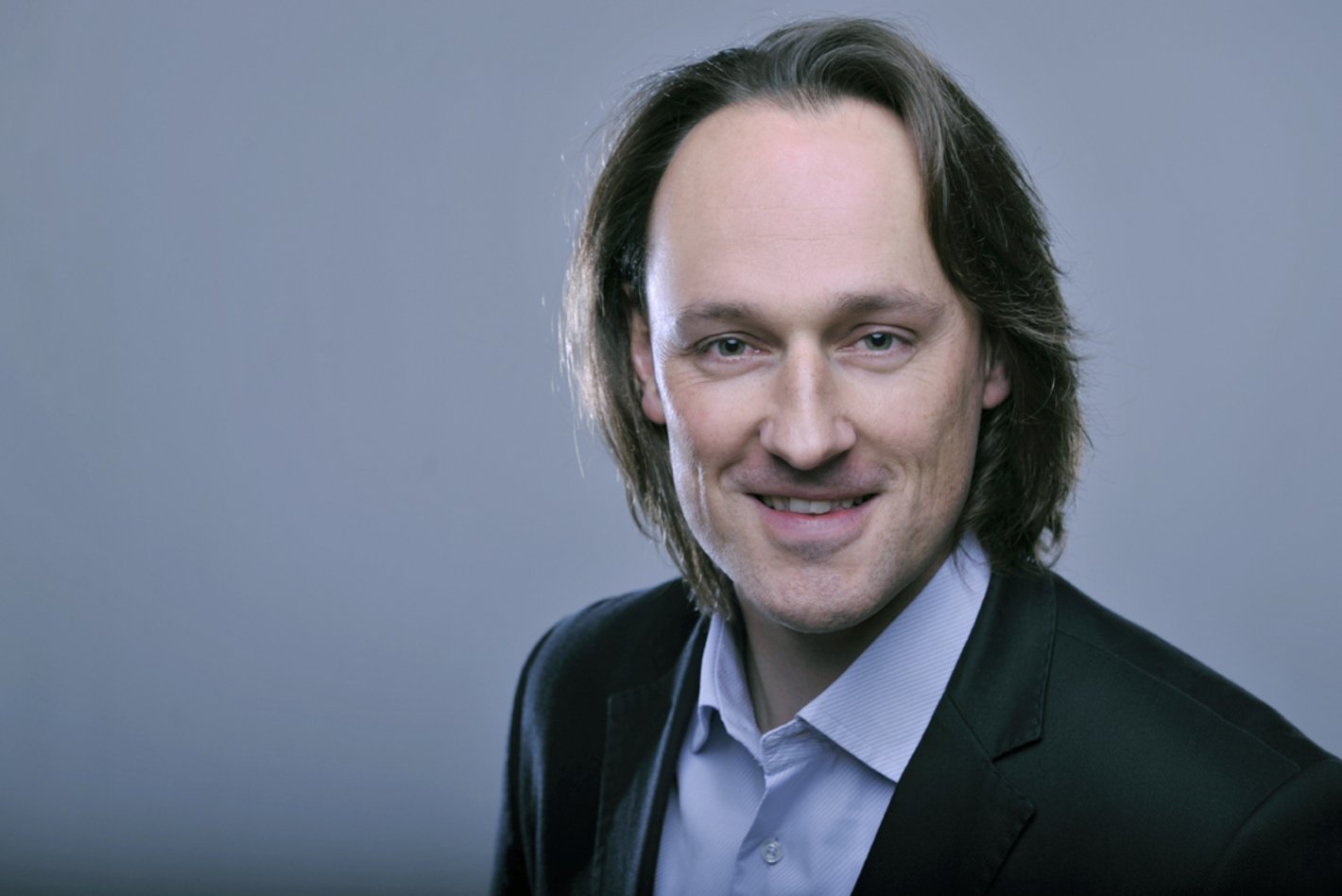
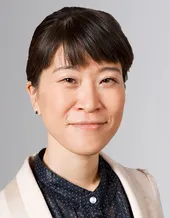
Prof. Dr. Leo van Waveren is a Professor and Head of the Technical Didactics Group at RheinMain University of Applied Sciences (RPTU/Koziel). His academic career includes postdoctoral research at the University of Stuttgart (2018-2022) and academic roles at Technische Universität Kaiserslautern. He holds a PhD (Dr. phil.) from the University of Stuttgart (2017) and a Diplom in Technikpädagogik (Dipl.-Gwl. Informatik/Chemie). His research focuses on vocational education, ICT integration in teaching, and the impact of artificial intelligence (AI) on education. Recent work emphasizes AI's role in curriculum design and teacher training. He actively participates in national and international conferences, delivering keynote speeches on topics like generative AI in classrooms and digital transformation in vocational training. Research interests include technical competency modeling, dual education systems, and educational technology. Notable contributions include studies on vocational competencies in automation technology and teacher job satisfaction across career pathways. His work bridges theoretical frameworks with practical applications, such as smartphone-based experiments in STEM education. Prof. van Waveren leads the RPTU's efforts in digital education initiatives, including the DIGILL@Praxis program. He collaborates with regional and international institutions to advance educational innovation. Despite no listed awards, his extensive publication record and active speaking engagements underscore his scholarly impact.
Prof. Stefan Sieber is a Professor at the Leibniz Centre for Agricultural Landscape Research (ZALF), leading the 'Sustainable Land Use in Developing Countries' working group under Program Area 2 'Land Use and Governance'. His expertise spans food security, climate change adaptation, bioenergy systems, and agricultural policy. He holds a doctoral degree (Dr. agr. habil.) from Humboldt University of Berlin. His work emphasizes decision support systems for sustainability, policy coordination, and knowledge management in international development contexts. Research interests focus on interdisciplinary approaches to sustainable land use, integrating socioeconomic factors with ecological resilience. Recent projects include analyzing wildfire impacts in Cameroon, stakeholder dynamics in forest landscape restoration (FLR), and policy interventions for deforestation-free cocoa production in Côte d'Ivoire. He coordinates global research initiatives, advising on climate-smart agricultural practices and environmental governance frameworks. Publications highlight FLR adoption in Togo, climate change impacts on crop yields in Kenya, and energy transitions in Zambia. His work bridges academic research with practical policy solutions, particularly in vulnerable regions facing climate and development challenges. Collaborations span Sub-Saharan Africa, Southeast Asia, and Latin America, emphasizing participatory methodologies and equitable resource management.
Viviane Tabar, MD, is a neurosurgeon-scientist and Chair of the Department of Neurosurgery at Memorial Sloan Kettering Cancer Center (MSKCC). Her clinical expertise focuses on brain tumor surgery, including complex gliomas, meningiomas, and skull base tumors. Her research lab explores stem cells for brain repair and tumor modeling. Key projects include using human pluripotent stem cells to model pediatric gliomas and developing therapies for radiation-induced brain injury. She leads collaborations with the Center for Stem Cell Biology and Brain Tumor Center at SKI. Her lab’s work aims to advance cell-based therapies for Parkinson’s disease and identify novel treatments for brain tumors like diffuse intrinsic pontine glioma (DIPG). Education: MD from the American University of Beirut. Affiliations: Memorial Hospital Research Laboratories, Cancer Biology & Genetics Program, Center for Cell Engineering, Center for Stem Cell Biology, Gerstner Sloan Kettering Graduate School. She also holds leadership roles in translational research initiatives, including NYSTEM consortium grants. Labs/Teams: The Viviane Tabar Lab collaborates with the Allis Lab, Studer Lab, and Soulet Lab. Current projects include drug screening for epigenetic therapies targeting histone mutations in tumors and optimizing stem cell-derived dopamine neurons for clinical trials.
Claudia Pahl-Wostl is a full professor for resources management at the Institute for Environmental Systems Research (USF) at the University of Osnabrück, Germany. She holds a dual affiliation with both the Institute for Environmental Systems Research and the Institute of Geography, working from room 66/106 at Barbarastr. 12 in Osnabrück. Professor Pahl-Wostl is an internationally leading scholar specializing in governance and adaptive management of water resources, with particular expertise in the role of social and societal learning in environmental systems. Her research builds on systems science foundations that acknowledge the complex and often unpredictable dynamics of the systems being managed. Her work spans multiple critical areas including adaptive governance, transformation processes toward sustainability, global water governance within multi-level systems, and conceptual frameworks for analyzing social-ecological systems. Her recent research has expanded to address the water-energy-food nexus, SDG implementation, and social-ecological network analysis, reflecting an evolving focus on integrated approaches to global sustainability challenges. The publications demonstrate a clear trajectory toward increasingly complex, interconnected systems analysis with emphasis on governance structures capable of addressing multi-scalar environmental challenges. Her scientific achievements have been recognized with the prestigious Bode Foundation Water Management Prize in 2012 for her pioneering interdisciplinary work on 'Governance in times of change' and comparative analyses of water governance in large river basins. Professor Pahl-Wostl teaches courses in Adaptive Management, Participatory Modeling, Environmental Risk Analysis and Governance, Actor-based and Social Network Analysis, Complex Adaptive Systems, Rule-based Modeling, and Adaptive Governance and Political Steering, reflecting the interdisciplinary nature of her research program.
Dr. Inés Recio is an academic director at the Heidelberg Center Latin America (HCLA) in Santiago, Chile, and a lecturer in legal translation at the Pontifical Catholic University of Chile. She holds a PhD in Modern Languages (summa cum laude) from Heidelberg University (2019) and has extensive experience in applied linguistics, discourse analysis, and translation studies. Her research focuses on experimental pragmatics, cognitive linguistics, and the processing of discourse markers in Spanish and other languages. Education: PhD, Faculty of Modern Languages, University of Heidelberg (2013–2019) Master of Arts in Applied Linguistics, Universidad Nebrija (2009–2011) Bachelor's in Translation and Interpreting, Universidad Pontificia Comillas (2000–2004) Research Interests: Her work explores how procedural meaning influences second language processing, with a focus on connectives and discourse particles. She employs experimental methods, including eye-tracking, to analyze cognitive aspects of language use in multimodal contexts. Recent projects include studies on pandemic discourses in Latin America and multimodal literacy in education. Academic Roles: She serves on admissions committees for international law and governance programs and is a member of Heidelberg's Ibero-American Studies and Language and Cognition labs. She has led projects funded by DAAD, CONICYT, and others, focusing on discourse processing and cross-linguistic studies. Awards: Summa Cum Laude distinction for her doctoral thesis (2019). Other Qualifications: Sworn translator (German/Spanish, English/Spanish), certified examiner for Instituto Cervantes Spanish proficiency exams.
Prof. Dr. Ansgar Thiel is a Professor in the Department of Social Sciences at Eberhard Karls University Tuebingen. His work focuses on gerontology, public health, and sociological aspects of aging. He leads research in the HELP (Helping the Elderly to enjoy Long Complete lives) group, addressing stereotypes of elderly populations, physical activity promotion, and health behavior in aging societies. His interdisciplinary projects include the BaSAlt study on physical activity in nursing homes and studies on elite athletes’ health challenges. He collaborates with the Institute of Political Science and Policy Analysis, exploring social conflicts and institutional dynamics. Key research areas include: 1) Aging populations and social policies, 2) Physical activity interventions for elderly and marginalized groups, 3) Mental health in high-performance domains (sports, music), and 4) Sociological analysis of e-sports and digital culture. His work emphasizes participatory approaches and transdisciplinary collaboration with healthcare institutions and long-term care facilities. Publications span topics from analgesic use in elite sports to pandemic impacts on older adults’ social networks. He co-developed the GEKOS educational program to enhance youth health literacy and contributed to guidelines for occupational health management (BGM). His research bridges social sciences with practical health promotion strategies in diverse settings.
Prof. Sherry Suyu is an Associate Professor at the Technical University of Munich (TUM) and a Max Planck Fellow at the Max Planck Institute for Astrophysics (MPA). Her research focuses on probing the dark cosmos through gravitational lensing, dark energy, dark matter, and supermassive black holes. She leads the H0LiCOW program measuring the universe's expansion rate using lensed quasars and the HOLISMOKES program studying lensed supernovae. Her work has been supported by an ERC Consolidator Grant. Education and Affiliations: PhD in Physics from Caltech (2008), postdoctoral positions at UC Santa Barbara and Stanford University. Joint appointments at MPA (since 2016) and TUM. Member of the Excellence Cluster ORIGINS. Holds honorary positions including Emmy Noether Visiting Fellowship at Perimeter Institute (2018). Research Interests: Gravitational lensing, cosmic expansion rate, galaxy evolution, supernovae, tidal disruption events, and deep learning applications. Her group studies galaxy clusters, dark matter distribution, and cosmological models using lensing techniques. Awards: 2021 Berkeley Prize (AAS), 2024 ISIMM Senior Prize. Over 90 peer-reviewed publications. Teaches courses on extragalactic astrophysics and gravitational lensing at TUM. Labs/Teams: Head of the Observational Cosmology Group at TUM-MPA. Collaborates internationally with institutions in the US, Europe, Japan, and Taiwan. Supervises postdocs, PhD students, and bachelor/master researchers.
Prof. Dr. Wanja Wellbrock is a Professor at Heilbronn University's Faculty of Economics, focusing on Supply Chain Management, Sustainability, and Circular Economy. She leads the cooperative doctoral program with Tallinn University of Technology, focusing on 'Innovative Supply Chain Management in the Context of Industry 4.0 and Sustainable Management.' Her research spans funded projects like the 'Emission-free campus transport' (€200,000) and collaborations with organizations such as Hendricks, Rost & CIE and Lumics GmbH. Her academic roles include membership in the Senate Committee for Research, Transfer and Innovation, the Ethics Committee, and the Contact Point against Racism. She supervises doctoral students at the Schwäbisch Hall campus and actively contributes to international conferences and journals, including the 'Supply Management' symposium and 'GSI Journals Serie C.' Key research themes include sustainable procurement, risk management in supply chains, and digital technologies in logistics. Recent work explores circular economy innovations, cross-cultural communication, and the environmental impact of consumer choices. Research Collaborations: Philips University of Marburg (Innovative Supply Chain Management) Lumics GmbH (Process Orientation and Disruption Management) Grants: €200,000 from the Baden-Württemberg Ministry for 'Emission-free Campus Transport.' Her publications address sustainability in various sectors, including automotive, construction, and retail, with a focus on practical case studies and policy implications.
Prof. Katja Gelbrich is a Full Professor of International Management at the Catholic University of Eichstätt-Ingolstadt, leading the Department of Business Administration and International Management. She coordinates academic programs including the Bachelor's in Management & Marketing, a Master's Double Degree with Toulouse Business School, and doctoral studies. Educational Background: PhD in Marketing from University of Stuttgart (2001–2006) Postdoc in Business Administration at University of Stuttgart (2002–2006) Diploma in Business Administration from TU Dresden (1995–1997) Undergraduate studies in Business, Korean and Japanese Studies at Humboldt University Berlin (1990–1995) Research Focus: Her work centers on automated agents in marketing, digital services, cross-cultural consumer behavior, and service recovery strategies. Key areas include robotic customer service agents, virtual companions in e-commerce, and cross-national product recall management. Awards & Recognition: 2023 Best Conference Paper Award (Hanoi) 2022 Best Paper in Track Award (Glasgow) 2015 Teaching Excellence Award (Eichstätt) 2005 Textbook Award for Intercultural Marketing Professional Experience: Prior roles include Full Professor at TU Ilmenau (2006–2011) and managing a market research firm (2001–2006). She has held leadership positions in data mining at DaimlerChrysler and rejected multiple chaired professorships at other universities.
Prof. Dr. Michael Herschelmann is a Professor for Social Work with a focus on Methods and Action Concepts at the University of Applied Sciences Emden/Leer. He holds a Doctorate in Philosophy and is a Diplom-Pädagoge in Social Work/Social Pedagogy. His primary affiliations include the Social Work and Health faculty, where he has served as Dean (2020-2022) and currently chairs the Practical Training Commission. His research emphasizes child protection in rural areas, prevention of sexual violence against children and youth, gender studies, and methodological innovations in social work. Notable projects include the EU-funded GenderSAFE initiative addressing gender-based violence in academia and comparative studies between German-Russian child protection systems. He actively collaborates with institutions like the Niedersachsen Kinderschutz Centers and the Stiftung Kinderschutz im Zentrum. Prof. Herschelmann’s teaching spans methodological social work practice, child protection diagnostics, and youth welfare policy. He leads projects exploring TikTok’s role in child protection, bystander intervention programs, and rural community engagement strategies. His work bridges academic research with practical implementation through participatory methods and policy advocacy. Awards and recognitions are not explicitly listed, though his extensive publication record and leadership roles highlight sustained professional impact. He advises numerous institutional bodies including accreditation processes and ethical oversight committees, underscoring his commitment to institutional integrity and student welfare.
Alin Deutsch is a Professor of Computer Science at the University of California, San Diego (UCSD), specializing in database systems, graph databases, and formal verification. He has contributed significantly to research areas including query optimization, data integration, and privacy-preserving systems. His work spans theoretical foundations and practical implementations, such as the Linked Data Benchmark Council (LDBC) and the TigerGraph database system. He co-authored over 100 papers and has been involved in major conferences like SIGMOD and VLDB. Research interests include graph query processing, parallel computing, data-centric business processes, and automated system verification. Recent work focuses on scalable hybrid analytics and graph databases. Deutsch is also active in database education, co-authoring a paper on UCSD's database curriculum. He has led projects in privacy-aware systems, such as policy-aware location-based services, and contributed to tools like CLIDE for interactive query formulation in service-oriented architectures. His collaborations involve industry partners like TigerGraph and academic institutions globally.
Balázs Fábián is a postdoctoral researcher at the Max Planck Institute of Biophysics in the group of Gerhard Hummer. He holds a PhD from the University Bourgogne Franche-Comté (France) and Budapest University of Technology and Economics (Hungary). His research focuses on molecular dynamics simulations of lipid membranes and viral systems, particularly studying viral budding mechanisms in enveloped viruses like HIV. Fábián’s work bridges computational biophysics and membrane biology, with applications ranging from anaesthesia mechanisms to neurodegenerative diseases. Education: BSc and MSc in Chemical Engineering from Debrecen and Budapest Universities (Hungary), followed by a PhD in Biophysics. Previously, he conducted postdoctoral research at the Czech Academy of Sciences and the Max Planck Institute. Research Interests: Computational modeling of lipid bilayers, viral membrane interactions, anaesthetic effects on membranes, and protein aggregation in neurodegenerative contexts. His methods include molecular dynamics simulations and coarse-grained modeling (e.g., Martini force field). Teaching and Mentorship: Guides junior researchers in computational techniques and simulation methodologies. Active in conference presentations and publication preparation. Future Goals: Aims to lead a junior research group via the Emmy Noether program, focusing on advancing computational tools for membrane systems and viral dynamics.
Prof. Dr. Hans-Peter Piepho is a faculty member at the University of Hohenheim , serving as Director of Biostatistics (340c) within the Institute of Crop Science . His research focuses on advanced statistical methods for plant sciences, including genomic prediction, spatial modeling of field trials, and network meta-analysis. Key research areas: Genotype-environment interaction, mixed model applications, and experimental design in agriculture. Collaborations span plant breeding, cultivar testing, and environmental stress analysis. His group emphasizes mixed model procedures as the backbone of methodological innovation. Recent publications highlight climate change adaptation, nitrogen optimization, and agroforestry yield dynamics. Contact: piepho@uni-hohenheim.de | Fruwirthstr. 23, Institute Building, 211, Stuttgart, Germany
Dr. Fabian Kratzlmeier serves as a Senior Research Fellow at the Max Planck Institute for Tax Law and Public Finance in Munich, specializing in Business and Tax Law. He also lectures at the University of Regensburg, where he teaches seminars on current issues and developments in corporate law. His academic credentials include law studies at LMU Munich, McGill University, and the University of Regensburg, with First State Examination in Law completed in 2017. He undertook the German legal traineeship at the Higher Court of Appeals Nuremberg, including placements at various courts and a U.S. law firm's London office, completing his Second State Examination in 2019. He earned an LL.M. from the University of Chicago Law School in 2022 and completed his Ph.D. at the University of Regensburg with a thesis on cross-border preventive restructurings. Dr. Kratzlmeier's research centers on Private Law with particular expertise in German, European and International Business Law. His work critically examines Commercial, Corporate and Bankruptcy Law, with special focus on cross-border restructuring mechanisms. He investigates how companies navigate different regulatory environments during financial distress, analyzing creditor protection mechanisms, jurisdictional conflicts in international insolvency cases, and harmonization challenges within European restructuring frameworks. His scholarship bridges theoretical legal analysis with practical case studies, providing valuable insights for both academic and practitioner audiences. His recent publications demonstrate consistent engagement with European insolvency law, examining pre-pack procedures, shareholder loans in international contexts, and implications of partnership law reforms on property registration systems. His work often addresses practical implementation challenges of cross-border restructuring mechanisms within the European legal framework. YANIL Research Prize for Innovative and Outstanding Research (2023, first prize) Juratisbona-Prize for outstanding Ph.D. thesis (2023) Stitching Bob Wessels Insolvency Law Collection, European Insolvency Law Workshop Leiden (2023, third prize) Honors for the highest score in the Second State Examination class of 2019/I (2021) JZ-Prize for outstanding academic achievements (2017) Dr. Kratzlmeier has received scholarship support from the Bavarian Academic Elite Network Program and the German-American Fulbright Commission. At the University of Regensburg, he teaches courses on corporate law, contracts, commercial law, partnership law, and strategies for financial distress. He has presented his research at numerous international conferences across Europe and North America, including events in Bologna, Bonn, Sorrento, Luxembourg, Berlin, San Diego, and Leiden. His scholarly contributions address critical challenges in harmonizing European insolvency frameworks and provide practical guidance for cross-border business restructurings. Through his active engagement with the academic community via workshops, guest lectures, and international collaborations, Dr. Kratzlmeier continues to advance understanding of complex issues at the intersection of business law, insolvency proceedings, and international legal frameworks.
Dongheui Lee is an Assistant Professor at the Institute of Automatic Control Engineering (LSR) within the Faculty of Electrical Engineering and Information Technology at Technische Universität München (TUM). She leads the Dynamic Human Robot Interaction for Automation System Lab. Her research focuses on human motion understanding, physical human-robot interaction, and machine learning in robotics. Education: B.S. and M.S. in Mechanical Engineering from Kyunghee University (2001-2003), PhD in Mechano-Informatics from the University of Tokyo (2007). Prior roles include research scientist at KIST Korea (2001-2004) and project assistant professor at the University of Tokyo (2007-2009). Research Interests: Human-robot collaboration, probabilistic robotics, motion recognition, and incremental lifelong learning mechanisms. She has contributed to advancements in motion primitives, compliant physical interaction, and real-time object tracking. Selected Awards: Finalist for KUKA Service Robotics Best Paper Award (2009), Hirose Scholarship (2006-2007), and multiple grants from KRF, KOSEF, and international robotics competitions. Key Publications: Focus on prioritized inverse kinematics, motion imitation, and adaptive control systems. Her work bridges robotics theory and practical applications in humanoid robots and human-robot interaction.