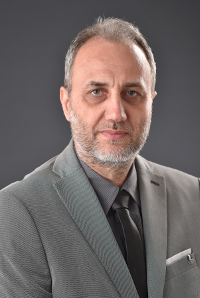
Dr. Antony McCabe is a Lecturer in Computer Science who divides his time between academia and the Computational Biology Facility. His work focuses on bridging artificial intelligence with biomedical challenges through software development, data analysis, and user interface design. Lecturer in Computer Science Member of Computational Biology Facility Research Interests McCabe specializes in applying AI techniques like neural networks and large language models to biomedical problems. His contributions include: Developing the lcmsWorld 3D visualization software for mass spectrometry Advancing the Allele Frequency Net Database for HLA diversity analysis Creating immunoinformatics tools for ethnicity-specific vaccine design Building infrastructure for biomedical data processing and storage Research Trends His publications reveal a consistent focus on computational biology infrastructure (4/6 papers), AI applications in immunology (3/6), and software development for proteomics (2/6). Key themes include data standardization, ethnic diversity considerations, and visualization techniques. Current Projects He is currently tuning large language models to analyze biological literature through a Biotechnology & Biological Science Research Council (BBSRC) grant (2024-2026). Teaching McCabe co-ordinates the COMP222 module on computer game design while also teaching algorithmic game theory, programming languages, and human-centric computing.
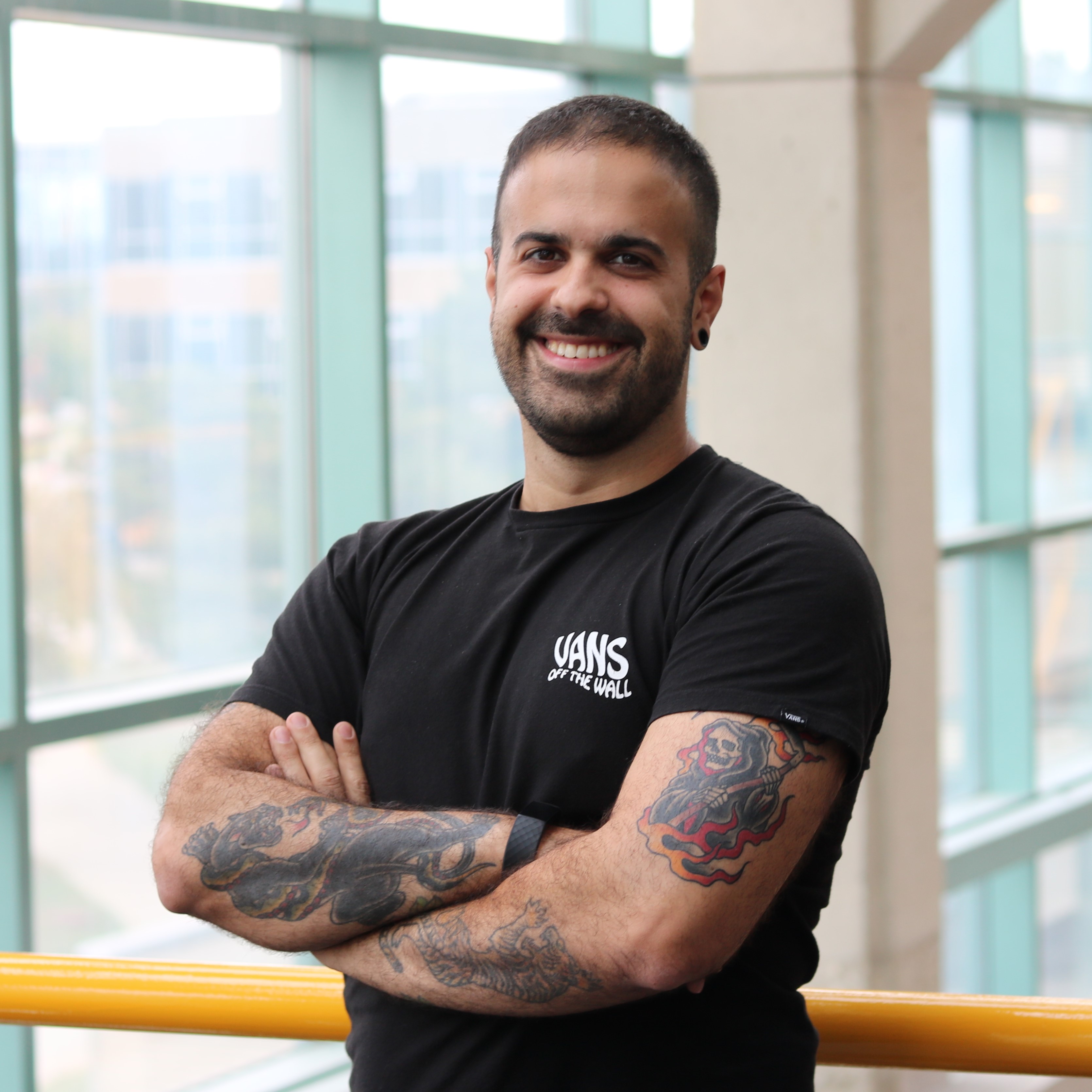
Danny Caballero is a Professor at Michigan State University with joint appointments in the Department of Physics & Astronomy and the Department of Computational Mathematics, Science and Engineering . He holds the Lappan-Phillips Chair of Physics Education and co-directs the Physics Education Research Lab , while also serving as a principal investigator for the Learning Machines Lab and research faculty at the University of Oslo’s Center for Computing in Science Education. His research focuses on: How computational tools and scientific practices influence learning Cognitive and sociocultural theories in STEM education Departmental valuation of computational methods WCAG-compliant open educational resource development Recent publications highlight: Statistical modeling in physics education Computational literacy assessment Graduate admissions policy analysis Machine learning applications in educational assessment Scientific recognitions include: Lappan-Phillips Chair (2025) $300,000 NSF grant for computational education tools Additional roles: Founder of OER-Forge platform Union of Tenure System Faculty organizer Editor for upcoming Computing in Physics Education book
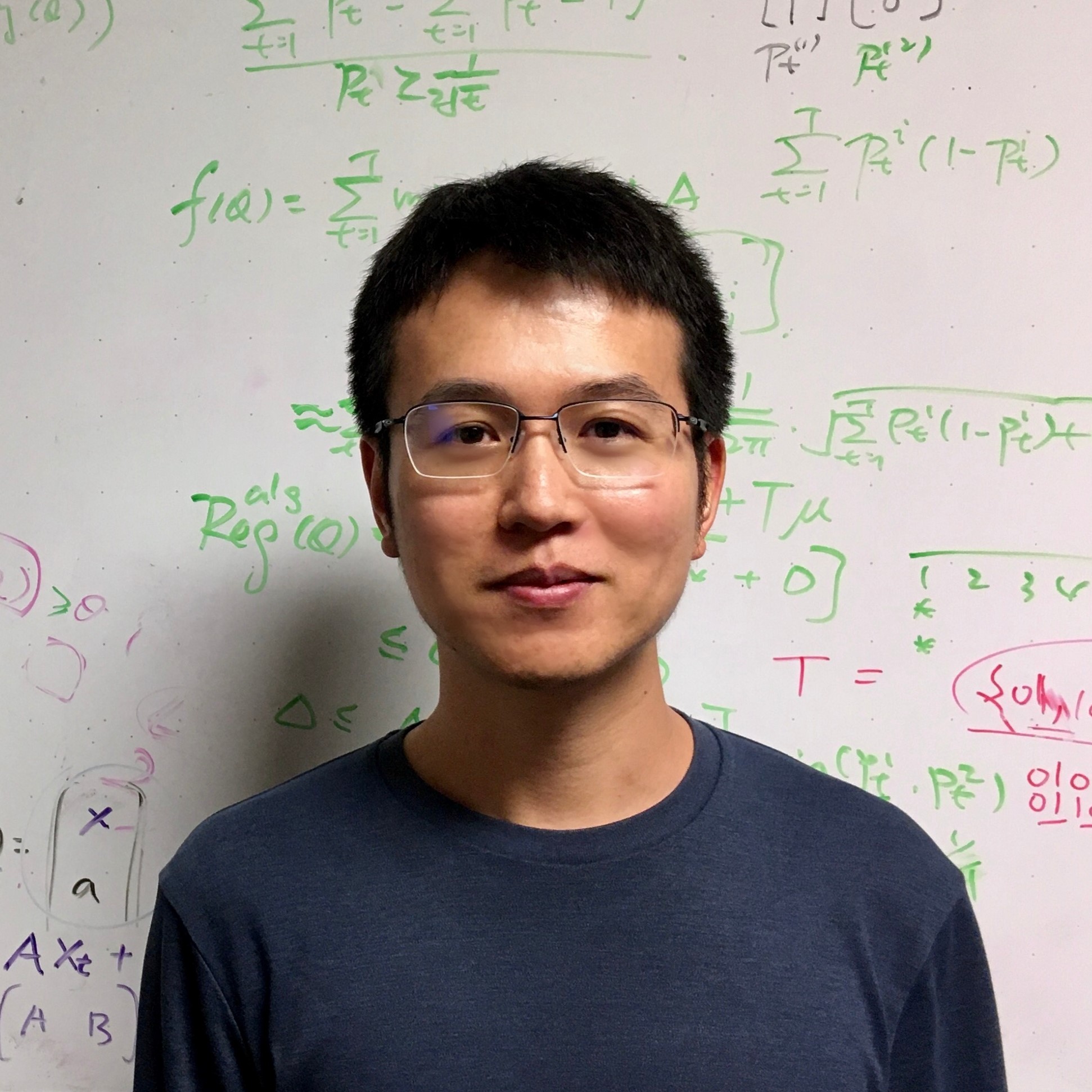
Yikun Ban is a tenure-track Associate Professor in the School of Computer Science and Engineering at Beihang University, where he is a member of the State Key Laboratory of Software Development Environment. He earned his PhD in Computer Science from the University of Illinois Urbana-Champaign (2023), MS in Computer Science from Peking University (2019), and BS in Software Engineering from Wuhan University (2016). PhD: University of Illinois Urbana-Champaign (2023) MS: Peking University (2019) BS: Wuhan University (2016) His research focuses on principled algorithms for reinforcement learning with human feedback, neural contextual bandits, and exploration-exploitation problems. He develops frameworks combining deep learning with bandit theory for applications in recommendation systems, disinformation detection, and dynamic graph learning. Recent publications address: Robust neural contextual bandits (NeurIPS 2024) Graph neural bandits (KDD 2023) Meta-learning for bandit scheduling (NeurIPS 2023) Clustering in contextual bandits (WWW 2021, AAAI 2021) Honors include the NeurIPS Scholar Award and recognition as ICML Outstanding Reviewer . His open-source LOCB repository provides Python implementations for contextual multi-armed bandit algorithms with local clustering, supporting applications in recommendation systems and online learning.
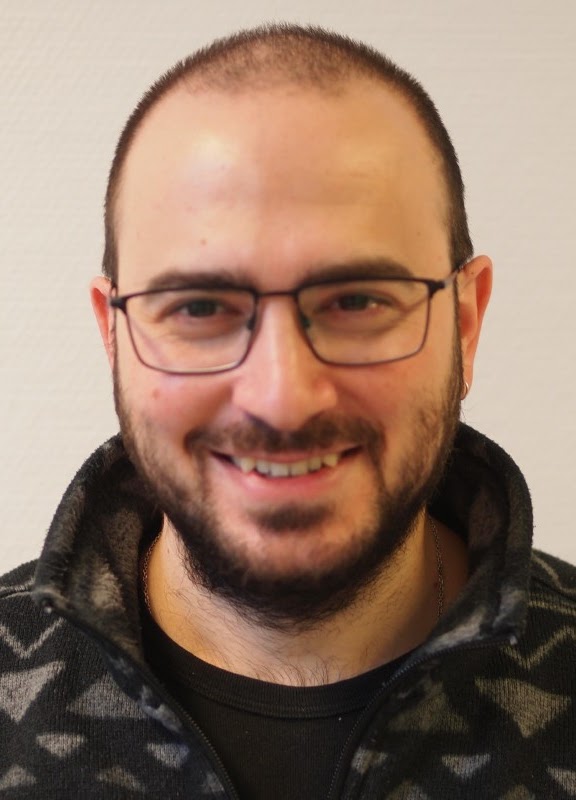
Emily Oh Navarro is a Continuing Lecturer in the Department of Informatics at the Donald Bren School of Information and Computer Sciences, University of California, Irvine. She has been actively involved in software engineering education, focusing on innovative teaching methods and simulation-based learning environments. Dr. Navarro earned her Ph.D. in Information and Computer Sciences from UC Irvine in 2006, with her dissertation titled "SimSE: A Software Engineering Simulation Environment for Software Process Education." She also holds an M.S. in Information and Computer Sciences and a B.S. in Biological Sciences, both from UC Irvine. Dr. Navarro's research primarily focuses on software engineering education, particularly using simulation and game-based approaches to teach software processes. Her work centers around SimSE, an educational software engineering simulation environment designed to help students learn and practice software engineering processes in an interactive, graphical setting. She has extensively explored how learning theories can be applied to improve software engineering education, investigating various educational approaches and their effectiveness. Her research demonstrates how simulation environments can overcome the limitations of traditional lectures and small-scale class projects by allowing students to experience complex software engineering processes that would be infeasible to practice in real-world academic settings. Dr. Navarro's publications reveal a consistent focus on simulation-based learning tools for software engineering education. Her work spans from theoretical explorations of learning theories to practical implementations of educational tools like SimSE and Problems and Programmers. She has conducted multi-site evaluations of her educational tools, demonstrating their effectiveness across different institutions and student populations. Her research shows progression from conceptual frameworks to practical implementations and rigorous evaluations, establishing her as a significant contributor to the field of software engineering education. Dr. Navarro teaches numerous courses in software engineering and design, including: Informatics 43: Introduction to Software Engineering Informatics 113: Requirements Analysis and Engineering Informatics 117: Project in Software System Design Informatics 121: Software Design I Informatics 122: Software Design II Informatics 191: Senior Design Project ICS 45J: Programming in Java ICS 139W: Critical Writing on Information Technology SWE 241P: Applied Data Structures and Algorithms SWE 245P: GUI Programming SWE 246P: Mobile Programming SWE 272P: Project Management Her teaching methodology reflects her research interests, emphasizing practical experience with software engineering processes through simulation-based learning. While specific information about her advising and grants is limited in available materials, her extensive research on educational methods suggests involvement in educational research projects and likely mentorship of students in software engineering projects. Dr. Navarro's primary research contribution is the SimSE project, which has evolved through multiple iterations and evaluations. This simulation environment represents a significant innovation in software engineering education, addressing the critical gap between theoretical knowledge and practical application in software process management. Her work continues to influence how software engineering is taught at UC Irvine and potentially at other institutions through her multi-site evaluations.
Miloš Racković serves as a full Professor in the Department of Mathematics and Informatics at the University of Novi Sad, Serbia. He maintains active academic engagement through the Laboratory for the development of information systems, with his office located in the Information technologies and systems office (DMI&DF) on the second floor, room 49. Contact is available via telephone (485)-2868 or email rackovic@dmi.uns.ac.rs, and his personal website (http://www.is.pmf.uns.ac.rs/rackovicm/) provides additional resources. His research spans foundational and applied computer science, with seminal contributions in fuzzy database systems including PFSQL query language development and prioritized fuzzy logic for relational databases and XML. He has pioneered deep learning methodologies through innovative classification techniques using negative and missing features in convolutional neural networks. Additional expertise includes high-performance computing implementations of Lattice Boltzmann methods using OpenCL, robotics (symbolic modeling and trajectory planning), and blockchain applications for Industry 4.0 production processes. His sports analytics work applies neural networks to basketball player and referee movement analysis. Analysis of his 2012-2025 publications reveals a strategic evolution toward interdisciplinary applications, particularly in industrial transformation (blockchain-enabled traceability) and sports analytics. His work consistently bridges theoretical computer science with practical implementations, demonstrating increasing focus on real-world problem solving while maintaining strong foundations in database theory and computational methods. Professor Racković leads the Laboratory for the development of information systems, which focuses on advancing information system methodologies through formal modeling extensions (including Petri net innovations) and practical implementations for uncertainty management. The laboratory's work spans from foundational research in fuzzy logic systems to applied projects in high-performance computing and blockchain integration, fostering innovation in information technology development.
Michel Gendreau is a Full Professor in the Department of Mathematics and Industrial Engineering at Polytechnique Montréal. He holds a B.Com. from McGill University, and both an M.Sc. and Ph.D. from the University of Montreal. His research focuses on operational research with applications in logistics, transportation, energy systems, and telecommunications. He is affiliated with several prestigious research centers including the Institute for Data Valorization (IVADO), the Trottier Energy Institute (IET), and the Interuniversity Research Center on Enterprise Networks, Logistics and Transport (CIRRELT). Professor Gendreau's research interests span operational research, with particular emphasis on stochastic optimization methods applied to transportation and logistics problems, energy systems management, and telecommunications. His work often addresses real-world challenges through mathematical modeling and algorithm development, with applications ranging from bike-sharing systems to emergency response planning and electricity grid management. The analysis of his recent publications reveals a strong focus on vehicle routing problems under uncertainty, maintenance optimization, and the integration of stochastic programming with machine learning techniques for improved decision making. Professor Gendreau has received numerous prestigious awards recognizing his contributions to the field of operations research. In 2022, he was named a Fellow of the International Federation of Operational Research Societies (IFORS). In 2010, he was awarded Fellow status by INFORMS (Institute for Operations Research and the Management Sciences). Most notably, in November 2015, he received the Robert M. Herman Lifetime Achievement Award from the Transportation Science and Logistics Society of INFORMS, which is considered the most prestigious distinction for operational researchers working in logistics and transportation. Throughout his career, Professor Gendreau has supervised 25 doctoral students and 18 master's students, contributing significantly to the development of the next generation of operations research experts. His research has been supported by numerous grants from organizations including NSERC (Natural Sciences and Engineering Research Council of Canada), with expertise recognized in Operational Research and Management Science (NSERC subject 1601) and Logistics (NSERC subject 1603). Professor Gendreau is actively involved in several research teams and laboratories, particularly those focused on data valorization, energy systems, and transportation logistics. His current work continues to push the boundaries of stochastic optimization and its applications to complex real-world problems, with recent publications addressing challenges in urban transportation, energy management, and emergency response systems.
Simon Oya is an Assistant Professor in the Department of Electrical and Computer Engineering at the University of British Columbia (UBC), Faculty of Applied Science. He holds a PhD in Information Technologies and Communications from the University of Vigo (Spain) and was previously a postdoctoral fellow at the Cryptography, Security and Privacy (CrySP) group at the University of Waterloo. His educational background includes: BSc, MSc, PhD from University of Vigo (Spain) Simon Oya's research focuses on designing and evaluating privacy-enhancing technologies with strong privacy and utility guarantees. He approaches privacy problems from a statistical perspective, using theoretical tools from signal processing and information theory to quantify privacy leakage and develop effective defenses. His primary research areas include: Privacy-preserving searchable encryption Machine learning privacy (particularly membership inference attacks) Anonymous communication systems Location privacy Differential privacy His publication record demonstrates a consistent focus on analyzing and improving privacy mechanisms across various domains. His recent work has particularly emphasized the intersection of machine learning and privacy, as well as advancing techniques for searchable encryption. His research methodology typically involves developing statistical models to understand privacy leakage and designing optimization-based approaches to improve privacy-utility tradeoffs. His notable scientific contributions include developing attacks against searchable encryption schemes to better understand their privacy limitations, and designing improved privacy mechanisms for location-based services. His work on statistical disclosure attacks against anonymous communication systems has also been influential in the field. As an educator, he teaches CPEN 442: Introduction to Cybersecurity at UBC. He actively seeks motivated graduate students interested in privacy research, particularly those with strong backgrounds in statistics, machine learning, or optimization.
James B. Higley is a Professor in the Mechanical Engineering Technology (MET) program at Purdue University Northwest's College of Technology. He has been at PNW since 1988, teaching courses like MET 46100 (Computer Integrated Design and Manufacturing) and MET 49500 (Senior Project), while managing the MET Program and conducting applied research with industry partners. Education: M.S. in Mechanical Engineering (Purdue University, 1987), B.S. in Mechanical Engineering (Purdue University, 1985). His research focuses on applied engineering technology collaborations with companies, particularly in packaging machinery and firearms fields. He holds five U.S. patents and emphasizes hands-on, project-based learning to bridge classroom theory with real-world applications. Recent publications highlight his work on evolving capstone projects for industry alignment and integrating ethics into engineering education. These articles reflect his commitment to practical pedagogy and professional responsibility. His teaching philosophy prioritizes minimizing lectures in favor of lab projects, where students build confidence through incremental challenges and group work. He leverages his industry experience to mentor students on technical and conceptual problem-solving.
Haipeng Luo is an Associate Professor at the Thomas Lord Department of Computer Science, University of Southern California, holding the IBM Early Career Chair. He previously worked as a Postdoctoral Researcher at Microsoft Research, NYC, and has held visiting roles at Google and Amazon. His research focuses on developing practical machine learning algorithms with strong theoretical guarantees, particularly in online learning, bandit problems, reinforcement learning, and game theory. PhD in Computer Science, Princeton University (2011–2016) BSc in Computer Science, Peking University (2007–2011) His work spans adversarial and stochastic environments, addressing challenges in reinforcement learning, game dynamics, calibration, and omniprediction. Recent publications highlight advancements in regret minimization, game equilibrium computation, and robust optimization frameworks. Key contributions include algorithms for zero-sum games, bandit problems with feedback graphs, and theoretical analyses of convergence properties in multi-agent systems. Scientific accolades include Best Paper Awards at COLT 2021, COLT 2018, NeurIPS 2015, and ICML 2015. He has received prestigious grants such as the NSF CAREER Award (2020), Google Faculty Research Award (2020), and NSF CRII Award (2018). His students have secured academic and industry positions, and he actively teaches graduate courses in machine learning and online optimization.
Romain Bordes is a Researcher in Applied Chemistry at Chalmers University of Technology, specializing in colloid and interface science with applications spanning sustainable materials development, art conservation science, and environmental remediation technologies. His work bridges fundamental chemical research with practical applications addressing contemporary challenges in cultural heritage preservation and green chemistry. Dr. Bordes' research interests focus on several interconnected domains: Development and application of amino acid-based surfactants and green chemistry solutions for sustainable applications Nanocellulose and biomaterials for art conservation, packaging, and textile applications Surface chemistry and interfacial phenomena in complex colloidal systems Novel separation techniques for environmental remediation, particularly heavy metal removal Sustainable materials development for cultural heritage preservation Analysis of Dr. Bordes' extensive publication record reveals a consistent trajectory toward increasingly sophisticated applications of colloid science. His recent work demonstrates a growing integration of advanced characterization techniques like acoustic levitation with traditional colloid chemistry approaches, enabling non-contact analysis of delicate materials. A significant portion of his research addresses practical challenges in art conservation, with particular emphasis on developing sustainable alternatives to traditional conservation methods. His work on beeswax nanoemulsions and nanocellulose-based consolidants represents innovative approaches to longstanding challenges in cultural heritage preservation. Dr. Bordes has secured substantial research funding from multiple prestigious sources including VINNOVA, the European Commission (EC), the Swedish Research Council (VR), and the Swedish Foundation for Strategic Research (SSF). His collaborative projects demonstrate strong interdisciplinary connections across chemistry, materials science, conservation science, and environmental engineering. The GREENART project (2022-2025) and NANORESTART project (2015-2018) particularly highlight his leadership in applying advanced materials science to cultural heritage challenges. His research group appears to focus on developing sustainable chemical solutions that address real-world problems at the intersection of environmental science, cultural preservation, and materials innovation, with particular emphasis on replacing hazardous chemicals with bio-based alternatives in conservation practices and industrial applications.
Georgios Arvanitidis is an Associate Professor at the Technical University of Denmark (DTU) in the Department of Applied Mathematics and Computer Science, specifically within the Section for Cognitive Systems (CogSys). He has established himself as a leading researcher in geometric machine learning, focusing on the application of differential geometry principles to enhance machine learning models. His work bridges theoretical mathematics with practical applications in artificial intelligence, with particular emphasis on understanding the geometric structure of data manifolds and latent spaces. Dr. Arvanitidis completed his educational journey with a Bachelor's degree from the Department of Informatics at the Aristotle University of Thessaloniki, followed by a Master's degree in Computer Science from Saarland University supported by the Max Planck Institute for Informatics. He earned his PhD at DTU's Cognitive Systems section under the supervision of Søren Hauberg, with additional research experience at Philipp Hennig's Probabilistic Numerics group. Prior to his current position as associate professor, he was a PostDoc at the Max Planck Institute for Intelligent Systems working with Bernhard Schölkopf. Dr. Arvanitidis's research primarily focuses on differential geometry in machine learning , where he explores how geometric structures can enhance representation learning and statistical modeling. His work in generative models investigates how learning the geometry of data manifolds can improve deep learning architectures. In the domain of deep learning theory , he examines why deep learning models generalize effectively on unseen data, with particular attention to the curvature properties of loss landscapes. His research in approximate Bayesian inference applies geometric principles to improve uncertainty quantification in neural networks. Through his innovative approaches, Dr. Arvanitidis has established himself as a leading researcher in geometric machine learning, contributing to both theoretical foundations and practical applications across various domains including robotics and life sciences. The publication trends of Dr. Arvanitidis reveal a consistent and evolving focus on geometric approaches to machine learning problems. His recent work (2023-2025) demonstrates increasing sophistication in applying Riemannian geometry to deep learning architectures, with particular emphasis on latent space geometry, optimization on manifolds, and geometric interpretations of neural network behavior. A notable pattern is the progression from foundational work on geometric representations to more applied research in areas like robotics and causal inference. His publications span top-tier conferences including NeurIPS, ICML, ICLR, and AISTATS, reflecting the high impact of his research. The interdisciplinary nature of his work is evident in collaborations across mathematics, computer science, and robotics domains, with recent papers addressing challenges in multimodal sampling, safety guarantees for dynamical systems, and counterfactual explanations. Dr. Arvanitidis has received several notable scientific awards and recognitions: Sapere Aude starting grant from the Independent Research Fund Denmark (DFF) GADL funding i-Rase, Pathfinder, and EIC (European Innovation Council) funding Best reviewer award for NeurIPS 2019 Best reviewer award for NeurIPS 2018 Best student paper award at Robotics: Science and Systems (R:SS) 2021 Dr. Arvanitidis actively mentors PhD students and researchers, currently supervising Alejandro Valverde, Johanna Gegenfurtner, and Albert Kjøller Jacobsen. He has previously co-supervised Alison Pouplin's PhD and worked with research assistant Georgios Pantis. His group receives substantial funding through multiple prestigious grants including the Sapere Aude starting grant from the Independent Research Fund Denmark, as well as European Innovation Council funding. He has been instrumental in creating opportunities for students interested in geometric machine learning, offering BSc and MSc thesis projects focused on generative models, deep learning theory, and optimization techniques. Dr. Arvanitidis also contributes significantly to the academic community as a reviewer for top conferences including ICLR and TMLR, and as an area chair for NeurIPS, ICML, AISTATS, and UAI. He co-organized the Machine Learning Summer School 2020 in Tübingen, further demonstrating his commitment to education and community building. Dr. Arvanitidis leads a vibrant research group focused on geometric machine learning within the Cognitive Systems section at DTU. His team includes multiple PhD students working on cutting-edge research at the intersection of differential geometry and artificial intelligence. The group has developed notable software tools, including the "geometric_ml" GitHub repository with over 70 stars, which contains implementations for applying Riemannian geometry in machine learning. His research has practical applications in robotics, where geometric approaches enable more robust motion planning, as evidenced by his work on "Reactive Motion Generation on Learned Riemannian Manifolds" which received a best student paper award. Additionally, his methodologies have found applications in life sciences, as mentioned in his 2022 AISTATS paper. The collaborative nature of his work is evident through extensive partnerships with researchers at institutions including the Max Planck Institute for Intelligent Systems, University of Cambridge, and various European universities. His recent news items indicate active engagement with the academic community through talks, conference presentations, and ongoing supervision of new PhD students joining his group.
Kirill Serkh is an Assistant Professor in the Department of Mathematics at the University of Toronto, with a cross-appointment to the Department of Computer Science. His research focuses on advanced numerical methods for solving complex mathematical problems. Key Research Areas: Numerical analysis, Scientific computing, Partial differential equations, Numerical linear algebra, Quadrature and approximation theory, Special functions His recent work explores high-order numerical schemes for PDEs on non-smooth domains, adaptive methods for oscillatory integrals, and efficient evaluation of Newtonian potentials. He has contributed to the development of hybrid boundary integral methods and spectral techniques for challenging computational problems. While no specific scientific awards are mentioned in the provided text, his publications demonstrate expertise in computational mathematics and interdisciplinary applications in fluid dynamics, wave propagation, and machine learning. His methodological innovations span both theoretical and applied domains.
Ben K. Grunwald serves as Professor of Law at Duke University School of Law, where he has been a faculty member since 2017 after completing a Bigelow Fellowship at the University of Chicago Law School. His scholarly work bridges legal theory and empirical analysis to address critical issues in criminal justice systems. JD, PhD in Criminology, AM in Statistics, and BA from the University of Pennsylvania Clerked for the Honorable Thomas Ambro on the U.S. Court of Appeals for the Third Circuit Bigelow Fellow at the University of Chicago Law School (2016-2017) Professor Grunwald's research program centers on evidence-based criminal justice reform, with particular emphasis on prosecutorial power dynamics, sentencing fairness, juvenile justice boundaries, and police accountability mechanisms. His methodological approach integrates advanced statistical techniques with legal scholarship to produce actionable insights for policymakers. Current projects examine racial bias in criminal records, optimal decarceration strategies, and the labor market consequences of police discipline. His recent publications demonstrate a consistent focus on translating empirical findings into practical legal reforms, particularly in law enforcement practices and juvenile justice systems. Through interdisciplinary collaborations with criminologists and statisticians, his work challenges conventional wisdom using rigorous data analysis while maintaining strong connections to constitutional principles and procedural justice. Professor Grunwald teaches foundational courses including Criminal Law and Criminal Procedure: Investigation, along with specialized seminars in Criminology and Criminal Procedure that emphasize empirical methodologies. His curriculum development reflects his commitment to training future lawyers in evidence-based legal practice and policy analysis.
Xinyu Jia is currently a Humboldt Research Fellow at the Engineering Risk Analysis Group, Technical University of Munich since June 2024, and concurrently serves as Associate Professor in the Department of Mechanical Engineering at Hebei University of Technology, China since October 2022. Her research focuses on advancing uncertainty quantification, structural reliability, and risk assessment methodologies for engineering systems. Her academic background includes: PhD in Mechanical Engineering, University of Thessaly, Greece (2018-2021) Bachelor of Engineering and Master of Science in Mechanical Engineering, Hunan University, China (2011-2018) Dr. Jia specializes in Bayesian learning frameworks for physics-based models, with particular expertise in uncertainty propagation in structural dynamics and industrial robotics applications. Her work develops hierarchical Bayesian approaches that integrate multi-level data to enhance predictive accuracy for complex engineering systems, addressing critical challenges in structural health monitoring and risk-informed decision making. Analysis of her 2022-2023 publications reveals a concentrated research trajectory in applying Bayesian inference to structural dynamics, with emphasis on hierarchical modeling techniques, variational inference schemes, and nonlinear model updating. These contributions predominantly appear in top-tier mechanical engineering journals, demonstrating methodological innovations that bridge theoretical statistics with practical engineering reliability problems. Her scientific recognition includes: Humboldt Research Fellowship (2023) Marie Curie Early Stage Researcher Fellowship (2018) No specific student advisement records are documented, though her Associate Professor role implies teaching responsibilities. Her fellowship awards represent significant research funding supporting her work in uncertainty quantification. As an active member of TUM's Engineering Risk Analysis Group, she contributes to high-impact projects including digital twins for ships, S3UQDyn, Navigating Risk, and infrastructure resilience initiatives like BIG-ROHU and INFRA.RELEARN, focusing on probabilistic risk modeling across civil and mechanical engineering domains.
Annick Hubin is a Professor in the Department of Sustainable Materials Engineering at the Faculty of Engineering, Vrije Universiteit Brussel. She serves in additional leadership roles including R&D Central management and as Head of a Research Group. Her work focuses on electrochemical processes with applications in materials engineering, corrosion science, and sustainable technologies. Her research interests span electrochemical kinetics, thermodynamics of aqueous solutions, electrode processes, electroreduction of metals and alloys (plating, extraction, refining, recycling), and environmental electrochemistry. She specializes in investigating basic electrochemical reactions using techniques such as potentiometric titrations, voltammetry, chronoamperometry, chronopotentiometry, and impedance measurements. Her work also examines mass transport in electrochemical processes and the action of organic inhibitors for metal deposition or dissolution reactions. Her recent publications reveal a strong focus on corrosion science, battery technologies, and electrochemical materials. There is a clear trend toward applying advanced characterization techniques and machine learning to solve complex problems in electrochemistry and materials science. Her research increasingly addresses sustainability challenges, particularly in battery technology and low-carbon solutions. Professor Hubin actively supervises doctoral students and participates in numerous research projects, demonstrating her commitment to mentoring the next generation of scientists and engineers. She has secured substantial research funding for projects spanning fundamental and applied research in materials engineering. She leads or participates in several significant research initiatives including DESTINY (Low-carbon solutions network), fundamental research on sulfide-based all-solid-state batteries, and projects focused on atmospheric corrosion prediction using machine learning. Her laboratory appears to specialize in electrochemical characterization and materials development for energy applications.