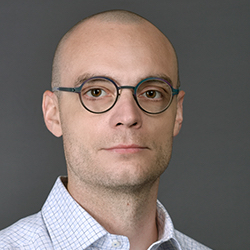
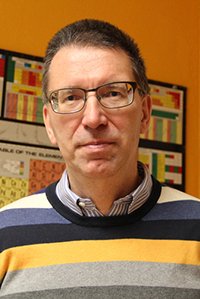
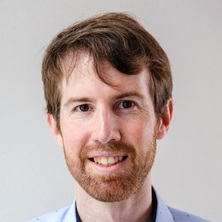
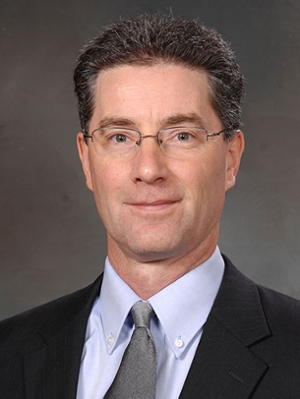
Professor Darren Robinson holds the Chair in Architectural and Urban Sciences at the University of Sheffield 's School of Architecture and Landscape, where he serves as Director of Research. His work bridges social, building, and urban physics through multiscale modeling approaches. RCUK Innovation Fellowship (2018-2021, £268k) Leverhulme Research Programme Grant (2015-2020, £3.4M) EPSRC grant for Model-Predictive Control in buildings (2016-2019, £541k) His research focuses on statistical modeling of human behavior in buildings, urban energy simulation , and integrated assessment modeling for climate policy. Key contributions include stochastic occupant behavior models and urban metabolism frameworks. Notable awards include the Sustainability Science Best Paper Award (2020) , CIBSE Napier-Shaw Medal (2007), and Fellowships from FIBPSA and the Research Council of Norway. He leads the People, Environments and Performance and Multiscale Simulation research groups.
Jörg Spenkuch is an Associate Professor of Managerial Economics & Decision Sciences at Kellogg School of Management, Northwestern University, where he has been since 2013. He holds a Ph.D. in Economics (2013) and M.A. (2009) from the University of Chicago, and dual B.A. degrees in Economics and Business Administration (2007) from the University of St. Gallen, Switzerland. Education: Ph.D., 2013, Economics, University of Chicago M.A., 2009, Economics, University of Chicago B.A., 2007, Economics, University of St. Gallen B.A., 2007, Business Administration, University of St. Gallen Professor Spenkuch's research bridges political economy and applied microeconomics , with a focus on ideological behavior, strategic decision-making, and social dynamics. His work examines topics like: Political Economy: Campaign finance, electoral accountability, and ideological sorting. Behavioral Economics: Satisficing behavior, memory-driven choices, and strategic voting. Public Policy: School desegregation effects, bureaucratic performance, and immigration-crime linkages. His recent publications analyze: Long-term ideological shifts from 1975 school desegregation (2025 working paper). Memory premiums in decision-making (2025 working paper). Complexity's role in chess strategy (2024 Review of Economic Studies ). Political accountability during natural disasters (2025 American Economic Journal ). Scientific Recognition: MinE Best Paper Award (European Economic Association) Chair's Core Teaching Award Deutschlands "Top 40 unter 40" (Capital magazine) FEEM Award (European Economic Association) Best Paper Award, RGS Doctoral Conference At Kellogg, he teaches Leadership and Crisis Management (PACT-440-5) and Business Analytics (DECS-435-0). His work has been published in top journals like Econometrica , American Economic Review , Quarterly Journal of Economics , and Review of Economic Studies , covering topics from partisan spatial sorting to expressive vs. strategic voting behavior.
Lisa Wu Wills is an Assistant Professor in the Department of Computer Science and Electrical and Computer Engineering at Duke University, leading the APEX Lab (Application-driven Programmable Efficient Accelerated Systems Lab). Her research focuses on hardware acceleration for big data analytics in genomics, graphs, and databases to advance healthcare and natural sciences. Education: Ph.D. in Computer Science, Columbia University, 2014 Research Interests: Dr. Wills pioneers computer architecture and hardware-software co-design to create efficient accelerators for emerging applications. Her work targets genomics , graph analytics , and database systems , emphasizing simplified hardware deployment and energy efficiency for scientific breakthroughs in healthcare and AI. Publication Trends: Her 2022-2025 publications reveal a strong focus on open-source frameworks (Beethoven, PyTFHE) for accelerator development, hardware acceleration in privacy-preserving computing, and optimization for large language models. Key themes include transfer learning for EDA, domain-specific architectures for genomics, and energy-efficient image processing. Scientific Awards: Google ML and Systems Junior Faculty Award (2025) Advising and Grants: Dr. Wills mentors three PhD students: Chris Kjellqvist (Beethoven framework architect), Mason Ma (PyTFHE lead for FHE applications), and Mansi Choudhary (COCOSSim simulator creator). Her 2025 Google award funds research on accelerating vector databases and retrieval-augmented generation for LLMs. Labs and Teams: She directs the APEX Lab at Duke, developing tools like Beethoven (open-source accelerator composer) and PyTFHE for hardware-software integration, enabling domain scientists to leverage custom acceleration with minimal hardware expertise.
J. Ilja Siepmann is a Distinguished McKnight University Professor and Distinguished University Teaching Professor at the University of Minnesota's Department of Chemistry, with affiliations spanning Chemical Engineering, Materials Science, and Data Science. His research integrates molecular simulations, force field development, and machine learning to study adsorption phenomena, phase equilibria, polymer chemistry, and nanoporous materials. Education: Undergraduate: University of Freiburg, Germany (1983-1987) Graduate: University of Cambridge, UK (PhD, 1988-1991) Post-doctoral: IBM Zurich Research Lab, Koninklijke/Shell Lab, and University of Pennsylvania (1991-1994) Research interests focus on chemical theory, materials genomics, and environmental chemistry, with emphasis on energy-efficient separations, nanostructured materials, and sustainable chemical processes. Computational methods like Monte Carlo algorithms and machine learning underpin his investigations into fluid interfaces, nucleation, and catalytic systems. Recent publications emphasize adsorption thermodynamics, molecular simulations of complex fluids, data-driven materials discovery, and polymer self-assembly. Trends include integration of machine learning with molecular modeling, nanoporous materials for clean energy, and phase behavior of refrigerants. Awards: Distinguished McKnight University Professor Distinguished University Teaching Professor Advises graduate and undergraduate researchers in computational chemistry projects. Leads the Siepmann Group at Kolthoff Hall, part of the Chemical Theory Center and Nanoporous Materials Genome Center. Research funded through MURI and industry partnerships.
Dr. Jake O'Brien is a Senior Research Fellow at the Queensland Alliance for Environmental Health Sciences (QAEHS) within the University of Queensland. He holds an NHMRC Emerging Leadership Fellowship and serves as Chair of the EMCR@UQ Committee. His work focuses on wastewater-based epidemiology, antimicrobial resistance, and environmental chemical exposure assessment. O'Brien co-leads the National Wastewater Drug Monitoring Program and has contributed to understanding pharmaceutical impacts on wastewater systems. His research spans analytical chemistry, environmental toxicology, and public health, with particular emphasis on antimicrobial resistance gene mobility and plastic pollution in air/water matrices. Key research areas : Wastewater-based epidemiology, antimicrobial resistance surveillance, plastic pollution, pharmaceutical fate in environment Techniques : High-resolution mass spectrometry, non-target screening, in-sewer stability analysis O'Brien's recent publications examine antidepressant correction factors, tobacco product monitoring, and antimicrobial resistance gene dynamics. He has advised over 15 PhD students on topics including microplastics in biosolids, SARS-CoV-2 wastewater tracking, and novel psychoactive substance detection. Scientific Awards NHMRC Emerging Leadership Fellowship His team's work impacts national drug policy evaluation, environmental health monitoring, and wastewater treatment regulations.
Mark Burris is the Herbert D. Kelleher Professor in the Department of Civil & Environmental Engineering at Texas A&M University's College of Engineering, where he also serves as Division Head of Transportation & Materials Engineering. He is additionally a Research Engineer with the Texas A&M Transportation Institute, demonstrating his dual commitment to academic research and practical transportation solutions. With a career spanning over two decades since joining Texas A&M in 2001, Burris has established himself as a leading expert in transportation economics and traveler behavior. Burris's research focuses on the intersection of transportation economics, behavioral psychology, and infrastructure management. His work primarily investigates traveler responses to pricing mechanisms, particularly value pricing and high-occupancy toll (HOT) lanes. He has pioneered research combining traditional transportation engineering with behavioral economics to understand seemingly irrational traveler choices, such as paying to use express lanes that are sometimes slower than toll-free alternatives. His research has significantly advanced the understanding of travel time value, reliability valuation, and how psychological factors influence transportation decisions. Analysis of Burris's recent publications reveals a strong trend toward integrating behavioral economics with transportation engineering, with increasing attention to equity considerations in road pricing, the impacts of emerging technologies like autonomous and connected vehicles, and innovative methods for measuring traveler responses. His work consistently addresses practical transportation challenges while advancing theoretical understanding of travel behavior. Burris has served in prominent leadership roles, including a six-year term as chair of TRB's transportation economics committee. He has advised numerous federal agencies, serving on NCHRP panels and participating in FHWA expert forums on road pricing. His expertise is widely recognized in both academic and professional transportation circles. As an educator, Burris has advised over 60 graduate students and numerous undergraduates, teaching core courses including CVEN 307 (Introduction to Transportation Engineering), CVEN 454 (Urban Planning for Engineers), and CVEN 632 (Transportation Engineering: Economics). His research portfolio includes substantial funding from FHWA, NCHRP, and various state transportation agencies, with recent projects focusing on behavioral economics applications to managed lanes, vehicle miles traveled fee equity, and the impact of emerging mobility technologies.
Rachel Hess, MD, MS is Professor of Population Health Sciences and Internal Medicine and Associate Vice President for Research-Health Sciences at the University of Utah Schools of the Health Sciences. She co-directs the Utah Clinical and Translational Science Institute and was founding Chief of the Division of Health System Innovation and Research (2014-2022). A board-certified General Internist and internationally recognized health-services researcher, she focuses on translating evidence into practice through health-information technology and patient-centered outcomes. Education & Training MD – University of New Mexico School of Medicine MS Clinical Research – University of Pittsburgh Fellowship – General Internal Medicine & Women’s Health, University of Pittsburgh / VA Pittsburgh Medical Center Chief Residency – Internal Medicine, Western Pennsylvania Hospital Residency – Internal Medicine, Temple University Hospital BA Mathematics – Washington University in St. Louis Research Focus Dr Hess’s program is dedicated to improving patient-centered outcomes by leveraging implementation science, health-information technology, and patient-reported measures. Her work spans: Design and nationwide deployment of EHR-integrated clinical decision support for cancer genetics, lung-cancer screening, heart-failure management, and antibiotic stewardship. Large multi-site pragmatic trials (ADAPTABLE, RECOVER, BRIDGE, MAINTAIN) examining effectiveness, equity, and scalability of digital-health interventions. Women’s health across the lifespan, including studies on menopause, sexual function, and post-COVID sequelae. Advanced analytics linking patient-reported outcomes (PROs) with healthcare utilization and cost. Scientific Awards & Recognition Board Certification, American Board of Internal Medicine (Internal Medicine) Leadership of NIH RECOVER Consortium adult cohort—one of the largest studies of Long COVID worldwide Principal investigator on >$50 million in federal and foundation funding (PCORI, NHLBI, NCI, AHRQ, CDC) Leadership & Service As Associate Vice President for Research she sets strategic priorities for the Schools of Medicine, Nursing, Pharmacy, Dentistry, and Health. She co-chairs the Utah Clinical and Translational Science Institute, oversees campus-wide clinical-trials infrastructure, and mentors interdisciplinary teams spanning informatics, behavioral science, epidemiology, and clinical medicine. Laboratories & Teams Dr Hess leads the Health System Innovation and Research (HSIR) group—an interdisciplinary unit of data scientists, implementation researchers, clinicians, and patient partners—dedicated to rapid-cycle testing and national scale-up of digital-health solutions.
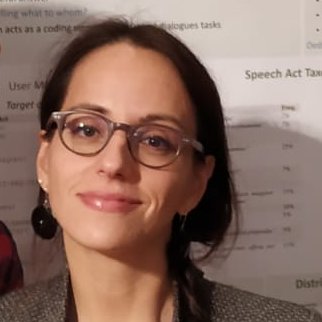
Nicole Novielli, Ph.D., is Associate Professor at the University of Bari “A. Moro” , Italy, where she conducts research on affective computing applied to software engineering and human-computer interaction. She leads the Collaborative Development Group and coordinates national projects investigating emotions in software teams, AI quality and IoT ecosystems. Education: Ph.D. in Computer Science, University of Bari, 2010 – thesis on “Lexical Semantics of Dialogue Acts” M.Sc. in Computer Science (Knowledge & Software Engineering), University of Bari, 2006 – summa cum laude B.Sc. in Computer Science, University of Bari, 2004 – summa cum laude Visiting researcher at USC-ICT, University of Aberdeen, FBK-irst (Trento) Research interests revolve around recognizing and exploiting affective and cognitive states in computer-mediated cooperative work. She studies sentiment and emotion mining in developers’ textual communication, multimodal emotion recognition via low-cost biometric sensors, and natural-language dialogue simulation for intelligent interfaces. Her work couples software engineering with natural language processing , social media analytics and human-computer interaction . Recent articles (2021-2025) reveal a clear trend: integrating deep learning and large language models into software engineering tasks—automated issue labelling, sentiment classification, technical-debt detection—while validating these techniques through rigorous empirical studies and biometric experiments . A parallel stream explores developer experience , measuring how emotions and cognitive load influence productivity, code quality and collaboration. Scientific awards include the 2020 Apex Award for Publication Excellence , multiple Distinguished Reviewer Awards at flagship venues (ESEC/FSE, ICSME, MSR), the Best Paper Award SANER 2019 and the Best Student Paper Award ACII 2009 . She currently teaches “Sentiment Analysis” in the Data-Science MSc and “Computer Networks” in the ITPS programme. She has advised numerous B.Sc., M.Sc. and PhD projects and is PI or Co-PI of four ongoing grants: EmoQuest (SIR), EMPATHY (PRIN), FAIR-Spoke 6 (PnRR), and QualAI (PRIN 2022). Dr. Novielli serves on the editorial boards of Empirical Software Engineering and Journal of Systems and Software , has guest-edited special issues on affect awareness in SE, and has chaired tracks at ICSE, SANER, MSR, ICSME and SSBSE. She co-leads the Collaborative Development Group and actively releases datasets and open-source tools for the community.
Asunción Gómez Pérez is a Spanish computer scientist and Full Professor at the Technical University of Madrid (UPM) . She currently serves as Vice-Rector for Research, Innovation and Doctoral Studies at UPM and holds a seat at the Real Academia Española . She has authored over 300 publications and accumulated 20,000 citations. Education : PhD in Computer Science (UPM, 1993), MBA (Comillas Pontifical University) Leadership Roles : Director of the Department of Artificial Intelligence (2008–2016), Academic Director of AI Master’s/PhD programs (2009–2016), Executive Director of UPM’s Artificial Intelligence Lab (1995–1998) Her research focuses on Semantic Web and Ontology Engineering , with applications in knowledge representation, machine-machine communication, and multilingual data integration. She pioneered methods for ontology validation, metadata licensing, and AI-driven social inclusion. Key publication trends include: Ontology evaluation frameworks (e.g., OOPS!) Linked Data quality models and validation tools Multilingual and cross-lingual AI applications Interoperability solutions for smart cities and healthcare Machine Learning for social exclusion prediction Ontology-driven library and lexicography systems Scientific Awards Fellow of the European Academy of Sciences Ada Byron Prize She has led projects like the NeOn Methodology for ontology development and contributed to the European framework for linked data rights (LD Terms). Her work bridges theoretical research with practical implementations in AI and Semantic Technologies.
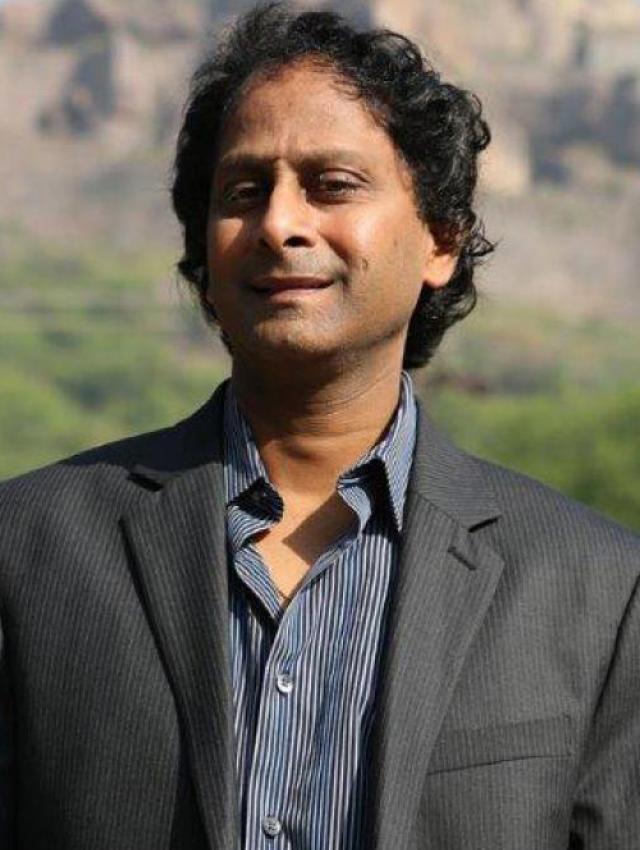
Praveen K. Kopalle is the Signal Companies' Professor of Management, professor of marketing, and area chair at the Tuck School of Business, Dartmouth College. He served as associate dean for the MBA program (2015–18) and chairs the marketing area (2012–15, 2022–present). He teaches courses in retail pricing analytics, marketing concepts, and new product development. Education: PhD in Marketing (Columbia University, 1992), MBA (Indian Institute of Management, 1988), BE in Mechanical & Product Engineering (Osmania University, 1986) His research focuses on marketing , machine learning , artificial intelligence , pricing strategy , retail analytics , and new product innovation . Recent work addresses digital customer orientation, loyalty programs in the big data era, and predictive analytics in retailing. He has published in top journals like Journal of Consumer Research , Management Science , and Marketing Science . Praveen serves as departmental editor for Production and Operations Management and associate editor for multiple journals. He has held leadership roles in the INFORMS Society for Marketing Science and contributed to editorial boards of 10+ journals. Scientific Awards: 2018 Lifetime Achievement Award (American Marketing Association’s Retailing and Pricing Special Interest Group) 2015 Core Teaching Excellence Award (Tuck School) 2011 Distinguished Alumni Award (IIM Bangalore) Multiple John Little and Davidson Awards 2022 Distinguished Alumnus Award (Osmania University) His teaching spans MBA core courses ( Marketing , Statistics for Managers ) and electives ( Retail Pricing Strategy , Marketing New Products ). He also leads executive education programs and the Tuck Integrative Experiential Learning (TuckINTEL) initiative.
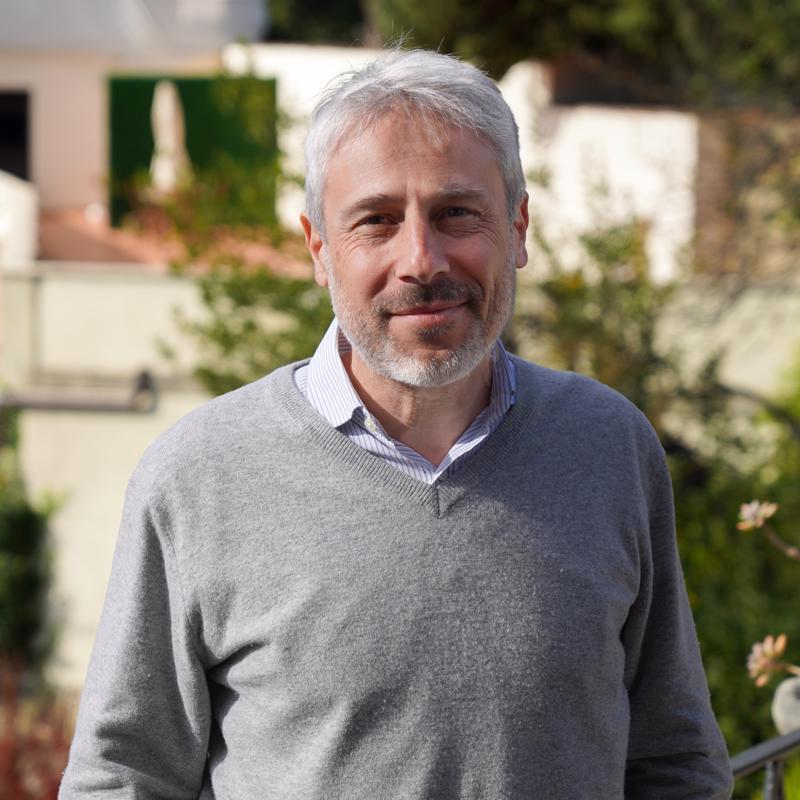
Giacomo Calzolari is a Full-time Professor of Economics at the European University Institute (EUI) in Florence, Italy, and serves as Provost for Research and External Relations. He holds a Ph.D. from the University of Toulouse. His research focuses on Industrial Organization, Competition Policy, Artificial Intelligence, and Banking Regulation, with notable contributions to understanding algorithmic pricing, collusion, and regulatory frameworks. Education: Ph.D. in Economics from the University of Toulouse. Research Interests: Artificial Intelligence and Market Dynamics Competition Policy and Antitrust Economics Algorithmic Pricing and Collusion Banking Regulation and Supervision Behavioral and Experimental Economics Publications: Recent work includes studies on AI-driven markets, algorithmic collusion, and regulatory policy. His research emphasizes the intersection of technology and competition, with over 50 publications in top-tier journals like the American Economic Review and International Journal of Industrial Organization. Awards: Recognized with the 'Best Paper Award' from the Association of Competition Economics (2013) and the 'Young Economist Award' (2005). Advisory Roles: Advises the European Commission on competition policy and the European Parliament on AI in financial markets. Serves as Editor of the International Journal of Industrial Organization and European Economy - Banks and Regulation. Research Groups: Leads projects on digital transformations, technological change, and AI's impact on competition. Supervises numerous graduate students and collaborates with institutions like the Centre for Economic Policy Research (CEPR).
Sheng Lu is a Professor and Director of Graduate Studies in the Department of Fashion and Apparel Studies at the University of Delaware, part of the College of Arts & Sciences. His research focuses on the global textile and apparel industry, including trade policy, sustainability, and digital technologies' impact. He holds a PhD from the University of Missouri-Columbia and master's and bachelor's degrees from Donghua University. Dr. Lu's work has been cited in government reports by the U.S. Congress, World Bank, and United Nations. He has received prestigious awards such as the ITAA Mid-Career Excellence Award and Rising Star Award. His research explores sourcing strategies, supply chains, and trade policies, with a focus on Sub-Saharan Africa, recycled materials, and U.S.-China trade dynamics. Education: PhD, University of Missouri-Columbia MS and BS, Donghua University Research Interests: Global textile/apparel trade and policy Sustainability and social responsibility Impact of digital technologies on fashion Media Mentions: Wall Street Journal, New York Times, BBC Featured in Business of Fashion and Associated Press Consulting: International Trade Centre (ITC) consultant His 80+ publications cover topics like recycling in fashion, U.S. tariffs, and regional trade agreements. He advises on global supply chain strategies and teaches courses on sustainable sourcing and trade policy.
Cengiz Zopluoglu is an Associate Professor in the Department of Special Education and Clinical Sciences at the University of Oregon's College of Education. His research focuses on quantitative methods in education, item response theory, computational psychometrics, and educational data science. He teaches advanced courses on psychometrics, statistical methodology, and data analysis using R. Education: PhD, 2013: University of Minnesota (Educational Psychology, Quantitative Methods) MA, 2009: University of Minnesota (Educational Psychology, Quantitative Methods) BA, 2005: Abant Izzet Baysal University (Mathematics Education, K-8) Research Interests: Zopluoglu's work emphasizes integrating machine learning and statistical models into educational measurement. He develops methods to detect test misconduct (e.g., item preknowledge) using response time and accuracy data, and explores automated scoring of open-ended responses using AI (e.g., transformers). His contributions include advancements in continuous response models, multidimensional IRT, and DETECT analysis for dimensionality assessment. Awards: 2023 Runner-up Prize in NAEP Math Automated Scoring Challenge (NCES) 2021 3rd Place in NIJ Recidivism Forecasting Challenge 2013 Graduate Student Research Award (University of Minnesota) Advising & Grants: Zopluoglu has advised on projects related to test security, automated scoring, and machine learning applications. His work often involves open-source tools like R and Stan, with a focus on reproducible research. Labs & Collaborations: He collaborates on initiatives like the Deterministic Gated Models for Test Security and the WrightRightNow automated scoring platform. His research leverages interdisciplinary approaches, blending psychometrics with computer science and data science.
Dr Lin Yue is a Lecturer at the University of Adelaide , affiliated with the Faculty of Sciences, Engineering and Technology and the School of Computer and Mathematical Sciences . She earned her PhD from Jilin University, with part of her doctoral studies completed as a joint PhD candidate at the University of Queensland. Past affiliations: Northeast Normal University, University of Queensland, University of Newcastle Her research focuses on Sequential Data Analysis and its applications in Medical Data Analytics, EEG Data Analysis, Brain-Computer Interfaces, Social Media Data Analytics, and Sentiment Analysis . She collaborates with academia, government, and professional organizations, supported by internal and external research grants. Dr Yue is eligible to supervise Masters and PhD students as a Co-Supervisor and contributes to advancing data mining and machine learning techniques in healthcare and time series analysis.
Ali Shojaie is a Professor of Biostatistics and Statistics at the University of Washington, serving as Associate Chair for Strategic Research Affairs in the Department of Biostatistics. He leads the Summer Institute for Statistics in Big Data (SISBID) and the Data Management and Statistics (DMS) Core for the UW Alzheimer's Disease Research Center. His research focuses on developing statistical and machine learning methods for high-dimensional data, with applications in genomics, neuroscience, and public health. Shojaie's work includes advancements in graphical models, Granger causality, and spatial statistics. He has contributed to methodologies for analyzing networks from time series and spatial data, with applications in understanding gene regulatory networks and brain connectivity. His recent projects involve NIH-funded grants exploring gene-phenotype associations using omic data and explainable machine learning for brain stimulation research. Scientific awards include the 2022 Leo Breiman Award from ASA's Statistical Learning and Data Science section, and election as a Fellow of the Institute of Mathematical Statistics (IMS) and American Statistical Association (ASA). He serves on editorial boards for journals like the Journal of the American Statistical Association and Biometrika. Shojaie advises numerous PhD students and postdocs, many of whom have secured academic and industry positions. His lab develops open-source software tools, including the netgsa and ngc packages for network analysis and Granger causality estimation.