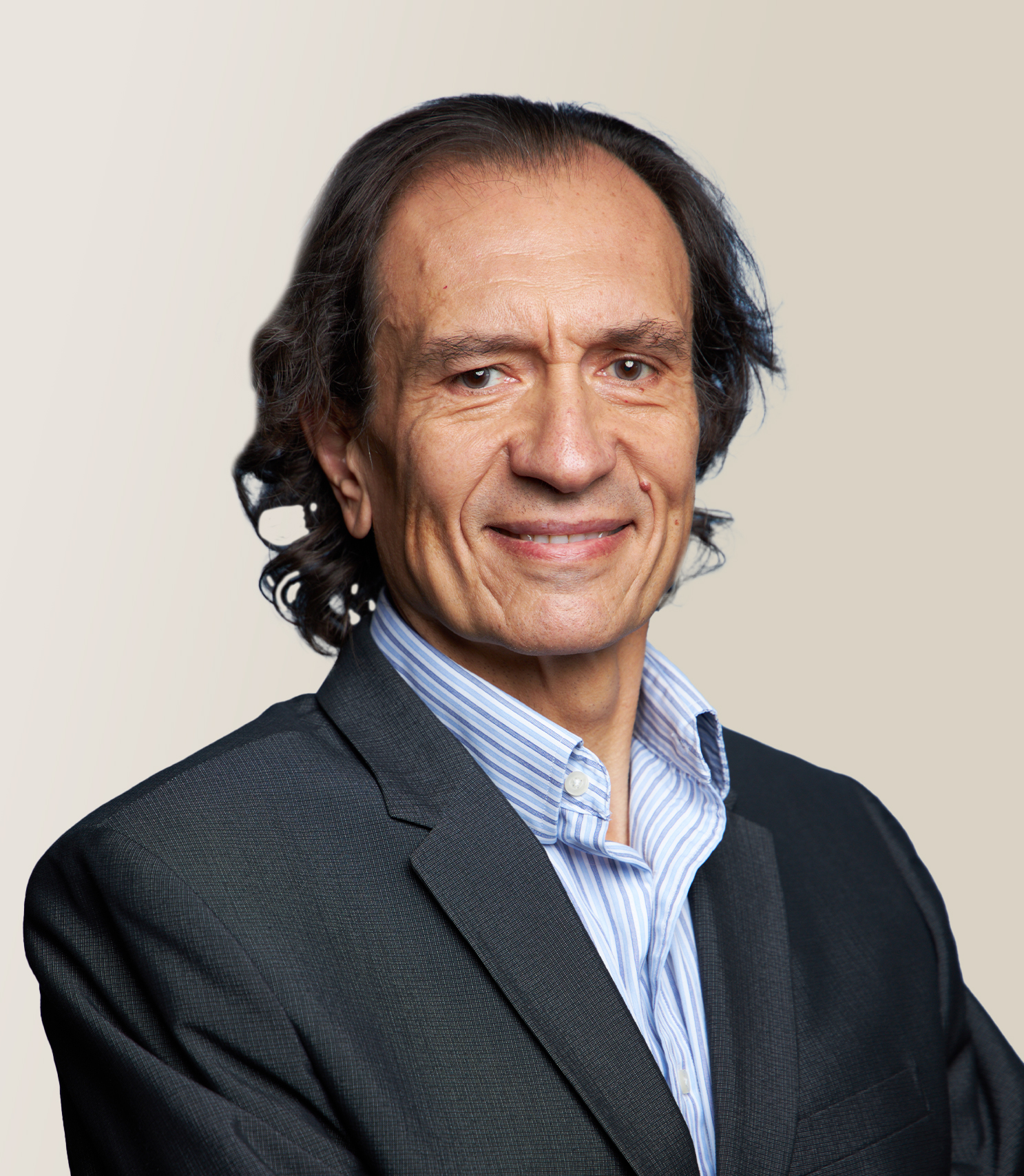
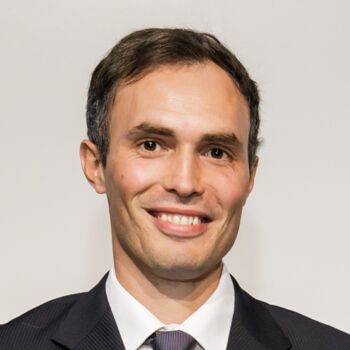
Fernando Zapatero is the Richard D. Cohen Professor in Finance at the Questrom School of Business , Boston University. His office is located in the Rafik B. Hariri Building at 595 Commonwealth Avenue, Boston, MA 02215. Email: fzapa@bu.edu His research focuses on asset pricing , risk aversion , and investment behavior , with recent work exploring the economic foundations of demand for skewness , climate finance , and technological transitions . He has extensively studied the effects of heterogeneous investment horizons and convex incentives on financial markets. Selected Research Themes: Asset Pricing Implications of Behavioral Biases Climate Finance and Technological Innovation Dynamic Portfolio Allocation Options Market Anomalies Government Grants in Deep Tech Commercialization
Dr. Michael Richter serves as a Researcher at HafenCity University Hamburg within the Department of Environmentally Sound Urban and Infrastructure Planning, Faculty of Urban Planning. Since 2014, he has been actively engaged in climate adaptation research, building upon his earlier work with the 'plan B:altic' research group (2009-2014) focused on Baltic coastal urban regions. His professional trajectory combines academic research with practical implementation of nature-based urban solutions. Dr. Richter holds a degree in Geoecology from the Technical University Bergakademie Freiberg (2003-2008). His educational background laid the foundation for his interdisciplinary approach to urban climate challenges, integrating ecological principles with urban planning practices. This cross-disciplinary perspective informs his current research on sustainable urban infrastructure. His research centers on developing climate-resilient urban environments through innovative nature-based solutions. Dr. Richter specializes in sponge city concepts and blue-green infrastructure , particularly examining how building greening systems and urban vegetation can mitigate heat islands, manage stormwater, and enhance biodiversity. His work bridges theoretical research with practical implementation through direct collaboration with Hamburg's urban planning authorities and international research networks. He has made significant contributions to understanding the hydrological performance of green infrastructure through long-term monitoring of real-world implementations. Dr. Richter's publication record demonstrates a consistent focus on empirical research of climate adaptation solutions. His recent work emphasizes performance evaluation of blue-green infrastructure in urban settings, particularly examining street trees and green roofs as integrated components of urban water management systems. This research provides critical data on long-term functionality, helping to refine implementation strategies and inform policy decisions. Editorial Board Member, Journal Water (MDPI) for Urban Water Management section Member, German Green Roof Association (Bundesverband GebäudeGrün e.V.) Member, German Water Association (DWA) Member, German Association for Geoeecology (Verband für Geoökologie in Deutschland) As an academic supervisor, Dr. Richter has mentored over 20 bachelor's and master's students, focusing on practical urban planning challenges related to climate adaptation. His research is supported through multiple projects including the BlueGreenStreets initiative and Hamburg's Green Roof Strategy development. He maintains strong connections between academic research and professional practice through active participation in professional organizations and direct collaboration with city planners. Dr. Richter's work with the City Science Lab and BIMLab at HCU demonstrates his commitment to interdisciplinary collaboration. His research on rainwater-sensitive urban design directly addresses Hamburg's climate adaptation challenges while contributing to international knowledge on sponge city implementation. Through his involvement in the RES:Z research program (Resource-Efficient City Quarters for the Future), he helps shape sustainable urban development practices that balance ecological, social, and technical considerations.
Martin Huber is Professor of Applied Econometrics and Policy Evaluation at the University of Fribourg, Switzerland, within the Faculty of Management, Economics and Social Sciences, Department of Economics. He leads the Chair of Applied Econometrics and maintains an active research profile with numerous publications in top economics and statistics journals. His work bridges theoretical econometrics with practical policy applications across multiple domains including labor, health, and education economics. Professor Huber earned his Ph.D. in Economics and Finance in 2010 and served as Assistant Professor at the University of St. Gallen until 2014. He has conducted research stays at Harvard University (2011/2012) and the University of Sydney (2014 and 2019), establishing an international research network. His academic affiliations include the Committee for Econometrics of the Verein für Socialpolitik, Global Labor Organization, Soda Labs (Monash Business School), and Centre for European Economic Research (ZEW) Mannheim. Huber's research focuses on data-based causal analysis , machine learning applications in economics , and policy evaluation methods . He specializes in developing and applying statistical and econometric methods for measuring causal effects, with particular emphasis on semi- and nonparametric microeconometrics. His work spans labor economics (gender occupational segregation, maternal labor supply), health economics, education policy, and competition policy (bid-rigging cartels detection). His recent publications (2023-2025) demonstrate a clear trajectory toward integrating machine learning techniques with traditional econometric methods for causal inference. This includes developing frameworks for causal discovery, improving difference-in-differences methods with machine learning, and creating novel approaches for detecting collusion in markets. His 2023 book "Causal Analysis: Impact Evaluation and Causal Machine Learning with Applications in R" (MIT Press) has become a key reference in the field. As an active researcher, Professor Huber directs several research projects including experimental evaluations of gender occupational segregation in the Swiss apprenticeship market. His work combines theoretical rigor with practical policy relevance, often employing experimental and quasi-experimental methods to address questions of causal mechanisms in social and economic phenomena. Through his Chair of Applied Econometrics, Huber supervises Ph.D. students and maintains an active research group focused on advancing causal inference methodologies. His work has significant implications for evidence-based policymaking across multiple sectors, particularly in evaluating the effectiveness of social programs and economic policies.
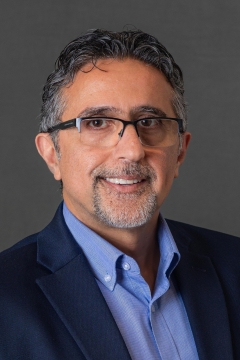
Reza Taheri is a Professor and Senior Associate Dean of Pharmacy Education at Chapman University School of Pharmacy. His expertise spans leadership development, curriculum design, strategic planning, and programmatic accreditation in pharmacy education. Previously, he served as Chief Strategy Officer at RxPrep Inc., founding Associate Dean at West Coast University, and held faculty and leadership roles at Western University of Health Sciences and Loma Linda University School of Pharmacy. Education: Doctor of Pharmacy (University of Minnesota), Executive MBA (University of Southern California) Current Role: Department of Pharmacy Practice, Chapman University His research focuses on pharmacy education , emphasizing emotional intelligence coaching , interprofessional collaboration , and virtual learning modalities . Recent studies examine mock-trial simulations for teaching-assessment, supplemental instruction efficacy, and interprofessional virtual simulations for leadership and patient advocacy. Publications highlight technology integration in pharmacy curricula and resilience measurement in educational contexts. Taheri collaborates extensively on interprofessional education (IPE) interventions, analyzing their impact on patient outcomes like length of stay , medical errors , and mortality . He is a certified Emotional Intelligence Coach and trainer with Crucial Learning and The Table Group.
Alexis H. Kunz serves as Professor of Financial Accounting and Director of the Institute for Corporate Accounting and Controlling at the University of Bern since 2011, with prior academic appointments at HEC Lausanne, University of Lausanne, and University of Friborg spanning over two decades in accounting research and leadership. Education: Habilitation, University of Friborg (2002-2004) Visiting Researcher, UCLA (2003) PhD (Dr. oec. publ.), University of Zurich (1995-2000) Master in Business Administration, University of Zurich (1989-1994) Military Service (1988) College Education, Gymnasium Zürcher Unterland (1981-1987) His research centers on Earnings Management, Financial Reporting Systems, Incentive Structures, and Corporate Governance, examining how accounting information systems influence organizational decision-making and executive behavior. Work integrates economic theory with empirical analysis of real-world corporate practices. Publication analysis reveals consistent focus on incentive design, financial disclosure quality, and governance mechanisms across 12 major works from 1999-2020. Key themes include structured product risk assessment, performance metric validity (EVA/ERIC), and behavioral impacts of compensation systems, primarily published in The Accounting Review and European Accounting Review. Scientific Awards No specific awards or fellowships were documented in the source material. Research leadership includes SNF-funded UCLA Visiting Scholarship and grants for IFRS 15 implementation, Swiss GAAP/FER reporting systems, and Say on Pay analysis. Third-party projects cover CEO evaluation frameworks, cost accounting concepts, and performance measurement system development. He directs the Financial Accounting Section within the Institute for Corporate Accounting and Controlling, overseeing research initiatives in financial reporting standards and incentive system design while serving as primary institutional contact for accounting research.
Anthony J. Gambino is a Postdoctoral Research Associate in the Department of Educational Psychology at the University of Connecticut. His research focuses on gifted education, teacher evaluation, and multilevel modeling techniques. Ph.D. in Research Methods, Measurement, and Evaluation (University of Connecticut) M.A. in Measurement, Evaluation, and Assessment (University of Connecticut) B.S. in Psychology (Wagner College) His work addresses critical issues in educational equity, including disparities in gifted program identification by race, poverty, and language status. He develops and evaluates statistical tools for multilevel modeling and contributes to understanding the role of teacher rating scales in educational assessments. Gambino’s publications emphasize methodological rigor in educational research, particularly in behavioral interventions like PBIS and analytical frameworks for teacher effects. He maintains active engagement in advancing evaluation curricula for graduate programs.
Andrew Rau-Chaplin is a Professor and Dean of the Faculty of Computer Science at Dalhousie University, where he leads the Risk Analytics Lab and contributes significantly to research in high performance computing, parallel algorithms, and risk analytics. He is affiliated with the Institute for Big Data Analytics and has a strong academic and administrative presence. Education: Postdoc - DIMCS (Princeton, Rutgers, Bell Labs) PhD - Carleton University (1993) MCS - Carleton University (1990) BCS - York University (1986) His research focuses on applying parallel and high performance computing to data-intensive domains such as data warehousing, OLAP, catastrophe modeling, and risk analytics. He emphasizes both algorithmic design and practical system implementation, with a strong grounding in experimental evaluation. His work spans theoretical studies and real-world applications in finance, bioinformatics, and geospatial systems. The 15 most recent publications reflect a consistent focus on parallel data processing, OLAP optimization, indexing techniques (e.g., Hilbert curves), and risk modeling. Key themes include scalable data cube computation, view selection, adaptive coding, and spatial analytics, demonstrating expertise in both algorithmic innovation and systems-level performance. He has served on numerous scientific committees and grant panels, including NSERC and Compute Canada, and has been a journal editor for JPDC and DMTCS. Dr. Rau-Chaplin has supervised a wide range of graduate students in areas including risk analytics, GPU computing, text analytics, and parallel algorithms. His lab has received funding for postdoctoral, graduate, and undergraduate research positions. He teaches courses such as Parallel Computing, Software Engineering, Data Structures, and Risk Analytics, and has developed software tools like LaHave, Clustal XP, and Digital Coliseum. His lab, the Risk Analytics Lab, focuses on integrating analytics, risk management, and HPC for challenges in catastrophe modeling and financial risk. The lab leverages technologies such as stochastic simulation, optimization, and spatial OLAP.
Jonathan McCarthy is a Professor and Director of the LLM Business Law Programme at University College Cork (UCC), serving as Deputy Director for Graduate Research in the School of Law. He holds a BCL and LLM from UCC and earned his PhD there in 2018. His research focuses on financial law and corporate governance, particularly regulatory frameworks for FinTech and SME support. He has taught at UCC since 2015 and previously at University of Limerick. Education: BCL (University College Cork) LLM (University College Cork) PhD (University College Cork, 2018) Research interests emphasize EU financial regulation, digital finance innovation, and corporate rescue mechanisms for SMEs. His work explores the efficacy of legal processes for start-ups and the adaptation of traditional frameworks to emerging technologies like blockchain and distributed ledger systems. He frequently reviews submissions for journals and publishers in his field. Teaching spans courses such as Company Law, Digital Finance Regulation, and Corporate Law at both undergraduate and postgraduate levels. He also serves as an external examiner for the Dublin Business School's LLB program. Professional development includes certifications in research integrity, universal design for learning, and connected curriculum strategies. Grants and funding include an Irish Research Council Government of Ireland Postgraduate Scholarship and the Ronan Daly Jermyn Scholarship during his doctoral research on SME rescue procedures in Ireland. His work combines qualitative analysis with policy advocacy for improved legal frameworks. Labs/Teams: Active in cross-disciplinary research within UCC's School of Law, collaborating on projects related to FinTech regulation and EU policy implementation.
Oliver Gasser is a researcher at the Max Planck Institute for Informatics (MPI-INF) and the Technical University of Munich (TUM), where he has co-lectured courses such as Advanced Computer Networking and Master Course Computer Networks. His research focuses on Internet measurement, security, and privacy, with a strong emphasis on IPv6, DNS, BGP, and web tracking technologies. His research interests include Internet measurement, IPv6 deployment, BGP security, DNS infrastructure, web tracking, privacy technologies, and network resilience. He has made significant contributions to understanding IPv6 hitlists, router fingerprinting, hypergiant content delivery networks, and consent banner manipulation on the web. His work combines large-scale active measurements with data analysis to uncover systemic issues in Internet infrastructure and privacy practices. The recent publications highlight a consistent focus on measurement-driven research across networking, security, and privacy. Trends include analyzing IPv6 adoption patterns, detecting covert tracking mechanisms in web cookies, evaluating security of Internet protocols like DNS and BGP, and improving measurement methodologies for large-scale network studies. His work often involves developing open tools and datasets that advance reproducibility in networking research. PAM 2023 Best Paper Award TMA 2023 Best Paper Award TMA 2023 Fast Track Award PAM 2018 Best Paper Award IRTF Applied Networking Research Prize 2018 IMC 2017 Community Contribution Award TMA 2017 Best Dataset Award CoNEXT 2023 Community Contribution Award Oliver Gasser has advised or co-advised over 40 master’s and bachelor’s theses at MPI-INF and TUM, demonstrating strong mentorship in academic research. He has led several measurement projects that have received external funding, including development of the IPv6 Hitlist Service and tools for analyzing web tracking. His community service includes extensive participation in program committees for major networking conferences such as IMC, CoNEXT, PAM, and TMA. He leads and contributes to several open research initiatives including the IPv6 Hitlist Service, SNMPv3 Measurement Service, MPTCP Measurement Service, DNS Observatory, and the BannerClick tool for automated cookie banner interaction. These platforms provide valuable resources for the global networking research community and support reproducible science.
Malvina Nissim is a leading researcher in computational linguistics and NLP at the University of Groningen's Department of Artificial Intelligence, with a focus on multilingual modeling, bias mitigation, and human evaluation frameworks. Key Contributions : Developed CALAMITA (Italian LLM benchmark), IT5 models for Italian language processing, and ReproHum framework for NLP evaluation reproducibility Research Pillars : Multilingual reasoning consistency, perspective-based text analysis, and figurative language modeling Her work spans activation steering techniques, cross-lingual transfer learning, and the creation of specialized language resources like the EurekaRebus dataset and MAGPIE idiom corpus. She pioneered methods for gender bias measurement in BERT and developed the SocioFillmore tool for perspective visualization. Recent publications explore model uncertainty as MCQ difficulty proxy, Italian headline generation benchmarks, and multilingual multi-figurative language detection. She actively participates in teaching initiatives like the "NLP with Bracelets" workshop for Italian high school students. Scientific Awards : ACL Best Paper Award (2025) EMNLP Outstanding Reviewer (2023) EVALITA Leadership Recognition (2024) She advises PhD students in model bias analysis and has contributed to the development of the Dutch Abusive Language Corpus (DALC) and the ReproNLP reproducibility framework. Her collaborations span institutions in Italy, Netherlands, and international NLP communities.
Shoshana R. Shelton is a Professor at the RAND School of Public Policy and a Policy Researcher at the RAND Corporation. Her work centers on program evaluation, public health systems, emergency preparedness, and national health security, with significant contributions to pandemic response, violence prevention, and crisis decision-making. She has led major projects for federal agencies including the CDC, DHS, FEMA, and the U.S. Secret Service. Education: M.P.H., The Ohio State University B.A. in English, Denison University Her research focuses on strengthening public health infrastructure through performance measurement, logic modeling, and stakeholder engagement. She has developed tools such as tabletop exercises for continuity of operations in public health laboratories and led after-action reviews of the public health response to COVID-19. Her work emphasizes building resilience against biological threats, natural disasters, and targeted violence. Shelton's recent publications highlight trends in emergency alert systems, disaster resilience, criminal justice reform during pandemics, and equitable health security research investment. She advocates for evidence-based policies that balance bioterrorism preparedness with responses to natural disasters and climate-related emergencies. Scientific Awards: No awards listed in the provided text. She has advised or collaborated with numerous federal and state agencies, contributing to national health security through rigorous evaluation and policy analysis. Her grants and projects reflect sustained funding from DHS, CDC, and other federal bodies focused on improving public safety and health system readiness. She has also led initiatives on behavioral threat assessment in schools and wearable technology for law enforcement wellness. Labs and Teams: Previously led a four-year project on mass attacks and targeted violence for the U.S. Secret Service. Collaborated with the Association of Public Health Laboratories (APHL) on continuity of operations planning. Contributed to the Priority Criminal Justice Needs Initiative, fostering innovation across law enforcement, courts, and corrections.
Wing Ng serves as Alumni Distinguished Professor and Chris C. Kraft Endowed Professor in Virginia Tech's Department of Mechanical Engineering within the College of Engineering. His career spans over four decades with continuous contributions to aerospace thermal systems and fluid dynamics research since joining Virginia Tech in 1984. Dr. Ng's academic foundation includes: Ph.D. in Mechanical Engineering from Massachusetts Institute of Technology (1984) M.S. in Mechanical Engineering from Massachusetts Institute of Technology (1980) B.S. in Mechanical Engineering from Northeastern University (1979) His pioneering research focuses on aeroacoustics of drones and jet engines, where he develops advanced diagnostics for turbine flow measurements and investigates transonic turbine blade aerodynamics. Current work explores aerothermal particle interactions in gas turbines and clean energy applications for wind turbines. His experimental approach bridges fundamental fluid dynamics with practical aerospace engineering solutions, particularly in cooling systems for high-temperature components. Analysis of recent publications (2024-2025) reveals three dominant research thrusts: turbine cooling optimization (film/phantom cooling configurations), particle dynamics in gas paths (impact/rebound mechanics), and novel measurement techniques (strain sensors, multiphase flow diagnostics). These studies consistently target performance enhancement and durability improvement in turbomachinery through experimental validation. Dr. Ng's exceptional contributions are recognized through: Virginia Tech Faculty Entrepreneur Hall of Fame (2017) William E. Wine Award for teaching excellence (2014) Multiple Certificates of Teaching Excellence (1985,1988,2011,2014) Dean's Award for Research Excellence (2013) Consecutive Best Paper Awards from ASME/AIAA (2001-2013) Fellow of ASME (1996) and Associate Fellow of AIAA (1992) As director of the Ng Lab, he maintains active collaborations with industry partners through Techsburg, Inc. (where he serves as Chairman) to translate research into commercial applications. His work on drone aeroacoustics and turbine diagnostics directly informs next-generation propulsion systems while addressing critical challenges in particle ingestion and thermal management.
Chen Liu is an Assistant Professor in the Department of Computer Science at City University of Hong Kong and the Principal Investigator (PI) of the Machine Learning and Optimization (MLO) group. His research focuses on building reliable machine learning models, particularly studying robustness and privacy properties of deep neural networks from an optimization perspective. University: City University of Hong Kong Academic Rank: Assistant Professor Students: Supervises multiple PhD, MPhil, and postdoctoral researchers. Education: Holds a Ph.D. (2022) and MSc (2017) in Computer Science from École Polytechnique Fédérale de Lausanne (EPFL), and a BSc (2015) in Computer Science from Tsinghua University. Research Interests: Adversarial robustness, privacy-preserving machine learning, optimization algorithms, dataset distillation, generative models, and theoretical analysis of loss landscapes. His work addresses challenges like catastrophic overfitting, architecture overfitting in distilled data, and stable adversarial training methods. Article Trends: Recent publications explore adversarial robustness under l0/l1 norms, gradient inversion for data reconstruction, evolutionary factor searching in finance, and meta-tuning for out-of-domain few-shot learning. These works emphasize optimization techniques to enhance model reliability and generalization. Scientific Awards: Microsoft Research Ph.D. Scholarship Programme (2017–2019) Advising and Grants: Supervises a diverse team of current and former students, with collaborations across institutions like George Mason University and Zhejiang University. Research supported by academic and industry grants. Labs and Teams: Leads the MLO group, which investigates fundamental ML theory and algorithms to improve system reliability. The group's work spans adversarial training, dataset distillation, and generative model optimization.
Dr. Sam Ferguson is a Senior Lecturer at the School of Computer Science, University of Technology Sydney (UTS), with a multidisciplinary background in music performance, cognitive science, and psycho-acoustics. His research explores the intersection of sound, music, and human experience through creative coding, machine learning, and interactive systems. Key Research Areas: Sound and Music Computing, Human-Computer Interaction, Creative Coding, Cognitive Science, Installation Art, and Acoustics. Current Projects: ARC Linkage project on creative coding and multiplicitous media; industry collaborations on IoT-based audiovisual systems. Recent Publications: Focus on spatial audio complexity, gestural interaction with networked sound, music emotion recognition frameworks, and robotic performance through genre-based cultural platforms. Leadership Roles: Director of Teaching & Learning Engagement; former Deputy Head of School (Teaching and Learning); active in ACM Creativity and Cognition Steering Committee. Teaching: Courses like Digital Media Studio , Prototyping Physical Interaction , and Data Processing using R within UTS's interdisciplinary Software Development Studio.
Dr. Bin Zhu is a Research Fellow in the School of Mechanical Engineering Sciences at the University of Surrey, affiliated with the Centre for Engineering Materials. He obtained his PhD from the same institution, focusing on multiscale residual stress evaluation and mechanical property characterization using microscopy and large-scale facilities. His research develops techniques for harsh environments to enhance material longevity by managing manufacturing-induced residual stress, with applications in nuclear fusion components. Education PhD, University of Surrey (Research focus: Multiscale residual stress evaluation and mechanical property characterization) Research Focus Dr. Zhu's research centers on three interconnected areas: 1) Multiscale residual stress evaluation using advanced techniques like plasma-focused ion beam and neutron diffraction; 2) In situ mechanical testing under extreme conditions; and 3) Computational modeling for predicting stress distributions and material behavior. His work primarily addresses nuclear fusion reactor challenges, particularly laser-welded Eurofer97 steel components, where residual stress critically impacts structural integrity. Publication Trends Dr. Zhu's recent publications (2021-2025) demonstrate three key themes: 1) Advanced residual stress analysis in nuclear materials using machine learning, neutron imaging, and synchrotron techniques; 2) High-temperature mechanical performance of welded joints for fusion reactors; and 3) Biomimetic material characterization, including bioinspired composites and biological light-diffraction mechanisms. His methodologies consistently integrate multiscale experimental approaches with computational modeling.