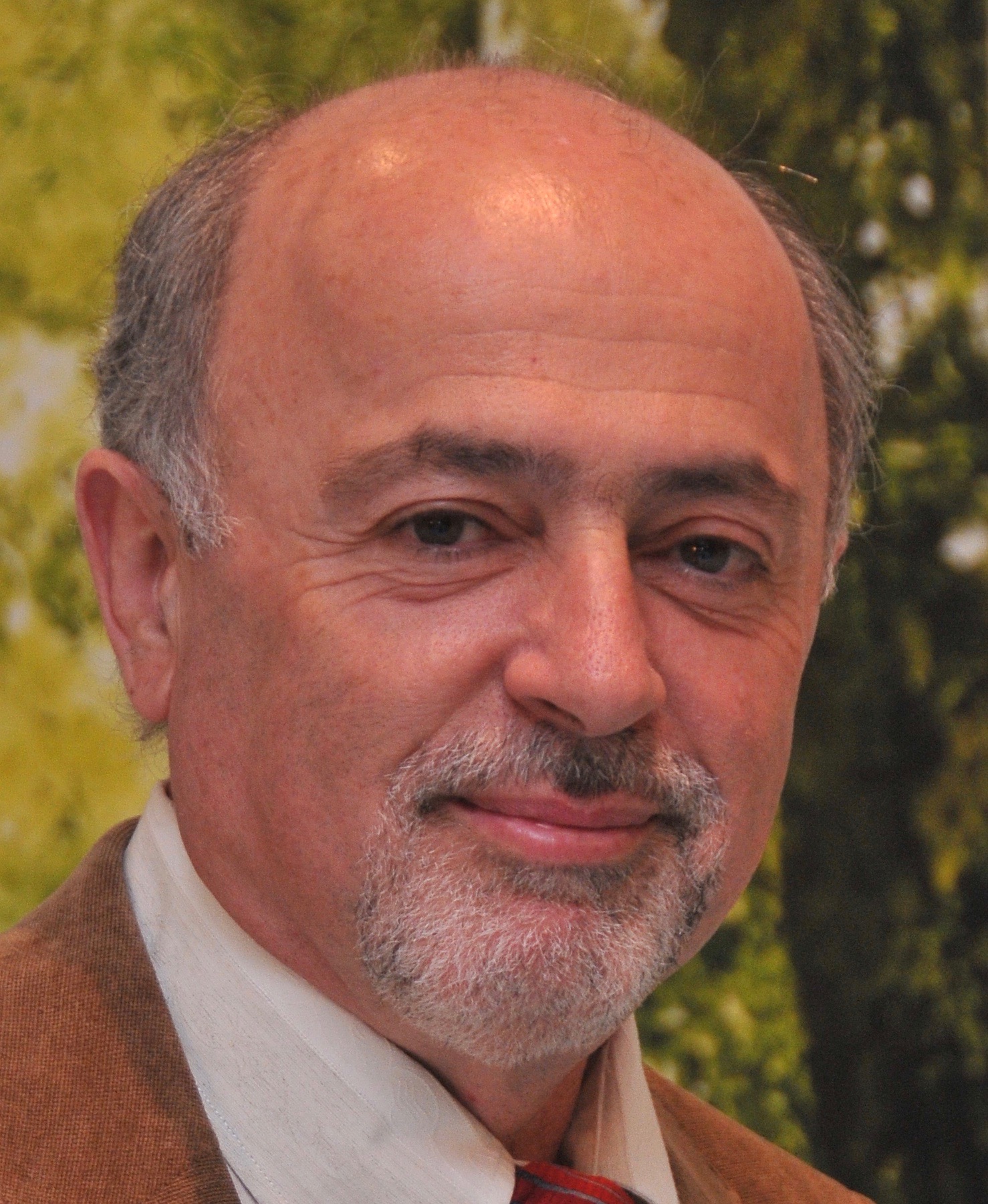
Pierre Colmez is a French mathematician affiliated with the École Polytechnique (1993-2010) and the National Center for Scientific Research (CNRS) at the Institut de Mathématiques de Jussieu since 2010. His academic journey includes postdoctoral positions at the Institut Joseph Fourier (Grenoble) and the Max Planck Institute for Mathematics (Bonn). Ph.D. in 1988 (Grenoble) under Jean-Marc Fontaine and John Coates École Polytechnique: Professor (2006-2010), Teaching Professor (1993-2005) Colmez’s research lies at the intersection of arithmetic geometry , Galois representations , p-adic Hodge theory , and the Langlands program . His work explores connections between automorphic forms, p-adic analysis, and cohomological structures in number theory. His most recent publications focus on p-adic cohomology, Drinfeld towers, and syntomic complexes, reflecting his expertise in advanced topics of nonarchimedean geometry and Galois cohomology . Collaborations with Gabriel Dospinescu and Wiesława Nizioł highlight his contributions to modern arithmetic geometry. Prix Léonid Frank (2016) Aisenstadt Chair (2015) Prix Fermat (2005) Prix Gabrielle Sand et Guido Triossi (1999) Colmez has held editorial roles at Astérisque (1999-2004), directed the SMF Mathematical Documents collection (2001-2016), and served on editorial boards for Annales de l'ENS and Publications de l'IHES . His academic network includes collaborations with Laurent Berger, Christophe Breuil, and Jean-Pierre Serre.
Jonathan Pila is a Reader in Mathematical Logic at the University of Oxford's Mathematical Institute, with a focus on model theory and number theory. He is affiliated with the Mathematical Logic and Number Theory research groups. BScHons (University of Melbourne, 1984) PhD (Stanford University, 1988) His research explores intersections of mathematical logic with number theory, particularly via o-minimality, addressing problems like the Andre-Oort conjecture, Zilber-Pink conjecture, and Ax-Schanuel theorems in algebraic and Diophantine geometry. Recent work includes advancements on functional transcendence, canonical heights in Shimura varieties, and uniform parameterization techniques with applications to Diophantine problems. Leverhulme Trust Research Fellowship (2008-2010) Clay Research Award (2011) LMS Senior Whitehead Prize (2011) ASL Karp Prize (2013) Elected FRS (2015) Rolf Schock Prize (2022) Frontiers of Science Award (2023)
Patrick Ingram is an Associate Professor at the Department of Mathematics and Statistics , Faculty of Science , York University . His research focuses on number theory and diophantine geometry , particularly the arithmetic of elliptic curves and surfaces , and dynamical systems over global fields . His scholarly work includes significant contributions to the study of canonical heights , post-critically finite maps , and primitive divisors in arithmetic dynamics . His research often bridges complex dynamics with number theory, exploring the interplay between Galois representations , Drinfeld modules , and polynomial iterations . Patrick has received the Top Cited Article 2007 - 2011 award from the Journal of Number Theory . He collaborates with leading mathematicians in arithmetic dynamics, including Joseph H. Silverman , and has published extensively in top-tier journals such as the Duke Mathematical Journal , Proceedings of the London Mathematical Society , and Transactions of the American Mathematical Society . His work spans both theoretical advancements and computational techniques in algebraic divisibility sequences and rigidity theorems .
Christian Wald is a Post-doctoral researcher at Technical University Berlin working under Professor Gabriele Steidl, focusing on generative modeling, flow matching, and stochastic processes in machine learning. His research bridges theoretical probability with practical medical imaging applications, particularly in MRI reconstruction and analysis. He completed his PhD at Humboldt University of Berlin in 2017 with a thesis on p-adic quantum groups. His academic journey transitioned from pure mathematics to interdisciplinary machine learning research, reflecting his versatile expertise. Wald's primary research explores generative models through the lens of optimal transport and flow matching, with significant contributions to Wasserstein geometry and conditional distance metrics. His work frequently integrates stochastic processes to enhance medical image reconstruction, demonstrating strong cross-disciplinary impact in both theoretical machine learning and clinical applications. Recent publications highlight innovations in sliced MMD flows, Bayesian OT methods, and uncertainty-aware medical image analysis. Analysis of his 15 most recent publications (2019-2025) reveals a consistent trajectory toward unifying geometric probability with deep learning. Key themes include flow-based generative modeling for medical time-series data, optimal transport applications in image reconstruction, and novel kernel methods for distribution matching. His work spans both foundational theory (e.g., Fisher-Rao curves) and high-impact medical applications (e.g., coronary calcium scoring). No specific scientific awards are documented in the provided text, though his publications appear in prestigious venues including ICLR, IEEE TMI, and Physics in Medicine & Biology. Wald maintains extensive collaborations with the medical imaging group at Technical University Berlin, particularly with Andreas Kofler and Gabriele Steidl. His co-authored works demonstrate consistent contributions to MRI reconstruction pipelines and segmentation frameworks, though no formal advising roles or grant leadership are indicated. Current projects focus on uncertainty quantification in active learning for medical image segmentation. He operates within Gabriele Steidl's research group at Technical University Berlin, which specializes in mathematical imaging and machine learning. The team combines expertise in optimization, probability theory, and deep learning to solve medical imaging challenges, with Wald contributing core algorithmic innovations in generative modeling and stochastic reconstruction.
Victor H. Moll is a Professor of Mathematics at Tulane University, New Orleans, Louisiana. He holds a Ph.D. and M.S. in Mathematics from New York University (1984/1982) and a B.S. in Mathematics from Universidad Santa Maria (1978). His research focuses on Classical Analysis, Symbolic Computation, Special Functions, and Number Theory. He has held visiting positions at Universidad Santa Maria (Chile) and the Courant Institute (NYU), and served as a postdoctoral researcher at Temple University. Moll has contributed extensively to integral evaluations, particularly through the Gradshteyn and Ryzhik series and the method of brackets for definite integrals. His work bridges pure mathematics with applications in physics and combinatorics. His research spans asymptotic analysis of polynomials, valuation theory of number sequences, and symbolic computation techniques. Notable contributions include studies on Jacobi polynomials, Catalan numbers, and hypergeometric inequalities. Moll has collaborated on projects involving Feynman diagrams and modular-type transformations, showcasing interdisciplinary reach. His academic journey includes roles from Assistant Professor (1986–1992) to full Professor (2001–present) at Tulane. While no specific grants or awards are listed, his prolific publication record (over 200 articles from 2015–2025) highlights sustained academic engagement. His work often explores connections between classical mathematical analysis and modern computational methods.
Pavel Coupek is a Visiting Assistant Professor in the Department of Mathematics at Michigan State University (MSU). He holds a PhD from Purdue University, where he was supervised by Tong Liu, and completed his Bachelor's and Master's studies in homological algebra at Charles University in Prague. His research focuses on p-adic Hodge theory, arithmetic geometry, and homological algebra, with applications to modular forms and rational points on algebraic curves. Education: PhD in Mathematics, Purdue University (Advisor: Tong Liu) MSc in Mathematics, Charles University, Prague BSc in Mathematics, Charles University, Prague Research Interests: p-adic Galois representations and p-adic Hodge theory Algebraic and arithmetic geometry Homological algebra and its interactions with algebraic geometry Modular and automorphic forms Quadratic Chabauty methods for rational points Professional Activities: Organized seminars on infinity categories and perfectoid spaces at Purdue University Co-authored research on prismatic cohomology, automorphic forms, and geometric Chabauty methods Teaching experience includes courses at MSU and Purdue, covering differential equations, calculus, and linear algebra
Andrei Khrennikov is Professor of Mathematics at the Department of Mathematics, Linnaeus University, where he also serves as director of the International Center for Mathematical Modeling (ICMM) . He leads a vibrant research group focused on interdisciplinary modeling in physics, biology, cognition, and social systems. Research Interests: His work spans a vast interdisciplinary landscape, including mathematical physics, p-adic and non-Archimedean analysis, quantum foundations, quantum-like modeling of cognition and decision-making, econophysics, and biological dynamics . He is a pioneer in applying quantum probability and formalism outside quantum physics, especially in psychology and social sciences. The Växjö series of quantum theory conferences , which he organizes, is the longest-running continuous conference series on quantum foundations, fostering dialogue between theorists, experimentalists, and philosophers. His recent publications (2021–2025) show a strong focus on quantum cognition, p-adic biology, entanglement models, and social laser theory , often leveraging generalized probability and open quantum systems frameworks. Scientific Contributions: Developed quantum-like models for cognition, decision-making, and biological processes. Pioneered use of p-adic and ultrametric analysis in genetics and brain dynamics. Advanced classical random field models as alternatives to quantum interpretations. Introduced the social laser model for collective emotional amplification in societies. He is actively involved in major research projects such as QUARTZ (Quantum Information Access and Retrieval Theory) and DYNALIFE (Information, Coding, and Biological Function) . His work bridges mathematics, physics, and cognitive science, promoting a unified framework for understanding complex systems through quantum-inspired tools.
Prof. Philippe Michel is a Professor in the Mathematics Institute at the École Polytechnique Fédérale de Lausanne (EPFL), where he leads research in the Number Theory group (TAN). His office is located at MA C3 634, Station 8, 1015 Lausanne, Switzerland. Michel received his education at ENS Cachan and obtained his PhD from Université Paris XI in 1995 under the supervision of E. Fouvry. His academic career includes positions as maître de conférence at Université Paris XI (1995-1998), full professor at Université Montpellier II (until 2008), before joining EPFL. Prof. Michel's research spans across analytic number theory and related fields. His work integrates diverse mathematical techniques including arithmetic geometry, exponential sums, sieve methods, automorphic forms and representations, L-functions, and more recently, ergodic theory. His research has significant implications for understanding the distribution of prime numbers, properties of L-functions, and connections between number theory and other mathematical disciplines. Michel has made substantial contributions to the study of Kloosterman sums, trace functions, and the analytic properties of families of L-functions. Peccot-Vimont prize Member of the Institut Universitaire de France Invited speaker at the 2006 International Congress of Mathematicians Member of the Academia Europaea (Academy of Europe) since 2011 Fellow of the American Mathematical Society since 2012 Prof. Michel serves on the editorial boards of several prestigious mathematical journals including Archiv der Mathematik, Journal of Algebra and Number Theory, Journal of the European Math. Society, and Journal of Number Theory. His research has been consistently funded by major mathematical institutions, supporting his work on analytic number theory and its applications. At EPFL, Prof. Michel leads the Number Theory group (TAN) within the Mathematics Institute, fostering research collaborations and mentoring young mathematicians. His team focuses on cutting-edge problems in analytic number theory, connecting with broader mathematical fields and maintaining strong international collaborations.
Yoichi Mieda is an Associate Professor at the Graduate School of Mathematical Sciences, University of Tokyo . His research focuses on Number Theory , particularly the Langlands correspondence , Shimura varieties , and Rapoport-Zink spaces . Mathematical Society of Japan His work connects automorphic representations and p-adic reductive groups through the geometry of Shimura varieties . Recent publications emphasize l-adic cohomology of Rapoport-Zink spaces, formal degree conjectures , and p-adic uniformization of algebraic varieties. Key collaborations include research with Naoki Imai on potentially good reduction loci of Shimura varieties and Tetsushi Ito on Lubin-Tate spaces. His contributions have advanced understanding of non-cuspidal cohomology and local Langlands correspondences .
Samit Dasgupta is the James B. Duke Distinguished Professor of Mathematics at Duke University's Trinity College of Arts & Sciences since 2018. His research focuses on algebraic number theory , particularly the explicit construction of units in number fields, points on abelian varieties, and connections to special values of L-functions including Stark's conjectures , Birch-Swinnerton-Dyer , and Beilinson's conjectures . He has made significant progress on the Brumer-Stark conjecture and its refinements, as well as the Gross-Stark conjecture for p-adic L-functions. Education : Ph.D. from University of California, Berkeley (2004), A.B. from Harvard University (1999) Research Highlights : His recent work includes proving the p-part of the integral Gross–Stark conjecture (2024), analyzing Brumer-Stark units (2023), and extending Eisenstein cocycle theory to GL_n. His publications span topics from factorization of p-adic L-series to mock Heegner points and Shintani zeta functions , demonstrating deep connections between number theory and modular forms. Grants & Awards : NSF RTG Grant: "Linked via L-functions: training versatile researchers across number theory" (2023–2028) NSF Grant: "The Brumer-Stark Conjecture and its Refinements" (2022–2027) NSF Grant: "Beyond L-functions: the Eisenstein Cocycle and Hilbert's 12th Problem" (2019–2022) NSF CAREER Award (2010) Sloan Fellowship (2009) Advising & Teaching : He has advised graduate students including Michael Daub, Mitchell Owen, and Shawn Tsosie. Recent courses include Number Theory , Mathematical Cryptography , and advanced topics in linear algebra.
Grigory Mikhalkin is a Full Professor at the University of Geneva, where he has been a faculty member since 2008. He is considered one of the founders of Tropical Geometry, a domain of algebraic geometry governed by (max,+)-calculus where geometric objects degenerate to their piecewise-linear limits. He leads the "ALGEBRA AND GEOMETRY" research group at the university. Mikhalkin studied at Leningrad and Michigan State University under the supervision of Oleg Viro and Selman Akbulut. After receiving his PhD in 1993, he completed postdoctoral training at Princeton, Bonn, Toronto, Berkeley, and Harvard (1993-2000). He served as associate and then full Professor at the University of Utah before moving to the University of Toronto, eventually joining the University of Geneva in 2008. Mikhalkin's primary research areas are Geometry and Topology, with a particular focus on Tropical Geometry. His work bridges algebraic geometry with combinatorial structures, exploring how complex geometric objects can be understood through their piecewise-linear tropical counterparts. This approach has proven fruitful in solving problems in enumerative geometry and has connections to mathematical physics through the study of sandpile models and self-organized criticality. His research group actively explores the connections between tropical geometry, symplectic geometry, and real algebraic geometry, organizing regular seminars including the "Séminaire Fables Géométriques." The recent publications of Professor Mikhalkin demonstrate a strong focus on the intersection of tropical geometry with sandpile models and self-organized criticality. His work has evolved to examine tropical aspects of number theory, lattice sums, and even applications to economics through auction theory. A significant portion of his recent research explores the patterns and structures that emerge in sandpile models across various lattices and dimensions, connecting discrete mathematics with continuum limits through tropical techniques. Prize of the St. Petersburg Mathematical Society (1999) Silver Medal of the Mexican Mathematical Society (2011) Canada Research Chair (2004-2009) Friedrich-Wilhelm-Bessel Research Award of the Alexander-von-Humboldt Foundation (2007-2008) European Research Council Advanced Grant (2010-2015) Chair of Fondation Sciences Mathématiques de Paris (2013-2015) Mikhalkin has successfully advised several PhD students to completion, including Kristin Shaw (2011), Lionel Lang (2014), Nikita Kalinin (2015), Mikhail Shkolnikov (2017), and Johannes Josi (2018). His research has been supported by prestigious grants including the ERC Advanced Grant and the Canada Research Chair. He presented his work at the Bourbaki seminar in 2003 and was selected as a Geometry speaker at the International Congress of Mathematicians in 2006, highlighting the significance of his contributions to the field. Professor Mikhalkin leads the "ALGEBRA AND GEOMETRY" research group at the University of Geneva, which includes current members Thomas Blomme, Francesca Carocci, Aloïs Demory, Gurvan Mével, and Antoine Toussaint. The group has a strong track record of postdoctoral fellows and alumni, including notable researchers such as Ivan Bazhov, Johan Bjorklund, Rémi Crétois, and others. They organize several seminars including the "Séminaire Fables Géométriques" and have historical connections to the Battelle Seminar and Tropical working group Seminar.
Scott Ahlgren is a Professor in the Department of Mathematics at the University of Illinois at Urbana-Champaign, affiliated with the College of Liberal Arts & Sciences. His research focuses on Number Theory, particularly modular forms, partition functions, and congruences. He has advised numerous PhD students and contributed significantly to algebraic and analytic number theory through over 50 publications. Education details are not explicitly stated, but his academic career includes extensive research at top-tier institutions. Research interests emphasize modular forms, congruences, and connections between number theory and combinatorics. His recent work explores congruences for the partition function, modular forms modulo primes, and applications of mock theta functions. Earlier contributions include studies on elliptic curves, modular curves, and hypergeometric series. He teaches advanced courses in abstract algebra, number theory, and proof techniques, mentoring students at both undergraduate and graduate levels. Advising includes over 10 PhD graduates, many now in academic or research roles.
Michael Rapoport is a Professor at the University of Bonn, with a distinguished academic career spanning multiple institutions including the University of Cologne (1996-2003), University of Wuppertal (1989-1996), and the University of Heidelberg (1982-1986). He is a member of the Academy of Europe (elected 2012) and has held significant roles in mathematical research communities, such as serving on the Scientific Committees of the MPI Bonn (1988-2008) and IHES Paris (2001-2005). Current Position: Professor at University of Bonn Previous Positions: University of Cologne, Wuppertal, Bonn, Heidelberg Academic Affiliation: Mathematics Section Rapoport's research focuses on advanced mathematical structures in Algebraic Geometry and Number Theory. His work explores Shimura varieties, moduli spaces of abelian varieties, and locally symmetric algebraic varieties, with a particular emphasis on their geometric and arithmetic properties. Additionally, he has contributed to the study of p-divisible groups, affine flag varieties, and G-bundles on curves, shaping theoretical frameworks in these domains. His scholarly contributions include influential publications such as "Smooth compactifications of locally symmetric varieties" (2010) and "Period spaces for p-divisible groups" (1996). These works span topics like modular forms, special cycles, and coefficient spaces, reflecting a deep integration of geometry and number theory. Scientific Awards Heinz-Hopf-Preis (2011) Prix Gay-Lussac/Humboldt (2000) Gottfried-Wilhelm-Leibniz-Preis (1992) Akademiestipendium of the VW-foundation (1991) Rapoport has also played a pivotal role in academic governance, serving on editorial boards and selection committees. He was an Associate Editor of the Duke Mathematical Journal (1995-2000) and a member of the Scientific Committee at the Max Planck Institute for Mathematics in Bonn for two decades (1988-2008).
Jesse Wolfson is an Associate Professor and Vice-Chair for Inclusive Excellence in the Department of Mathematics at the University of California, Irvine. His research focuses on the interplay of arithmetic, geometry, and topology, with notable contributions to arithmetic topology, resolvent degree, and algebraic geometry. He co-directs the Southern California Geometry and Topology Center (SCGTC), an NSF Research Training Group (RTG) program actively recruiting graduate students in geometry and topology. He holds a PhD and has expertise spanning algebraic structures, homological algebra, and interdisciplinary applications such as fractals in music. His work bridges pure mathematics with educational outreach, including public lectures and collaborations with institutions like St. John’s College, Santa Fe. His email is wolfson@uci.edu , and he maintains an active research blog detailing his projects and collaborations. Wolfson’s research emphasizes foundational questions in mathematics, including Hilbert’s 13th problem and the epistemic role of proofs in AI. His recent talks and articles explore topics like prismatic cohomology, modular functions, and geometric gauge theories, reflecting his commitment to advancing both theoretical and applied mathematical frontiers.
Professor Vladimir Berkovich is affiliated with the Department of Mathematics at the Weizmann Institute of Science, where he focuses on Non-Archimedean Analytic Geometry, Algebraic Geometry, and Number Theory. His research explores the interplay between formal schemes and non-Archimedean spaces, with applications to cohomology theories and Hodge theory. Education: Ph.D. from Moscow State University (1977). Appointments: Senior Scientist (1989–1994), Associate Professor (1994–2000), and Professor at Weizmann Institute of Science (ongoing). Research Focus: Vanishing cycles, étale cohomology, spectral theory, and geometric interpretations of non-Archimedean structures. His work includes foundational contributions to non-Archimedean geometry, particularly in extending Hodge theory to p-adic spaces and analyzing local contractibility. Publications span from 1990 to 2018, with collaborations and applications in Shimura varieties, arithmetic geometry, and tropical geometry. Contact: Vladimir.Berkovich@weizmann.ac.il