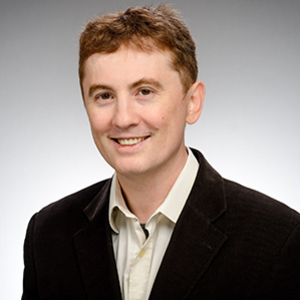
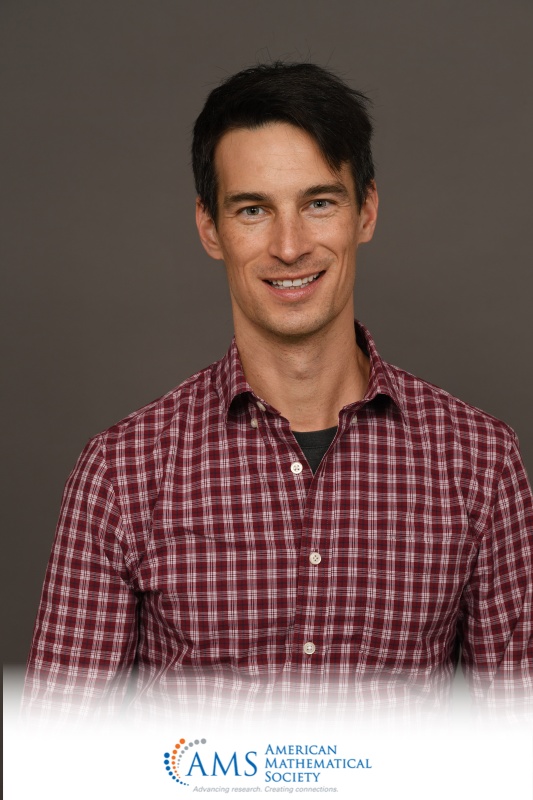
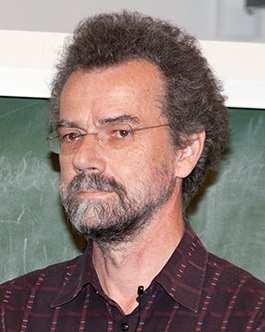
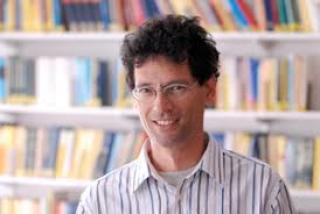
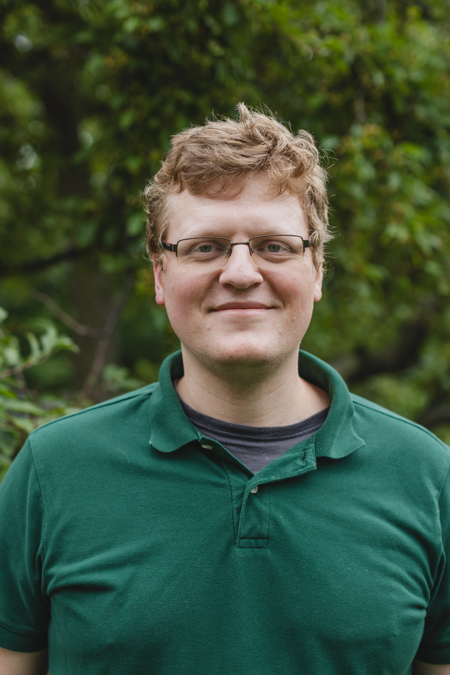
Jared Weinstein is a Professor in the Department of Mathematics and Statistics at Boston University, serving as the Departmental Ombud. He specializes in Number Theory and Algebraic Geometry, with a focus on p-adic geometry, shtukas, and moduli spaces. His research explores connections between arithmetic geometry and homotopy theory, including contributions to the Langlands program and local Shimura varieties. Education: AB from Harvard University (undergraduate), PhD from University of California, Berkeley. Postdoctoral work at UCLA and the Institute for Advanced Study before joining BU in 2011. Research interests include arithmetic geometry, p-adic Hodge theory, and the geometry of moduli spaces. His work often intersects with topics like perfectoid spaces, diamonds, and chromatic homotopy theory. Recent articles highlight advancements in modularity of elliptic curves over function fields and the Kottwitz conjecture for local shtuka spaces. No scientific awards are explicitly listed, but his extensive publications reflect significant contributions to his field. Advising and grants details are not provided here. His work is closely tied to the v-topology and related geometric frameworks in algebraic geometry.
Maxim Kontsevich is a permanent professor at the Institut des Hautes Études Scientifiques (IHÉS), holding the AXA Chair for Mathematics since 1995 and a visiting chair at Rutgers University (one month annually since 1997). Born in 1964 in Khimki, USSR, he earned his PhD from Bonn University in 1992. His career includes visiting positions at Harvard, the Institute for Advanced Study, and Berkeley, where he was a professor from 1993 to 1995. His research spans mathematical physics, algebraic geometry, and non-commutative geometry. Notable contributions include deformation quantization, mirror symmetry, and motivic integration. His work bridges algebraic structures with geometric and physical concepts, influencing areas like topological field theories, string theory, and integrable systems. Awardees of Fields Medal (1998), Crafoord Prize (2008), and Breakthrough Prize (2014), he also holds editorial roles at Compositio Mathematica and Publications Mathématiques IHÉS. His over 50 publications explore advanced topics such as quantum cohomology, Hodge theory, and categorical structures in geometry.
Mark Kisin is the Perkins Professor of Mathematics at Harvard University. His research focuses on Galois representations, p-adic Hodge theory, and Shimura varieties. He has made significant contributions to number theory and algebraic geometry. Research Interests Kisin's work bridges deep questions in number theory with algebraic geometry. His primary areas include Galois representations, p-adic Hodge theory, and Shimura varieties, with applications to modular forms and arithmetic geometry. Recent Publications His recent articles explore topics such as prismatic cohomology, essential dimension, Honda-Tate theory, and Hecke orbits. These works highlight his expertise in Shimura varieties and Galois representations, often involving collaborations with leading mathematicians like B. Farb and J. Wolfson. Editorial Involvement Kisin has served on the editorial boards of prestigious journals including Inventiones (2007–present), Cambridge Journal of Mathematics (2013–present), and Algebra and Number Theory (2013–2015).
Andrei Jorza is an Associate Professor of the Practice in the Department of Mathematics at the University of Notre Dame. His research focuses on the interplay between number theory and algebraic geometry, including topics such as modular forms, Galois representations, p-adic Hodge theory, and arithmetic geometry. He holds an A.B. from Harvard University (2005) and a Ph.D. from Princeton University (2010), advised by Andrew Wiles. Prior to his current position, he was a Taussky-Todd Instructor at Caltech and a member of the Institute for Advanced Study (IAS). Dr. Jorza has taught advanced courses on p-adic Hodge theory, global class field theory applications, algebraic number theory, and graduate algebra. His work includes significant contributions to computational verification of the Birch and Swinnerton-Dyer conjecture and studies on Galois representations for Siegel modular forms. His research also extends to topics like Lagrangian hyperplanes in holomorphic symplectic varieties and eigenvarieties in automorphic forms. He is affiliated with Notre Dame's Department of Mathematics, located in 275 Hurley Hall, and actively participates in seminars on algebraic geometry and commutative algebra. His lecture notes and courses reflect a deep engagement with foundational topics in number theory and algebra, emphasizing adelic methods and applications of class field theory.
Nathan Kaplan is a Professor in the Department of Mathematics at the University of California, Irvine, where he conducts research in number theory, algebraic geometry, and combinatorics. His work spans rational points on varieties over finite fields, arithmetic statistics, coding theory, and the study of numerical semigroups. He is actively involved in the mathematical community, organizing seminars and conferences including the UC Irvine Number Theory Seminar and the Southern California Number Theory Day. Dr. Kaplan received his PhD from Harvard University in 2013 under the direction of Noam Elkies. Following his doctorate, he was a postdoctoral researcher at Yale University from 2013-2015 before joining the faculty at UC Irvine. His research interests focus on the intersection of number theory and algebraic geometry, with particular attention to problems involving rational points on varieties over finite fields, arithmetic statistics, and coding theory. He has made significant contributions to the study of numerical semigroups, cokernels of random p-adic and integer matrices, and quadratic forms and lattices. His work often bridges theoretical mathematics with applications in coding theory and cryptography. Analysis of his recent publications shows a strong trend toward combinatorial aspects of number theory, particularly in the study of numerical semigroups and their properties. He frequently collaborates with researchers across institutions, with recent work spanning algebraic geometry, combinatorics, and coding theory. His publications demonstrate expertise in both theoretical developments and computational aspects of number theory. Dr. Kaplan is deeply committed to undergraduate research and mentoring. He has experience as a mentor for undergraduate research projects through programs including SUMRY (a research program for Yale undergraduates), the University of Minnesota-Duluth REU program, and the Trinity University REU program. He actively encourages undergraduates to apply for summer research opportunities and has organized numerous outreach activities. He is an organizer of the UC Irvine Number Theory Seminar and the Southern California Number Theory Day conference series. In 2018, he co-organized the Conference on Open Questions in Cryptography and Number Theory in honor of Alice Silverberg's 60th Birthday. Dr. Kaplan has given numerous talks at mathematical venues including the Museum of Mathematics' Math Encounters series, where he presented "Error-Correcting Codes: The Mathematics of Communication" in July 2022. He has also spoken at the Yale Undergraduate Math Society, the UCI Math Circle, and various other outreach events.
Prof. Dr. Peter Schneider is a faculty member at the University of Münster, affiliated with the Faculty of Mathematics and Computer Science and the Department of Mathematics and Computer Science . He is a principal investigator in the CRC 1442 Geometry: Deformations and Rigidity and contributes to the Mathematics Münster cluster. University: University of Münster School: Faculty of Mathematics and Computer Science Department: Department of Mathematics and Computer Science Academic Rank: Professor His research focuses on arithmetic geometry and representation theory , particularly the p-adic Langlands program , cohomology theories in mixed characteristics, and noncommutative algebraic structures. He investigates derived categories of p-adic representations, moduli spaces of Galois representations, and geometric approaches to automorphic forms. He has supervised numerous students, including Torsten Schoeneberg (2009), Marten Bornmann (2009), and Marius Kley (2016, 2019). His collaborative works with Rachel Ollivier, Otmar Venjakob, and Marie-France Vigneras explore modular Hecke algebras, Iwasawa theory, and (phi, Gamma)-modules. Emails: pschnei@wwu.de pschnei@uni-muenster.de Workshops Organized: Noncommutative Algebras (2006) Instructional workshop on noncommutative main conjectures (2011) International workshop on K-types for p-adic groups (2003)
Christopher Deninger is a distinguished Professor in the Mathematical Institute at the University of Münster, Germany, where he leads research in Arithmetic Geometry and Representation Theory. His office is located in Room 413 of the Einsteinstr. 62 building, and he maintains active teaching responsibilities including courses in Representation Theory of Finite Groups, Linear Algebra, and specialized topics like Adic Spaces. Deninger's research spans multiple interconnected domains of modern mathematics, with a consistent focus on the deep connections between number theory and geometry. His work has evolved from classical arithmetic geometry to incorporate increasingly sophisticated connections with p-adic analysis, dynamical systems, and more recently proalgebraic fundamental groups. A unifying theme throughout his career has been exploring analogies between different mathematical structures, particularly those connecting analytic number theory with dynamical systems on foliated spaces. His recent publications reveal a continued expansion of his research program into new territories while maintaining connections to his foundational work. The most recent papers show increasing integration of algebraic topology concepts with arithmetic geometry, particularly through proalgebraic fundamental groups and their applications. The consistent thread throughout his decades of publications is the search for deeper structural connections between seemingly disparate areas of mathematics, particularly those bridging analysis, geometry and number theory. Professor Deninger has mentored an extensive number of doctoral students and postdoctoral researchers, as evidenced by the comprehensive list of former members in his working group. His collaborations span the international mathematical community, with numerous joint publications with leading mathematicians across Europe and beyond. While specific grant information isn't detailed in the available materials, his sustained publication record across decades suggests consistent research support for his mathematical investigations. The Mathematical Institute at Münster provides the institutional home for Deninger's research activities, where he maintains an active working group focused on arithmetic geometry and related fields. His office environment includes support staff and colleagues working in closely related mathematical domains, creating a vibrant research community centered around advanced topics in pure mathematics.
Gyujin Oh is a Ritt Assistant Professor in the Department of Mathematics at Columbia University's Faculty of Arts and Sciences. He received his PhD in mathematics from Princeton University in 2022 under the supervision of Christopher Skinner and Akshay Venkatesh. Prior to joining Columbia, he was a postdoctoral member of the SLMath/MSRI program Algebraic Cycles, L-Values, and Euler Systems in Spring 2023. Dr. Oh's research spans multiple areas of number theory and arithmetic geometry. His primary interests include Algebraic Number Theory, the Langlands Program, Modular Forms, Galois Representations, and Arithmetic Geometry. His work often bridges classical number theory with modern geometric approaches, exploring connections between automorphic forms, cohomology theories, and arithmetic structures. He has made contributions to understanding rigid local systems, the Néron-Ogg-Shafarevich criterion, and various aspects of the Langlands correspondence. His recent publications demonstrate a strong focus on advanced topics in number theory, particularly exploring the intersection of modular forms, Shimura varieties, and Galois representations. His work on generalized Whittaker models, moduli stacks of crystals, and arithmetic quantum local systems reflects his interest in both classical and cutting-edge approaches to number-theoretic problems. The pattern in his research shows a consistent theme of connecting geometric structures with arithmetic phenomena. Dr. Oh is an active educator who has developed comprehensive lecture notes for both undergraduate and graduate courses in Algebraic Number Theory. In Spring 2025, he is teaching Graduate Algebraic Number Theory (MATH GR6657) at Columbia University, covering local and global class field theory, Langlands program connections, and related advanced topics. He has also been involved in organizing and participating in numerous learning seminars including the Moduli of Langlands Parameters seminar, Theta learning seminar, and Deformation theory learning seminar.
Bence Hevesi is a MathInGreaterParis Postdoctoral Fellow at the Laboratoire de Mathématiques d'Orsay, affiliated with Université Paris-Saclay. Previously, he completed his PhD (2020–2023) at the London School of Geometry and Number Theory (LSGNT), a collaboration between King's College London, Imperial College London, and University College London. His primary supervisor during his PhD was Professor Fred Diamond, with additional supervision by Ana Caraiani. He holds a Master's degree in Mathematics, supervised by David Hansen, focusing on the Geometry of the de Rham affine Grassmannian . Research Interests: Bence specializes in Number Theory, particularly the Langlands program. His work explores global and p-adic aspects, including automorphic forms, Galois representations, and arithmetic geometry. He actively contributes to advancing methodologies in p-adic Hodge theory and representation theory. Publications/Preprints: His recent preprint, Ordinary parts and local-global compatibility at l=p , reflects his engagement with cutting-edge topics in number theory. This work bridges local and global perspectives in the Langlands program, with implications for understanding p-adic structures in arithmetic geometry. Awards & Grants: No specific awards or grants are mentioned, but his postdoctoral fellowship under MathInGreaterParis highlights institutional recognition of his research potential. His PhD at LSGNT was supported by the UK's Engineering and Physical Sciences Research Council (EPSRC). Labs & Collaborations: Based at Laboratoire de Mathématiques d'Orsay, he collaborates with leading researchers in arithmetic geometry and number theory. His work intersects with CNRS and international networks, fostering interdisciplinary advancements in algebraic number theory.
Pierre Colmez is a French mathematician affiliated with the École Polytechnique (1993-2010) and the National Center for Scientific Research (CNRS) at the Institut de Mathématiques de Jussieu since 2010. His academic journey includes postdoctoral positions at the Institut Joseph Fourier (Grenoble) and the Max Planck Institute for Mathematics (Bonn). Ph.D. in 1988 (Grenoble) under Jean-Marc Fontaine and John Coates École Polytechnique: Professor (2006-2010), Teaching Professor (1993-2005) Colmez’s research lies at the intersection of arithmetic geometry , Galois representations , p-adic Hodge theory , and the Langlands program . His work explores connections between automorphic forms, p-adic analysis, and cohomological structures in number theory. His most recent publications focus on p-adic cohomology, Drinfeld towers, and syntomic complexes, reflecting his expertise in advanced topics of nonarchimedean geometry and Galois cohomology . Collaborations with Gabriel Dospinescu and Wiesława Nizioł highlight his contributions to modern arithmetic geometry. Prix Léonid Frank (2016) Aisenstadt Chair (2015) Prix Fermat (2005) Prix Gabrielle Sand et Guido Triossi (1999) Colmez has held editorial roles at Astérisque (1999-2004), directed the SMF Mathematical Documents collection (2001-2016), and served on editorial boards for Annales de l'ENS and Publications de l'IHES . His academic network includes collaborations with Laurent Berger, Christophe Breuil, and Jean-Pierre Serre.
Alireza Salehi Golsefidy is a Professor in the Department of Mathematics at the University of California, San Diego (UCSD). He received his Ph.D. from Yale University under Gregory Margulis, a Fields Medalist. His research focuses on algebraic, arithmetic, and analytic properties of linear groups, homogeneous dynamical systems, and expander graphs. He has held positions at Princeton University and the Institute for Advanced Study as a Veblen Research Instructor before joining UCSD in 2011. Education: Ph.D. in Mathematics, Yale University (2006). Research Interests: His work bridges discrete subgroups of Lie groups, homogeneous dynamics, and number theory. Recent contributions include studies on super-approximation, spectral independence, and geometric group theory. He has organized workshops on thin groups, arithmetic groups, and homogeneous dynamics at MSRI and Oberwolfach. Grants & Awards: Alfred P. Sloan Research Fellowship (2012), Clay Liftoff Award (2006), NSF grants 1602137, 1902090, and 2302519. His research explores applications of expander graphs and random walks in algebraic structures. Teaching: Currently teaching Algebra (Math 200C) in Spring 2025. Past courses include advanced algebraic topology, representation theory, and graduate-level number theory. Labs/Teams: Co-organizes UCSD's Algebra Seminar and contributed to the 2013 Lie Theory Workshop. Active in collaborative projects on group actions and automorphic forms.
Uri Onn is a Professor at the Mathematical Sciences Institute of the Australian National University (ANU). His research focuses on advanced algebraic structures, including zeta functions, arithmetic groups, and representation theory. He contributes to the understanding of nilpotent groups, valuation rings, and Lie algebras through rigorous mathematical frameworks. Research Interests: Dr. Onn’s work spans number theory, group theory, and algebraic geometry, with a particular emphasis on zeta functions, arithmetic groups, and representation growth. His studies explore the interplay between algebraic structures and their applications in modern mathematics. Key Research Trends: His articles address topics like zeta functions in nilpotent groups, representation theory over finite rings, and the behavior of arithmetic groups under base change. These contributions advance foundational knowledge in abstract algebra and number theory. Grants and Projects: He leads projects such as the Geometry of Character Varieties (2025–2028) and Representations of Arithmetic Groups (2017–2023), focusing on algebraic and geometric representations.
Jonathan Pila is a Reader in Mathematical Logic at the University of Oxford's Mathematical Institute, with a focus on model theory and number theory. He is affiliated with the Mathematical Logic and Number Theory research groups. BScHons (University of Melbourne, 1984) PhD (Stanford University, 1988) His research explores intersections of mathematical logic with number theory, particularly via o-minimality, addressing problems like the Andre-Oort conjecture, Zilber-Pink conjecture, and Ax-Schanuel theorems in algebraic and Diophantine geometry. Recent work includes advancements on functional transcendence, canonical heights in Shimura varieties, and uniform parameterization techniques with applications to Diophantine problems. Leverhulme Trust Research Fellowship (2008-2010) Clay Research Award (2011) LMS Senior Whitehead Prize (2011) ASL Karp Prize (2013) Elected FRS (2015) Rolf Schock Prize (2022) Frontiers of Science Award (2023)
Patrick Ingram is an Associate Professor at the Department of Mathematics and Statistics , Faculty of Science , York University . His research focuses on number theory and diophantine geometry , particularly the arithmetic of elliptic curves and surfaces , and dynamical systems over global fields . His scholarly work includes significant contributions to the study of canonical heights , post-critically finite maps , and primitive divisors in arithmetic dynamics . His research often bridges complex dynamics with number theory, exploring the interplay between Galois representations , Drinfeld modules , and polynomial iterations . Patrick has received the Top Cited Article 2007 - 2011 award from the Journal of Number Theory . He collaborates with leading mathematicians in arithmetic dynamics, including Joseph H. Silverman , and has published extensively in top-tier journals such as the Duke Mathematical Journal , Proceedings of the London Mathematical Society , and Transactions of the American Mathematical Society . His work spans both theoretical advancements and computational techniques in algebraic divisibility sequences and rigidity theorems .
Pavel Coupek is a Visiting Assistant Professor in the Department of Mathematics at Michigan State University (MSU). He holds a PhD from Purdue University, where he was supervised by Tong Liu, and completed his Bachelor's and Master's studies in homological algebra at Charles University in Prague. His research focuses on p-adic Hodge theory, arithmetic geometry, and homological algebra, with applications to modular forms and rational points on algebraic curves. Education: PhD in Mathematics, Purdue University (Advisor: Tong Liu) MSc in Mathematics, Charles University, Prague BSc in Mathematics, Charles University, Prague Research Interests: p-adic Galois representations and p-adic Hodge theory Algebraic and arithmetic geometry Homological algebra and its interactions with algebraic geometry Modular and automorphic forms Quadratic Chabauty methods for rational points Professional Activities: Organized seminars on infinity categories and perfectoid spaces at Purdue University Co-authored research on prismatic cohomology, automorphic forms, and geometric Chabauty methods Teaching experience includes courses at MSU and Purdue, covering differential equations, calculus, and linear algebra

.jpg)