

Professor Ihab Ilyas is a leading figure in data management and machine learning at the Cheriton School of Computer Science , University of Waterloo , where he holds the Thomson Reuters Research Chair in Data Quality . He is currently on leave from the university, serving as a Distinguished Engineer, Proactive Intelligence at Apple Inc . His research focuses on data cleaning , large-scale data integration , knowledge graphs , and machine learning applications in data quality . He has pioneered systems like HoloClean and Saga , with commercial impacts through co-founded startups Inductiv (acquired by Apple) and Tamr . PhD in Computer Science from Purdue University Co-founder of Inductiv (acquired by Apple) Co-founder of Tamr Research Interests include: Probabilistic and uncertain data management Machine learning for data quality and enrichment Big data systems and information extraction Knowledge graph construction and optimization Scientific Awards and Recognitions include: Fellow of the Royal Society of Canada (2024) C.C. Gotlieb Computer Award (2024) IEEE Fellow (2021) ACM Fellow (2020) Cheriton Faculty Fellowship (2013-2016) Ontario Early Researcher Award
جستجوی استاد راهنمای دانشگاهی
برای مسیر پژوهشیتان، استاد راهنما، استاد دانشگاه و پژوهشگر مناسب را پیدا کنید و با آنها ارتباط بگیرید.
نمایش ۱-۱۵ از ۱٬۴۷۹ استاد راهنما
اطلاعات پروفایلها از صفحات عمومی دانشگاهها گرفته شده و ممکن است بهروز نباشد.
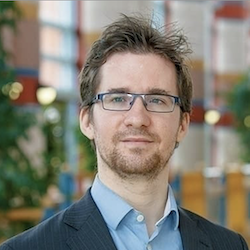
David Stillwell serves as Professor of Computational Social Science at Cambridge Judge Business School and Academic Director of The Psychometrics Centre, University of Cambridge. His research leverages big data to understand human psychology and behavior, with significant contributions in personality prediction from digital footprints and personalized advertising applications. His educational background includes: BSc in Psychology from the University of Nottingham (2007) MSc in Research Methods from the University of Nottingham (2008) PhD in Decision Making from the University of Nottingham (2012) Dr. Stillwell's research centers on computational social science and psychometrics, pioneering the myPersonality Facebook application that collected data from over 6 million users. His work demonstrates computers can predict personality as accurately as spouses, reveals psychological targeting's advertising effectiveness, and establishes links between personality-matched spending and life satisfaction. He also explores linguistic honesty markers through profanity analysis and personality-based dating patterns. His recent publications (2019-2025) reveal a strong trajectory toward AI evaluation using psychometric frameworks, particularly in medical and general-purpose AI assessment. Key themes include fairness metrics in language models, crisis emotional responses through social media, and computational personality recognition - demonstrating consistent innovation at the psychology-technology intersection. He has received significant recognition: Top 10 most influential papers of 2013 by Altmetric Nieman Journalism Lab highlight of 2013 Named in 'top 30 thinkers under 30' by Pacific Standard Magazine Dr. Stillwell maintains active industry engagement through consultancy with Barclays, Hilton, and Ubisoft on projects spanning computer-adaptive testing systems to interactive experiences like Predictive World for Watch Dogs 2. His policy impact is substantial, with citations by the European Data Protection Supervisor, World Bank, and multiple national governments, leading to speaking engagements at the European Parliament and Bank of England. As Academic Director of The Psychometrics Centre, he leads a global hub for advancing psychological assessment through innovative methods including Concerto open-source software, collaborating with organizations ranging from the European Commission to major corporations on psychometric applications in people analytics and digital behavior.
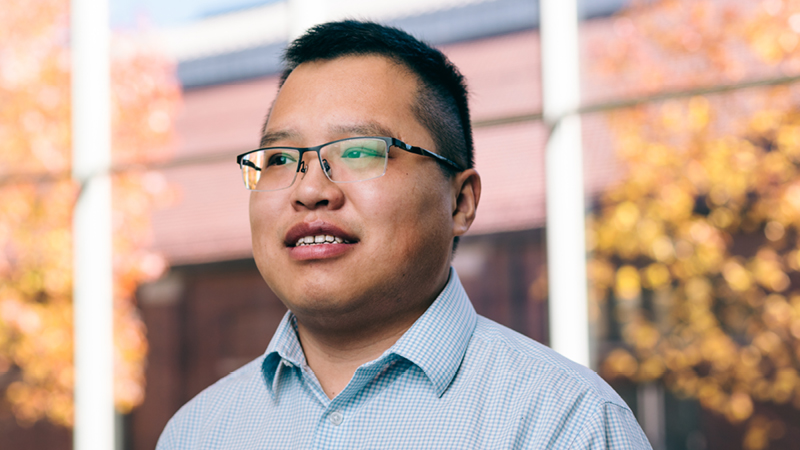
Jianguo Wangمشاهده پروفایل
استادیار
Jianguo Wang is an Assistant Professor in the Department of Computer Science at Purdue University, joining in Spring 2021. His research focuses on database systems for the cloud and large language models, including disaggregated databases and vector databases. He holds a PhD from the University of California, San Diego, and has worked at Zilliz (Milvus) and Amazon Web Services (AWS). Education: PhD in Computer Science (UC San Diego, 2019), MPhil (Hong Kong Polytechnic University), BSc (Zhengzhou University) Research interests include Disaggregated Databases, Vector Databases for Large Language Models, and cloud-native systems. Notable work includes OpenAurora (an open-source Amazon Aurora prototype) and contributions to Milvus. He has received grants like the NSF CAREER Award and honors such as the IEEE TCDE Rising Star Award. Advising a team of students in database systems and teaching courses like CS592 (Disaggregated Database Systems) and CS440 (Large-scale Data Analytics). Serves on program committees for SIGMOD, VLDB, and ICDE.

Dr. Sezgin Ayabakan is an Associate Professor in the Department of Management Information Systems at the Fox School of Business and Management, Temple University . He holds a PhD in Management Science from the University of Texas at Dallas, with a focus on Management Information Systems (MIS), an MS in Industrial and Systems Engineering from the University of Florida, and a BS in Industrial Engineering from Bilkent University in Turkey. His research focuses on healthcare analytics , particularly exploring how health information technology (HIT) impacts healthcare costs, quality, and utilization. Key research interests include data analytics applications in healthcare and social media, the business value of information systems, and open-source production strategies. He has examined topics such as telehealth efficacy, electronic health record (EHR) adoption challenges, hospital readmission reduction programs, and the interplay between healthcare IT and clinician well-being. Dr. Ayabakan teaches undergraduate and graduate courses in information systems, including MIS 2101: Digital Systems and SBM 3586: Diamond Peer Teachers - Internship II . His work has been published in top-tier journals like MIS Quarterly and Health Services Research and Management Epidemiology , with recent studies addressing telehealth utilization, EHR strategy impacts, and the role of organizational routines in clinician satisfaction. While no formal awards are listed, his contributions to healthcare IT research demonstrate significant academic impact. His advisory and grant activities are not detailed in the provided text, but his research often intersects with practical healthcare system challenges, suggesting potential collaborations with healthcare institutions and policy organizations.
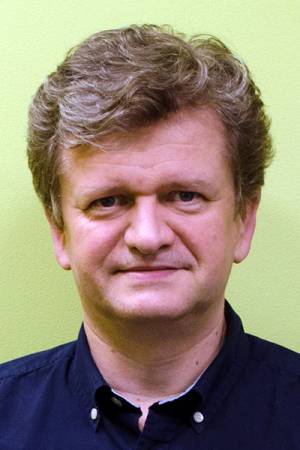
Artur W. Dubrawskiمشاهده پروفایل
استاد پژوهش
- Artificial Intelligence
- Machine Learning
- Robotics
- +۷ مورد دیگر
Artur W. Dubrawski is an Alumni Research Professor of Computer Science and Director of the Auton Lab at Carnegie Mellon University's School of Computer Science. He leads interdisciplinary research on Artificial Intelligence, Machine Learning, and Robotics with real-world applications in healthcare, nuclear safety, food safety, and counter-human trafficking. His work focuses on bridging gaps between data-driven AI and empirical sciences through probabilistic modeling, predictive analytics, and time-series intelligence. Lab: Auton Lab (founded 1993) Collaborations: Allegheny County Health Department, USDA, CDC, U.S. Army Research Impact: AI for wastewater-based COVID-19 forecasting, radiological inspection systems, and hospital infection detection His students and affiliates include current PhD candidates Angela Chen, Emma Erickson, Cecilia Morales, Willa Potosnak and past researchers like Benedikt Boecking (co-inventor of Interactive Weak Supervision). The lab has spun off startups like Marinus Analytics (IBM XPrize finalists) and developed open-source tools like auton-survival for survival analysis. Key Grants: $10.5M U.S. Army contract for AI-driven predictive maintenance research.
Srijan Kumarمشاهده پروفایل
استادیار
Srijan Kumar is an Assistant Professor in the School of Computational Science and Engineering at Georgia Institute of Technology's College of Computing. His research focuses on data science, AI for security, and online safety, addressing challenges in detecting malicious users, misinformation, and enhancing AI robustness. His work has been deployed in platforms like Flipkart and Wikipedia, and recognized through awards such as the NSF CAREER and Forbes 30 Under 30. Education: B.Tech from Indian Institute of Technology, Kharagpur Ph.D. in Computer Science from University of Maryland, College Park Postdoctoral training at Stanford University Research Interests: Multi-modal/multi-lingual detection of harmful content and users Adversarial robustness of AI models Graph and network analysis for early detection Responsible recommender systems Awards & Grants: NSF CAREER Award (2023) Kavli Fellow (2022) Facebook/Adobe Faculty Awards NSF Convergence Accelerator Phase II grant ($5M) Advising & Labs: Leads the CLAWS Lab, advising over 20 students. Active in mentoring through conferences and NSF-funded projects.

Dr. Stan Ahalt serves as the inaugural Dean of the UNC School of Data Science and Society (SDSS) and holds a professorship in the Department of Computer Science at UNC-Chapel Hill. He previously directed the Renaissance Computing Institute (RENCI) and currently acts as its executive advisor. Additionally, he is the associate director of informatics and data science at NC TraCS, the translational research institute at UNC. His academic journey includes a 22-year tenure as professor of electrical and computer engineering at Ohio State University and leadership roles at the Ohio Supercomputer Center. Ahalt’s research focuses on applying data science to societal challenges such as healthcare, climate, and judicial reform. Key initiatives include the National Consortium for Data Science and the iRODS project, which advanced enterprise data management systems. Ahalt has secured over $34.5M in grants to lead high-impact projects like the NHLBI BioData Catalyst (unifying biomedical data), the NCATS Translator (accelerating clinical discovery), and the NIH HEAL Initiative (ensuring FAIR data standards). He mentors students across doctoral and master’s programs, teaching data science fundamentals in courses like COMP 116: Introduction to Scientific Programming. His work emphasizes interdisciplinary collaboration, evidenced by roles in RENCI, NC TraCS, and the SDSS. Ahalt’s contributions span cyberinfrastructure development, educational innovation, and translational research, positioning UNC as a national leader in data science.
Michele Zorzi is a Professor of Telecommunications at the School of Engineering, University of Padova, Italy, where he has held a faculty position since 2003. He leads the SIGNET (Signal processing and Networking) Research Group, focusing on cutting-edge wireless networking challenges including mmWave communications and underwater networks. His extensive publication record exceeds 600 papers in top-tier journals and conferences, reflecting significant contributions to the field through both theoretical and experimental work. He received his Laurea Degree (1990) and Ph.D. (1994) in Electrical Engineering from the University of Padova. Prior academic appointments include Politecnico di Milano (1993-1996), University of California San Diego (1995-1998), and University of Ferrara (1998-2003), where he progressed from Associate Professor to full Professor. His educational trajectory demonstrates deep roots in Italian academia with international exposure. Professor Zorzi's research spans wireless communications and networking, with current emphases on mmWave networking for vehicular systems, underwater acoustic/optical communications, non-terrestrial networks, and AI-driven networking solutions. His group conducts experimental validations including at-sea trials for underwater systems and testbeds for vehicular networks. Key projects include PRATA for predictive QoS in autonomous driving and IoT-based environmental monitoring of the Venice Lagoon, demonstrating practical applications of theoretical work. Analysis of his 2022-2025 publications reveals strong trends in applying artificial intelligence to networking challenges across diverse environments. There is significant emphasis on vehicular networks (predictive QoS, teleoperated driving), underwater systems (acoustic/optical communications, AUV swarms), and satellite networks (Starlink integration, NTN security). Experimental validation in real-world scenarios like the Venice Lagoon monitoring project and underwater sea trials characterizes his applied research approach. His scientific accolades include: IEEE Fellow (2007) IEEE Communications Society Best Tutorial Paper Award (2008, 2019) Stephen O. Rice Best Paper Award (2018) Multiple best paper awards at IEEE conferences (2005-2020) As principal investigator for numerous European and US research projects plus 20+ industry-funded initiatives, Professor Zorzi has mentored over 35 PhD students and post-docs. Graduates now hold prominent positions at institutions including Stanford, UCSD, CTTC, and Huawei. His SIGNET group maintains active international collaborations and contributes to open-source networking tools via GitHub, demonstrating commitment to community engagement. The SIGNET Research Group, housed within the Department of Information Engineering, operates specialized experimental facilities for mmWave and underwater communications. Current initiatives include AI-based predictive QoS frameworks for vehicular networks, underwater optical communication systems using ultraviolet light, and large-scale IoT deployments for environmental monitoring. The group's GitHub presence indicates strong open-science practices, while recent sea trials confirm hands-on experimental capabilities beyond theoretical work.
Aditya Parameswaran is an Associate Professor in the Electrical Engineering and Computer Sciences (EECS) department at the University of California, Berkeley. He co-directs the EPIC Data Lab and the Police Records Access project, focusing on simplifying data science at scale through human-in-the-loop systems, LLM-powered tools, and scalable data systems. His research spans database systems, human-computer interaction, and machine learning, with notable contributions in tools like Lux, Modin, and DataSpread. Education : PhD in Computer Science from Stanford University (2013) BTech in Computer Science and Engineering from IIT Bombay (2007) Research Interests : Parameswaran's work centers on empowering end-users with intuitive data tools. Recent projects include LLM-powered systems for document processing (DocETL, TWIX), proactive data systems, and benchmarking frameworks. He emphasizes democratizing data science through low/no-code solutions and improving production ML workflows. Articles Trends : His recent work (2023–2025) prioritizes LLM integration into data systems, focusing on robust pipelines, assertion generation (SPADE), and debugging tools (RAGGY). Earlier contributions include visualization recommendation (Lux), scalable dataframes (Modin), and spreadsheet optimization (DataSpread). Awards : Recipient of the VLDB Early Career Award (2019), Sloan Research Fellowship (2020), NSF CAREER Award (2017), and multiple best paper/demonstration awards at top venues like SIGMOD and VLDB. Advising & Grants : Guides over 20 PhD/postdoc alumni, many now in academia (e.g., Madelon Hulsebos at CWI) and industry leadership roles. Active in securing grants (e.g., NSF, Army Research Office) and industry partnerships (e.g., Snowflake, LangChain). Labs/Teams : Leads the EPIC Data Lab, focusing on agentic data systems, and co-founded Ponder (acquired by Snowflake). Collaborates on the Police Records Access initiative, building transparency tools for public records.
Michael Baldeaمشاهده پروفایل
دانشیار
Michael Baldea is an Associate Professor in the Department of Chemical Engineering at the University of Texas at Austin . He holds a Ph.D. in Chemical Engineering from the University of Minnesota (2006), with prior degrees from 'Babeş-Bolyai' University in Romania (M.Sc. 2001, Diploma 2000). His research group develops theoretical and computational methods for Process and Energy Systems Engineering , focusing on integrated decision-making, performance optimization, and process intensification with industrial validation. Education: Ph.D., Chemical Engineering, University of Minnesota (2006) M.Sc., Interface Process Engineering, 'Babeş-Bolyai' University (2001) Diploma, Chemical Engineering, 'Babeş-Bolyai' University (2000) Research Thrusts: Integrated decision-making in chemical/energy supply chains Process performance monitoring and optimization Process integration and intensification Key applications include grid-responsive chemical plants, intensified distillation/column designs, and renewable energy integration for building systems. Scientific Awards: Frank A. Liddell, Jr. Fellowship NSF CAREER Award (2015-2020) Moncrief Grand Challenges Faculty Award (2014) AIChE Outstanding Young Researcher Award (2017) Implementation : His group has translated research into commercial tools through partnerships with industrial test beds and is working to integrate methods into commercial simulators. They explore predictive approaches for building energy management and strategic capital investment analysis in next-generation energy systems.
Dr. Jonathan Bright is a Senior Research Fellow and Associate Professor at the Oxford Internet Institute, University of Oxford , specializing in computational approaches to the social and political sciences. His research explores how digital technologies reshape political participation and how new data sources enhance governmental decision-making. Research Interests: Focused on social media, political behavior, computational social science, and big data , Bright’s work addresses digital governance, algorithmic bureaucracy, and the dynamics of political fragmentation online. His empirical studies span open government data usage, crowdsourced geographical information, and the impact of neighborhood effects on data completeness. Scientific Contributions: Leading studies on algorithmic governance in UK local authorities (2020) Investigating geodemographic biases in crowdsourced platforms like OpenStreetMap (2018) Mapping political fragmentation in social media ecosystems (2018) Grants & Collaborations: Funded by UK taxpayers, ESRC, and Google, his work intersects with projects on vaccine misinformation, hate speech monitoring, and digital economies. Formerly held positions as Research Fellow and Research Associate at OII from 2013 to present.
Connor Coleyمشاهده پروفایل
استادیار
Connor Coley is the Henri Slezynger (1957) Career Development Assistant Professor at the Massachusetts Institute of Technology (MIT) School of Engineering. His research bridges chemistry and machine learning, focusing on autonomous molecular discovery, predictive chemistry, and laboratory automation. Education: Ph.D., MIT (2019) M.S.CEP., MIT (2016) B.S., Caltech (2014) Research Interests: Dr. Coley’s work centers on domain-informed machine learning for chemistry, computer-aided molecular design, and autonomous laboratories. Key themes include predictive modeling of chemical reactivity, optimization of synthesis pathways, and integration of AI with experimental data for drug discovery and materials science. Publications: His recent articles highlight advancements in AI-driven reaction prediction, molecular representation learning, and laboratory automation. Trends include applications of Bayesian optimization, contrastive learning, and diffusion models to chemical discovery. Scientific Awards: Camille Dreyfus Teacher-Scholar Award (2025) James W. Swan Outstanding Faculty (2025) Schmidt Futures AI2050 Early Career Fellow (2022) NSF CAREER Award (2021) Forbes 30 Under 30: Healthcare (2019) Software & Tools: He leads the open-source ASKCOS software suite for synthesis planning, adopted by 35,000+ chemists and deployed at 15+ pharmaceutical companies. His team also develops tools for metabolomics and molecular representation learning.
Lina Bertling Tjernberg is a Professor at the Department of Electrical Engineering, KTH Royal Institute of Technology, and Deputy Head of the School of Electrical Engineering and Computer Science (EECS) with responsibility for research conditions and impact. She served as Director of KTH's Energy Platform during 2018-2024 and holds memberships in IVA (Swedish Royal Academy of Engineering Sciences) and the IEEE Power & Energy Society. Research Focus: Applying mathematics (statistics, optimization, life cycle assessment) to enhance reliability and predictive maintenance in electric power systems, with emphasis on future electricity grids integrating microgrids, battery storage, HVDC, nuclear/pumped/hydro/wind/solar power, hydrogen, and electrified transport. Collaborations: Engaged with Comillas Pontifical University (Madrid), Addis Ababa University, Norwegian University of Science and Technology (NTNU), and IEA Wind. Key Research Trends: Recent articles highlight advancements in microgrid control (2025), SMR nuclear energy integration (2025), AI-driven asset management (2024), hydrogen sector coupling (2024), and renewable forecasting techniques (2024). Awards: 2021 Power Woman of the Year 2022 Energy Power List (Sweden’s top 20 energy influencers) Leadership Roles: Swedish Electromobility Center (SEC) board Chair of Swedish Electrical Standards (SEK Svensk Elstandard) Member, IEEE PES ISGT Europe steering committee
- Data Management
- Database Systems
- Machine Learning
- +۸ مورد دیگر
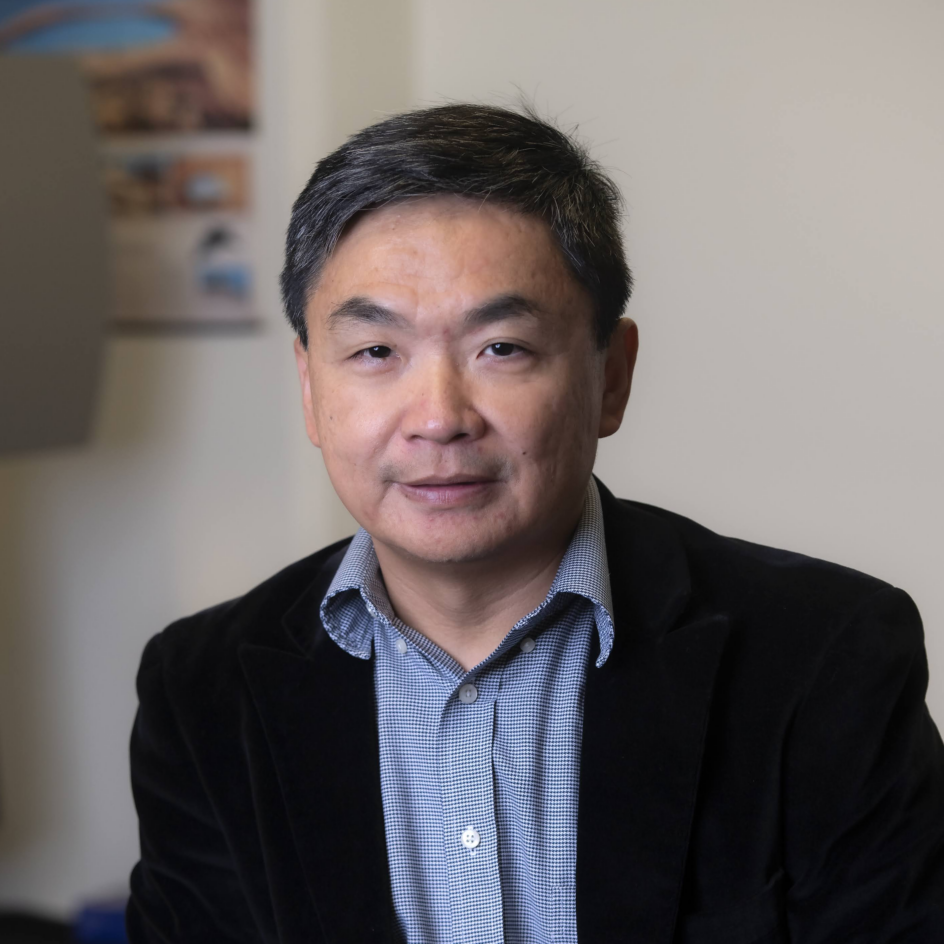
Chen Li is a Professor in the Department of Computer Science at the University of California, Irvine (UCI), affiliated with the Donald Bren School of Information and Computer Sciences (ICS). He holds a Ph.D. from Stanford University and bachelor's and master's degrees from Tsinghua University. His research focuses on data management, including databases, query optimization, machine learning systems, and open-source tools like AsterixDB and Texera. He has received prestigious awards such as the NSF CAREER Award and IEEE Fellow recognition. Li is also a board member of the VLDB Endowment and the former Faculty Director of UCI's ICS Master of Computer Science Program. Education: Ph.D., Computer Science, Stanford University M.S. and B.S., Computer Science, Tsinghua University Research interests span next-generation databases, approximate query processing, and AI-driven data analytics. Notable contributions include the Texera system for collaborative data science workflows and the Apache AsterixDB project. He has led NIH-funded initiatives in diabetes research and pandemic prediction, emphasizing real-world applications of data science. Professional roles include PC co-chair of VLDB 2015, General Co-chair of SIGMOD 2027, and a visiting research scientist at Google. His awards highlight his impact in both academia and industry. Advising and mentoring are central to his career, with a focus on graduate education. He has pioneered outreach programs like DS4ALL to teach high-school students data science using Texera.

Charles Rahalمشاهده پروفایل
دانشیار
Charles Rahal is an Associate Professor in Data Science and Informatics at the University of Oxford, with additional affiliations as an Associate Member of Nuffield College and Researcher at the Gradel Institute, New College. He serves as a Co-Investigator at the ESRC Centre for Care and sits on the Steering Group of Reproducible Research Oxford. His academic career includes previous roles as a Senior Departmental Research Lecturer at the Leverhulme Centre for Demographic Science and a British Academy Postdoctoral Fellow. Dr. Rahal completed his PhD in 2016 and has established himself as a prominent social science methodologist and applied social data scientist with expertise in high-dimensional econometrics. His research spans multiple domains, focusing particularly on unique Big Data origination processes and their relationship to social inequality, mobility, and stratification. He is deeply engaged in machine learning methods, civic technology, spatial and time series econometrics, model uncertainty, and scientometrics. His recent publications reveal a strong trend toward computational social science, with significant contributions to understanding prediction limits, pandemic impacts, healthcare systems, and environmental sustainability. The articles demonstrate his interdisciplinary approach, bridging traditional social science with cutting-edge computational methods, particularly in the analysis of large-scale datasets and development of novel metrics like the InterModel Vigorish for model comparison. Dr. Rahal is actively involved in teaching and mentoring, co-convening courses in Demographic Analysis, Life Course Research, and the Oxford Partner site of the Summer Institute in Computational Social Sciences. He has developed workshops on machine learning, command line interfaces, and LaTeX, reflecting his commitment to methodological training in social science. He leads the Metrics and Models lab and maintains several open-source projects including the GWAS Diversity Monitor and RobustiPy. His editorial roles include Associate Editor-in-Chief at the Journal of Social Computing and Associate Editor at ACM Transactions on Social Computing, highlighting his influence in shaping computational social science methodology.
نمایش نتایج تا ۷۵۰ مورد اول. برای یافتن نتایج دقیقتر، جستجوی خود را با فیلترها محدود کنید.