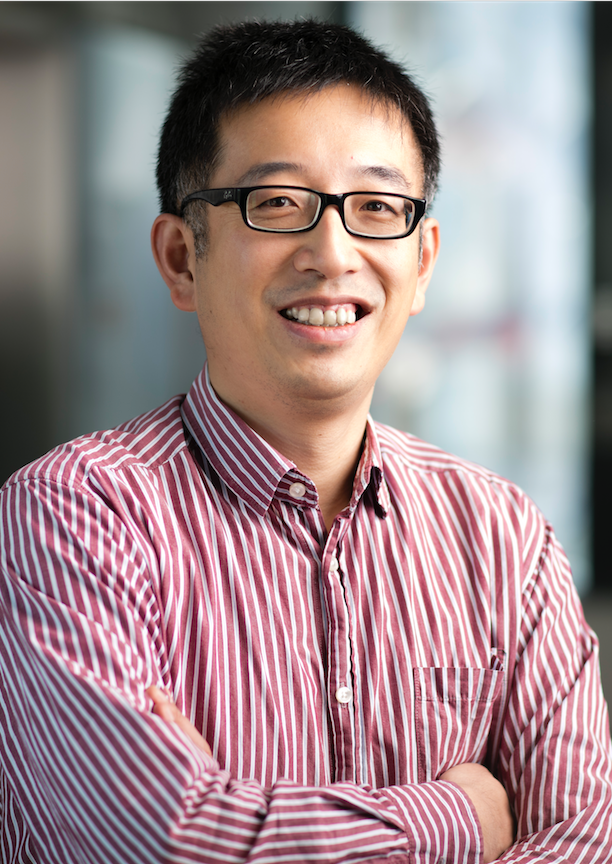
Michael Heethoff is an Associate Professor at the Technical University of Darmstadt in the Department of Animal Evolutionary Ecology. His research spans soil ecology, chemical defense mechanisms in arthropods, functional morphology of microarthropods, and the evolution of parthenogenesis. He leads interdisciplinary projects using Synchrotron X-ray tomography and DISC3D for 3D insect digitization. PhD in Genetic Diversity of Parthenogenetic Oribatid Mites (2003, TU Darmstadt) Habilitation on Evolution and Ecology of Oribatid Mites (2012, University of Tübingen) His work integrates chemical ecology with biomechanical modeling , focusing on predator-prey dynamics and forest soil community responses to climate change. Recent publications highlight collaborations in biomedical image segmentation and genetic studies of arthropod defense systems. He advises PhD students Jascha Höpfner , Arianna Tartara , and Matteo Trevisan , and has secured grants from DFG and BMBF for projects like ASTOR and Predator-Prey Networks . His lab investigates tropical rainforest regeneration in Ecuador and microclimatic changes in Hessian forests.
Paul Lukowicz is a distinguished researcher affiliated with the University of Kaiserslautern and DFKI, Kaiserslautern, Germany. His work focuses on Human Activity Recognition (HAR) using wearable sensors, Augmented Reality for surgical navigation, and Quantum-Inspired Computing for AI efficiency. He leads interdisciplinary projects involving capacitive sensing , bio-impedance , and large language models (LLMs) in real-world applications. Research Trends from his recent publications (2024-2025) reveal a focus on Energy-efficient AI for wearables Context-aware AR systems Physics-informed neural networks Quantum machine learning Human-in-the-loop training frameworks Medical device innovation His work spans health applications , industrial IoT , and human-AI collaboration , often involving partnerships with institutions like University of Passau and international collaborators. Key technical approaches include sensor fusion , cross-modal learning , and edge computing for wearable systems.
Jonathan W. Y. Gray is a Reader in Critical Infrastructure Studies at the Department of Digital Humanities , King's College London . He serves as Director of the Centre for Digital Culture and co-founded the Public Data Lab . Gray is also a Research Associate at the Digital Methods Initiative (University of Amsterdam) and médialab (Sciences Po, Paris). His research focuses on the role of digital data, methods, and infrastructures in shaping collective life , with projects spanning Humanities-based digital methods for environmental issues Critical technical practices in digital research Digital mobilization of East and Southeast Asian (ESEA) communities Public data cultures and open access politics Gray’s recent publications explore topics such as algorithmic misinformation , datafied ecological politics , and critical data infrastructures . He co-edited open-access books on scholarly communication and data journalism, including the Data Journalism Handbook . Scientific awards include Fellow of the Higher Education Academy He supervises PhD projects on AI ethics , open data in China , and social media in higher education . Gray also leads interdisciplinary initiatives like SUPERB: Upscaling Forest Restoration and KingsCAT , a social media research toolkit.
Lukas Daniel Klausner is a Researcher at the Institute of IT Security Research within the Department of Computer Science and Security at St. Pölten University of Applied Sciences (since 2018). His work intersects fields like Artificial Intelligence, Data Science, and Cybersecurity, with a focus on ethical and societal implications of algorithms and Big Data analytics. Education : Bachelor's degree in Mathematics in Computer Science, TU Vienna (2006–2009) Master's degree in Mathematics, TU Vienna (2009–2011) Doctoral studies in Technical Mathematics, TU Vienna (2011–2018) Research Focus : Algorithmic fairness (FAIRAI, Big Data Analytics) Open-source software criticality (CrOSSD2, CrOSSD) Human-AI collaboration (SCiNDTiLA, "Algorithms, Law and Society") Secure remote work frameworks ("Secure Home Office" webinar series) Projects : FAIRAI YCSAD CrOSSD2 SCiNDTiLA "ACCESS POINT" for oncological research NO:HATE (radicalization and hate online) "Algorithmen, Recht und Gesellschaft" His academic trajectory includes roles as a Project Assistant (FWF) at TU Vienna's Institute of Discrete Mathematics and Geometry (2013–2018).
Dr. Michael Bain is a Senior Lecturer at the School of Computer Science and Engineering, University of New South Wales (UNSW). His research focuses on integrating machine learning with declarative programming to create explainable AI systems, particularly for complex domains like bioinformatics, social networks, and medical informatics. He has taught courses including Machine Learning and Data Mining and Computational Bioinformatics . Key Research Areas: Explainable AI through logic programming Bioinformatics applications in systems biology Medical claim fraud detection using graphical models Swarm robotics and epigenetic learning Recent Publications highlight his work on fairness-aware AI, knowledge acquisition for event extraction, and hybrid models combining temporal features with collaborative filtering. He actively mentors students, with 8 current advisees and over 30 graduates, and has contributed to projects in online dating recommendation systems and dynamic systems control. Education: PhD in Statistics and Modelling Science from University of Strathclyde; BSc (Hons) from University of Edinburgh. He is affiliated with the Smart Services Cooperative Research Centre for industry grants.
Avraam Chatzopoulos serves as an Assistant Professor at the Department of Industrial Design and Production Engineering within the School of Engineering at the University of West Attica. With a robust academic background including a PhD from the same institution, he brings extensive industry experience to his academic role, having worked over 15 years as a freelancer in IT and automation projects. His educational qualifications include: BSc in Automation Engineering MSc in Telematics Management (Danube University of Krems - Austria) MSc in Information and Communication Technologies for Education (National and Kapodistrian University of Athens) Ph.D. from the University of West Attica He also holds adult educator certification from EOPPEP, GGEE, and EKEPIS of the Ministry of National Education and Religions. Chatzopoulos' research centers on embedded systems with emphasis on automation, mechatronics applications, and educational robotics. His work bridges theoretical knowledge with practical applications, particularly in developing accessible educational technology platforms. He has made significant contributions to STEM education through innovative robotics platforms that have been evaluated using the Technology Acceptance Model. His publication record over the past five years reveals a strong focus on educational robotics, IoT applications, and STEM education tools. The research shows a consistent trajectory toward developing low-cost, open-source educational platforms that make advanced technologies accessible to students at various educational levels. His work particularly emphasizes practical applications in agricultural education, pharmaceutical manufacturing, and sustainable engineering practices. Notable recognition includes: Patent on 'Self-propelled polymorphic test base for laboratory training in robotics and micro-controllers' from the Industrial Property Organization (2005) As an educator, Chatzopoulos has developed and taught numerous courses spanning microcontroller design, mechatronics, robotics, and UAV development. He founded the Robotics Academy of the A.E.I. Piraeus T.T. in 2017 for training and research in Educational Robotics and STEM Education. His commitment to educational innovation is evident in his long-term involvement with Mechatron, an educational robotics platform for university education that he has been developing since 2000. His laboratory work centers around the Electronic Automation, Telematics & Cyber-Physical Systems Research Laboratory within the Department of Industrial Design and Production Engineering, where he leads initiatives in educational robotics and mechatronics applications.
Tom Kane is a Senior Lecturer in Business Analytics at the University of Stirling , affiliated with the School of Management, Work and Organisation . His research focuses on the intersection of businesses and people, particularly in Free and Open-Source Software for Medical Informatics and Large-Scale AI systems addressing societal and business functions. Key research interests include: Ethical implications of AI deployment in business contexts Integration of data science with organizational behavior Open-source solutions for healthcare data systems Scalable AI architectures for enterprise applications Tom combines academic rigor with industry experience, having consulted for innovative UK organizations. His work bridges theoretical AI training with practical business implementation. Scientific recognition: Fellow of Higher Education Academy
Rob Deardon is a Professor jointly appointed in the Faculty of Veterinary Medicine and the Department of Mathematics and Statistics at the University of Calgary. His research spans Bayesian statistics, infectious disease epidemiology, and spatial modeling, with applications in human and animal health. PhD in Applied Statistics, University of Reading (2001) MSc in Medical Statistics, University of Southampton (1997) BSc in Pure Mathematics & Mathematical Statistics, University of Exeter (1996) Rob Deardon's work focuses on computational statistics, infectious disease modeling (including foot-and-mouth disease and influenza), and spatio-temporal analysis. His methodological interests include Monte Carlo methods, approximate Bayesian computation, and statistical learning. Recent publications emphasize spatial epidemic models, behavioral change analysis, and computational methods for disease surveillance. He leads a research group of 10 graduate students. He teaches graduate courses in infectious disease modeling and maintains collaborations across biostatistics, veterinary medicine, and public health.
Pierpaolo Pontrandolfo is a Full Professor at the Polytechnic University of Bari , affiliated with the Department of Mechanics, Mathematics and Management . His research focuses on sustainability, supply chain management, open innovation, and digital transformation. He has extensively published on topics such as circular economy, Industry 4.0, and sustainable business models. Research Interests : Pontrandolfo explores intersections between sustainable innovation and operational efficiency. Key themes include Digital transformation in manufacturing systems Circular economy business models Supply chain sustainability Open innovation measurement Smart city development Scientific Contributions : His recent articles highlight applications of additive manufacturing for supply chain resilience, geopolitical impacts on energy strategies, and AI-driven sustainability reporting. Research spans both theoretical frameworks and applied case studies across Europe and Africa.
Sümeyye KAYNAK serves as an Assistant Professor in the Department of Computer Engineering at Sakarya University's Faculty of Computer and Information Sciences. Her academic profile demonstrates interdisciplinary expertise bridging computer science with environmental sustainability and educational technology through computational modeling and data-driven solutions. Her educational foundation includes: Doctorate (2019) from Sakarya University Institute of Science/Computer and Information Engineering with thesis on solar energy potential modeling using 3D data Master's degree (2014) from same institution focusing on AI-based student counseling infrastructure Bachelor's degree (2012) in Computer Engineering from Sakarya University Faculty of Engineering Dr. KAYNAK's research integrates advanced computational methodologies across multiple domains. Her primary focus areas include Artificial Intelligence applications for resource allocation in cloud manufacturing (utilizing genetic algorithms and AHP), Environmental Informatics for flood modeling and hydrological analysis, and Sustainable Energy systems through solar potential estimation tools. Recent work demonstrates significant expansion into geospatial web components for earth science agencies and digital twin frameworks for urban infrastructure resilience, reflecting growing emphasis on climate change adaptation technologies. Publication analysis from 2012-2025 reveals a clear research evolution: early work (2012-2018) concentrated on educational AI systems and solar energy tools, while current output (2023-2025) prioritizes environmental applications with city-scale flood impact modeling, hydroinformatics, and open data frameworks. This trajectory shows increasing sophistication in real-time data analytics and cross-domain integration, particularly between manufacturing systems and environmental monitoring. No scientific awards were documented in the source materials. Regarding academic mentoring, the available documentation contains no references to graduate student supervision or grant-funded research projects. No laboratory affiliations or research team leadership roles were specified in the provided information.
Tessa Cook is an Assistant Professor of Radiology whose work bridges artificial intelligence, clinical systems, and medical education. She focuses on clinical decision support, data integration, and human-computer interaction within radiology workflows. Research Interests: Clinical decision support, data mining, imaging informatics, and generative AI applications in radiology Education: Not explicitly mentioned in text Awards: None listed Recent publications highlight trends in AI governance, LLM implementation, and patient-centered radiology. Her work emphasizes ethical AI development, workflow optimization, and democratizing access to radiology education tools via generative models. No formal advising or grant details were specified in the provided text.
Paul Sheridan is an Assistant Professor at the School of Mathematical and Computational Sciences, University of Prince Edward Island, specializing in text analysis and ontologies for computational literary studies. He develops novel term weighting schemes through statistical significance testing to improve document retrieval, classification, and summarization methods. His Literary Theme Ontology (LTO) provides the first controlled vocabulary of literary themes for media annotation and information retrieval. Research Grants: AI/machine learning for engine maintenance (2024), keyword extraction efficacy analysis (2023–2024), GPT-2 unnatural language generation (2022–2025) Academic Leadership: Statistics and Analytics Program Lead (2024–present), ACENET Research Directorate member His recent publications focus on lexical diversity analysis, term dispersion quantification, and statistical foundations of TF-IDF. He supervises students in projects spanning energy-efficient NLP, causal inference in finance, and low-resource language embeddings. Paul actively contributes to open-source projects like stoRy and PAFit packages.
Dr. Liming Zhu is a Conjoint Full Professor at the School of Computer Science and Engineering, University of New South Wales, and leads the Software and Computational Systems Research Program at Data61, CSIRO. This research program comprises over 200 personnel working across key technology domains including big data analytics infrastructure, computational science platforms, trustworthy systems, distributed systems, business process management, legal informatics, provenance tracking, behavior analytics, blockchains, and software engineering. His research expertise spans software architecture in enterprise and embedded systems, dependable and secure distributed systems, DevOps and continuous deployment methodologies, big data analytics infrastructure and pipelines, blockchain applications, software ecosystems, and model-driven development. His work intersects with multiple Fields of Research including Computer Software, Distributed Computing, Software Engineering, Computer System Security, and Data Security. Zhu's publication record demonstrates significant scholarly impact with 97 journal articles, 186 conference papers, 39 preprints, 7 book chapters, and 1 authored book. His research program at Data61 focuses on translating theoretical advances into practical systems that address real-world challenges in data management, system security, and software development processes. The research program has particular strength in developing infrastructure for computational sciences, including specialized applications in imaging processing and bioinformatics/life sciences. Software and Computational Systems Research Program, Data61, CSIRO (Leadership role) School of Computer Science and Engineering, University of New South Wales (Conjoint Full Professor) Dr. Zhu actively supervises PhD students at UNSW, having successfully guided 6 doctoral candidates to completion as primary supervisor. His teaching focuses on software architecture courses, connecting academic theory with industry practice. The research program he leads serves as a bridge between academic inquiry and practical application, working closely with industry partners to develop innovative solutions in data platforms, trustworthy systems, and software engineering practices.
Professor Weizi Li serves as Professor of Informatics and Digital Health, Deputy Director of the Informatics Research Centre, and Programme Director for MSc Digital and Technology Solutions and MSc Informatics (BIT) at Henley Business School, University of Reading. She directs the EPSRC Future Blood Testing for Inclusive Monitoring and Personalised Analytics Network+, demonstrating leadership in digital health innovation. Her research integrates artificial intelligence, machine learning, and information systems to solve critical healthcare challenges. Key focus areas include digital health analytics, decision support systems for clinical pathways, and personalized medicine applications. Current work targets inflammatory arthritis detection, diabetes management through glucose monitoring, and reducing healthcare inequalities via predictive attendance systems implemented at Royal Berkshire NHS Foundation Trust. Recent publications reveal consistent application of multimodal machine learning to healthcare data, emphasizing uncertainty quantification, risk stratification, and real-world clinical implementation. Her work bridges technical AI advancements with practical healthcare delivery improvements across diverse patient populations. Professor Li has earned significant recognition for research impact including the ESRC O2RB Excellence in Impact Award (2018), Research Engagement and Impact Award (2020), and Times Higher Education STEM Award (2025). Her contributions to patient safety and digital health innovation have been acknowledged through Health Service Journal awards and British Computer Society fellowship. ESRC O2RB Excellence in Impact Award (2018) Research Engagement and Impact Award (2020) Shortlisted for 2022 Impact Award Health Service Journal Patient Safety Award Times Higher Education STEM Award (2025) Fellow of British Computer Society As Principal Investigator, she has secured major funding from EPSRC, NIHR, ESRC, The Health Foundation, NHS, and Innovate UK totaling over £3 million. Current projects include the £1.16M NIHR RMD-Health initiative for rheumatic disease detection and the £600k EPSRC grant for inflammatory arthritis prediction. Her Royal Berkshire NHS partnership has successfully implemented machine learning systems reducing outpatient non-attendance. She leads the Informatics Research Centre's digital health team, fostering collaborations between academia, NHS trusts, and industry partners to translate AI research into clinical practice through the EPSRC Future Blood Testing Network+ and multiple collaborative innovation funds.
Johannes Wachs is an Associate Professor (Docens) at the Institute of Data Analytics and Information Science, Corvinus University of Budapest, and a Research Fellow at the Institute of Economics, Centre for Economic and Regional Studies. He maintains an affiliation with the Complexity Science Hub Vienna, focusing on interdisciplinary research at the intersection of data science, network theory, and socioeconomic systems. His educational background includes a PhD in Network Science (summa cum laude, Central European University, 2019), an MS in Applied Mathematics with distinction (Central European University, 2012), and dual BS degrees in Mathematics and Economics (cum laude, Tulane University, 2009). Wachs specializes in analyzing social, technical, and economic networks, with recent emphasis on the societal impact of software systems—particularly open-source ecosystems and AI technologies. His work employs computational social science methods to investigate developer behavior, innovation diffusion, and network-driven inequality. Key research threads include software ecosystem dynamics, corruption detection in public procurement, and urban network segregation effects on socioeconomic disparities. His publication portfolio reveals a strong focus on open-source software geography, AI's societal implications, and network-based corruption analysis, with increasing attention to generative AI's impact on knowledge-sharing platforms and software development workflows since 2023. Scientific recognition includes: IMF Anti-Corruption Challenge (2020) He actively supervises doctoral candidates including Hannah Schuster (WU Wien/CSH) and Brigi Németh (Corvinus University), alongside mentoring numerous bachelor's theses on topics ranging from corruption analytics to Stack Overflow dynamics. Major funded projects include the Hungarian Research Funding Agency's Building Blocks of the Digital Economy (2024-2027) and the FFG-supported CRISP initiative (2021-2024) on crisis response through semantic data pooling. Wachs contributes to the Complexity Science Hub Vienna and leads Corvinus University's upcoming MSc in Social Data Science (launching 2025), positioning him at the forefront of computational social science education in Central Europe.