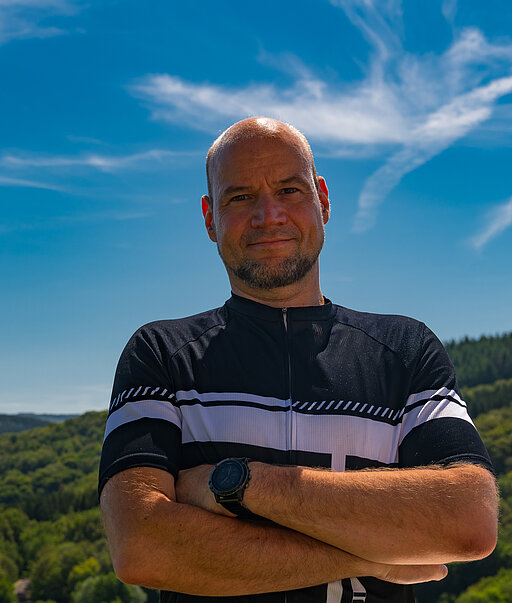
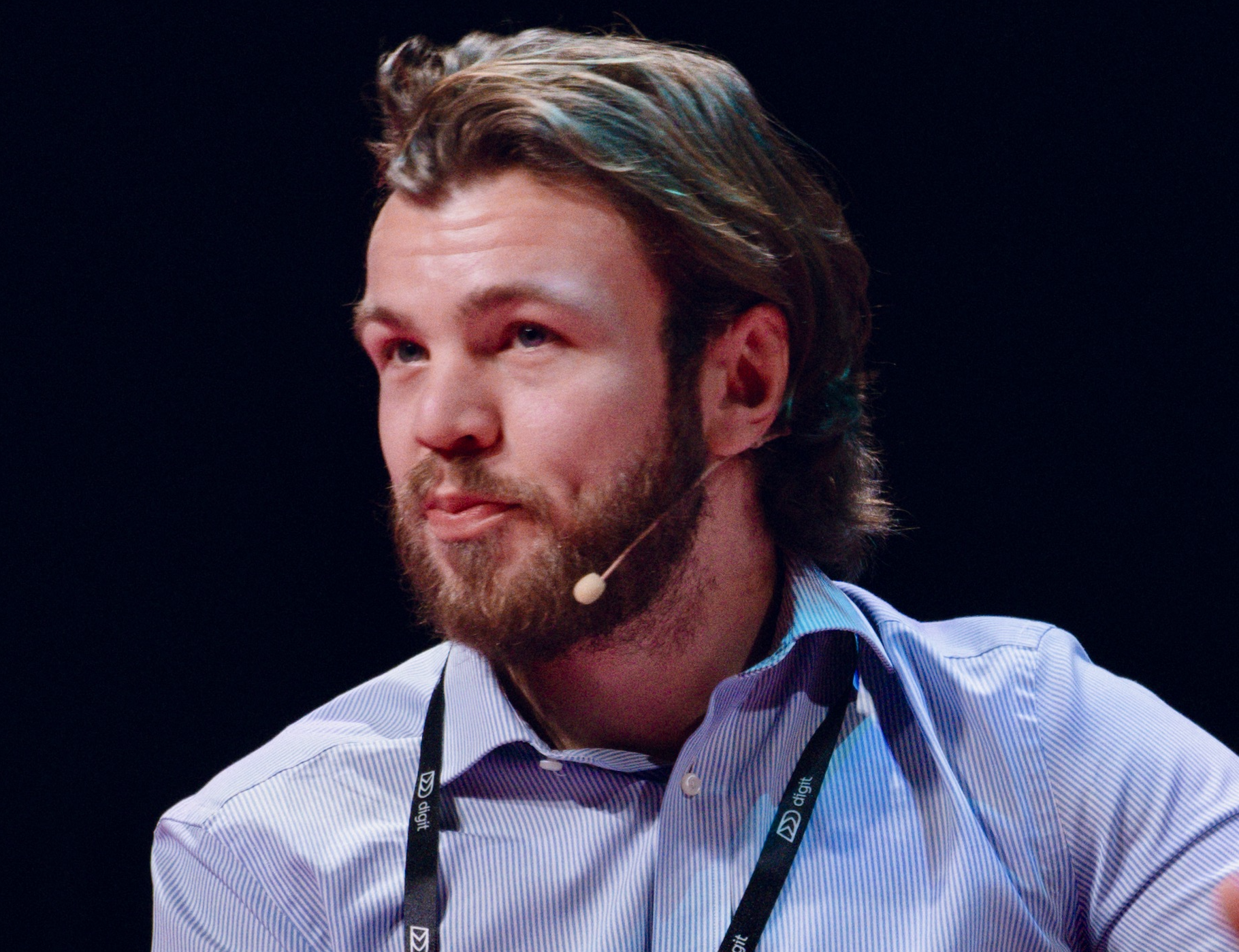
Prof. Dr. Sebastian Steinhorst is an Associate Professor (W3-level with tenure) at the Technical University of Munich (TUM) within the Embedded Systems and Internet of Things group at the TUM School of Computation, Information and Technology . His research focuses on advancing the security, predictability, reliability, and interoperability of smart connected and autonomous systems, particularly for applications in Internet of Things (IoT) , Industry 4.0 , and automotive systems . PhD in Computer Science (2011) from Goethe University Frankfurt Postdoctoral roles at TUMCREATE Singapore (2011-2016) and Aarhus University (2016) Joined TUM in 2016 as Rudolf Moessbauer Tenure Track Professor His research areas include decentralized embedded systems, hardware/software co-design, modeling and verification of cyber-physical systems, security protocols for automotive networks, and time-sensitive networking (TSN) for industrial applications. Recent work explores blockchain-based data sovereignty, zero-knowledge proofs for vehicle authentication, and resilient architectures for autonomous systems. Key scientific contributions include the 2019 ACM TODAES Best Paper Award and pioneering work on CyberSecDome , LeapChain , and Simutack frameworks. He serves on editorial boards and conference committees, including co-organizing the Autonomous Systems Design initiative at DATE. His teaching portfolio spans lectures on System Design for IoT , Software Architecture for Distributed Systems , and IoT Security across multiple semesters. He also leads advanced seminars on embedded systems and IoT.
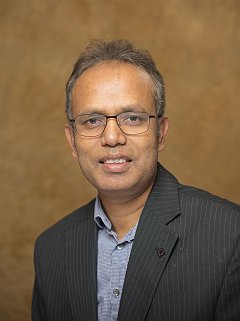
Carlos Cinelli is an Assistant Professor in the Department of Statistics at the University of Washington, where he conducts research at the intersection of causal inference, statistical methodology, machine learning, and artificial intelligence. He is also a data science fellow at the eScience Institute and affiliate faculty of the Center for Statistics and the Social Sciences, demonstrating his interdisciplinary approach to causal methodology. Dr. Cinelli received his Ph.D. in Statistics from the University of California, Los Angeles, advised by Chad Hazlett and Judea Pearl, two prominent figures in causal inference. His research focuses on developing new causal and statistical methods for transparent and robust causal claims in empirical sciences, with particular attention to challenges faced by social and health scientists. His work spans theoretical developments in causal identification, sensitivity analysis frameworks, and practical software implementations that enable researchers to assess the robustness of their causal conclusions. Cinelli's research program addresses fundamental questions about how unobserved confounding affects causal estimates and develops tools to quantify how sensitive findings are to potential violations of causal assumptions. His work on omitted variable bias frameworks has been particularly influential across multiple disciplines. Through his publications, Cinelli has established himself as a leading researcher in causal inference methodology, with papers appearing in top journals across statistics, machine learning, epidemiology, and social sciences. His work demonstrates both theoretical rigor and practical relevance, often accompanied by open-source software implementations that make his methods accessible to applied researchers. Best paper award at SBE 2024 in Econometrics Royalty Research Fund (RRF) Award recipient NSF/MMS research support As an advisor, Cinelli has successfully guided PhD students like Nick Irons to dissertation completion. He actively seeks new students with strong interests in causal inference. His research is supported by multiple funding sources including the National Science Foundation and the University of Washington's Royalty Research Fund. Cinelli contributes to the academic community through editorial work for the Journal of Causal Inference and by developing widely used software packages like sensemakr for sensitivity analysis.
Elena Simperl is a Professor of Computer Science and Deputy Head of Department for Enterprise and Engagement at King's College London's Department of Informatics. She co-directs the King's Institute for Artificial Intelligence and serves as Director of Research for the Open Data Institute. As a Hans Fischer Senior Fellow at the Technical University of Munich's Institute for Advanced Study, she leads the Trustworthy Knowledge Graphs focus group and contributes to advancing human-centric AI research across European institutions. Professor Simperl obtained her doctoral degree in Computer Science from the Free University of Berlin and her diploma from the Technical University of Munich. Prior to joining King's, she held academic positions in Germany, Austria, and at the University of Southampton, and was a Turing Fellow. Her career trajectory demonstrates consistent leadership in bridging academic research with practical applications in data ecosystems. Her research sits at the critical intersection of AI and social computing, focusing on human-centric approaches to building sociotechnical systems that integrate data, algorithms, and human capabilities. She investigates how to make knowledge engineering more accessible, how to leverage collective intelligence for data quality improvement, and how to design participatory AI systems that address societal challenges like misinformation. Her work spans knowledge graphs, semantic technologies, crowdsourcing, and open data, with particular emphasis on the social dimensions of data-intensive systems and the governance frameworks needed for trustworthy AI deployment. Analysis of her recent publications reveals a strong evolution toward integrating large language models with traditional knowledge engineering practices while maintaining human oversight. There's a clear trajectory from foundational work on knowledge representation toward increasingly applied research addressing real-world challenges in media ecosystems, citizen science, and data governance, with growing attention to policy implications of AI technologies. Fellow of the British Computer Society Fellow of the Royal Society of Arts Hans Fischer Senior Fellow at TUM-IAS (2023) Ranked among top 100 most influential scholars in knowledge engineering of the last decade Included in Women in AI 2000 ranking Professor Simperl has led 14 major European and national research projects totaling millions in funding, including MediaFutures (a Horizon 2020 program tackling online misinformation), QROWD, ODINE, Data Pitch, and ACTION. She currently co-chairs the Croissant working group in ML Commons developing data standards for AI, and serves as president of the Semantic Web Science Association. Her research has directly influenced the development of data ecosystems supporting startups and citizen science initiatives across Europe, demonstrating exceptional ability to translate theoretical advances into practical impact. As Director of Research at the Open Data Institute, she oversees initiatives connecting data entrepreneurs with artists and civic organizations. Her leadership in the MediaFutures project established a data-driven innovation hub that supported 51 startups/SMEs and 43 artists through three open calls, creating a sustainable model for arts-technology collaborations addressing media challenges. Her work with the ODINE project helped create a European ecosystem for data-driven startups, demonstrating her commitment to building practical applications of open data principles.
Prof. Dr. Ingo Scholtes is Chair of Machine Learning for Complex Networks at Julius-Maximilians-Universität Würzburg's Center for Artificial Intelligence and Data Science (CAIDAS). His research spans network science, graph machine learning, and computational social science, with applications in software engineering, ecology, biology, and physics. He received a Juniorfellowship from the German Informatics Society (2014) and an SNSF Professorship (CHF 1.5Mio, 2018). Current affiliations: JMU Würzburg (since 2021), University of Zurich (2018-2024), Bergische Universität Wuppertal (2019-2021) Research focus: Higher-order network modeling, temporal graph analysis, AI for collaborative systems, causality-aware machine learning His recent publications demonstrate strong trends in temporal network analysis , graph neural networks for time-series, and higher-order models across software engineering and social science domains. He co-chairs multiple international workshops on complex networks and serves as associate editor for EPJ Data Science and Advances in Complex Systems. Key scientific contributions: Foundational work on higher-order network models published in Nature Physics Methodological innovations in temporal network visualization (HOTVis) and path-based analysis (pathpy) As both educator and organizer, he leads the Computational Social Science Section at GI e.V., mentors across disciplines, and develops tools like git2net for collaboration analysis. His work bridges theoretical foundations with practical applications in network science.
Nasir M. Rajpoot is a Professor in the Department of Computer Science at the University of Warwick, UK. His research focuses on computational pathology, medical image analysis, and deep learning applications in histology. He leads interdisciplinary projects integrating artificial intelligence with healthcare, particularly in cancer diagnostics and pathology workflows. Rajpoot’s work emphasizes developing robust algorithms for histology image analysis, including nuclear segmentation, tumor classification, and domain generalization in computational pathology. His contributions include the TIAToolbox, an open-source framework for tissue image analytics, and the CoNIC Challenge to advance nuclear detection and counting in histology images. He collaborates with clinicians and biologists to translate AI models into clinical practice, addressing challenges like tumor heterogeneity and staining variability. Rajpoot’s research spans colorectal, lung, and oral cancers, with a focus on predicting clinical outcomes via histological features and genomic data integration. Notable projects include the development of Handcrafted Histological Transformer (H2T) for unsupervised representations of whole slide images and the SAFRON framework for histology image synthesis. His work addresses domain adaptation, robustness evaluation, and explainability in AI-driven pathology systems.
Chanchal K. Roy is Professor of Software Engineering/Computer Science at the University of Saskatchewan and Co-Director of the Software Research Lab. He leads an NSERC CREATE graduate program on Software Analytics Research and co-leads the Data Management group for an NSERC CFREF project on Food Security, with over 170 publications cited 6,000+ times. His research centers on software clone detection using the widely adopted NICAD system, software evolution, empirical studies, and AI-driven software analytics. Recent work integrates large language models for code generation, clone detection in the AI era, and developer interactions with tools like ChatGPT, emphasizing practical applications in maintenance and analytics. Analysis of his 15 most recent publications reveals a strong trend toward AI/ML integration in software engineering: 12 of 15 articles (2025) explore LLMs, quantum computing, or deep learning for tasks like bug localization, code snippet generation, and feature-toggle analysis. Key themes include empirical validation of AI tools, Stack Overflow data mining, and cross-domain frameworks for Society 5.0. His scientific awards include: Most Influential Paper Awards (SANER 2018, ICPC 2018) Outstanding Young Computer Science Researcher Award (CS-Can/Info-Can, 2018) New Researcher Award (University of Saskatchewan, 2019) New Scientist Research Award (College of Arts and Science, 2019) As lead of the NSERC CREATE program and CFREF data group, he mentors graduate students in software analytics while securing major grants. He actively serves on program committees for ASE, ICSE, and FSE, reviewing journals and organizing workshops on clone detection and empirical methods. His lab focuses on real-world applications in food security data management and software evolution. The Software Research Lab, co-directed by Roy, drives projects like NICAD and the NSERC CREATE initiative, emphasizing open-source contributions and industry collaboration. Current efforts include quantum-SE integration and AI-augmented maintenance tools under the CFREF food security mandate.
Luigi Acerbi is an Associate Professor in the Department of Computer Science at the University of Helsinki, where he leads the Machine and Human Intelligence research group. He is also an active member of the Finnish Center for Artificial Intelligence (FCAI) and ELLIS (European Laboratory for Learning and Intelligent Systems). His research focuses on probabilistic machine learning and computational neuroscience, particularly on developing efficient methods for statistical inference, Bayesian models of perception, and resource-constrained rationality. His work bridges machine learning and cognitive science, with applications in Bayesian optimization, simulation-based inference, and image completion. The recent publications highlight a strong trend toward unifying probabilistic conditioning across diverse tasks using transformer-based meta-learning frameworks like the Amortized Conditioning Engine (ACE). These works emphasize amortized inference, flexible latent variable modeling, and the integration of prior knowledge at runtime, enabling efficient and scalable Bayesian methods for complex problems. Scientific Affiliations: University of Helsinki, Department of Computer Science Finnish Center for Artificial Intelligence (FCAI) ELLIS (European Laboratory for Learning and Intelligent Systems) Education: PhD in Computational Neuroscience, Doctoral Training Centre, Edinburgh, UK Advisor: Sethu Vijayakumar and Daniel Wolpert Visiting work at Computational and Biological Learning Lab, Cambridge Postdoctoral Experience: Alex Pouget’s lab, University of Geneva, Switzerland Wei Ji Ma, New York University, USA Collaboration with the International Brain Laboratory Luigi Acerbi mentors PhD students including Daolang Huang and Nasrulloh Loka, and collaborates widely with researchers such as Samuel Kaski. He has contributed to open-source tools like PyVBMC and is involved in community initiatives such as the EurIPS conference. His work is supported by grants from the Research Council of Finland, Business Finland, and the UKRI Turing AI World-Leading Researcher Fellowship. He leads a research lab focused on amortized probabilistic inference, with ongoing projects including PriorGuide and Stacked VBMC, aiming to make Bayesian methods more practical and accessible for real-world scientific and engineering applications.
Farzan Banihashemi serves as a Research Fellow at the Chair of Energy Efficient and Sustainable Design and Building at the Technical University of Munich (TUM), maintaining this affiliation since 2019 while concurrently working as a Data Scientist at Climateflux GmbH since 2023. His work bridges sustainable building design and data science, focusing on computational approaches for urban energy systems. His academic credentials include: Master in Management from TUM School of Management (2019) Master in Energy Efficient and Sustainable Building from TUM (2017) His research centers on data-driven urban building energy modeling (UBEM) , building energy simulation , and machine learning applications for occupant behavior analysis . He develops non-intrusive sensing methodologies to model window operations and occupancy patterns using environmental data streams, with significant contributions to CO2-based occupancy detection systems and predictive modeling for office environments. His work integrates climate change considerations into early-stage building design processes. Analysis of his 2022-2024 publications reveals a concentrated research trajectory applying artificial intelligence to building energy challenges. Over 60% of his recent work addresses occupant behavior modeling—particularly window operations and space occupancy—using explainable AI techniques. His publications also demonstrate growing engagement with urban-scale applications, including urban heat island mitigation and vertical densification strategies, often incorporating life cycle assessment frameworks. No scientific awards were documented in the source materials. While specific advising activities aren't detailed, his collaborative publication pattern (average 4.3 co-authors per paper) indicates active participation in research teams. Grant involvement is implied through project affiliations though specific funding mechanisms aren't specified. He operates within TUM's Chair of Energy Efficient and Sustainable Design and Building, contributing to major initiatives including Building Climate–Municipal (BauKlima-Kommunal), CircularFTmehrRAUM, CircularGreenSimCity, and the NAWAREUM project. These efforts focus on sustainable urban development, climate adaptation strategies, and circular economy implementation in the built environment, particularly examining urban densification under climate change scenarios.
Diogo Carbonera Luvizon is a Researcher at the Max-Planck-Institut für Informatik (MPI-INF) in Saarbrücken, Germany, and a member of the Visual Computing and Artificial Intelligence (VIA) Research Center. He holds a PhD in Computer Vision and Machine Learning from CY Cergy Paris University (2019), and Bachelor's and Master's degrees in Engineering and Applied Computing from UTFPR, Brazil. His research focuses on solving complex problems in Computer Vision, Computer Graphics, and Deep Learning, particularly in human modeling and real-time systems. Education: PhD (2019) - CY Cergy Paris University; M.Sc. (2015) - UTFPR; B.Sc. (2011) - UTFPR. Research interests include 3D human pose estimation, action recognition, multitask learning, and novel view synthesis. He has contributed to patents on multiplane image generation (Samsung) and vehicle speed measurement systems. His work has been recognized with awards like the Best Paper Honorable Mention at GCPR-VMV 2022 and Best Presentation Award at ETIS Lab (2018). He has developed open-source tools, including the deephar repository for human action recognition and pose estimation. His current affiliations include MPI-INF and the VIA Research Center, a partnership between MPI-INF and Google.
Stefan Riezler is a full professor of Statistical Natural Language Processing at Heidelberg University's Department of Computational Linguistics (since 2010), affiliated with the Faculty of Mathematics and Computer Science. Prior to this, he worked in Silicon Valley at Xerox PARC and Google Research. He holds a PhD in Computational Linguistics from the University of Tübingen (1998) and conducted postdoctoral research at Brown University (1999). His research spans machine learning, NLP, and medical informatics, focusing on interactive statistical learning. He co-leads the Interdisciplinary Center for Scientific Computing (IWR) and serves on the editorial boards of Computational Linguistics and Transactions of the Association for Computational Linguistics . Key research areas include neural machine translation, healthcare AI (e.g., sepsis prediction), data augmentation, and reproducibility in ML. He develops tools like JoeyNMT and explores ethical challenges in clinical machine learning. Notable recent work includes advancements in time series analysis, multimodal interfaces (e.g., NLMaps for OpenStreetMap), and ethical frameworks addressing validity in healthcare ML. His publications emphasize practical applications of NLP in healthcare, speech translation, and cross-lingual systems. Grants and collaborations include interdisciplinary projects on medical data science and training next-gen NLP researchers. He actively contributes to open-source toolkits and reproducible research practices.
Prof. Dr. Matthias Weidlich is a faculty member at Humboldt University of Berlin within the Institute of Computer Science under the Faculty of Mathematics and Natural Sciences . His research focuses on Process Mining , Complex Event Processing , and Data Privacy with applications in Business Process Management and Scientific Workflows . Research Interests: Business Process Management and Process Mining Complex Event Processing and Stream Data Analysis Data Privacy and Security in Process Systems Scientific Workflow Systems and User Behavior Heterogeneous Network Embeddings Algorithm Design and Optimization Recent Publications (2023-2025) demonstrate expertise in: Efficient stream processing techniques Privacy-preserving process mining frameworks Scientific workflow analysis tools Graph neural network applications Multi-modal data integration Adaptive querying systems Contact: Office: Unter den Linden 6, 10099 Berlin Phone: 030 2093-41277 Email: matthias.weidlich@hu-berlin.de Web: hu.berlin/data
Prof. Dr. Enkelejda Kasneci is a Distinguished Professor at the Technical University of Munich (TUM), leading the Chair of Human-Centered Technologies for Learning. She holds dual affiliations within TUM School of Social Sciences and Technology and TUM School of Computation, Information and Technology. Her research integrates AI, eye-tracking, and immersive technologies to advance educational paradigms. She directs the TUM Center for Educational Technologies and chairs the MSc program 'AI in Society.' Education: PhD in Computer Science from University of Tübingen (2013), M.Sc. from University of Stuttgart (2007). Earlier roles include Assistant Professor and Dean of Studies at University of Tübingen. Research Focus: Human-centered AI applications in education, multimodal interaction design, and privacy-preserving eye-tracking. Her work bridges technology and pedagogy through projects like AI tutor PEER, VR Classroom, and Privacy-Preserving Eye-tracking. Key Projects: Leads EU-funded projects VIVA (€1.125M), DigiProMIN (€163K), and SARA Kids (€244.8K). Active in policy initiatives like Europe’s AI Imperative. Awards: TUM Heinz Maier-Leibnitz Medal (2024), Liesel Beckmann Distinguished Professorship (2022), and Südwestmetall Research Prize (2014). Grants & Advising: Over €5M in secured funding across 12+ projects. Supervises 14+ PhD researchers and mentors postdocs in AI education and HCI. Labs & Teams: IT-Stiftung EdTech Lab houses advanced VR/eye-tracking setups. Research group includes 20+ members spanning AI, HCI, and educational technology.
Ahmed Elbeltagi is an Assistant Professor in the Agricultural Engineering Department at Mansoura University's Faculty of Agriculture. His work focuses on hydrology, agricultural water management, and climate change adaptation. Specializes in data-driven modeling for water resource optimization Integrates machine learning with traditional hydrological models Active in climate change impact assessments on agricultural systems Recent research trends include: Developing open-source tools like Aqua-MC for irrigation simulation Applying hybrid deep learning models for evaporation prediction Advancing water quality assessment through multivariate analysis Exploring economic applications of wetlands in arid regions He collaborates with institutions across Egypt, India, China, and Saudi Arabia, with a focus on sustainable water management solutions.
Riccardo Tommasini is an Associate Professor at INSA Lyon , a leading engineering institution in France. He leads the Stream Processing and Knowledge Graphs research within the DB Team at LIRIS laboratory under Professor Angela Bonifati. His academic journey began with a PhD in Computer Science from Politecnico di Milano under Emanuele Della Valle, with a dissertation titled Velocity on the Web to be published as a Springer book. Research Interests : Advancing stream processing for real-time data systems Extending knowledge graphs with dynamic data Designing graph databases for big data applications Creating query languages for heterogeneous data environments Building data engineering pipelines with Apache Airflow Enabling big graph processing in distributed settings Key Contributions : Developed Zodiac framework for Datalog reasoning under rule amendments (ICDE 2025) Co-authored foundational Streaming Linked Data book with Springer (2023) Created RSP4J API for RDF stream processing (ESWC 2021) Designed challenge-based learning curriculum for Data Engineering courses Scientific Recognition : Received ANR JCJC grant for POLYFLOW project (2024) Awarded Best Resource at ESWC 2021 Managed industrial collaborations with Neo4j, InfluxData, and Confluent Advising & Teaching : Supervises Mohamed Ragab (PhD candidate at University of Tartu) Course Leadership : Foundational Data Engineering course at INSA Lyon and University of Tartu Structured around Apache Airflow , Docker, and graph databases
Luisa Wellert is a Research Associate at the Innovative Educational Technologies Department within the Tübingen Center for Digital Education (TüCeDE) at the University of Tübingen since September 2023. She is also a PhD student at TüCeDE since October 2022. Education: Master of Arts in Intermedia and General Educational Science (2020-2022) from University of Cologne Bachelor of Arts in Media Studies and Educational Science (2016-2019) from University of Tübingen Research Focus: Her work centers on media pedagogy , media didactics , and adaptive learning systems , with particular emphasis on AI integration in educational contexts. Recent projects examine automated qualitative coding of AI tutoring dialogues using large language models and effectiveness of self-developed adaptive systems in schools. Publications: Recent work analyzes assessment methodologies in adaptive learning systems, compares performance-based and cognitive load-based evaluation approaches, and explores implementation challenges of DIY adaptive technologies. She actively contributes to open-source AI tutoring initiatives through the OSATI project. Presentations: Luisa presents her research at major conferences including EARLI, LEAD Research Meeting, and GEBF Conference, focusing on practical implementations of AI-based educational tools and their cognitive impacts. Professional Activity: Prior to her current role, she served as Project Manager for Educational Research at TüCeDE (2022-2023) and worked as a Research Assistant at mmb Institut GmbH (2021-2022) and mecodia GmbH (2018-2020). She also has experience in media education and empirical media research.