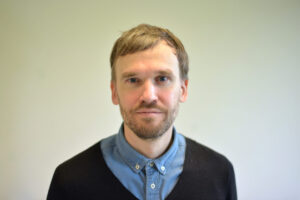
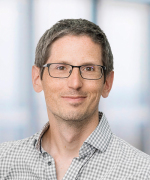
Cornelius Puschmann is a Professor of Communication and Media Studies at the University of Bremen's ZeMKI, leading the Digital Communication and Information Diversity (DCID) Lab. He has held affiliations with institutions including Zeppelin University, the Alexander von Humboldt Institute for Internet and Society, and the Leibniz Institute for Media Research / Hans Bredow Institute. His research focuses on computational communication, digital media usage, hate speech, and algorithmic impacts on digital communication. Current projects: Informed by Influencers? (INDI), Political Polarization and Individualized Online Information Environments (POLTRACK) Member of Deutsche Gesellschaft für Publizistik- und Kommunikationswissenschaft (DGPuK), European Communication Research and Education Association (ECREA), and International Communication Association (ICA) His recent publications explore topics such as alternative news consumption, political polarization, and communicative AI. He has also contributed to open-source methodologies like the RPC-Lex dictionary for analyzing right-wing populist discourse. Notable affiliations include visiting scholar roles at the Oxford Internet Institute, Berkman Klein Center for Internet and Society, and University of Amsterdam's Department of Media Studies.
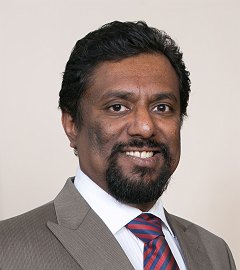
Professor Saman Amarasinghe is a full Professor in the Department of Electrical Engineering and Computer Science (EECS) at the Massachusetts Institute of Technology (MIT), and Principal Investigator at MIT's Computer Science and Artificial Intelligence Laboratory (CSAIL). He leads the Commit compiler research group, which focuses on programming languages and compilers that maximize application performance on modern computing platforms. His work spans multiple academic departments and research centers, with strong affiliations to both MIT's School of Engineering and CSAIL. Professor Amarasinghe's research interests center around high-performance domain-specific languages and compiler technology . His work combines language design with sophisticated compilation techniques to deliver unprecedented performance for targeted application domains. His research spans multiple areas including image processing (Halide), sparse tensor algebra (TACO), graph analytics (GraphIt), stream computations (StreamIt), and bioinformatics (Seq). A significant thread throughout his work is the application of machine learning for compiler optimizations, from Meta optimization in 2003 to the OpenTuner autotuner framework. Analysis of Professor Amarasinghe's recent publications reveals a strong focus on sparse computing , compiler vectorization , and domain-specific language implementation . His work consistently bridges theoretical compiler concepts with practical performance gains across diverse application domains. The progression from earlier work on StreamIt and Halide to more recent projects like GraphIt and TACO shows an evolution toward more specialized, high-performance DSLs targeting specific computational patterns. His 2020-2025 publications particularly emphasize sparse tensor operations, GPU acceleration, and machine learning integration with compiler technology. ACM Fellow (2019) Professor Amarasinghe has made significant contributions to academic entrepreneurship and student development. He founded Determina, Inc. (acquired by VMware) based on security research from his MIT lab and co-founded Lanka Internet Services, Ltd., Sri Lanka's first ISP. As faculty director of MIT Global Startup Labs, his programs across 17 countries have helped create over 20 successful startups. His teaching includes the popular Performance Engineering of Software Systems (6.172) course with Professor Charles Leiserson, as well as innovative project-based courses like the Open Source Software Project Lab and Bring Your Own Software Project Lab. His educational approach emphasizes hands-on experience with compiler and language design concepts. Professor Amarasinghe leads the Commit compiler research group at MIT CSAIL, which has produced numerous influential domain-specific languages and compilers including Halide, TACO, Simit, StreamIt, and GraphIt. The lab maintains strong industry connections through projects like OpenTuner and Determina, and collaborates with researchers worldwide on compiler technology. The group's work spans both theoretical compiler research and practical implementation, with a consistent focus on bridging the performance gap between high-level programming abstractions and hardware capabilities.
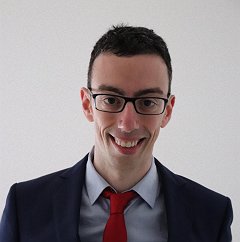
Andreas Maier is a Researcher at the University of Hamburg's Faculty of Mathematics, Informatics and Natural Sciences, affiliated with the Computational Systems Biology department. He began his PhD in May 2021 with Cosy.Bio (Center for Systems Biology) at UHH, focusing on drug repurposing projects such as REPO-TRIAL. Previously, he completed a Bioinformatics master's thesis at TUM (Technical University of Munich), developing a web application for analyzing molecular disease networks. His research interests emphasize network medicine, drug repurposing, and computational tools for biomedical discovery. He has contributed to platforms like NeDRex-Web, Drugst.One, and BioCypher, which democratize access to systems medicine workflows. His work bridges heterogeneous data integration, federated learning for rare diseases, and quantum computing applications in genetics. Maier's publications highlight innovations in knowledge graph-based drug discovery, privacy-preserving federated learning, and single-cell network analysis. He actively develops open-source bioinformatics tools to address challenges in disease module identification and patient stratification. His projects align with the REPO4EU consortium and other collaborative initiatives in translational bioinformatics.
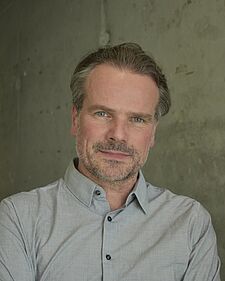
Gabriele Bavota is an Associate Professor at the Software Institute of Università della Svizzera Italiana (USI) in Lugano, Switzerland. He leads the SEART (Software Engineering Advanced Research Team) group and serves as Principal Investigator for the DEVINTA ERC starting grant focused on developer intelligence through mining software artifacts. Dr. Bavota's research spans Software Quality, Empirical Software Engineering, and Mining Software Repositories. His work has evolved from foundational studies on code smells and technical debt to cutting-edge research at the intersection of artificial intelligence and software development. He has made significant contributions to understanding API usage patterns, software quality metrics, and developer behavior through empirical studies of large software repositories. His recent publications reveal a strong focus on AI-assisted software development, with extensive research examining code generation, code summarization, and code review automation using large language models. He has also expanded his research to include quality assurance in game development (detecting game stuttering and low engagement events) and voice user interface testing. His work consistently bridges theoretical insights with practical applications for software developers. ACM SIGSOFT Distinguished Paper Award for API compatibility research (MSR 2019) ACM SIGSOFT Distinguished Paper Award for Hugging Face model documentation study (ICPC 2024) ACM SIGSOFT Distinguished Artifact Award for deep learning fault taxonomy (ICSE 2020) As an active member of the software engineering research community, Dr. Bavota serves on program committees for major conferences including ICSE, ASE, FSE, and MSR. He has held leadership roles such as Program Co-Chair for ICSME 2023 and Vision/Reflection Track Co-Chair for ICSE. His SEART research group develops practical tools like the SEART Data Hub that streamline large-scale source code mining and preprocessing for empirical software engineering research.
Prof. Dr.-Ing. Jörg Rainer Noennig is Professor of Digital City Science at HafenCity University Hamburg (HCU) and Head of the WISSENSARCHITEKTUR Laboratory of Knowledge Architecture at TU Dresden. With a background in architecture (Bauhaus Universität Weimar, Waseda University Tokyo), he practiced in Tokyo before transitioning to academia. He has held visiting professorships in Italy, France, Russia, and Japan. His research focuses on digital urban systems , including smart cities, participatory planning, and knowledge architecture. He explores AI applications in urban design, agent-based simulations for mobility, and transdisciplinary frameworks for sustainability. Recent projects include TOSCA (open-source urban tools), SmartFly (eVTOL integration), and MICADO (migrant integration platforms). Publications emphasize data-driven urban methodologies , spanning synthetic data generation, pedestrian modeling, and sustainable infrastructure design. His work integrates materials science (e.g., auxetic structures) with digital twins for resilient cities. Awards include the Grand Prix of the European Association for Architectural Education (EAAE). He leads Hamburg’s Digital City Science team and coordinates international collaborations, including Indo-German urban development projects. He directs the WISSENSARCHITEKTUR Laboratory , focusing on knowledge synthesis for urban innovation. Courses taught at HCU include 'Knowledge Architecture', 'Digital City Science', and 'Smart City Technologies'.
Prof. Dr. Ilona Buchem is a Professor of Communication and Media Studies at the Berlin University of Applied Sciences (BHT), Department I of Business and Social Sciences. She serves as Head of the Communication Laboratory and leads research in human-robot interaction, educational robotics, and technology-enhanced learning. Her work spans multiple interdisciplinary projects including Social Robotics, Open Virtual Mobility, and ePA-Coach, focusing on digital media for communication, collaboration, and digital sovereignty for older adults in healthcare contexts. Dr. Buchem holds a doctorate in business education from Humboldt University and a certificate in business administration from the University of St. Gallen, Switzerland. Her academic background bridges business education with digital media expertise, positioning her at the intersection of technology and communication for innovative educational approaches. Her research interests focus on human-robot interaction in educational contexts, social robotics for learning, AI applications in education, and digital media for communication and collaboration. She explores how robots can serve as educational tools in business studies, language learning, and health-related applications. Her work also investigates digital sovereignty, particularly for older adults using electronic health records, and the use of open digital credentials like Open Badges for recognizing learning achievements. The integration of gamification elements with social robots represents another significant strand of her research, enhancing student engagement and learning outcomes. Analysis of her recent publications reveals a strong focus on practical applications of social robots in educational settings, particularly examining student perceptions of different robot platforms (NAO, Pepper, Furhat). Her work increasingly integrates generative AI with robotics, exploring conversational interfaces and new learning paradigms. There's also a consistent thread examining digital literacy for seniors, especially regarding electronic health records, and innovative approaches to recognizing learning through micro-credentials and digital badges. Dr. Buchem actively supervises numerous bachelor's and master's theses across multiple programs including Business Administration: Digital Economy and Media Informatics Online. She has established a digital award system based on Open Badges to recognize outstanding thesis work with top grades. Her research is supported through various funding sources including BMBF, EU, DFG, and industry partners, with projects spanning social robotics, virtual reality applications, and digital credentialing systems that connect academic research with practical applications. She leads the Communication Laboratory at BHT and is actively involved in the 'House of Robotics' initiative at the university. Her work connects with international partners through projects like Social Robotics (EU) and Open Virtual Mobility, creating a global network for educational robotics research and development that bridges European institutions and promotes cross-cultural educational exchange.
Raffi Khatchadourian is an Associate Professor in the Department of Computer Science at Hunter College and the Graduate Center of the City University of New York (CUNY). His research focuses on techniques for automated software evolution, particularly automated refactoring and source code recommendation systems, with the goal of easing the burden associated with evolving large and complex software through automated tools. He also conducts research on the automated analysis of Object-Oriented programs. Ph.D., Computer Science & Engineering, Ohio State University (2011) MS, Computer Science & Engineering, Ohio State University (2010) BS, Computer Science, Monmouth University (2004) Khatchadourian's research spans multiple areas of software engineering and programming languages, with particular emphasis on automated software evolution techniques. His work addresses critical challenges in refactoring legacy systems to modern language constructs, optimizing parallel processing in Java 8 streams, and addressing technical debt in machine learning systems. His recent research has expanded into deep learning program transformation, where he develops techniques to convert imperative deep learning code to more efficient graph execution models while ensuring safety. His approach combines static analysis, program transformation, and empirical validation to create practical tools that developers can integrate into their workflows. Analysis of Khatchadourian's recent publications reveals a strong focus on bridging the gap between theoretical program analysis and practical software engineering challenges. His work increasingly intersects with machine learning systems, examining both how to improve ML code through refactoring and how to ensure safety in deep learning frameworks. The research demonstrates consistent evolution from foundational work on Java language features toward more complex systems involving concurrency, deep learning, and automated program transformation. Distinguished Paper Award at SCAM '18 for work on Java 8 stream optimization EAPLS Best Paper Award at FASE '20 for study on Java 8 stream usage EAPLS Distinguished Paper Award at FASE '25 for Deep Learning refactoring work Best Paper Award nominee at IJCAI '24 for AI safety framework Khatchadourian actively mentors graduate and undergraduate students, with several advisees going on to successful academic and industry positions. His former Ph.D. student Tatiana Castro Vélez accepted a tenure-track Assistant Professor position at the University of Puerto Rico. He has supervised numerous master's theses and undergraduate research projects, often resulting in co-authored publications at top software engineering venues. His research has been supported by various grants, though specific funding details are not prominently featured in the available information. Through his work on tools like Fraglight for aspect-oriented programming and Hybridize Functions for deep learning refactoring, Khatchadourian has established a research group focused on practical program analysis and transformation. His lab develops Eclipse plugins and other IDE-integrated tools that help developers with automated refactoring, bug detection, and code optimization. The group maintains active collaborations with researchers at other institutions and contributes to open-source projects on GitHub.
Constantin Grigo is a PhD researcher at the Technical University of Munich (TU Munich), actively engaged in the Continuum Mechanics group. His work focuses on Uncertainty Quantification (UQ) and Machine Learning (ML), particularly for applications in maritime safety, bicycle traffic modeling, and stochastic systems. He has presented his research at major conferences like SIAM UQ and WCCM, and has been recognized with Student Travel Awards from SIAM UQ 2018 and SIAM CSE 2019. Education: Master of Science in Physics, LMU Munich (2015) Bachelor of Science in Physics, LMU Munich (2012) Year abroad at Grenoble INP (2010-2011) Research Interests: Probabilistic machine learning for coarse-graining high-dimensional systems Bayesian model and dimension reduction Stochastic differential equations in heterogeneous media Microscopic traffic simulation for bicycles and autonomous vehicles Digital twin applications for maritime and urban mobility Reduced-order modeling of random materials Selected Awards: SIAM UQ 2018: Student Travel Award Winner SIAM CSE 2019: Student Travel Award Winner His publications span topics such as data-driven scenario specification for autonomous vehicles, bicycle maneuver prediction using neural networks, and physics-constrained surrogates for UQ. He also contributes to open-source simulation tools like SUMO for traffic modeling.
Jingling Xue is a Scientia Professor at the School of Computer Science and Engineering at the University of New South Wales (UNSW) in Sydney, Australia. As an IEEE Fellow of the Computer Society, he leads the Programming Languages and Compilers research group, focusing on practical applications of compiler optimization and program analysis techniques. His work bridges theoretical foundations with real-world software systems, particularly in developing open-source tools for large-scale program analysis. Professor Xue received his B.Eng and M.Eng degrees from Tsinghua University in 1984 and 1987, respectively, followed by a PhD from the University of Edinburgh in 1992. His academic journey has established him as a leading figure in programming languages and compiler technology. Xue's research spans programming languages, compiler technology, and program analysis with emphasis on practical relevance. His current projects include compiler techniques for improving parallelism and locality, pointer/alias analysis for million-line-scale programs, and static/dynamic analysis for detecting bugs and security vulnerabilities in real-world applications like web browsers and Android apps. His group actively develops open-source tools to support scientific replicability and reproducibility in these areas. His recent publications demonstrate a strong focus on applying program analysis techniques to modern challenges including AI compilers, homomorphic encryption, security vulnerability detection, and graph processing systems. The work shows evolution from traditional compiler optimization to addressing emerging domains like privacy-preserving computation and deep learning systems while maintaining rigorous theoretical foundations. Scientific Awards: Best Paper Award at CGO'13 Best Paper Award at CGO'16 Distinguished Paper Award at ECOOP'16 Distinguished Paper Award at ICSE'18 Distinguished Paper Award at ISSTA'19 Distinguished Paper Award at ASE'19 Distinguished Artifact Award at ISSTA'23 Best Artifact Award at FSE'23 Distinguished Paper Award at ASE'23 Test-of-Time Award at CGO'21 Professor Xue has successfully supervised 30 PhD students to completion, many of whom now work as professors or researchers in academia and industry. He has served as Program Chair for major conferences including LCTES'13, CC'18, CGO'20, and General Chair for LCTES'20. His group currently focuses on memory safety in Rust, smart contract analysis, AI compilers, compilation for privacy-preserving computation, and adversarial attacks in deep learning. The Programming Languages and Compilers group maintains strong connections with industry partners, translating theoretical advances into practical tools for real-world software development challenges. Their work on pointer analysis, memory safety, and compiler optimizations continues to influence both academic research and industrial practice.
Ana Lucic is an Assistant Professor in Artificial Intelligence at the University of Amsterdam , with a joint appointment between the Institute for Logic, Language and Computation and the Informatics Institute . Her research focuses on interpretable machine learning applications for scientific discovery and societal impact. Formerly at Microsoft Research AI for Science and Partnership on AI PhD in Explainable Machine Learning from University of Amsterdam (2022) BSc/MSc in Mathematics from McMaster University Research Highlights: Develops mechanistic interpretability methods for deep learning architectures. Created Aurora , a foundation model for Earth system forecasting outperforming traditional operational models in air quality prediction and tropical cyclone tracking. Pioneers Clifford-Steerable CNNs for geophysical data analysis. Actively hiring PhD students for AI transparency research . Collaborative Networks: Contributions to ELLIS Summer School and ICML workshops . Collaborates with Microsoft Research AI for Science team on climate-related ML projects. Involved in organizing TerraBytes workshop at ICML 2025. Recent Advancements: Key role in publishing Aurora model in Nature (2025), demonstrating superior performance in Earth system forecasting. Supervises Ege Erdogan , new PhD student focused on mechanistic interpretability. Actively contributes to open-source AI development through GitHub repositories and technical discussions.
Prof. Petra Sauer is a Professor of Computer Science and currently serves as Dean of the Department of Computer Science and Media at BHT Berlin. She leads research in database systems, geospatial technologies, and educational data analytics. Her work bridges academic research with practical applications in facility management, urban logistics, and e-learning platforms. Key projects include DiSEA (education analytics), ExCELL (mobility data integration), and BIM-FM (building lifecycle management). Research interests focus on: Database design & schema evolution Semantic web applications Geodatabase implementations Learning analytics in MOODLE environments Notable awards include the Tiburtius Prize (Gold 2008 for Marc-Florian Wendland's thesis, Bronze 2009 for Marco Blankenburg's thesis). Active supervision spans over 15 advisees across data science, database security, and semantic integration topics. Current courses include 'Database Systems' for Media Informatics students. Key projects: DiSEA: Moodle-based learning analytics framework ExCELL: Real-time traffic forecasting platform mVIZ: Open data visualization guidelines BIM-FM: Semantic integration of building models
Fabian Gans is a Researcher at the Max Planck Institute for Biogeochemistry, affiliated with the Department Biogeochemical Integration led by Prof. Dr. M. Reichstein. He leads the Scalable Spatiotemporal Data Structures and Analytics (SSDSA) research group and is actively involved in the Empirical Inference of the Earth System group under Dr. Miguel D. Mahecha, as well as the Energy and Earth System group under Dr. A. Kleidon. His work is central to advancing data-driven methodologies in Earth system science. His research focuses on Earth system dynamics, particularly through the development and application of Earth System Data Cubes (ESDCs), which integrate multivariate spatiotemporal datasets for robust analysis. He employs machine learning, remote sensing, and hybrid modeling to study carbon and water fluxes, climate extremes, and ecosystem responses. His work bridges observational data with modeling frameworks to improve understanding of biosphere-atmosphere interactions. The 15 most recent publications highlight a strong trend toward data integration, scalability, and the use of artificial intelligence in Earth sciences. Key themes include the FLUXCOM framework for upscaling carbon fluxes, the development of Earth System Data Cubes, analysis of compound climate extremes, and hybrid modeling approaches. His research consistently emphasizes open science, reproducibility, and the need for integrated data platforms to tackle global environmental challenges. Scientific Awards: No awards listed in the provided text. Advising and Grants: No formal advisees or students are listed. No specific grants or funding sources are mentioned, though his involvement in large collaborative projects like FLUXCOM and Earth System Data Cubes suggests participation in significant research initiatives. Labs and Teams: Fabian Gans leads the Scalable Spatiotemporal Data Structures and Analytics (SSDSA) group and is a key member of the Empirical Inference of the Earth System team. He is also involved in the DeepESDL platform, an open collaborative environment for Earth system research, indicating leadership in developing research infrastructure and fostering interdisciplinary collaboration.
Prof. Dr.-Ing. André Nitze is a faculty member at the Brandenburg University of Technology in the Department of Economics . His research focuses on Internet of Things (IoT) , Digital Business Models , Software Architectures , Cloud Computing , Mobile Computing , and Predictive Analytics . He leads research projects on municipal LoRaWAN infrastructure, rural on-demand transport systems, and user-centered digitalization for sustainable development. Area of Expertise: IoT Applications, Software Engineering, Digital Transformation Current Research: Sustainable Municipal LoRaWAN, Rural Mobility Solutions Projects: risKI - KatKomm (2024-2026): Protocol development for disaster communication InNoWest (2023-2027): Subproject leader for digital sustainability OSLO (2023): Rural on-demand transport software architecture Awards: Best Paper Award at ICDS 2024 for work on LoRaWAN infrastructure Education & Supervision: M.Sc. and B.Sc. in Business Informatics Supervised over 15 theses including topics on GIS analysis, sensor networks, and AI applications
Prof. Dr.-Ing. Torsten Zesch serves as Deputy Scientific Director, Member of the Executive Board, and Head of the Research Professorship for Computational Linguistics at FernUniversität in Hagen since March 2022. He previously held W2 and W1 Professorships for Sprachtechnologie (Language Technology) at Universität Duisburg-Essen from 2014-2022. Zesch is also Spokesperson of the Advisory Board of the German Society for Computational Linguistics and Language Technology (GSCL) since 2024, having previously served as GSCL President from 2018-2024. Dr. Zesch completed his dissertation (Dr.-Ing.) in Computer Science at Technische Universität Darmstadt in 2009. His research spans robust language processing systems, analysis of non-standard language structures, and educational applications of language technology, with particular focus on automatic content scoring and spelling error correction for learner language. Zesch's recent publications reveal a strong focus on integrating language technology with educational applications. His work demonstrates expertise in developing practical NLP solutions for educational assessment, including transformer-based spelling error feedback systems, hierarchical automatic scoring methods, and leveraging LLMs for educational applications despite cold-start problems. He also maintains significant research in hate speech detection, particularly in multimodal contexts and visio-linguistic models. As leader of the Computational Linguistics research professorship within the CATALPA research center, Zesch directs a team investigating how language technology can support educational processes. His projects DAKODA and KISS-Pro focus on language acquisition and educational applications. He has contributed significantly to the field through numerous publications in top NLP and educational technology venues, with over 100 publications spanning from 2006 to present.
Srishti Yadav is a Research Fellow at the University of Copenhagen and University of Amsterdam , affiliated with the Pioneer Centre for AI and ILLC respectively. She is advised by Dr. Serge Belongie and Dr. Ekaterina Shutova . Education: M.Sc. (Research-Track) in Computing Science, Simon Fraser University , Canada Research Interests: AI and Society Cross-Cultural Competency in Multimodal Models AI Safety and Evaluation Frameworks Model Interpretability and Dataset Creation Scientific Awards: ELLIS PhD Fellowship Advising & Community: Board Member, Women in Computer Vision (WiCV) Advisor for WiCV@ICCV2023 and WiCV@CVPR 2021 Chaired workshops at CVPR 2024, CVPR 2023, CVPR 2020 Labs & Teams: Belongie Lab (University of Copenhagen) Shutova Lab (University of Amsterdam) Collaborator at MILA Biodiversity Monitoring Project