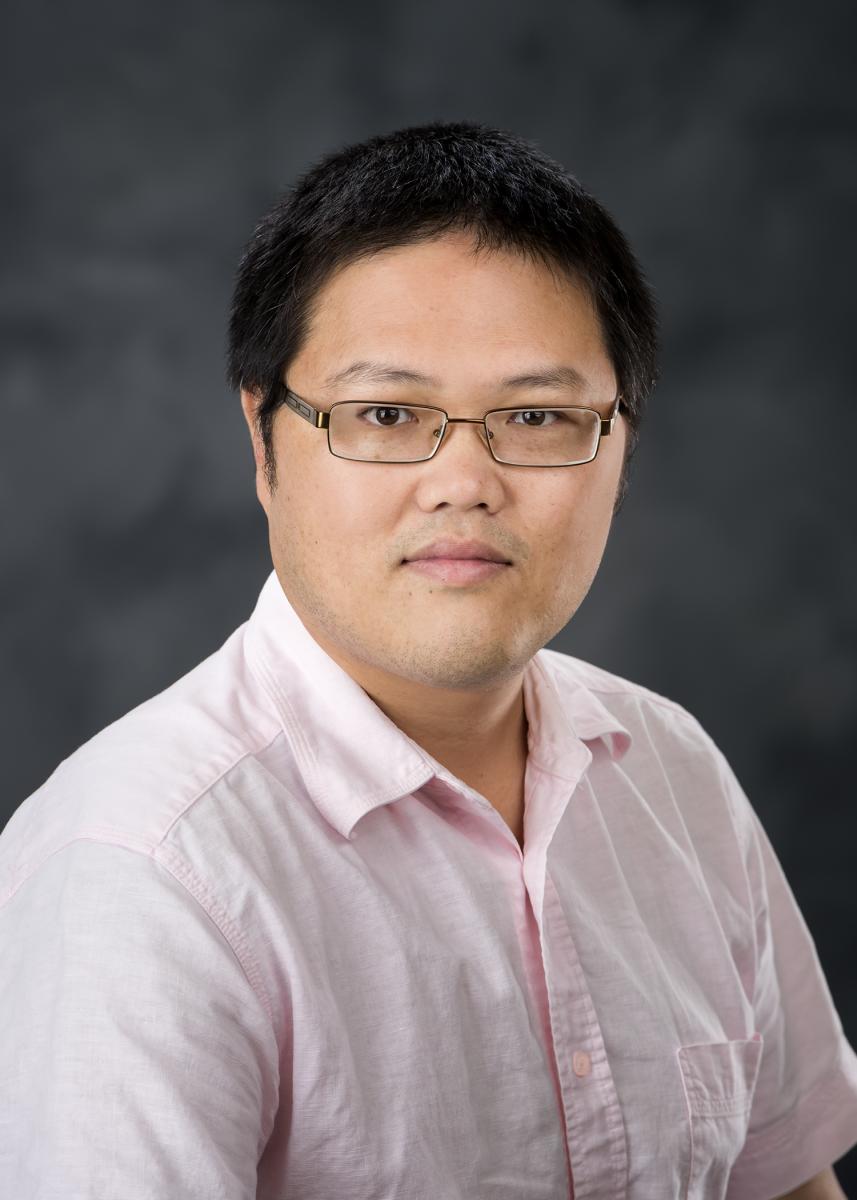
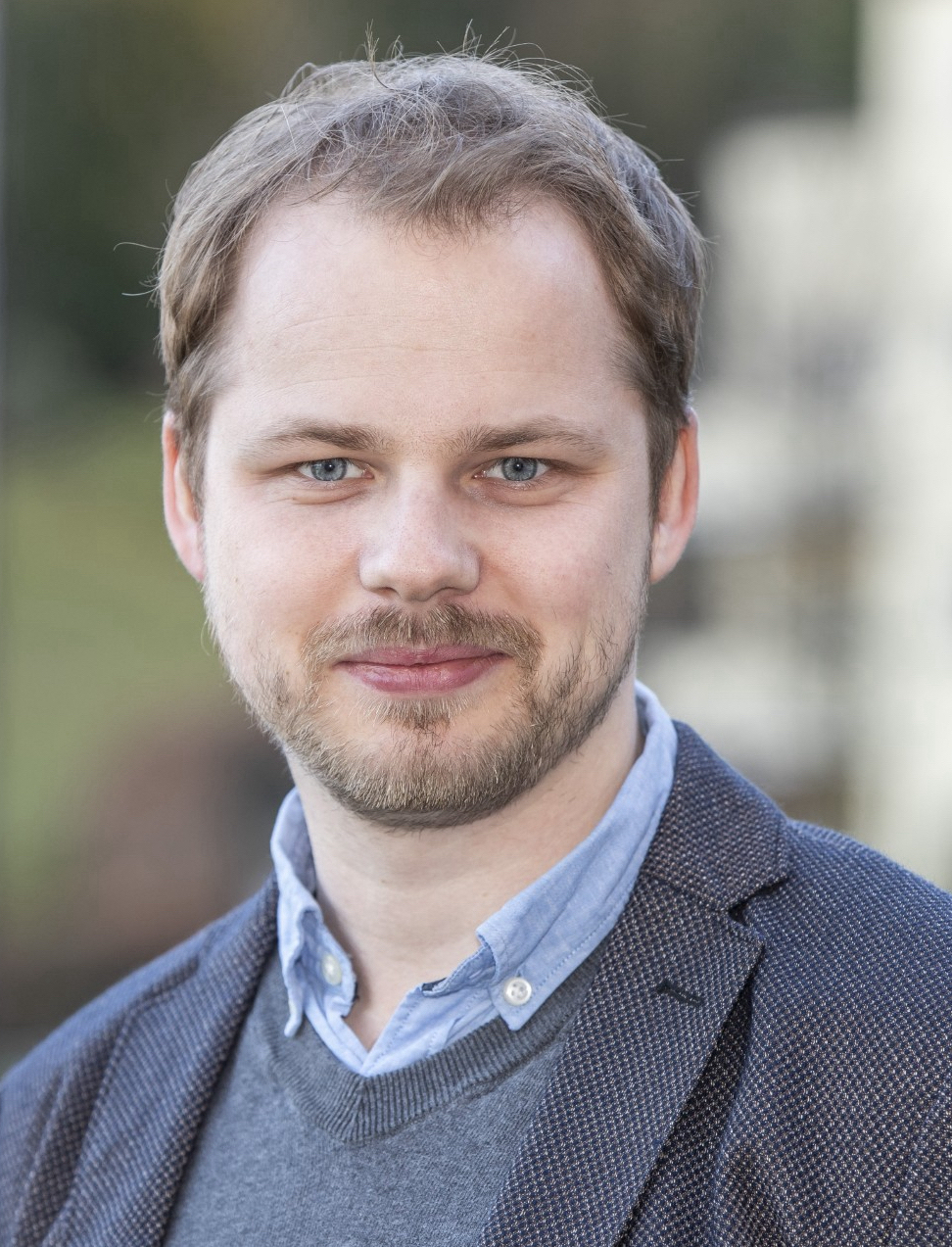
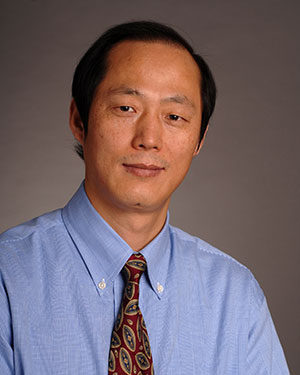
Dr. Tung-Lung Wu is Associate Professor of Statistics at Mississippi State University, specializing in applied probability and statistical methodology. His research develops analytical frameworks for boundary crossing problems, pattern distributions, and high-dimensional data. Research interests include first passage time calculations for stochastic processes, sequential analysis techniques in clinical trials, quality control applications of pattern distributions, and hypothesis testing for high-dimensional covariance structures. His work has applications in finance, manufacturing quality, and spatial epidemiology. Recent publications advance methods for scan statistics of Poisson processes, distribution-free control charts, and projected tests for covariance matrices. Analytical approaches include Markov chain imbedding techniques, random matrix projections, and adaptive scanning procedures. No awards, student advising, or laboratory affiliations are detailed in the source materials.
Hailin Sang is an Associate Professor in the Department of Mathematics at the University of Mississippi , affiliated with the College of Liberal Arts . He holds a Ph.D. in Mathematics from the University of Connecticut (2008) and has previously held visiting assistant professor and postdoctoral research fellow positions at institutions including the University of Cincinnati, National Institute of Statistical Sciences/Duke University, and Indiana University. Dr. Sang’s research spans theoretical and applied statistics, with emphasis on deep learning , probability theory , empirical processes , time series analysis , random fields , nonparametric and robust statistics , and self-normalized statistics . His work also extends to survey sampling design and analysis . Recent publications highlight applications in generative adversarial networks , modified ReLU networks , and entropy estimation , with methodological contributions to limit theorems and deviation bounds for complex stochastic structures. His research has received partial support from the Simons Foundation . He has not been explicitly recognized for scientific awards in the provided text. Dr. Sang teaches a range of courses from elementary statistics to advanced statistics seminars , reflecting his broad educational contributions.
Dr. Wenhui Sheng is an Assistant Professor in the Department of Mathematical and Statistical Sciences at Marquette University. His research focuses on dimension reduction techniques, variable selection, multivariate analysis, and data mining. He teaches courses in statistical methods and has published extensively in statistical theory and applications. Dr. Sheng's work bridges statistical methodology with computational challenges in high-dimensional data. His recent research includes developing novel dimension reduction approaches using distance covariance and exploring distributional properties in applied contexts. Collaborations span bioinformatics and genomics, as evidenced by contributions to epigenetic analysis via next-generation sequencing techniques. He currently holds no listed grants or awards in the provided materials. No specific lab affiliations or student advising records are mentioned here.
Marianna Pensky is a Professor of Mathematics at the University of Central Florida (UCF), affiliated with the College of Sciences. She holds a PhD from Moscow State University (1988) and has been at UCF since 1995. Her research focuses on Data Science, Machine Learning, and Mathematical Statistics, with specializations in Bayesian methods, nonparametric statistics, inverse problems, and network models. She has published over 100 refereed articles in top journals and is an elected Fellow of the Institute of Mathematical Statistics, American Statistical Association, and International Statistical Institute. In 2023, she was awarded the Pegasus Professorship, UCF's highest honor. Dr. Pensky serves as Chief Editor of the Journal of Statistical Planning and Inference and Associate Editor of the Annals of Statistics. She has mentored 13 PhD and 9 MS students, all of whom secured post-degree employment. Her work spans theoretical and applied statistics, including contributions to stress-strength models, empirical Bayes estimation, and statistical inverse problems. Recent research emphasizes network models and multiplex clustering, with applications in bioinformatics and engineering. Dr. Pensky’s methodologies address high-dimensional inference, wavelet-based techniques, and robust statistical frameworks.
Xiaohu Li is a Teaching Associate Professor in the Department of Mathematical Sciences at Stevens Institute of Technology's Charles V. Schaefer, Jr. School of Engineering and Science. He holds dual PhDs in Applied Mathematics from Lanzhou University and Engineering/Applied Sciences from University of New Orleans, with additional MA degrees from both institutions. His research focuses on: Statistical dependence modeling in reliability and risk Actuarial applications of stochastic orders Redundancy allocation in engineered systems Prior to Stevens, Dr. Li held academic positions at Xiamen University and Lanzhou University, plus postdoctoral research roles at University of Alberta and University of Texas at San Antonio. He serves as Associate Editor for Stochastic Models and Statistics & Probability Letters, and provides statistical consulting to Hackensack University Medical Center. His recent publications concentrate on: Stochastic comparisons in reliability systems Actuarial risk modeling with dependence structures Optimization of redundancy mechanisms
Florian Huber is a Professor of Economics and Vice-Head of the Department of Economics at the University of Salzburg. His research focuses on Bayesian macroeconometrics, particularly large-scale non-linear multivariate time series modeling. He has published in top journals such as the Journal of Econometrics and the Journal of Applied Econometrics. His work integrates machine learning and nonlinear methods to analyze macroeconomic dynamics and uncertainty. Huber serves as a Scientific Consultant to the Oesterreichische Nationalbank (OeNB), European Central Bank (ECB), and European Commission. He holds roles as Associate Editor of Macroeconomic Dynamics, Senior Scientist at the International Institute for Applied Systems Analysis (IIASA), and Research Fellow of Bocconi University’s Baffi Center. His accolades include the 2024 Kurt-Zopf-Förderpreis and Fellow status in the Society for Economic Measurement. Research interests span Bayesian econometrics, state space modeling, forecasting, and financial spillovers. His recent work addresses topics like growth-at-risk, nonlinear VAR models, and real-time inflation forecasting. Huber’s contributions bridge theoretical econometrics with policy-relevant analysis, emphasizing the integration of big data and structural models.
Dylan Spicker is an Assistant Professor in the Department of Mathematics and Statistics at the University of New Brunswick. His research focuses on statistical methodology with applications in healthcare analytics, measurement error correction, and differential privacy. He holds a position at UNB's Saint John campus in Ganong Hall 230 and can be contacted via dylan.spicker@unb.ca. Spicker's work bridges theoretical statistics and applied problems in medicine and public health. He explores topics such as dynamic treatment regimes, privacy-preserving algorithms, and the interplay between sociodemographic factors and health outcomes. Recent research emphasizes improving predictive models using error-prone data and developing robust methodologies for nonadherence in clinical studies. His publications reflect a multidisciplinary approach, combining machine learning techniques with rigorous statistical analysis. Notable themes include differential privacy applications in healthcare datasets and advancing methodologies for handling measurement errors in precision medicine contexts. While no formal awards are listed, his active publication record indicates sustained contributions to statistical theory and applied health research. His advising and grant activities remain unspecified in available records. Spicker’s work is typically conducted within the university’s mathematics and statistics academic framework without explicit lab affiliations mentioned.
Jürgen Dippon is a Senior Lecturer at the University of Stuttgart, affiliated with the Institute for Stochastics and Applications , part of the Faculty of Mathematics and Physics. His research focuses on stochastic analysis, sequential methods, probability theory in Banach spaces, and statistical learning. He also engages in applied statistics and biostatistics with computational support. He holds a habilitation (Dr. rer. nat. habil.) and serves as the Founding Representative of the Faculty of Mathematics and Physics . His academic work includes advising students on bachelor, master, and doctoral theses in stochastic topics. Consultation hours are arranged via email. Key research themes include nonparametric statistical methodologies, sequential experimental design, and probabilistic frameworks in high-dimensional spaces. He contributes to statistical consulting services for academic and applied projects.
Tasos Christofides is a Professor in the Department of Mathematics and Statistics at the University of Cyprus, School of Natural and Applied Sciences. He has been serving in this position since 2004 after previously holding the rank of Associate Professor from 1991 to 2004. Prior to his appointment at the University of Cyprus, he was an Assistant Professor at the State University of New York at Binghamton from 1987 to 1991. His educational background includes a Ph.D. (1987) and MSE (1985) in Mathematical Sciences from The Johns Hopkins University, USA, and a Mathematics degree (1983) from the University of Athens, Greece. Professor Christofides specializes in Probability Inequalities, Demimartingales, Stochastic Orders, Survey Methodology, and Indirect Questioning Techniques. His research primarily focuses on theoretical statistics with applications to survey methodology, particularly in developing techniques for handling sensitive questions while preserving respondent privacy. His work bridges probability theory with practical survey design, making significant contributions to both theoretical foundations and applied methodologies. His publication record demonstrates consistent contributions to statistical theory, with a particular emphasis on U-statistics, demimartingales, and randomized response techniques. The trajectory of his research shows progression from foundational work on U-statistics and probability inequalities in the early career to more applied survey methodology techniques in later years, while maintaining strong theoretical underpinnings. Professor Christofides serves as Associate Editor for several prestigious statistical journals including Communications in Statistics-Theory and Methods, Communications in Statistics-Computation and Simulation, Journal of Statistical Theory and Practice, and Statistics and Probability Letters. His editorial service reflects his standing in the statistical community and his expertise across multiple domains of statistical theory and methodology. While specific grant information is not provided in the available text, his sustained research output and editorial positions indicate active engagement with the research community.
Shaobo Li is an Associate Professor in the Department of Analytics, Information, and Operations at the University of Kansas School of Business. His research spans high-dimensional robust statistics, ordinal data analysis, and data privacy in business contexts. Ph.D. in Business Administration, University of Cincinnati M.S. in Statistics, University of Cincinnati B.A. in Mathematics, Shandong University Li’s work focuses on nonparametric regression techniques, corporate bankruptcy prediction models, and methodological innovations in ordinal variable analysis. He has contributed to data privacy frameworks for marketing and financial applications, emphasizing flexible statistical approaches. Recent publications highlight his expertise in partial association quantification, point-of-sale data anonymization, and second-party data utilization. Collaborative efforts include applications in marketing science and business analytics.
Ben Sherwood is an Associate Professor and Jack and Shirley Howard Mid-Career Professor in the Analytics, Information, Operations academic area at the University of Kansas School of Business. His research focuses on developing advanced statistical methodologies with applications across various domains including healthcare, finance, and business analytics. Ph.D. in Statistics, University of Minnesota, 2014 B.A. in Mathematics and Computer Science, Macalester College, 2003 Post Doctoral Fellow at Johns Hopkins Biostatistics Department, 2014-2016 Sherwood's research primarily centers on quantile regression methodologies, with special emphasis on penalized approaches for high-dimensional data. His work extends to semiparametric regression, multivariate regression models, and addressing challenges with missing data. He develops statistical methods with practical applications in business problems, healthcare analytics, and genomic studies. His approach often involves creating new statistical techniques, implementing them in software, and providing theoretical foundations through mathematical proofs. His publication record shows a consistent trajectory of impactful research, with recent work focusing on quantile regression for equity premium prediction, Bayesian network applications for PTSD screening, and advanced techniques for model selection in high-dimensional settings. His research bridges theoretical statistics with practical applications, particularly in business analytics contexts. Sherwood actively mentors PhD students, encouraging them to develop novel statistical methods while maintaining flexibility in their research direction. He frequently co-advises students with faculty from related disciplines including Professors Prakash Shenoy, Karthik Srinivasan, and Shaobo Li. His students have worked on diverse projects including beta regression for model selection uncertainty, Bayesian networks for PTSD prediction in veterans, bankruptcy prediction for firms, and analyzing crowdfunding platform dynamics. Complementing his theoretical work, Sherwood has developed multiple software packages to implement his methodologies, including rqPen for penalized quantile regression, hrqglas for group variable selection, and mcen for multivariate cluster elastic net models. These tools make advanced statistical methods accessible to practitioners across various fields.
Dr. Yingfu (Frank) Li is an Associate Professor of Statistics in the College of Science and Engineering at the University of Houston-Clear Lake (UHCL), where he has taught undergraduate and graduate statistics for over 20 years. His research focuses on experimental designs, biostatistics, and statistical computing, with notable contributions to survival analysis, censored data methodologies, and imputation techniques. He has authored 19 refereed publications, with 13 published post-joining UHCL. His research interests include advanced statistical methodologies such as nonparametric estimation, robust parameter designs, and applications in biopharmaceutical research. Dr. Li's work bridges theoretical statistics with practical applications, particularly in healthcare and engineering contexts. His articles demonstrate expertise in areas like Kaplan-Meier estimator refinements, Hadamard matrix-based experimental designs, and variance estimation under missing data scenarios. Though no specific awards are listed, his prolific publication record reflects sustained academic contribution. Courses taught include Introduction to Statistics, Applied Statistical Methods, and Statistical Computing.
Professor Kalimuthu Krishnamoorthy holds the Philip and Jean Piccione Endowed Chair in Statistics at the University of Louisiana at Lafayette. His research focuses on statistical methodologies for occupational exposure analysis, missing data, and tolerance regions, with contributions to censored data analysis and calibration techniques. He has advised over 30 Ph.D. students and led NIOSH-funded projects on exposure assessment. His work includes developing statistical software tools like StatCalc and over 200 peer-reviewed articles. Education: Ph.D. (Statistics, 1985) Indian Institute of Technology-Kanpur; M.Sc. & B.Sc. (Statistics) Madras University. Grants: Multiple NIOSH grants (R01-OH series) totaling $2.6M, focusing on exposure data analysis methodologies. Labs/Teams: Leads statistical research groups at the University of Louisiana, collaborating on occupational health and environmental statistics.
Saman Muthukumarana is a Professor and Head of the Department of Statistics at the University of Manitoba. He joined the department in 2010 as an Assistant Professor, was promoted to Associate Professor in 2016, and became a full Professor in 2022. He holds a BSc (Honours Special) in Statistics from the University of Sri Jayewardenepura, an MSc from Simon Fraser University, and a PhD from Simon Fraser University under Dr. Tim Swartz, focusing on Bayesian methods and applications. His research emphasizes Bayesian methodologies for complex models, with applications in social networks, health studies, sports analytics, environmental science, and machine learning. He has secured over $8.4M in research funding from NSERC, Mitacs, CIHR, and other organizations. His work has been published in journals such as the Canadian Journal of Statistics, Machine Learning with Applications, and IEEE Open Journal of Instrumentation & Measurement. Dr. Muthukumarana’s research spans Bayesian computation, biostatistics, data science, and environmental statistics. He has contributed to anomaly detection in buildings, predictive modeling for public health (e.g., Long COVID), and ecological studies like salmon stock recruitment. His collaborative projects include developing statistical tools for microbiome analysis and improving machine learning approaches for imbalanced datasets. He also leads the Data Science Nexus, fostering interdisciplinary research. His grants and collaborations highlight his role in advancing statistical methodologies for real-world challenges, including health, energy efficiency, and ecological conservation. While no specific awards are listed, his extensive funding and publication record reflect his scholarly impact. He currently supervises graduate students and actively participates in academic leadership roles.
Shakeeb Khan is a Professor of Economics at Boston College. His primary affiliation is with the Department of Economics. He holds a Ph.D. from Princeton University. His research focuses on econometrics, particularly in areas such as panel data models, endogeneity, censored regression, and binary response models. He has contributed extensively to methodological advancements in econometric theory and applications. Education: Ph.D. in Economics from Princeton University. Research interests include: Nonparametric and semiparametric estimation techniques Endogeneity and identification in econometric models Applications of econometric methods to labor economics, policy evaluation, and development economics His work often addresses challenges in censored data, dynamic models, and factor structures. Recent research trends emphasize high-dimensional models and robust inference in nonlinear frameworks. Courses taught include advanced econometrics and econometric theory.