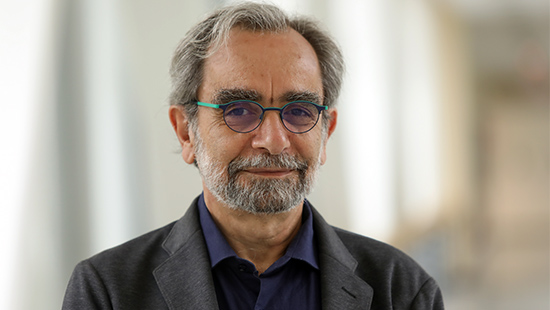
Apkar V Apkarian is a Professor at Northwestern University , holding appointments in the departments of Neuroscience , Anesthesiology , and Physical Medicine and Rehabilitation . He serves as Director of the Center for Translational Pain Research and leads clinical trials focused on chronic pain mechanisms and treatments. Education: PhD from SUNY/State University of New York, Syracuse (1988); Postdoctoral training at Physiologische Institut, Universitat Wurzburg (1989). Apkar V Apkarian’s research spans chronic pain neurobiology , fMRI-based pain imaging , opioid effects on the brain , and placebo response prediction . His work integrates human brain imaging and animal studies to uncover mechanisms of pain qualia and brain plasticity. Recent publications highlight advances in neural decoding , HDAC inhibitor therapies , and hippocampal connectivity in chronic pain. Notable scientific awards include the Excellence in Research Award from the International Headache Society (2009). He has held editorial roles, including Editor-in-Chief of Frontiers Methods in Pain Research , and serves on advisory boards for NIH NCCAM . His lab collaborates with institutions like the Mesulam Center for Cognitive Neurology and Northwestern University Clinical and Translational Sciences Institute (NUCATS).
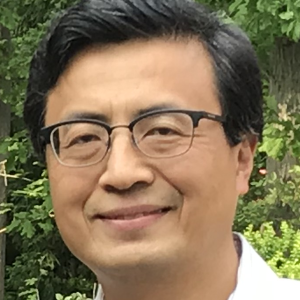
Josh Huang is a Professor of Neurobiology, Cell Biology, and Biomedical Engineering at Duke University School of Medicine , where he leads the Huang Lab. His research focuses on the development and function of cortical circuits underlying motor control and cognitive processing , integrating genetic engineering, single-cell genomics, and behavioral neuroscience to address neuropsychiatric disorders. Education : PhD in Neuroscience, Brandeis University (1995) Research Areas : Huang’s work spans three synergistic domains: (1) cell type genetic tools (e.g., CellREADR for RNA-programmable cell targeting), (2) molecular genetic programs defining neuronal specification, and (3) cell type basis of motor-cognitive circuits . His team employs multi-omics, optogenetics, and naturalistic behavior paradigms to decode cortical architecture. Publications highlight trends in RNA-based neurotechnology , glutamatergic/projection neuron subnetworks , and GABAergic interneuron mapping . Notable contributions include the BRAIN Initiative Cell Census Network (BICCN) and CellREADR innovations. Scientific Awards : Election to the American Academy of Arts & Sciences (2022) NIH Director’s Pioneer High-Risk High-Reward Award Grants from NIMH, NIH BRAIN Initiative, and collaborative programs support his multidisciplinary investigations . The lab trains PhD students and postdoctoral fellows in neuroscience and biomedical engineering.
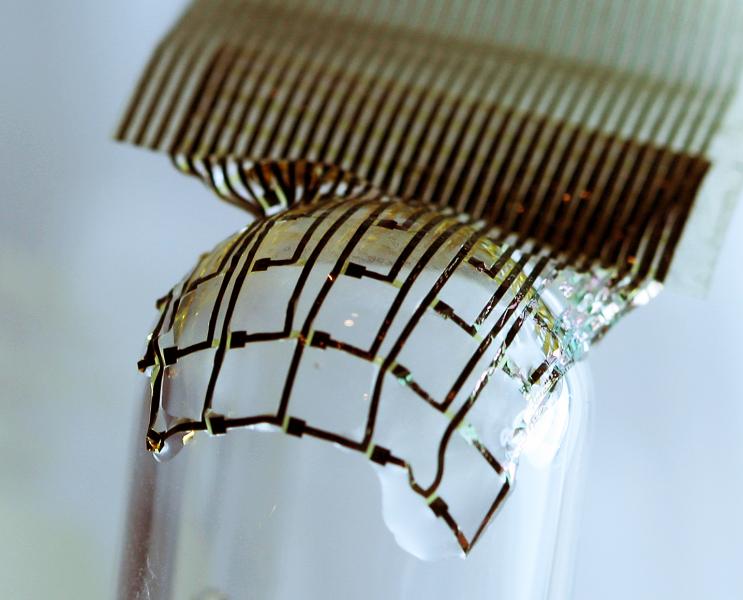
Jon Viventi is the Hawkins Family Associate Professor of Biomedical Engineering at Duke University. He holds secondary appointments as Assistant Professor in Neurosurgery and Assistant Professor of Neurobiology , and is a Faculty Network Member of the Duke Institute for Brain Sciences . His research focuses on developing flexible electronics for high-resolution neural interfaces, with applications in diagnosing/treating epilepsy and advancing brain-machine interfaces . Research Interests Dr. Viventi's work combines flexible electronics and high-density neural recording to address clinical challenges. His innovations include µECoG arrays for cortical mapping, low-power neural interfaces , and bioresorbable devices . Collaborations span neurology, neurosurgery, and materials science , with industrial partnerships yielding five patents. Scientific Recognition MIT Technology Review Innovators Under 35 (2014) Popular Science Brilliant 10 (2014) Publications Recent work includes high-density µECoG arrays for stroke monitoring (2024), artifact-free neural interfaces (2019), and foundational flexible electronics for neurophysiological mapping (2011). Articles appear in Nature Neuroscience , Science Translational Medicine , and Nature Materials .
Arya Mazaheri is a Research Leader at PanocularAI, affiliated with the Technische Universität Darmstadt. His work bridges high-performance computing (HPC) and machine learning, focusing on optimizing large-scale computational systems. Based at Hochschulstr. 10, Darmstadt, Germany, he contributes to GPU acceleration, neural network pruning, and parallel processing. PhD in Performance Engineering of Data-Intensive Applications (2022) Key areas: HPC, Machine Learning, GPU Computing, Neural Network Pruning Research Trends: Mazaheri's publications from 2015-2024 reveal expertise in: Accelerating LLM inference through pipelined speculation Topology-aware network pruning with reinforcement learning GPU-based spacecraft trajectory simulations Performance portability in tensor operations Hardware-independent communication metrics for parallel systems
David J. Anderson is the Seymour Benzer Professor of Biology at the California Institute of Technology (Caltech), serving as Director and Leadership Chair of the Tianqiao and Chrissy Chen Institute for Neuroscience. He is also a long-standing Investigator of the Howard Hughes Medical Institute (HHMI), appointed in 1989. His academic credentials include an A.B. in Biochemical Sciences from Harvard University (1978, summa cum laude) and a Ph.D. in Cell Biology from Rockefeller University (1983), where he trained with Nobel Laureate Günter Blobel. Postdoctoral training followed at Columbia University with Nobel Laureate Richard Axel. Anderson's research centers on the neurobiological basis of emotional behaviors, particularly fear, anxiety, and aggression. His lab employs mice, Drosophila, and the jellyfish Clytia hemisphaerica to dissect neural circuits using optogenetics, chemogenetics, single-cell RNA sequencing, and advanced behavioral analysis. Key discoveries include identifying aggression-controlling neurons in the hypothalamus and fear-processing microcircuits in the amygdala. Recent publications reveal a strong emphasis on decoding aggression circuits through computational modeling of neural dynamics, whole-brain imaging, and cross-species comparisons. His work integrates molecular, cellular, and systems approaches to understand how internal emotional states emerge from neural activity and influence behavior. Major scientific awards include: 2018 Edward M. Scolnick Prize in Neuroscience 2017 New York Academy of Medicine Salmon Award 2016 Perl-UNC Neuroscience Prize 2007 National Academy of Sciences election Multiple named professorships and fellowships As an HHMI Investigator since 1989 and Allen Distinguished Investigator (2010), Anderson has secured substantial research funding. He serves on the Scientific Advisory Board of the Allen Institute for Brain Science and has mentored numerous trainees. His lab develops cutting-edge tools like the Mouse Action Recognition System (MARS) for behavioral analysis. The David Anderson Lab operates as a multidisciplinary hub integrating genetics, neurophysiology, and computational methods. Current collaborations with engineering groups focus on machine vision for behavior quantification, while expanding the Clytia model to investigate primitive internal states in brainless organisms.
Daniel Benjamin Aharoni is an Associate Professor in the University of California, Los Angeles (UCLA) Department of Neurology, with affiliations in both the School of Medicine and interdisciplinary neuroscience research groups. His work bridges engineering, physics, and neuroscience to develop open-source neurotechnologies like the Miniscope system, now used in over 450 laboratories worldwide. Research interests include: Optical Imaging: Miniature microscopes for freely behaving animals Neural Dynamics: Single-cell and multi-region neural activity analysis Behavioral Neuroscience: Social behavior, spatial coding, and aversive memory studies Biomedical Hardware: FPGA-based real-time decoding systems His publications span high-speed volumetric imaging (2018), Miniscope-LFOV (2023), and BehaviorDEPOT (2022), focusing on hardware-software integration for neuroscience. The lab emphasizes democratizing access to neurotechnology and bridging tool design with biological complexity.
Dr. Rosie Bamford is a Research Fellow in the Complex Disease Epigenomics group at the University of Exeter Medical School, University of Exeter, where she investigates transcriptional variation in neuropsychiatric and neurodegenerative disorders using advanced genomic technologies including long-read and single-cell RNA sequencing. Her educational qualifications include: PhD in Physical Sciences of Imaging in the Biomedical Sciences from the University of Birmingham MSc in Physical Sciences of Imaging in the Biomedical Sciences from the University of Birmingham MPhys in Physics from the University of St Andrews Her research spans critical areas of neurogenomics and molecular neuroscience, with primary focus on: Neurodevelopmental trajectories in human brain samples and organoids Epigenetic mechanisms in neuropsychiatric disorders Application of long-read sequencing to neurodegenerative diseases Single-cell and spatial transcriptomics for brain mapping Development of targeted sequencing bioinformatics pipelines Integration of genomic technologies to study aging-related neural changes Rosie works under Professor Jon Mill within the Complex Disease Epigenomics group, collaborating closely with Dr. Aaron Jeffries and the Exeter Sequencing Service. Her current work implements novel sequencing applications to decode gene regulation during neurodevelopment, building on prior research in bacterial gene expression and autism/Alzheimer's molecular pathways. No scientific awards or specific grant funding details were mentioned in the source material, and no student advising activities were documented in the provided text.
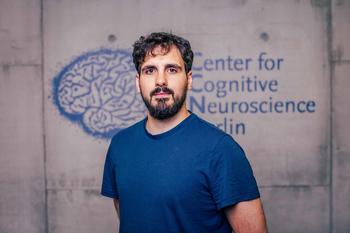
Guido Caccialupi is a researcher at the Department of Education and Psychology, Freie Universität Berlin, focusing on computational and neural mechanisms of purposive actions. University: Freie Universität Berlin Department: Department of Education and Psychology Research interests include computational neuroscience, cognitive neuroscience, and neuroimaging, with a focus on motor hierarchy, cognitive-motor intentions, and active inference models. He employs fMRI decoding, behavioral methods, and computer simulations. His recent work involves decoding grip-force anticipation using multivoxel pattern analysis in fMRI studies. Affiliation : Neurocomputation and Neuroimaging Unit, Freie Universität Berlin. Contact: gcaccialupi@zedat.fu-berlin.de
Prof. Yonina Eldar is a Professor of Electrical Engineering at the Faculty of Mathematics and Computer Science , Weizmann Institute of Science. She holds the Dorothy and Patrick Gorman Professorial Chair and serves as Head of the Manya Igel Center for Biomedical Engineering and Signal Processing . Her research bridges classical signal processing with modern deep learning techniques. Develops model-based deep learning frameworks combining domain knowledge with data-driven approaches Focuses on sub-Nyquist sampling for efficient data acquisition in radar, ultrasound, and communications Created hardware prototypes for time-encoding machines and modulo-ADC systems Innovates in joint radar-communication systems for autonomous vehicles Her work emphasizes algorithm unrolling to create interpretable neural networks with reduced training requirements. Publications demonstrate applications in: Medical imaging (ultrasound, ECG monitoring) Autonomous systems (automotive radar) Communication technologies (DFRC systems) Active in theoretical foundations of model-based deep learning, with recent work establishing mathematical guarantees for unfolded networks. Collaborations include Tsinghua University and industry partners for hardware validation.
Francesca Capozzi, PhD, is a Professor at the Department of Psychology, Université du Québec à Montréal, and an Associate Investigator in the Brain Repair and Integrative Neuroscience (BRaIN) Program at RI-MUHC's Montreal General Hospital site. Her work focuses on socio-cognitive factors supporting relational wellbeing through group therapies for LGBTQ+ individuals and families at the MUSIC (McGill University Sexual Identity Centre) clinic, using quantitative/qualitative language analysis. PhD in Cognitive Neuroscience (University of Turin, 2016) Postdoctoral work at McGill University (2016-2021) Clinical training in Couple and Family Therapy (McGill School of Social Work, 2020-2022) Her research explores social perception mechanisms, affective processes, and nonverbal communication in group dynamics and emotion recognition. Key methodologies include dual mobile eye tracking, multisensory integration analysis, and behavioral immune system evaluation. Current projects examine how societal underrepresentation affects emotional distress and how visual/auditory cues shape social event segmentation. She maintains affiliations with CORE research lab and MUSIC clinic. Licensing includes Quebec psychotherapist registration (OTSTCFQ #62045-22, #CAPF2206200TCF). Contact available via francesca.capozzi@muhc.mcgill.ca (academic) and psycho@francescacapozzi.ca (therapy inquiries).
John A. White serves as Professor and Deputy Chair in the Department of Biomedical Engineering at Boston University, with joint appointments in Pharmacology and Experimental Therapeutics and Neuroscience. He directs the Neuronal Dynamics Lab and maintains affiliations with the Center for Systems Neuroscience, Neurophotonics Center, and Photonics Center. Education: PhD, Biomedical Engineering, Johns Hopkins University B.S., Biomedical Engineering, Louisiana Tech University His research integrates engineering principles with neuroscience to decode brain information processing mechanisms. Key focus areas include episodic memory formation, epilepsy pathophysiology, computational modeling of neural networks, real-time instrumentation design, and advanced imaging of neuronal and astrocytic activity. Current work targets therapeutic interventions for memory disorders through precisely timed brain stimulation and develops computational frameworks for understanding cortical coherence in cognitive functions. Analysis of his 2022-2025 publications reveals dominant themes in hippocampal memory coding (time/distance representation, engram segregation), theta-gamma oscillation dynamics, and neurotechnology development. Recent work emphasizes ultrasound-based deep brain stimulation, calcium imaging analysis toolboxes, and computational models of inhibitory networks, demonstrating consistent innovation at the engineering-medicine interface. Scientific Awards: 2019: Elected Fellow of the International Academy of Medical and Biological Engineering 2019: Elected President of the Biomedical Engineering Society 2014: Meeting Chair, Biomedical Engineering Society Fall Meeting 2011: Distinguished Alumnus Award, Dept. of BME, La. Tech U. 2006: Elected Fellow, Biomedical Engineering Society 2005: Elected Fellow, American Institute for Medical and Biological Engineering 2003-2008: Co-Director, Methods in Computational Neuroscience, Marine Biological Lab Professor White actively collaborates across Boston University's interdisciplinary centers while advancing his lab's mission to translate neural dynamics research into clinical applications, particularly for memory restoration in neurological disorders. His leadership in the Biomedical Engineering Society and ongoing development of real-time electrophysiology tools underscore his commitment to bridging engineering innovation with neurological therapeutics.
Andreas Bjerregaard Jeppesen is a Research Fellow at the Department of Computer Science, University of Copenhagen, specializing in Machine Learning. His work bridges theoretical and applied research across diverse domains including quantum computing, biomedical informatics, environmental monitoring, and AI ethics. The Machine Learning section at DIKU explores foundational algorithms and their applications in Medical data analysis Remote sensing Biological modeling Sustainable AI Information retrieval . Andreas contributes to interdisciplinary projects like the SCIENCE AI Centre, leveraging the department's compute cluster for intensive simulations. His recent publications highlight trends in Quantum-inspired neural architectures Generative models for protein sequences Energy-aware AI development Neurological applications of ML Climate-conscious computing . Collaborations span computational biology, quantum chemistry, and federated learning for precision medicine.
Maher Harring Kassem serves as a Guest Researcher within the Machine Learning section at the Department of Computer Science, University of Copenhagen. His position falls under the research staff category, reporting to Head of Section Professor Yevgeny Seldin, and contributes to the department's mission in theoretical and applied machine learning research. His research spans Machine Learning , Natural Language Processing , Health Informatics , Sustainable AI , Quantum Machine Learning , and Cross-Cultural Computing . This interdisciplinary profile integrates computational methods with real-world applications in mental health analysis, culinary adaptation systems, emotion recognition, and environmental sustainability, reflecting the department's focus on domains like medical data analysis and biological modeling. Analysis of his 2024-2025 publications reveals a distinct trend toward high-impact interdisciplinary work. Key themes include sustainable AI development (addressing energy consumption in models), quantum-biomolecular applications (free energy calculations), cross-cultural NLP systems (recipe adaptation), and clinical AI (nursing values evaluation). His output demonstrates technical depth across optical neural hardware, EEG-based semantic relevance, and fairness-aware recommender systems, while consistently tackling societal challenges like climate impact and healthcare equity. No scientific awards or fellowships were documented in the available materials. As a Guest Researcher, Kassem leverages the department's powerful compute cluster and participates in initiatives like the SCIENCE AI Centre and TreeSense project for remote sensing of global tree resources. His collaborative work spans medical imaging analysis, quantum computing applications, and sustainable AI development, utilizing the university's infrastructure for large-scale computational tasks in domains ranging from wetland conservation to quantum photonic computing.
Sebastian Bugge Loeschcke is a PhD Fellow at the Machine Learning Section of the Department of Computer Science (DIKU), University of Copenhagen . His research spans theoretical and applied machine learning with focus on quantum machine learning, language modeling, and sustainability. Current affiliation: Machine Learning Section, DIKU Key research areas: Quantum-classical hybrid models, neural language processing, geospatial analysis Collaborative initiatives: SCIENCE AI Centre, TreeSense Centre Loeschcke's recent work includes Coarse-To-Fine Tensor Trains for compact representations and LoQT: Low-Rank Adapters for Quantized Pretraining , reflecting his focus on efficient neural architectures and quantum-inspired methods. His publications address cross-disciplinary challenges in climate modeling, healthcare, and quantum computing. Scientific contributions include: 2024: Tensor train compression methods for visual representations 2024: Low-rank adapter techniques for quantized models 2025: Quantum computing applications in molecular binding energy calculation 2025: Ethical frameworks for sustainable AI development 2025: Quantum dot array simulation tools (QDarts) Loeschcke contributes to interdisciplinary projects involving: TreeSense (remote sensing of global tree resources) Quantum computing optimization with Danish research consortia
Dr Christopher Chapman is a Lecturer in Bioengineering at Queen Mary University of London's School of Engineering and Materials Science. He serves as the Biomedical Engineering Programme Director (Undergraduate) and Outreach and Recruitment Lead for The Centre for Bioengineering. With expertise in bioelectronics design and fabrication for central and peripheral nervous system targets, Chapman leads research focused on developing soft and flexible bioelectronic implants using both metals and conducting polymers. Lecturer in Bioengineering Biomedical Engineering Programme Director (Undergraduate) Outreach and Recruitment Lead, Centre for Bioengineering Member, Institute of Materials, Minerals, and Mining Member, Institute of Physics and Engineering in Medicine Chapman's research interests center around bioelectronics, implanted devices, cancer neuroscience, conductive polymers, and electrical stimulation and recording. His work combines functional materials with laser-based fabrication methods to develop bioelectronic implants for cancer therapeutics and monitoring. He specializes in creating soft, flexible bioelectronic systems that can provide both therapeutic effects and diagnostic feedback from the tumor microenvironment. Analysis of Chapman's recent publications reveals a strong focus on developing novel bioelectronic materials and devices, particularly using conductive polymers and elastomers. His research spans neural interfaces, cancer monitoring, and drug delivery systems, with increasing emphasis on cancer neuroscience applications in recent years. The publications demonstrate a progression from fundamental materials development to more clinically relevant applications, especially in tumor margin detection and cancer microenvironment monitoring. Chapman currently leads the Continuous Advanced Recording for Cancer Lab (CARC Lab), which focuses on four key research areas: materials development, in vitro models of cancer, clinical measurements, and therapeutic drug delivery. His research group includes PhD students Joshua Daoud and Ester Do Couto Lopes, who are working on multimodal bioelectronic sensor development for real-time monitoring of the brain tumor microenvironment. Chapman has secured significant research funding for his work, including a £403,666 grant from the ARIA Advanced Research and Invention Agency for 'Oligodendronics: Engineering biology for scalable neural interfaces', a £74,990 grant from Barts and the London Charity for 'Development of multimodal tumour margin detection paradigm for use in neurosurgical oncology', and a £20,000 grant from the Royal Society for 'Customizable conducting elastomers for bioelectronics sensors'.