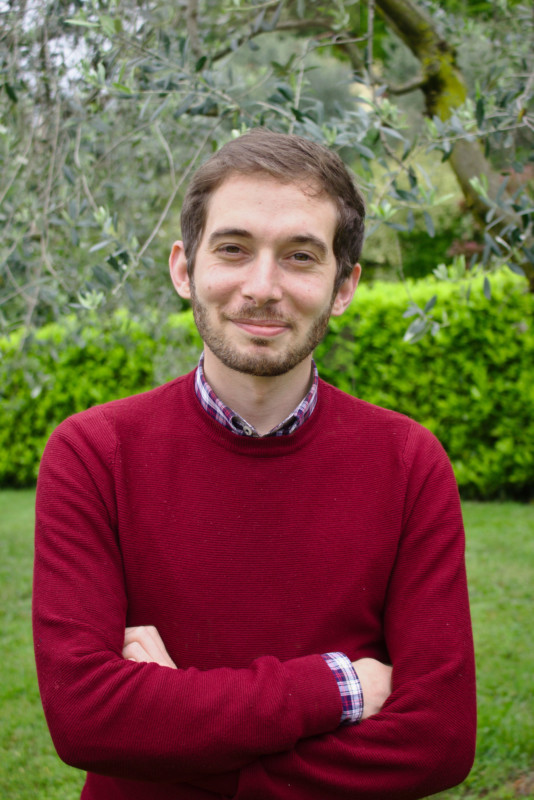
Davide Mencarelli is a Researcher at the Department of Information Engineering (DII) of the University of Ancona and Marche Polytechnic (UNIVPM), Italy. His research focuses on nanoelectronics, quantum transport phenomena, and advanced materials for energy harvesting and optoelectronics. He is affiliated with the Faculty of Engineering and contributes to interdisciplinary projects involving metamaterials, graphene-based devices, and computational materials science. His work spans experimental validation, theoretical modeling (e.g., density functional theory), and device design. Key areas include geometric diodes for THz rectennas, nanoscale ferroelectrics, and biosensors leveraging graphene field-effect transistors (FETs). He collaborates on projects funded by EU initiatives and has developed novel techniques for microwave energy harvesting and nanoscale characterization using inverted scanning microwave microscopy. Recent trends in his publications emphasize quantum effects in nanomaterials, tunable optical properties of 2D materials, and multiphysics modeling of nanoelectronic components. His research bridges fundamental physics and applied engineering, addressing challenges in renewable energy systems, biomedical diagnostics, and high-frequency electronics.
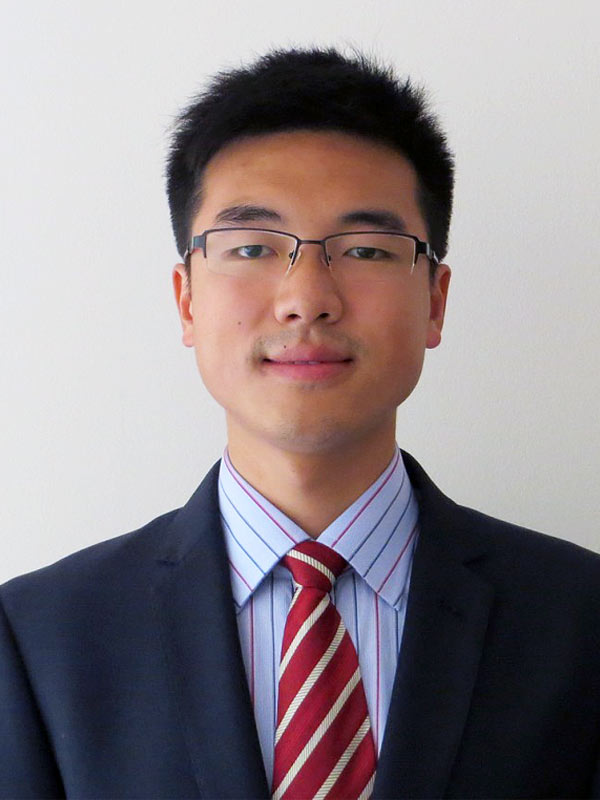
Dr. Yuan Tian is a VC2020 Senior Lecturer at De Montfort University (DMU) within the School of Engineering and Sustainable Development, Faculty of Computing, Engineering and Media. He is affiliated with the Institute of Energy and Sustainable Development (IESD), where he conducts research in thermal energy systems and sustainable engineering. Current Position: VC2020 Senior Lecturer, De Montfort University (2018–present) Previous Roles: Lecturer at Aston University (2017–2018), Diamond Jubilee Lecturer at University of Hertfordshire (2013–2017), Research Associate and PhD Student at University of Warwick (2008–2013) Dr. Tian holds a PhD from the University of Warwick, a PgCert in Teaching in UK Higher Education from the University of Hertfordshire, and a BEng (Distinction) from Xi’an Jiaotong University (XJTU). His research focuses on thermal energy storage , phase change materials (PCM) , energy-efficient buildings , waste heat recovery , and battery thermal management . He employs computational fluid dynamics (CFD) and experimental methods to enhance heat transfer in porous media such as metal foams. His work bridges fundamental thermal science with practical applications in renewable energy and smart grids. The 15 most recent publications reflect a consistent focus on thermal performance in energy storage systems, particularly in PCMs and battery thermal management. His research spans experimental, numerical, and review studies, published in high-impact journals like Applied Energy and International Journal of Heat and Mass Transfer . Key themes include heat transfer enhancement, multiphysics modeling, and system-level optimization. EPSRC PhD Scholarship (2008–2012) Henry Lester Scholarship (2012) Outstanding PhD Completion Award, University of Warwick (2012) Great Britain–China Scholarship (2012) Chinese Government Award for Outstanding Self-financed Students Abroad (2012) Most Downloaded Article of the Year, Applied Energy (2014) Dr. Tian has been actively involved in research funding and peer review, serving in the EPSRC Peer Review College and ranked among the Top 5% Grants Reviewers (2017–18). He regularly reviews for over 85 international journals and has served on the Science Board of the UK Energy Storage Research Hub and the IEA Energy Storage Experts Panel. He led the successful accreditation of DMU's Mechanical and Mechatronics Engineering programs (2018–19). He is affiliated with the Institute of Energy and Sustainable Development (IESD) at DMU, a leading research center in sustainable energy technologies. His work includes consultancy with the Building Research Establishment (BRE) on fire spreading systems and ongoing collaborations with international institutions.
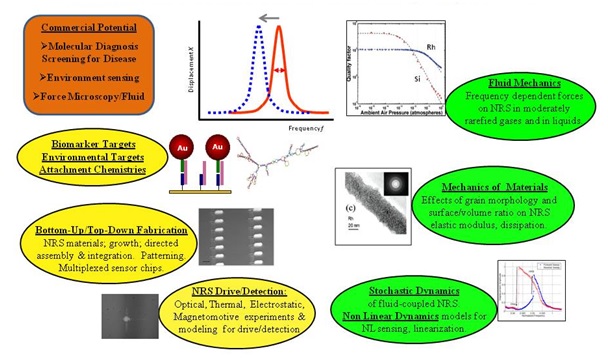
Rustom B. Bhiladvala is an Associate Professor in the Department of Mechanical Engineering at the University of Victoria. His expertise spans nanoscale materials, biomedical sensor development, and sustainable energy solutions. He holds degrees from IIT Kharagpur, the University of Iowa, and Yale University, and is a licensed Professional Engineer (P.Eng). Education: BTech (IIT Kharagpur), MS (University of Iowa), PhD (Yale) Affiliations: Faculty of Engineering, Mechanical Engineering Department, PRIMED Lab His research focuses on nanoresonators for early cancer detection, guard-heated thermal sensors for wind turbine optimization, and scalable nanostructure fabrication. Key projects include vibrating nanowire mass sensors and low-cost solar cell improvements. His work bridges fluid mechanics, materials science, and biomedical engineering. Notable contributions include developing field-directed nanowire assembly techniques and improving turbulent flow measurement accuracy. He teaches courses on energy systems and fluid mechanics at both undergraduate and graduate levels.
Robert Viesca is an Associate Professor in the Department of Civil and Environmental Engineering at Tufts University, where he has held academic roles since 2012. His research focuses on theoretical mechanics applied to geophysical and engineering problems, including earthquake nucleation, fault rupture dynamics, landsliding, and fluid-driven phenomena. Key areas of interest are seismology, tectonophysics, and porous media deformation. Education: Ph.D. (2011) and M.S. (2006) in Engineering Sciences from Harvard University; B.S. (2005) in Civil Engineering from Tufts University. He completed a postdoctoral fellowship at Dalhousie University (2011–2012) under Dmitry I. Garagash. Research emphasizes fault mechanics, frictional processes, and fluid-rock interactions. He leads the Geomechanics FOR subsurface Clean Energy (GEOFORCE) group, exploring subsurface deformation and failure mechanics for geothermal energy and CO₂ storage applications. Collaborators include Federico Ciardo, Ilya Svetlizky, and Thomas Cochard. Prominent former students/postdocs: Federico Ciardo (Northwestern University), Pathikrit Bhattacharya (NISER), Antoine Jacquey (Polytechnique Montréal), Sohom Ray (IIT Roorkee). Active in AGU meetings and international conferences, presenting recent work on thermohydro-mechanical fault modeling and seismic cycle dynamics. Teaching and advising: Oversees Ph.D., M.S., and undergraduate research programs. Supports Tufts Summer Scholars for undergraduates and Cataldo Fellowships for department students. Labs/Teams: GEOFORCE Group focuses on multiphysics modeling of subsurface deformation, integrating fracture mechanics and scaling arguments to address energy and seismic hazard challenges.
Shanelle Foster is an Associate Professor in the Department of Electrical and Computer Engineering at Michigan State University's College of Engineering. Her research focuses on developing sustainable electromechanical energy conversion technologies, emphasizing manufacturability, reliability, and control of linear and rotating electrical machines. She leads efforts to integrate advanced materials and additive manufacturing techniques to enhance electric machine efficiency and cost-effectiveness. Education: Ph.D. Electrical Engineering, Michigan State University (2013) M.S. Electrical Engineering, Michigan State University (1998) B.S. Electrical Engineering, Michigan State University (1996) Research Interests: Electromechanical systems and energy conversion Segmented stator/rotor design optimization Additive manufacturing of soft magnetic materials Condition monitoring and fault diagnosis High-performance control algorithms for electric drives Awards & Recognition: NSF CAREER Award (2021) Excellence in Diversity Award (2022) IEEE Women in Engineering Travel Grant (2017) Office of Naval Research Concept Challenge Finalist (2017) Service & Leadership: Associate Editor, IEEE Transactions on Energy Conversion (2021-present) Logistics Co-Chair, 2023 IEEE Energy Conversion Congress & Expo Former Secretary, IEEE Southeastern Michigan Section (2021-2022) Her work bridges fundamental research with practical applications, particularly in advancing additive manufacturing for electric machines and promoting inclusive engineering education through her NSF-funded CAREER project.
Iryna Rybak is a Senior Lecturer and Principal Investigator at the University of Stuttgart's Institute of Applied Analysis and Numerical Simulation. Her research focuses on mathematical modeling, numerical methods, and multiscale analysis for coupled free-flow and porous medium systems. She coordinates the German side of the ANR-DFG project FLUPOR and leads Project A03 in the Collaborative Research Centre (SFB) 1313 on interface-driven multi-field processes in porous media. Academic Roles: Research Assistant, Principal Investigator Institution: University of Stuttgart Key Projects: FLUPOR (ANR-DFG), SFB 1313 (DFG) Research Interests: Multiscale methods, averaging theories, Stokes-Darcy coupling, numerical algorithms for multiphysics problems, and model validation using neural networks. Her work addresses interface conditions, porous media flow, and sediment transport in three-phase systems. Publications emphasize fluid-porous interface modeling, preconditioning techniques, and sensitivity analysis. She has advised over 15 PhD/Master students on topics like preconditioners for coupled systems and surrogate-assisted validation frameworks. Teaching includes advanced numerical methods, mathematical programming, and partial differential equations at both undergraduate and graduate levels. Grant Roles: Principal Investigator in FLUPOR and SFB 1313; coordinator of DFG-funded projects on interface modeling (2012–2025).
Prof. Selda Oterkus is a Professor (Chair) at the University of Strathclyde's Department of Naval Architecture, Ocean and Marine Engineering, and co-director of the PeriDynamics Research Centre (PDRC). She holds a PhD in Mechanical Engineering from the University of Arizona. Her research focuses on multi-physics modeling, including damage prediction in materials and structures under various conditions. Key areas include fluid-structure interactions, offshore renewable energy systems, and composite materials. Her work is supported by organizations like BEIS, Innovate UK, and industry partners such as Babcock and TWI. Research interests span peridynamics, fracture mechanics, computational fluid dynamics, and desalination technologies. She has collaborated internationally, serving as a visiting professor at Stanford University, University of Padova, and Otto von Guericke University. She is an editor for journals like Computational Materials Science and chairs the ASME UK Section. Her projects include advanced manufacturing techniques, floating wind/solar energy devices, and corrosion damage analysis. She contributes to UN Sustainable Development Goals related to affordable clean energy and climate action. Supervised 16 students and led 32 projects, including consultancy work with Ferguson Marine. Active in workshops and conferences on sustainable materials and marine engineering. Labs/Teams: Co-directs the PeriDynamics Research Centre (PDRC), leading interdisciplinary research in computational mechanics and materials science.
Dr. Tomasz Plewa is a Professor at Florida State University's Department of Scientific Computing, with extensive expertise in computational astrophysics and high-performance computing. His research focuses on theoretical and computational modeling of complex astrophysical phenomena, particularly supernova explosions, fluid dynamics, and plasma physics. His research interests span: Fundamental astrophysical processes: stellar evolution, core collapse, and thermonuclear supernovae Advanced computational methods: adaptive mesh refinement (AMR), machine learning for subgrid modeling, and verification & validation Multiphysics simulations: magnetohydrodynamics, turbulent combustion, reactive flows, and high-energy density physics High-performance computing applications: extreme-scale simulations, data analytics, and scientific software development Analysis of his 15 most recent publications reveals strong trends in: Supernova explosion mechanisms (core collapse, detonation physics, gravitational confinement) Hydrodynamic instabilities in astrophysical contexts (Rayleigh-Taylor, shock-cylinder interactions) Advanced numerical methods for relativistic and reactive flows Laboratory astrophysics experiments validating cosmic phenomena High-performance computing frameworks for terascale simulations Dr. Plewa leads the Hydro Group research team and participates in the High-Energy Density Laboratory Astrophysics (HEDLA) consortium. He supervises students through Florida State University's Undergraduate Research Opportunity Program (UROP) and maintains active collaborations on international astrophysics projects.
Dr. Pejman Tahmasebi is an Associate Professor in the Department of Geophysics at the Colorado School of Mines, where he leads research in geomechanics, subsurface systems, and machine learning applications. He is affiliated with the G4 Lab (tahmasebi.mines.edu), focusing on advanced computational modeling and data-driven methods for earth sciences. His research interests span geomechanics (from granular particles to large-scale systems and THMC processes), subsurface systems (energy, water, storage) using computational modeling and multiple-point statistics, machine learning with physics-guided AI frameworks, and fluid flow in porous media . His work integrates statistical, multiscale, and data analytics techniques to solve complex geoscientific challenges. Dr. Tahmasebi has received several prestigious awards, including international recognitions from IAMG and EAGE as a rising star, regional SPE awards in Reservoir Description and Data Analytics, and the Elsevier Best Paper Award. He serves on the editorial boards of Water Resources Research , Computers & Geosciences , and Fluids , handling submissions in machine learning and subsurface modeling. He has conducted postdoctoral research at Stanford University and the University of Texas at Austin, and worked at Caltech in the Department of Mechanical and Civil Engineering. His educational background includes a Ph.D. from a joint program supervised by Prof. Muhammad Sahimi at the University of Southern California, focusing on data analytics for porous media modeling. Dr. Tahmasebi advises graduate students and leads the G4 Lab, which specializes in developing novel statistical and multiscale techniques for geoscientific applications. His lab actively contributes to advancing physics-informed AI and uncertainty quantification in subsurface systems.
Eddie Wadbro is a Visiting Professor at the Department of Computing Science , Umeå University. His research spans computational mechanics, acoustics, and machine learning, focusing on topology optimization and its applications in industrial design, forestry, and electromagnetics. He actively collaborates across disciplines to solve complex engineering challenges. Key Research Areas: Topology optimization, acoustic wave control, machine learning for industrial systems, fluid dynamics Recent Trends: Alzheimer's disease classification via morphological analysis, deep reinforcement learning for autonomous machinery, multiscale material design Collaborations: Works with experts in forestry engineering, electromagnetics, and biomedical imaging.
Prof. Dr.-Ing. Matthias Nienhaus is a full Professor at Saarland University, serving as the Chair of Drive Technology within the Faculty of Engineering. He leads a research group focused on advanced drive systems, including active magnetic bearings, sensorless control, and electromechanical design. His teaching includes courses such as Drive System Technology - Components , and he supervises student theses in mechatronic systems. University: Saarland University School: Faculty of Engineering Position: Professor and Chair Holder Research Focus: Electric Drives, Magnetic Bearings, Sensorless Control His research interests lie in the development and optimization of mechatronic drive systems, particularly in the areas of active magnetic bearings (AMBs), sensorless position detection, and control strategies for electric motors. He investigates novel control methods such as sliding-mode and super-twisting control, as well as applications in Vernier motors and Foucault pendulum drives. His work integrates modeling, simulation, and experimental validation. The recent publications highlight a strong trend in control engineering for magnetic bearings, emphasizing robustness, sensorless operation, and optimization techniques. These works apply advanced control algorithms like particle swarm optimization and super-twisting sliding mode control to improve stability and performance in high-precision drive systems. Prof. Nienhaus actively supervises student research and final theses, guiding projects in areas such as torque motor test benches, electromagnetic actuators, and optimization of electric machines. While no specific grants are listed, his work implies ongoing research funding through university and likely national or industrial sources. He leads the Drive Technology research group (Lehrstuhl für Antriebstechnik) at Saarland University, which includes scientific staff and alumni working on cutting-edge topics in electric drives and mechatronics. The team utilizes simulation tools like Comsol Multiphysics and Ansys Maxwell, and develops embedded control systems for experimental validation.
Dr. Zeynep Ekicioğlu-Küzeci is an Assistant Professor in the Department of Mechanical Engineering at Kırşehir Ahi Evran University's Faculty of Engineering and Architecture. She holds a PhD from Yıldız Technical University (2020), an MSc from Istanbul Technical University (2011), and a BSc from Kocaeli University (2008). Her academic career includes positions as a Research Assistant at Yıldız Technical University (2009-2013) and Ahi Evran University (2013-2022) before assuming her current role. Research Focus: Her primary research explores three interconnected domains: 1) Machine Theory and Dynamics , focusing on mechanical system behavior; 2) Mechanical Vibrations and Noise , examining damping and control; and 3) Mechatronics , integrating mechanical systems with electronics and control. Her work frequently involves hydro-piezoelectric systems, smart agriculture automation, and energy harvesting technologies. Publication Trends: Her 15 most recent publications (2016-2025) demonstrate evolving research in piezoelectric material applications, vibration analysis in fluid-structure systems, and microcontroller-based agricultural automation. Later works increasingly incorporate renewable energy assessment and AI applications in smart farming. Awards: Department Second Place Award, Kocaeli University (2008) Supervision and Projects: She currently advises Master's student Ayhan Umucu on piezoelectric energy harvesting. Her research leadership includes: Smart Greenhouse Automation with Image Processing (2025-2026, Lead Researcher) Piezoelectric Energy Harvesting Applications (2024-2025, Advisor) Microcontroller-Based Lighting Control in Greenhouses (2022-2023, Lead Researcher)
Xavier Feaugas is a Professor and Teacher-Researcher at the University of La Rochelle, serving as Director of the Laboratory of Engineering Sciences for the Environment (LaSIE) UMR CNRS 7356. His work spans the Research Section CNU 28 and CNRS Scientific Department INSIS, focusing on fundamental mechanisms of material degradation in demanding environments. His research centers on the critical intersection of plasticity mechanisms and surface reactivity, with particular emphasis on hydrogen embrittlement and stress corrosion cracking. Key interests include: Hydrogen diffusion and trapping in heterogeneous microstructures Metallurgical state effects on hydrogen-assisted failure Multiphysical couplings at liquid/solid interfaces Nanoscale void stability under hydrogen exposure Corrosion-fatigue interactions in advanced alloys Feaugas' recent publications reveal a strong trend toward multi-scale experimental and computational approaches, combining electrochemical techniques (SECM), in-situ characterization, and advanced modeling to unravel hydrogen transport phenomena. His work spans high-impact journals across materials science, corrosion engineering, and physical metallurgy, demonstrating consistent leadership in hydrogen-related failure mechanisms. As Director of LaSIE, he oversees research on engineering sciences for environmental applications, fostering collaborations across French and international institutions. His laboratory integrates experimental facilities for hydrogen charging, electrochemical analysis, and microstructural characterization to address industrial challenges in energy and transportation sectors.
Umberto Galietti serves as a Full Professor in the Department of Mechanics, Mathematics and Management at the Polytechnic University of Bari, Italy, specializing in Mechanical Design and Machine Construction (ING-IND/14). His research focuses on advanced thermographic methodologies for non-destructive evaluation of engineering materials and structures. His primary research domains include Non-Destructive Testing , Thermography , and Mechanical Design , with significant contributions to Composite Materials analysis, Additive Manufacturing process monitoring, and Fatigue Analysis . Galietti pioneered the integration of Deep Learning with thermal imaging for defect quantification and developed novel protocols for railway rail inspection, dissimilar material welding evaluation, and ceramic matrix composite characterization. Analysis of his 2020-2025 publications reveals a strategic shift toward AI-enhanced thermographic techniques for industrial applications, particularly in aerospace (composite wing spars), automotive (boron steel heat treatment), and railway infrastructure (crack detection). His work consistently bridges theoretical thermal modeling with practical industrial implementation, evidenced by leadership in the IDEA Project for composite-bonded joint monitoring. Professor Galietti actively contributes to academic discourse through peer review services and conference organization, including the preface for the 53rd AIAS Conference, demonstrating sustained engagement with the mechanical engineering community.
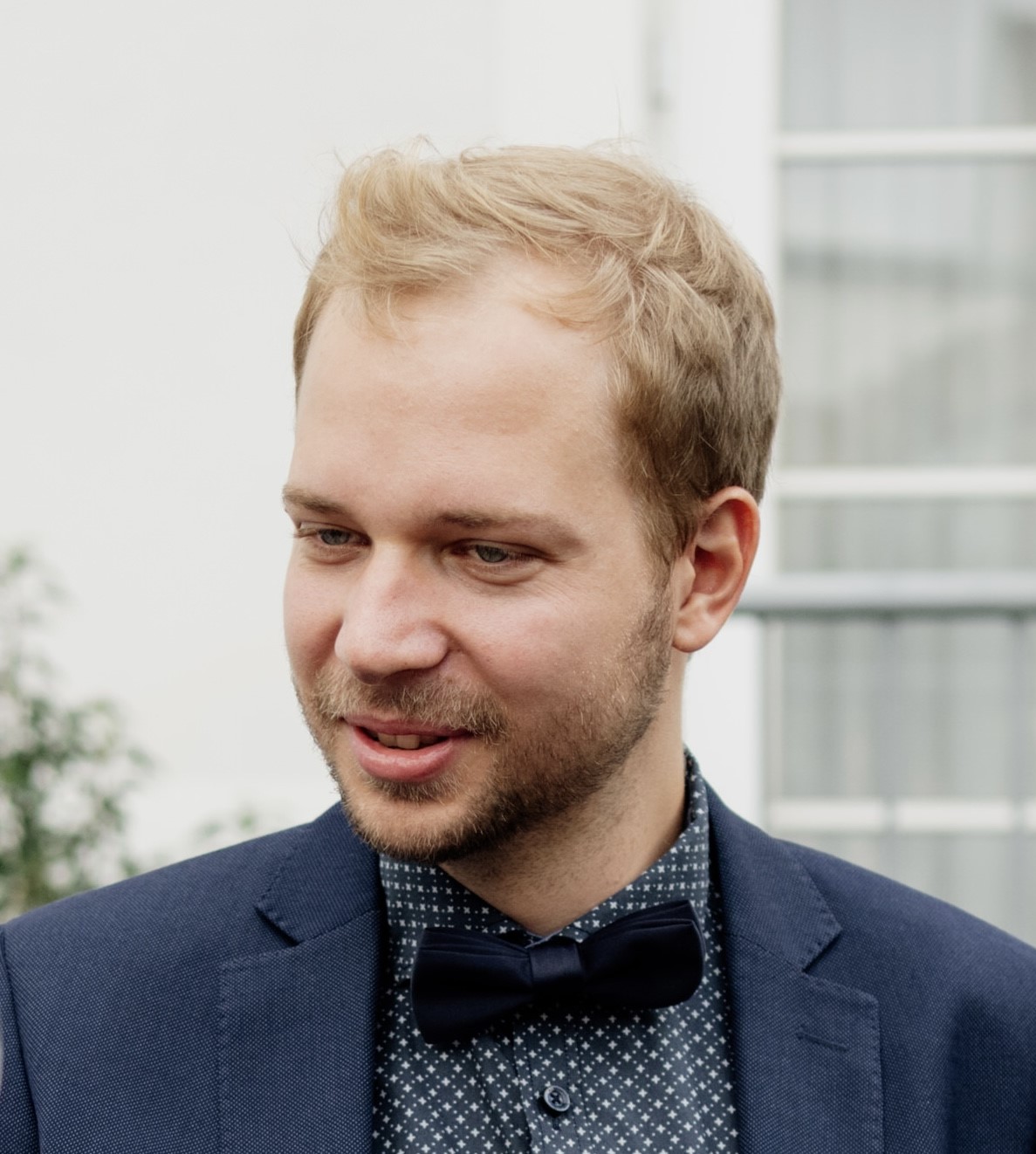
Marco Bresciani is a postdoctoral researcher at the Department of Mathematics, Friedrich-Alexander University Erlangen-Nürnberg (FAU), working in the Research group of Applied Analysis under Prof. Dr. Manuel Friedrich (2024-present). He previously held postdoctoral positions at FAU (2022-2024) and project assistant roles at TU Wien (2020-2022) and the University of Vienna (2019). Education : Master in Mathematics (Università di Pavia, 2016-2019); Bachelor in Mathematics (Università di Trento, 2011-2016). His research focuses on calculus of variations, multiphysics models with Eulerian-Lagrangian formulations, cavitation and fracture in nonlinear elasticity, rate-independent evolutions, and reduced theories for thin structures. Recent work involves magnetoelasticity, material failure modeling, and dimensional reduction techniques. Publications highlight trends in variational modeling of material failure, magnetoelastic systems, and nonlinear elasticity. Key subfields include Orlicz-Sobolev spaces, Kármán theory, and Γ-convergence analysis. Scientific Awards : Alexander von Humboldt Fellowship. Affiliated with FAU’s Applied Analysis group, Bresciani collaborates on mathematical modeling of physical phenomena. His work bridges theoretical analysis with computational mechanics applications.