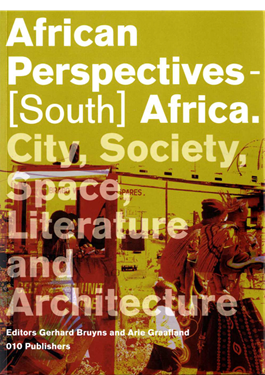
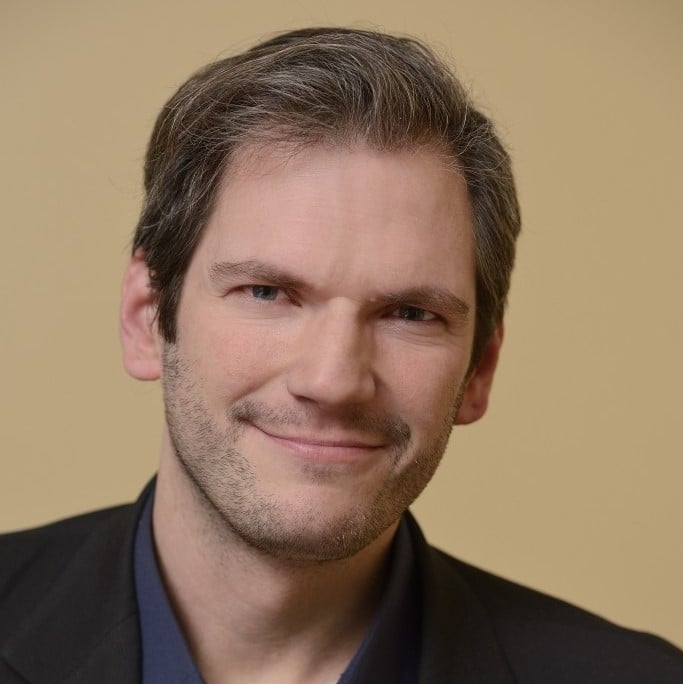
Dr. ir. Gerhard Bruyns is a tenured Associate Professor at the School of Design, The Hong Kong Polytechnic University , where he serves as Associate Dean (Academic Programmes) and Director of RPg Studies . Previously, he held tenured positions at the Delft University of Technology , Netherlands, in both the Delft School of Design and the Department of Urbanism. His expertise spans spatial morphology, volumetric urbanism, and critical environments in dense urban contexts.
Roberto Giorgi is an Associate Professor of Computer Engineering at the Department of Information Engineering, University of Siena, Italy. He has held this position since October 1, 2006, following his tenure as an Assistant Professor since March 15, 1999. His educational background includes a Ph.D. in Computer Engineering from the University of Pisa (1999) with a thesis on coherence protocols for shared-memory multiprocessors, and an Electronic Engineering degree (1995) with a thesis on trace-driven performance evaluation of multiprocessors. Giorgi's primary research focuses on Computer Architecture , particularly on multiprocessor/multicore issues including processor design, coherence protocols, programmability, and energy efficiency. His work spans both theoretical and practical aspects of computer architecture, with emphasis on real-world implementations and educational tools. He has coordinated significant EU-funded projects including AXIOM (2014-2018) on Smart Cyber-Physical Systems and TERAFLUX (2009-2014) on Many-Cores. His recent publications (2022-2025) demonstrate a strong progression toward practical applications of computer architecture research, with particular emphasis on RISC-V architecture, FPGA-based acceleration, dataflow computing models (especially DF-Threads), and graph processing. Many of his papers address educational tools for computer architecture education, real-time object detection on embedded platforms, and novel execution paradigms for edge computing and HPC. IEEE Senior Member ACM Lifetime Member Coordinator of EU-funded AXIOM project (2014-2018) on Smart Cyber-Physical Systems Coordinator of EU-funded TERAFLUX project (2009-2014) on Many-Cores Giorgi has been actively involved in securing research funding and building collaborations, particularly in high-performance computer architecture research with emphasis on scalable architectures and embedded systems. He leads the Computer Architecture Lab (ROOM 223) at the University of Siena, which was established in 2007, and has been instrumental in developing practical implementations of architectural concepts including the AXIOM platform for cyber-physical systems.
Zahra Mohaghegh is a Professor and Donald Biggar Willett Faculty Scholar in the Department of Nuclear, Plasma, and Radiological Engineering at the University of Illinois Urbana-Champaign. She directs the Socio-Technical Risk Analysis (SoTeRiA) Research Laboratory , focusing on advancing risk science for complex systems like nuclear power plants, advanced reactors, civil aviation, and oil industries. Her work integrates probabilistic risk assessment (PRA), probabilistic physics of failure, human-system reliability, AI trustworthiness, uncertainty analysis, and risk-informed policymaking, supported by grants from DOE, NSF, NRC, and IAEA. Academic Positions: Professor (2025–present), Associate Professor (2020–2025), Assistant Professor (2013–2020), Part-Time Faculty at Beckman Institute (2015–present) Her research explores socio-technical systems through hybrid models combining technical systems with organizational factors, earning awards like the NSF Mid-Career Achievement Award and American Nuclear Society's Mary Jane Oestmann Professional Women's Achievement Award. She has contributed to U.S. National Academies committees on transport airplane risk assessment and Coast Guard compliance programs. Recent publications focus on spatiotemporal risk modeling, fire PRA advancements, human-digital twin interactions, and AI integration in nuclear safety. Her work emphasizes reducing false negatives in screening analysis, validating simulation models, and connecting safety with financial performance through probabilistic physics of failure. She actively collaborates with academia, industry, and regulators, including DOE's Carbon Free Power Project and OECD-NEA's NEST SMR initiative. Scientific Awards: National Science Foundation Mid-Career Achievement Award Dean's Award for Excellence in Research (Assistant and Associate levels) George Apostolakis Award in risk assessment American Nuclear Society Mary Jane Oestmann Professional Women's Achievement Award She serves on the Board of Directors for the International Association for Probabilistic Safety Assessment and Management (IAPSAM) and acts as a technical advisor to the U.S. National Academies on risk assessment methodologies.
Prof. P. (Paris) Avgeriou is a full professor of Software Engineering at the Faculty of Science and Engineering , University of Groningen (RUG). His research focuses on software architecture , technical debt management , and self-adaptive systems through empirical studies and industrial collaborations. His work explores architectural decision-making using financial investment models, machine learning for debt detection, and dependency analysis in software systems. Recent projects include SDK4ED for energy-efficient embedded systems and DebtViz for debt visualization. Key article trends include technical debt lifecycle analysis (2023-2025), self-adaptive systems (2025), and modular architecture challenges (2024). Keywords span Computer Science , Machine Learning , and Software Systems . As an ancillary academic activity , he serves as editor for the Journal of Systems and Software (Elsevier). His collaborations extend to institutions in the Netherlands, Brazil, and Italy, with research outputs appearing in IEEE and ACM venues.
Dr. Wai Kiong Oswald Chong is an Associate Professor at Arizona State University's School of Sustainable Engineering and the Built Environment, with a dual affiliation as Senior Global Futures Scientist at the Global Futures Scientists and Scholars program. He holds a PhD in Civil Engineering from the University of Texas-Austin, MSc and BSc in Building from the National University of Singapore, and focuses on integrating artificial intelligence with sustainable engineering systems. PhD (2005): Civil Engineering, University of Texas-Austin MSc (1999) & BSc (1997): National University of Singapore His research bridges lunar construction with Earth-bound sustainable systems, covering topics like: Space habitat modularization Resource circularity systems AI-enhanced building codes Climate-resilient infrastructure Advanced energy modeling Construction supply chain optimization Publications demonstrate consistent focus on: Semiconductor facility HVAC optimization Building energy consumption anomalies Life cycle assessment frameworks Construction risk management Deconstruction and material reuse AI-driven system modeling Current research projects include: Lunar MVI (Moon Village Initiative) Semiconductor fab design optimization Human-AI knowledge interfaces Thermal insulation systems for extreme environments Smart grid energy modeling
Ricardo Aguilera Echeverria is an Associate Professor at the University of Technology Sydney (UTS), School of Electrical and Data Engineering . With a Ph.D. in Electrical Engineering from the University of Newcastle (2012), he has held academic positions at UNSW Australia (2014-2016) and UTS since 2016. His research focuses on model predictive control (MPC) applied to power electronics , renewable energy integration , and microgrid control systems . He actively supervises Masters and PhD students and has developed courses such as Control Studio A and Control Studio B . Education: PhD in Electrical Engineering (University of Newcastle, 2012) MSc in Electronics Engineering (Universidad Tecnica Federico Santa Maria, 2007) BSc in Electrical Engineering (Universidad de Antofagasta, 2003) Research Interests: Model Predictive Control (MPC) for power converters Microgrid stability and cybersecurity Second-life battery integration Hybrid DC-AC microgrid solutions Recent Research Trends: Advancements in modular multilevel matrix converters (M3C) for LFAC systems Development of per-phase instantaneous power theories for LVRT compensation Sliding mode observers (SMO) for cyberattack mitigation in AC microgrids Optimal control strategies for delta-connected CHB converters in energy storage Grants & Projects: Lead investigator in HORIZON Europe (2024-2027) on digital solutions for renewable energy systems ARC Discovery Project (DP240102646) on extending second-life battery life (2024-2026) Collaborative grants with Sovereign Propulsion Systems Pty Ltd and NSW Department of Industry for hybrid-electric vehicle control
Professor Ola Isaksson is a faculty member in Product Development at Chalmers University of Technology, where he leads the Systems Engineering Design research group. With over 40 research projects nationally and internationally, his work bridges academic research and industrial application, particularly in aviation and transport-related manufacturing sectors. His expertise spans digitalization, sustainability, and advanced manufacturing methods in product development. Ola Isaksson received his PhD in Computer Aided Machine Design from Luleå University of Technology in 1999. Prior to his academic career, he had a specialist career at GKN Aerospace Engine Systems (formerly Volvo Aero) in Trollhättan, focusing on design and product development until 2015. Professor Isaksson's research focuses on developing new product development capabilities to address societal and industrial needs through digitalization and advanced manufacturing. His primary interests include platform-based development, Set Based Engineering, multidisciplinary engineering methods, Value-driven development, and knowledge-intensive system support. He has particular expertise in additive manufacturing integration, design space exploration, and sustainability transition in product development. Analysis of Professor Isaksson's recent publications reveals a strong focus on integrating digital technologies with sustainable manufacturing practices. His work demonstrates a progression from traditional design methodologies toward AI-assisted design, digital twins, and advanced data analytics. Key thematic areas include additive manufacturing implementation, design margin management, sustainability integration, and aerospace component optimization, reflecting his commitment to bridging theoretical research with industrial applications. Professor Isaksson is one of the founders of the Swedish Product Development Academy and maintains active membership in the Design Society, ASME, and SIG PM, reflecting his significant contributions to the field of engineering design. With over 100 scientific publications and leadership in more than 40 research projects, Professor Isaksson has established himself as a leading figure in product development research. His work frequently involves close collaboration with industry partners, particularly in the aviation sector, securing substantial research funding for projects addressing digitalization, sustainability, and advanced manufacturing challenges. Professor Isaksson leads the Systems Engineering Design research group at Chalmers University of Technology. His team focuses on developing methodologies for complex product development, with particular emphasis on digital tools, sustainability integration, and manufacturing innovation. The group maintains strong industry connections, especially with aerospace manufacturers, facilitating the translation of research into practical applications.
Dr Walter Wojciech M. Kozlowski is an Adjunct Associate Professor at the School of Mathematics and Statistics of the University of New South Wales . He has been actively engaged in research in functional analysis, fixed point theory, and their applications since the 1980s. Additionally, he is a professional in Information and Communication Technology, serving as Head of Architecture at Telstra Network Cloud and elected Technology Co-Lead of the Common NFVI Telco Taskforce (CNTT) in 2019. Research Interests: Dr Kozlowski specializes in functional analysis , fixed point theory , and modular function spaces . His work explores the convergence of iterative processes, nonlinear operator theory, and applications in Banach spaces. Recent Publications: His 2024 studies focus on implicit iterative processes, modular versions of fixed point theorems, and convergence analysis. Earlier works (2013-2017) examine nonlinear differential equations, pointwise Lipschitzian mappings, and common fixed points in modular spaces. Scientific Awards: Fulbright Scholar
Dr. Franz-Karl Skala is a Senior Lecturer at the Vienna University of Economics and Business (WU) in the Business Education department, with over 15 years of academic and professional experience in higher education. He has held teaching and research positions at institutions including the University of Graz, University of Applied Sciences Burgenland, and Fachhochschule Wiener Neustadt. Current Senior Lecturer at WU (since 2012) Teaching focus on programming didactics and e-learning Specializes in business informatics didactics and vocational training Research interests center on curriculum development for hybrid education models, digital transformation in business training, and vocational education reform. His recent FLUENT project (2022-2025) develops flexible universal education models for AI-era learning. He has secured multiple Erasmus+ grants for international education initiatives in Central Asia. Scientific awards include four Vienna University of Economics and Business Innovative Teaching Awards (2020, 2019, 2017, 2010), University of Graz teaching excellence recognition (2020), AK Science Prize (2013), and Leopold-Kunschak Science Prize (2013). Developed modular curriculum frameworks Created e-learning platforms for entrepreneurs Conducted comparative studies on vocational vs academic degrees
Philipp Koehn is a Professor in the Department of Computer Science at Johns Hopkins University, with additional affiliation at the University of Edinburgh. His primary research focuses on statistical and neural machine translation, specifically developing methods to leverage large-scale digital information for cross-lingual communication. He leads the Machine Translation Research Group and maintains key resources like the Moses toolkit and Europarl corpus. His research interests span: Core machine translation techniques (statistical/neural approaches) Low-resource and unsupervised translation methods Cross-lingual representation learning Speech-to-speech translation systems Large-scale parallel data mining and alignment Evaluation methodologies for generated text Koehn's recent publications demonstrate strong focus on improving translation efficiency (dynamic compression, streaming models), robustness (noise handling, error correction), and accessibility (low-resource languages, radio speech processing). Key trends include multilingual generalization, document-level coherence, and human-centered evaluation. Significant scientific recognition includes: ACL Fellow (2024) IAMT Award of Honor (2015) European Inventor Award Finalist (2013) He currently advises PhD students Rachel Wicks, Elina Baral, Bismarck Odoom, and Weiting Tan. His Machine Translation Group develops widely-used open-source tools and organizes major conferences including WMT and MT Marathon.
Dr. Christoph Diehl is a researcher at the Faculty of Chemistry , affiliated with the Organic Chemistry and Biocatalysis Group at the University of Bielefeld . His work focuses on synthetic biology and biocatalysis, particularly in developing biochemical systems for CO 2 fixation and complex molecule synthesis. Current Affiliation: University of Bielefeld, Faculty of Chemistry Research Group: Organic Chemistry and Biocatalysis / Center for Biotechnology (CeBiTec) Research Interests Dr. Diehl specializes in: Designing synthetic CO 2 fixation cycles (THETA, HOPAC) Developing in vitro biochemical networks Engineering biocatalytic enzyme cascades Optimizing carbon utilization for chemical production Integrating machine learning with metabolic engineering Creating cell-free systems for biomanufacturing Publication Trends His recent work emphasizes synthetic CO 2 fixation pathways, biocatalytic cascade design, and machine learning-guided optimization of metabolic systems. He has pioneered modular approaches for terpene/polyketide synthesis from CO 2 and developed novel carboxylation modules.
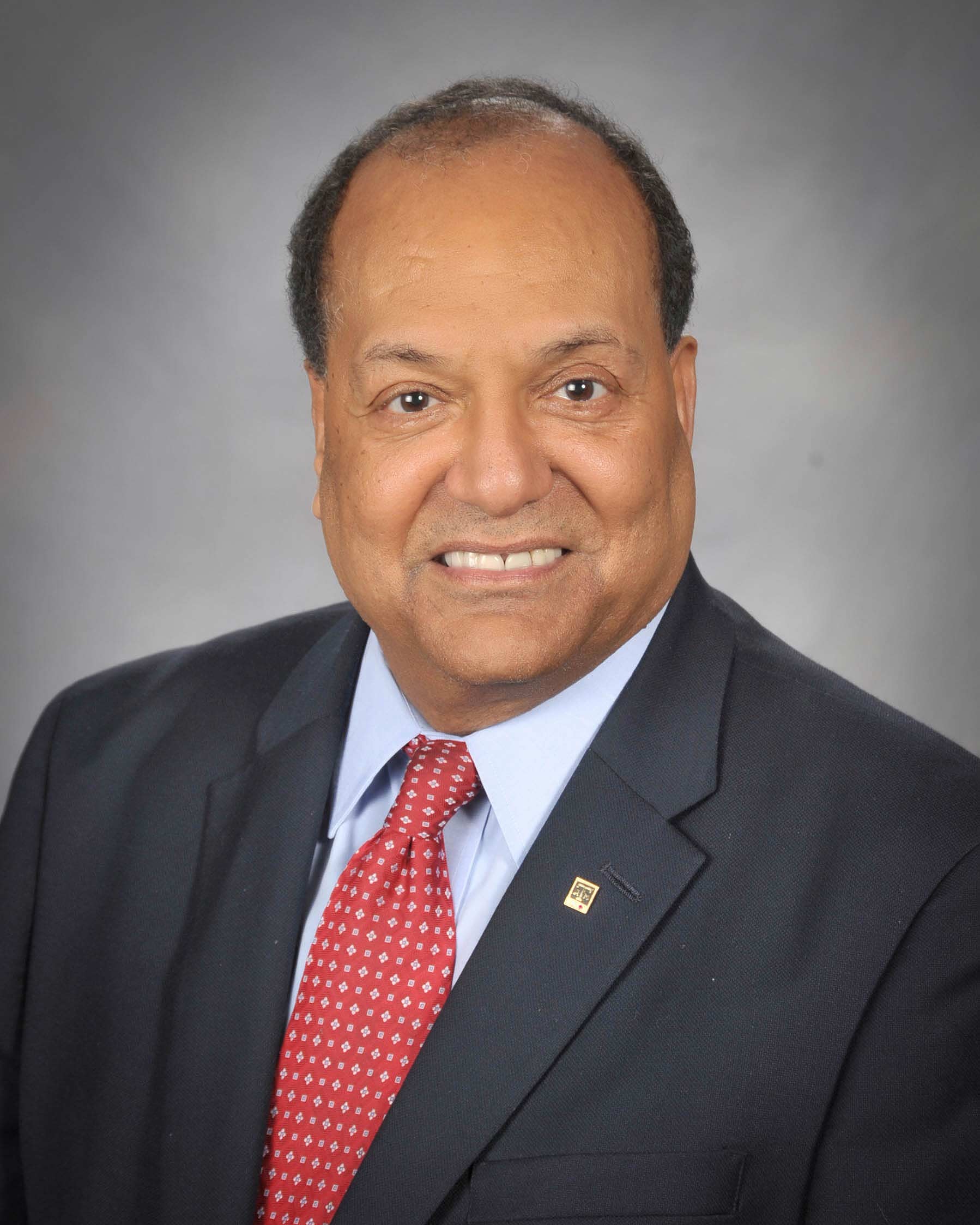
Dr. Yassin A. Hassan is a Professor at the College of Engineering , Texas A&M University , with joint appointments in Nuclear Engineering and Mechanical Engineering . He holds the L.F. Peterson '36 Chair II , is a University Distinguished Professor , and directs the Center for Advanced Small Modular and Microreactors (CASMR) . Ph.D., Nuclear Engineering, University of Illinois – 1980 M.S., Nuclear Engineering, University of Illinois – 1975 B.S., Engineering, University of Alexandria in Egypt – 1968 His research interests include: Computational & Experimental Thermal Hydraulics Reactor Safety Fluid Mechanics Two-Phase Flow Turbulence & Laser Velocimetry Imaging Techniques His recent publications focus on: Thermal hydraulics of heat pipes and microreactors AI integration in nuclear thermal-fluid systems Flow regime transitions in wire-wrapped fuel assemblies CFD validation for pebble bed and molten salt reactors Uncertainty quantification in reactor simulations Flow visualization techniques under elevated pressures Scientific awards include: American Nuclear Society Seaborg Medal (2008) James N. Landis Medal (ASME, 2017) Akiyama Medal (ICONE 24, 2016) Arthur Holly Compton Award (ANS, 2003) Texas A&M TEES Research Impact Award (2018-2019) Honorary professor, Bangor University, UK Dr. Hassan leads the Thermal-Hydraulics Research Laboratory and has pioneered advancements in reactor safety, digital twin technologies, and AI-driven thermal-fluid simulations.
Dr.-Ing. Ullrich Mönich is a Senior Researcher and Lecturer at the Technical University of Munich (TUM) , affiliated with the Chair of Theoretical Information Technology and leading research activities at the Advanced Communication Systems and Embedded Security Lab (ACES Lab) . Since 2019, he has been instrumental in shaping experimental and theoretical research in 6G communications, physical layer security, and signal processing. Education: Dr.-Ing. in Electrical Engineering, Technische Universität München (2011) – supervised by Prof. Holger Boche Previous affiliations include MIT (2012–2015) and TU Berlin Research Focus: His research spans signal processing, wireless communications, machine learning, and sampling theory , with a strong emphasis on physical layer security , computability in signal processing , and 6G communications . He explores theoretical foundations and practical implementations, including neuromorphic computing, digital twinning, and secure modular coding schemes. Publications & Trends: His recent publications (2023–2025) are heavily concentrated in 6G communications , integrated sensing and communications (ISAC) , semantic physical layer security , and digital twinning . These works often combine theoretical analysis with experimental validation using 5G/6G testbeds and neuromorphic hardware. Teaching & Supervision: Regularly teaches "Foundations of Analog, Digital, and Quantum Computers" (tutorials since 2018) Previously taught "Applied Functional Analysis" and "Advanced Signal Theory" Involved in practical courses like "Software Defined Radio Laboratory" Labs & Teams: He leads the ACES Lab at TUM, which focuses on experimental validation of advanced communication systems, including physical layer security, neuromorphic computing, and 6G testbeds. The lab collaborates with national and international partners, including MIT, and is supported by major funding bodies such as the German Federal Ministry of Education and Research (BMBF) and the German Research Foundation (DFG).
Dr. Sven Mackenbach serves as a Postdoctoral Researcher and Senior Engineer at RWTH Aachen University's Institute of Construction Management, Digital Engineering and Robotics in Construction (ICoM) since January 2023. Holding a doctorate in circular construction from the same institution, he leads the development of the "Circular Construction" research area, oversees multidisciplinary projects, and teaches Sustainable Construction Management to engineering students. His academic credentials include: PhD in Circular Construction, RWTH Aachen University (2023) Mackenbach's research integrates circular economy principles with digital construction technologies, focusing on strategic management frameworks for sustainable building practices. His expertise spans modular construction methods, BIM-based sustainability assessment, and digital twinning applications for infrastructure management. He bridges theoretical research with practical implementation through sustainability consulting for construction stakeholders, addressing real-world challenges in resource efficiency and regulatory compliance. His publication portfolio reveals a decisive shift toward data-driven circular construction solutions, with increasing emphasis on BIM-ontology integration for deconstruction planning, public participation systems, and sewer infrastructure management. Recent works demonstrate sophisticated methodological approaches to quantify ecological, economic, and social sustainability metrics without specialized expertise. As a scientific supervisor, Mackenbach mentors research assistants in project execution while contributing to curriculum development through his specialized course instruction. His leadership in research project coordination indicates substantial grant management experience, though specific funding sources aren't detailed in available materials. Within ICoM's collaborative environment, he contributes to cross-disciplinary teams advancing digital engineering and robotics applications in construction, particularly through the KaSyTwin sewer management project and BIPV facade digitalization initiatives.
Tyler Cody is an Associate Professor of Data Science at the University of Virginia School of Data Science and a member of the National Security Data and Policy Institute. His research bridges systems engineering and artificial intelligence through abstract systems theory. Education: Ph.D. in Systems Engineering, University of Virginia B.S. in Systems Engineering, University of Virginia (minors: Computer Science, Applied Mathematics) Dr. Cody's research centers on systems theory as a meta-theory for learning, with applications in machine prognostics, telecommunications, computer networks, fraud detection, and computer vision. He investigates phenomena in learning processes, focusing on change and reuse, lifecycles, and iterated games. His recent publications (2024-2025) reveal a strong trend in applying systems theory to machine learning assurance and cyber security. Key areas include reinforcement learning for cyber operations, combinatorial methods for testing ML systems, and outcome-based engineering for AI. His work also addresses ethical implications and architectural design of learning systems. Scientific Awards: No awards listed in the provided information. No details were provided regarding student advising or research grants. Dr. Cody contributes to the National Security Data and Policy Institute, where his expertise supports data-driven approaches to national security challenges through systems-theoretic frameworks.