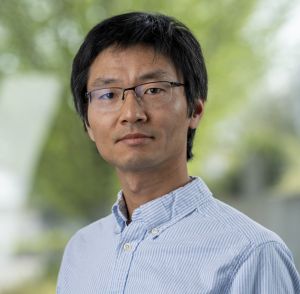
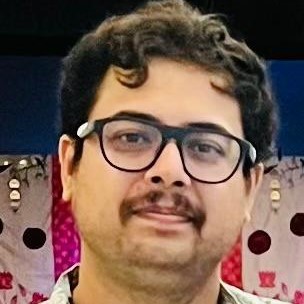
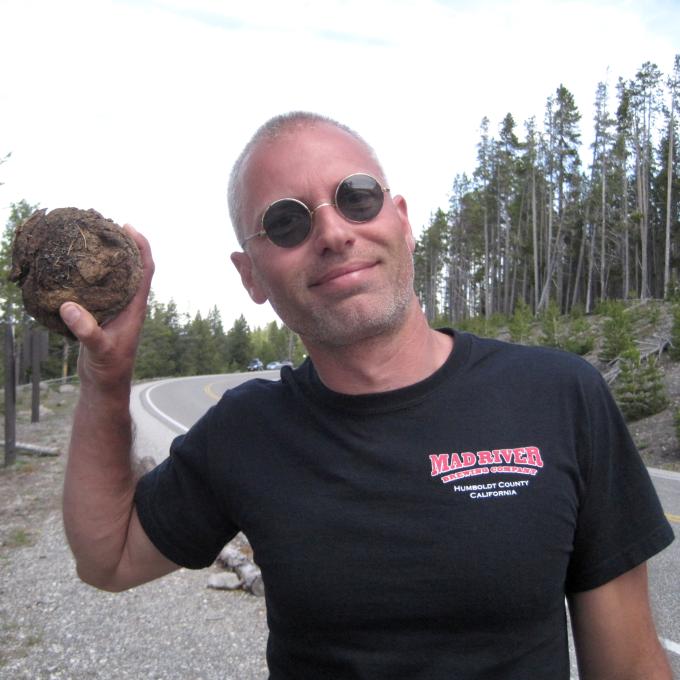
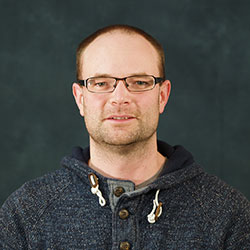
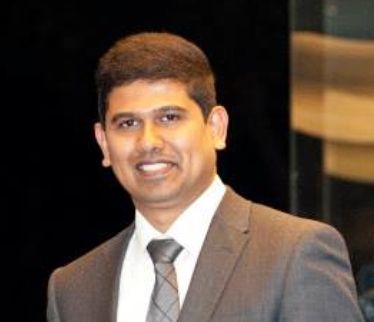
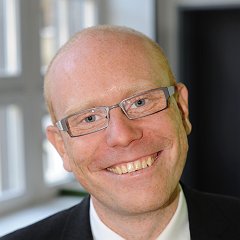
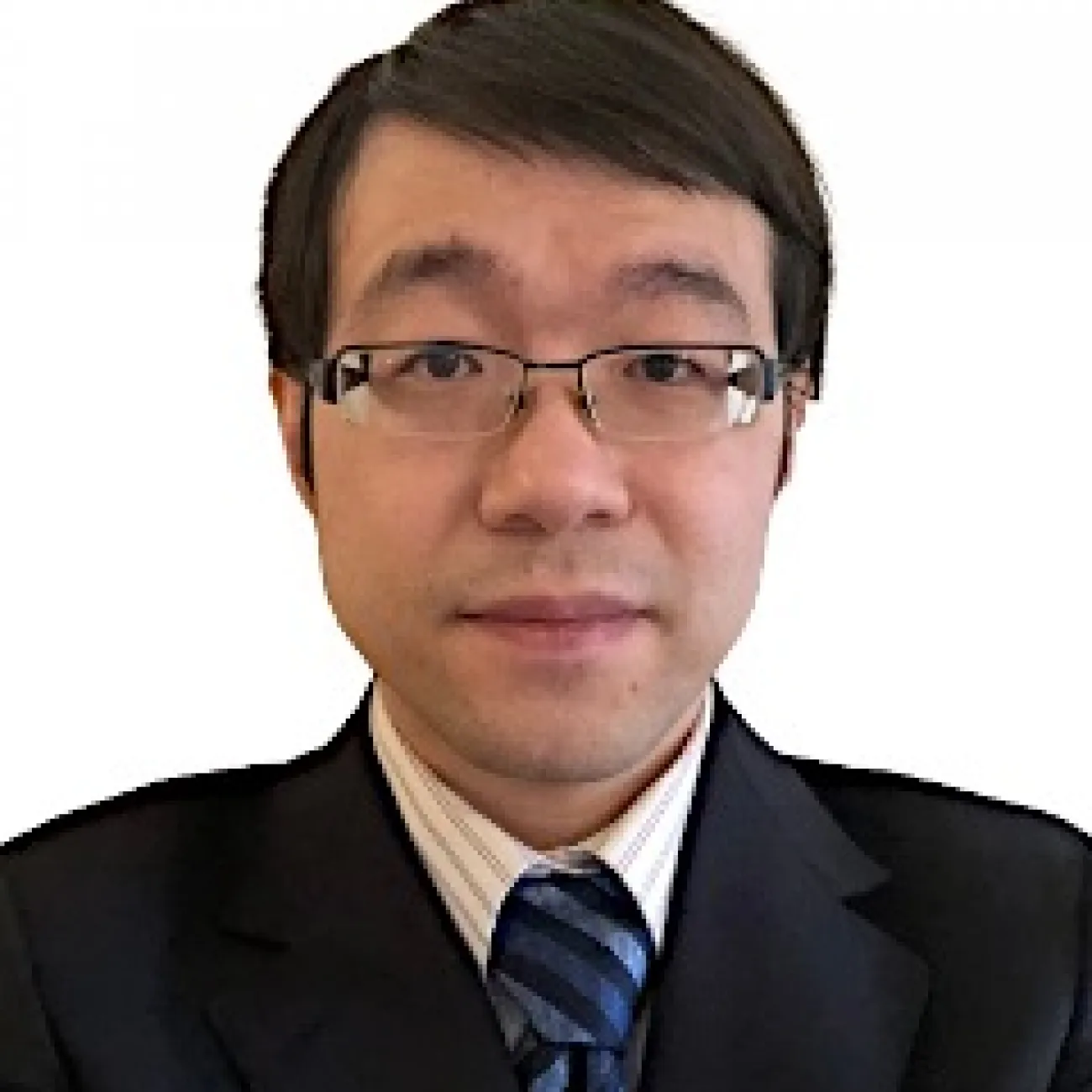
Yefeng Shen is an Associate Professor at the Department of Mathematics, University of Oregon , specializing in geometry and topology with connections to string theory. His research focuses on Mirror Symmetry Gromov-Witten Theory Fan-Jarvis-Ruan-Witten Theory Integrable Hierarchies Number-Theoretic Aspects of String Theory .
Dr. Ayan Mukherjee (Assistant Professor Grade I) is affiliated with the School of Chemistry at IISER Thiruvananthapuram . He holds a Ph.D. in Organic & Medicinal Chemistry from CSIR-Indian Institute of Chemical Biology (2013-2019) and completed postdoctoral training at Baylor College of Medicine (2022-2024) and University of Manitoba (2021-2022). His academic journey includes an M.Sc. from IIT Madras (2011-2013) and a B.Sc. (Hons) in Chemistry from University of Calcutta (2008-2011). Ph.D.: CSIR-Indian Institute of Chemical Biology (2013-2019) M.Sc.: Indian Institute of Technology Madras (2011-2013) B.Sc. (Hons): University of Calcutta (2008-2011) Dr. Mukherjee's research focuses on organic synthesis and medicinal chemistry , particularly addressing antimicrobial resistance through innovative therapeutic strategies. His work combines computational drug discovery with experimental synthesis to develop novel antibiotics and adjuvants that enhance existing therapies against multidrug-resistant pathogens like ESKAPE species. Recent publications highlight advancements in PROTAC development , TLR7/9 antagonism , and chemical transformation techniques . Research trends from his articles include modular assembly for targeted protein degradation, TLR modulation for anti-inflammatory applications, and innovative approaches to antibiotic adjuvants. These studies demonstrate a consistent emphasis on translational chemistry bridging mechanistic insights with clinical relevance. Dr. Mukherjee actively recruits dedicated students for Ph.D. and M.Sc. project positions. Eligible candidates must hold an M.Sc. in Chemistry with interest in organic chemistry, or possess national fellowships like CSIR/UGC, INSPIRE, or equivalent.
Mihai Tomescu is a Professor of Botany in the Department of Biological Sciences at Cal Poly Humboldt (formerly Humboldt State University), where he has established a renowned research program in paleobotany and plant evolutionary biology. Originally from Romania, he earned his MSc from the University of Bucharest and his PhD from Ohio University in 2004. His work bridges the fossil record with developmental biology to understand fundamental patterns in plant evolution. Dr. Tomescu's research interests focus on the plant fossil record, comparative morphology, and developmental anatomy to understand the evolution of plant form, patterns of plant diversity through geological time, and plant phylogeny. His laboratory investigates fossil studies of Late Ordovician–Silurian terrestrial biotas, Early Devonian floras, and plant diversity in Early Permian and Early Cretaceous periods. He maintains active field research programs in Wyoming (Beartooth Butte Formation), Quebec (Battery Point Formation), California (Budden Canyon Formation), and Patagonia. His work on boundary layers, vascular architecture, and the evolution of key plant features like roots and leaves has significantly advanced our understanding of plant morphological evolution. His most recent publications span topics from Devonian plant evolution to bryophyte fossil records, demonstrating a strong focus on integrating developmental perspectives with paleobotanical evidence. The research shows consistent themes in understanding plant body plan evolution, with particular attention to modular developmental patterns and their fossil signatures across geological time. Dr. Tomescu has mentored numerous undergraduate and graduate students, many of whom have received prestigious awards and gone on to successful careers in academia and related fields. His lab has produced significant research output with students frequently presenting at national meetings and publishing in top botanical journals. His laboratory maintains active research programs in multiple areas including Early Devonian floras, cryptogamic paleobotany, origin of land plants, plant morphological evolution, and paleobotany of Northern California and Patagonia. The lab utilizes diverse techniques from fossil preparation to comparative anatomy and collaborates with institutions worldwide including Oregon State University, Museo Paleontologico Egidio Feruglio in Argentina, and the Smithsonian Institution.
Tim Würtele is a Ph.D. researcher at the Institute of Information Security at the University of Stuttgart. His work focuses on formal security analysis of cryptographic protocols, particularly those underpinning critical web standards like OAuth 2.0, OpenID Connect, FAPI, ACME, and Web Payment APIs. He has contributed to identifying and mitigating vulnerabilities in these protocols, collaborating with standardization bodies such as the OpenID Foundation and W3C. University of Stuttgart Würtele's research interests include web security , cryptographic protocol verification , and formal methods for analyzing real-world implementations. His work addresses both theoretical and practical security flaws in protocols used by billions of users globally, spanning high-risk sectors like open banking and healthcare. He has published extensively in top-tier venues such as IEEE S&P, CCS, and ESORICS, often uncovering critical vulnerabilities and proposing formally verified fixes. In 2025, Würtele co-authored a paper introducing audience injection attacks , a novel class of vulnerabilities in Web-based authentication standards. His 2024 publications focused on fixing and verifying the FAPI 2.0 protocol , while 2023 papers addressed GNAP and layered protocol analysis . Earlier works (2021–2022) scrutinized the ACME certificate management standard and W3C Web Payment APIs , revealing over-charge vulnerabilities and formalizing security guarantees.
Philip Neil Garner is a Researcher at the Idiap Research Institute (LIDIAP), affiliated with École Polytechnique Fédérale de Lausanne (EPFL). His current position is listed as "EPFL member Current" with email philip.garner@epfl.ch. He maintains an active research profile with publications spanning from 2013 to 2025. Garner's research focuses on the intersection of physiological auditory modeling and machine learning for speech processing. His work bridges cochlear physiology with automatic speech recognition systems, investigating how biological principles of hearing can inform and improve computational models. Key areas include modeling the cochlea as an active amplifier using Hopf oscillators, exploring neural oscillations in speech perception via spiking neural networks, and developing interpretable affective speech synthesis systems. His research demonstrates consistent interest in creating biologically plausible models that maintain compatibility with modern deep learning frameworks. Analysis of his recent publications reveals a clear trajectory toward integrating physiological auditory models with state-of-the-art speech recognition systems. His work increasingly focuses on creating hybrid models that maintain physiological plausibility while leveraging pre-trained acoustic models. The research shows particular attention to modular approaches that allow different components (cochlear models, neural networks) to interact meaningfully, with emphasis on understanding how end-to-end learning affects physiological interpretations of speech processing. Garner has supervised multiple doctoral students including Louise Coppieters De Gibson, Bastian Schnell, and Sibo Tong, whose theses address cochlear modeling, affective speech synthesis, and multilingual speech recognition respectively. His research has received funding from the Swiss National Science Foundation as indicated in two publications. While specific grants aren't detailed, his work demonstrates consistent collaboration with Hervé Bourlard and Alexandre Bittar across multiple projects. As a core researcher at Idiap Research Institute, Garner works within a multidisciplinary team focused on speech processing and artificial intelligence. His publications indicate collaboration across units including LIDIAP, EDEE, STI, IEL, and LCAV at EPFL, suggesting integration within both the Idiap institute and broader EPFL research ecosystem. His work connects computational neuroscience with practical speech technology applications, positioning him at the intersection of theoretical auditory modeling and applied speech processing.
Dr. Kevin Worrall is a Senior Lecturer in Robotics and Control at the University of Glasgow's School of Engineering, Aerospace Sciences division. He holds affiliations with both the Space Engineering and Technology group and the Centre for Medical and Industrial Ultrasonics. His academic journey includes a BEng in Electronics and Electrical Engineering from Glasgow (2003), an MSc in Robotics and Embedded Systems from the University of Essex (2004), and a PhD from Glasgow (2008) focusing on optimization algorithms for mobile robot guidance. Research interests span mechatronic systems for extreme environments (space, underground, Antarctica), precision medical applications, and agricultural robotics. His work integrates control theory, machine learning, and hardware development across: Spacecraft attitude control and satellite systems Ultrasonic drilling and granular material handling Medical ultrasound classification using ML Autonomous planetary exploration technologies Publications demonstrate strong focus on aerospace control systems (inverse simulation, attitude control), planetary drilling technologies, and medical imaging AI. Recent work shows increasing emphasis on machine learning applications in both space systems and healthcare diagnostics. Grant leadership includes: ERC: Interglacial Collapse of Ice Sheets (£339k, CoI) ESA: Drill for Extensive Exploration of Planetary Environments (£253k, CoI) UKSA: Roving with Rosalind (£30k, CoI) EC H2020: Robot for Underground Operations (£477k, CoI) Multiple PI-led industry collaborations in positioning systems and image testing Current PhD supervision covers fault-tolerant space algorithms, planetary rover navigation, spacecraft plume interactions, and infrastructure monitoring. He leads research within the Space Engineering and Medical Ultrasonics research groups.
Chelsea Walton is a Professor in the Mathematics Department at Rice University. She received her B.S. from Michigan State University in 2005 and her Ph.D. from the University of Michigan in 2011. Her research is centered in Noncommutative Algebra, with particular focus on quantum symmetries of algebras and algebraic structures in categories. B.S. (2005) Michigan State University Ph.D. (2011) University of Michigan Professor Walton's research interests span multiple areas of algebra and category theory. She is particularly interested in noncommutative algebra, quantum symmetries of algebras, monoidal categories, Frobenius algebras, and Hopf algebras. Her work often bridges abstract algebraic structures with geometric and topological applications. Lately, her research has been centered on algebraic structures in categories, exploring how categorical frameworks can illuminate quantum symmetries. She is currently writing a three-volume book series on Algebraic Quantum Symmetry entitled "Symmetries of Algebras," with Volume 1 already published. Her extensive publication record demonstrates a consistent focus on developing the theoretical foundations of noncommutative algebra. The most recent articles reveal a deepening exploration of monoidal categories, Frobenius structures, and quantum symmetries, with increasing sophistication in the categorical frameworks employed. Her work shows strong connections between representation theory, quantum algebra, and topological quantum field theory, suggesting a unifying perspective on these seemingly disparate areas. Professor Walton has advised numerous students and maintains an active research group at Rice University. She has delivered several notable invited talks, including the NAM Claytor-Woodard Lecture at the 2021 Joint Mathematics Meetings titled "An Invitation to Noncommutative Algebra" and an MAA Invited Address at the same conference titled "Navigating Collaboration."
Dr. Pushpitha Kalutara serves as Head of Course for Built Environment at Central Queensland University's School of Engineering and Technology, holding a PhD in Civil Engineering from RMIT University. With over 17 years of post-graduate experience spanning academia and industry, he maintains active roles as Principal Supervisor for multiple PhD candidates and reviewer for the Journal of Engineering, Construction and Architectural Management. Education: BEng (Civil Engineering) - University of Moratuwa, Sri Lanka PhD (Civil Engineering) - RMIT University, Melbourne, Australia His research focuses on integrating digital solutions with sustainable practices in construction, particularly advancing Building Information Modelling (BIM) for facility management, developing lean procurement frameworks, and pioneering suicide prevention through architectural design. Recent publications demonstrate a shift toward mental health applications in built environments, with significant work on social-spatial design interventions for suicide prevention alongside traditional expertise in asset management and structural health monitoring. Key research trends: Analysis of 15 most recent publications reveals dual trajectories - ongoing development of decision-making frameworks for sustainable community building management (using AHP and neuro-fuzzy systems), and emerging focus on mental health applications in construction (suicide prevention design, industry mental health interventions). His work consistently bridges Australian industry needs with academic research, particularly for councils and infrastructure operators. Awards: Post Graduate Research Award by Engineers Australia and National Asset Management Council (2013) Australian Postgraduate Award Industry (APAI) by ARC Industry Linkage Scheme (2010) Dr. Kalutara actively supervises multiple PhD candidates including projects on construction industry suicide prevention frameworks, AI impacts on road construction project management, and counterterrorism design for critical infrastructure. His industry collaborations span Victorian local councils, Municipal Association of Victoria, and major construction firms. Professional software expertise includes SAP, Revit, AutoCAD, and statistical tools like SPSS and MATLAB for construction analytics.
Michael Eichberg is a Professor at Technische Universität Darmstadt, Germany, where his work centers on software engineering, static analysis, programming languages, and secure software development tools. He is the principal architect of the OPAL framework for Java bytecode analysis and has an extensive publication record spanning PLDI, ICSE, ESEC/FSE, ISSTA, ASE, FSE, SOAP, and other premier venues. Research Interests: Static program analysis and its scalability to real-world code bases Software security, particularly cryptographic API misuse and Android app repackaging detection Concurrent and parallel programming models, including deterministic concurrency in Scala Software architecture conformance, drift and erosion detection, and rule reuse Development of open extensible tools and frameworks (OPAL, LectureDoc, QScope, Sextant, XIRC, IRC) Publication Trends: His recent work (2015-2022) demonstrates a strong focus on empirical evaluation of static analysis techniques, modular composition of analyses, and security-related program understanding. Key themes include unsoundness in call graph construction, purity and immutability analyses, parallelization of static analyses, and large-scale studies of cryptographic API misuse. Tools & Frameworks: OPAL – A flexible Java bytecode analysis and manipulation framework (core developer until 2019) LectureDoc 2 – Web-based lecture material authoring and presentation system QScope – Open extensible metrics framework for modern software projects Sextant – Eclipse-integrated software exploration tool XIRC/IRC – Frameworks for enforcing system-wide properties and architectural constraints
Dr Yang Liu is a Lecturer in Strategy and Innovation at Southampton Business School, University of Southampton. He holds a PhD from the University of Cambridge and previously served as Lecturer in Management at Queen’s University Belfast. Research Interests: Digital platforms and ecosystems Innovation processes in multinational corporations Open innovation and knowledge transfer Global strategy and organizational change Boundary spanning in diversified firms Publication Trends: His research spans digital innovation (generative AI, platform ecosystems), organizational dynamics (boundary work, structural recombination), and global R&D processes (cross-border knowledge transfer, purchasing power gaps). Methodologically focuses on qualitative studies in international business contexts. Teaching: Currently teaches modules on strategy innovation, high-growth business management, and dissertation supervision. Supervision: Actively supervises PhD students in business studies and management.
Peter Brown serves as an Honorary Senior Lecturer at the School of Mathematics and Statistics, University of New South Wales (UNSW), Sydney. His academic role centers on undergraduate education as a casual tutor across first and second-year pure mathematics courses, while maintaining active research contributions in theoretical and historical mathematics. His research program bridges Number Theory and History of Mathematics, with significant work in Diophantine equations, arithmetic functions, and elliptic curves alongside cultural studies of Chinese mathematics and ancient Greek texts. This dual focus manifests in publications spanning rigorous theoretical proofs and contextual historical analysis, demonstrating consistent scholarly output from 1997-2015. Publication trends reveal evolving expertise: early work concentrated on classical number theory problems (Pell equations, Möbius functions), while later research incorporated historical dimensions (Chinese mathematics, cultural revolutions) and educational monitoring. The interdisciplinary nature connects abstract mathematical structures with socio-historical frameworks. Scientific Recognition Vice Chancellor's Teaching Award (2009) Science Faculty Lecturer of the Year (2016) Brown's teaching excellence has been formally acknowledged through university-wide awards, highlighting his effectiveness in foundational mathematics instruction. While specific grant funding and doctoral advising aren't documented, his sustained publication record and educational monitoring work indicate ongoing scholarly activity. The absence of laboratory facilities aligns with his theoretical research profile in pure mathematics.
Laure Gonnord is a Full Professor in Computer Science at Grenoble INP , affiliated with the Esisar Engineer School in Valence, France, since September 2021. She is a member of the CTSYS research team at the LCIS laboratory and an external member of the CASH team at the University of Lyon / CNRS / LIP / Inria. Her research focuses on compilation , static analysis , and applications to safety , security in high-performance and embedded systems . Fields of Interest : Compiler Design Static Analysis for Safety & Security Abstract Interpretation Embedded Systems High-Performance Programming Hardware Security Engineering Research Trends (from recent publications): Her work explores modular verification through monadic abstract interpreters, complexity bounds in term rewriting , and educational tools for theorem proving . Notable contributions include compiler hardening schemes for hardware security and memory layout optimizations for algebraic data types. Academic Leadership : Scientific Director of the Summer School EJCP (École Jeune Compilation et Programmation) Board Member of the French national research group GDR GPL Teaching Responsibilities at Grenoble INP include courses in architecture , compilation , programming languages , algorithms , and databases . She has also taught at University of Lyon, ENS Lyon, Polytech'Lille, and INSA.
Dan Fretwell is a Lecturer in Security and Protection Science within the School Of Mathematical Sciences at Lancaster University. His academic journey includes a PhD from the University of Sheffield (2015) under Prof. Neil Dummigan, a Heilbronn Research Fellowship at the University of Bristol (until 2022), and a Lecturer position at the University of South Wales (2022-2023). His research spans Algebraic Number Theory with extensive work on: Quadratic forms, lattices, and error correcting codes Modular forms, elliptic curves, and number fields Automorphic forms, Galois representations, and L-functions Interacting particle systems with applications in Statistical Mechanics Fretwell's work is significantly motivated by the Langlands program, focusing on computational evidence for conjectures and practical applications. His recent publications show a clear trajectory toward cybersecurity applications, particularly in cryptography and quantum computation. His 2025 publication on 2-superirreducible polynomials over finite fields demonstrates this applied direction. The publications collectively reveal expertise across pure number theory, computational mathematics, and increasingly relevant cryptographic applications. He teaches MATH320: Mathematical Cryptography and supervises PhD students in Algebraic Number Theory with emphasis on Modular Forms and Galois Representations. His professional activities include public engagement through the STEM Lecturer Series, "The Magic of Maths" public lecture, Pint of Science events, and school outreach programs at Winstanley College and Rochdale Sixth Form College.
Mary Beckerle is a Distinguished Professor of Biology and CEO & Director of the Huntsman Cancer Institute at the University of Utah. Her research focuses on cell adhesion, motility, and mechanobiology, with implications in cancer and respiratory diseases. She holds an adjunct appointment in the Department of Oncological Sciences and participates in the Sarcoma Center and Molecular Biology Graduate Program. Ph.D. from University of Colorado, Boulder Research Interests Beckerle's work investigates how cells integrate mechanical and biochemical signals to regulate adhesion, migration, and cytoskeletal dynamics. Key areas include Ewing sarcoma pathogenesis, integrin signaling, and actin stress response mechanisms. Publication Trends Her recent publications emphasize mechanosensitive pathways, tumor progression in sarcomas, and cytoskeletal regulation. Collaborative studies span molecular modeling, clinical implications in asthma, and epigenetic therapies for cancer. Labs & Affiliations She leads the Beckerle Lab, which operated from 1986 to 2022, and maintains affiliations with multiple programs at the University of Utah and Huntsman Cancer Institute.
Hossein Saidi is a Professor in the Department of Electrical and Computer Engineering at Isfahan University of Technology, Iran. His research spans High Speed Switching Networks, QoS Algorithms in Broadband Networks, Internet Security, Cryptography, Wireless Networks, Information Theory, and Coding. Research Interests: High Speed Switching Networks, QoS Algorithms, Internet Security, Cryptography, Wireless Networks, Information Theory, Coding Email: hsaidi@iut.ac.ir His recent publications focus on Software-Defined Networking (SDN), Blockchain Consensus, Wireless IoT, and Energy Management Systems. Key themes include network optimization, security protocols, distributed systems, and hardware design.